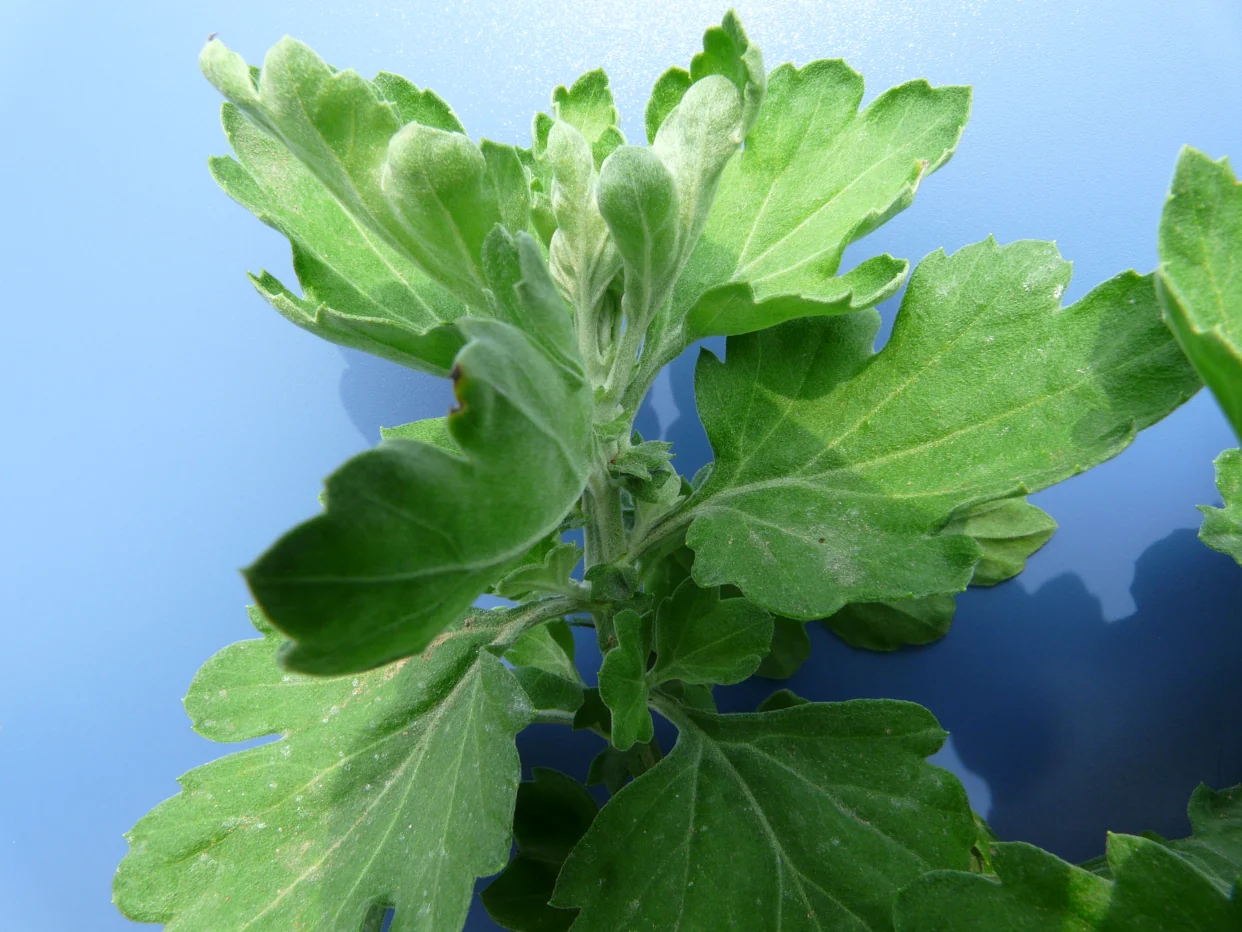
Artemisia annua
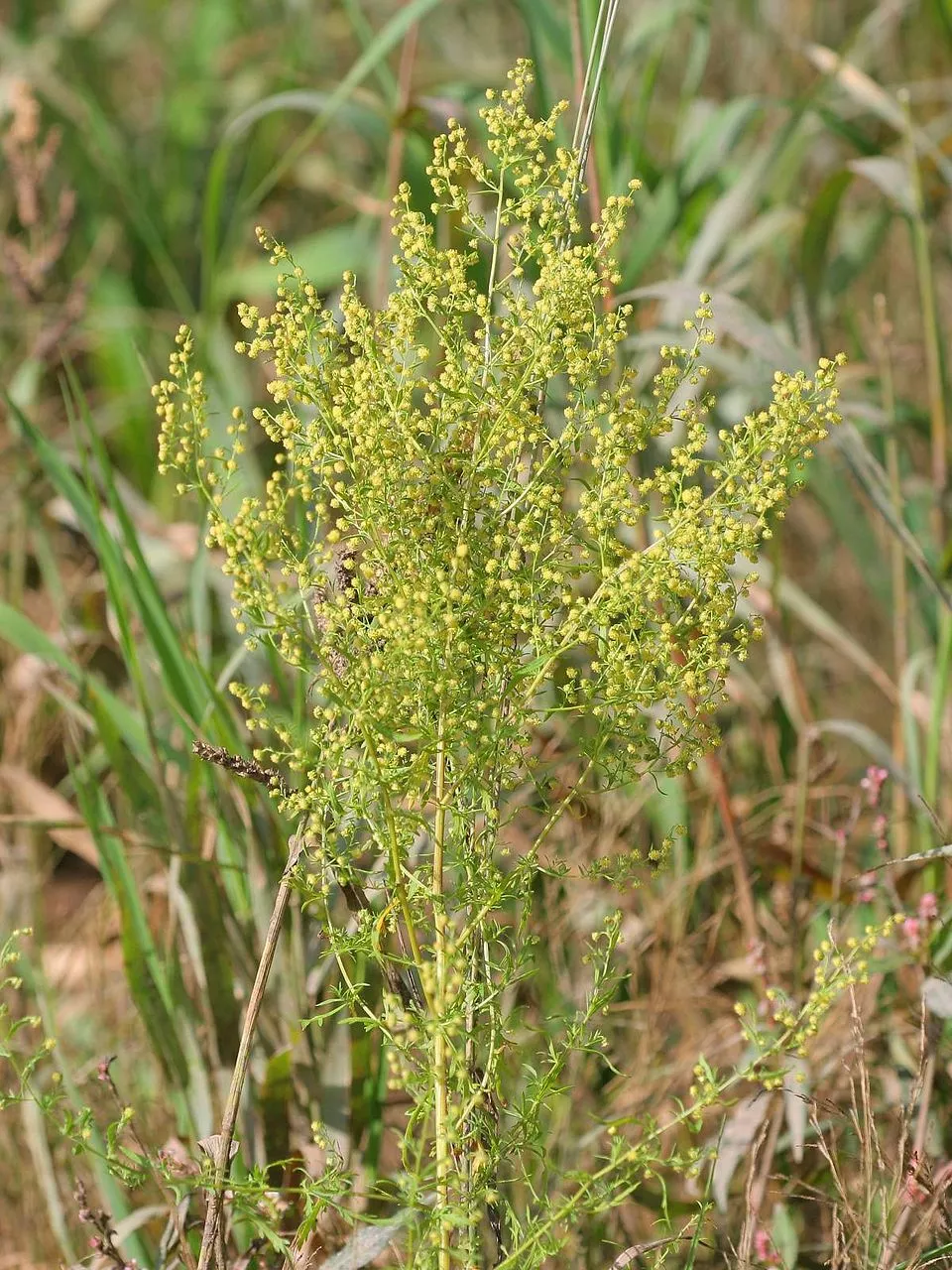
Image source:
https://baike.baidu.com/item/%E9%BB%84%E8%8A%B1%E8%92%BF/8259189
▍Morphological Features
- Height: Typically 50-150cm tall, but can
vary
- Stem: Erect, branched, glabrous or sparsely
hairy
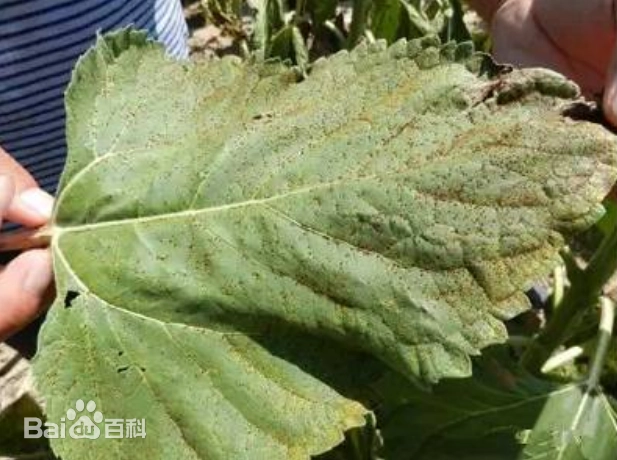
- Leaves: Alternate, segmented with deeply
dissected
leaflets
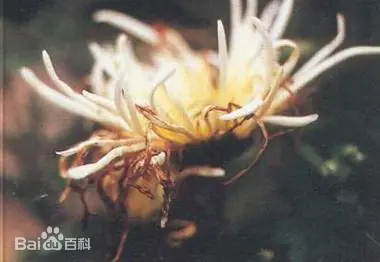
- Flowers: Small, yellow, tubular florets
forming a
capitulum
- Fruits: Achene, small and light enough for
wind
dispersal
- Roots: Taproot system with lateral roots
extending
broadly
▍Cultivation Methods
| Parameter |
Specifications |
| Soil Type |
Sandy loam (pH 6.0-7.5) |
| Germination Temp |
20-25℃ (Optimal) |
| Planting Density |
40cm row spacing |
▍Pest Management
Diseases
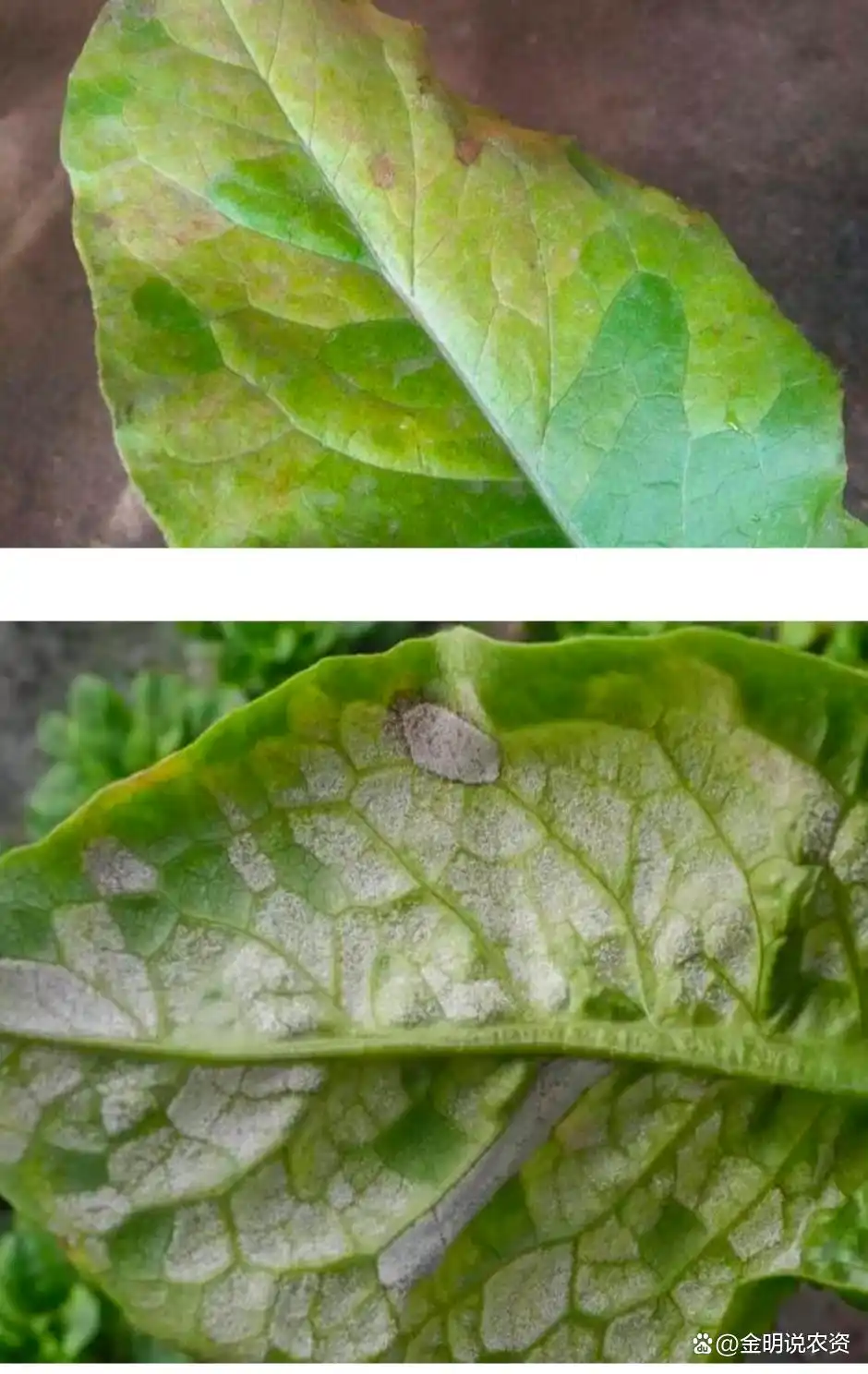
- Powdery Mildew: 50% Carbendazim WP
- Root Rot: Crop rotation & drainage
Pests
- Aphids: 10% Imidacloprid SC
- Spider Mites: Abamectin EC
▍Applications
Medical Use
Artemisinin production for malaria treatment
Essential Oil
Linalool (25%), Camphor (15%)
Ecological
Soil conservation plant
Artemisia argyi
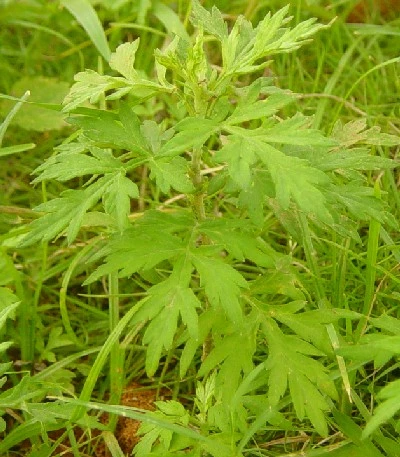
Image
source:https://shop.garten-jan.de/de/8472-artemisia-argyi.html
▍Morphological Features
- Height: Typically 80-120cm tall
- Stem: Erect, often with ascending branches,
densely
tomentose
- Leaves: Alternate, oblong or
ovate-lanceolate, segments
are
pinnatipartite or pinnatisect, greyish white on the lower
surface
- Flowers: Small, yellowish or reddish,
tubular florets
forming a dense capitulum
- Fruits: Achene, small and typically without
pappus
- Roots: Strong taproot with an extensive
network of
lateral
roots
▍Cultivation Methods
| Parameter |
Specifications |
| Soil Type |
Well-drained loam or sandy loam (pH 6.0-7.5) |
| Germination Temp |
18-25℃ (Optimal) |
| Planting Density |
30-40cm between plants, 60cm row spacing |
▍Pest Management
Diseases
- Leaf Blight: Thiophanate-methyl WP
- Root Knot: Marigold rotation
Pests
- Leaf Beetles: Emamectin benzoate
- Cutworms: Phoxim granules
▍Applications
Traditional Therapy
Moxibustion material in TCM
Aromatherapy
Essential oil extraction
Cultural
Dragon Boat Festival rituals
Ambrosia artemisiifolia
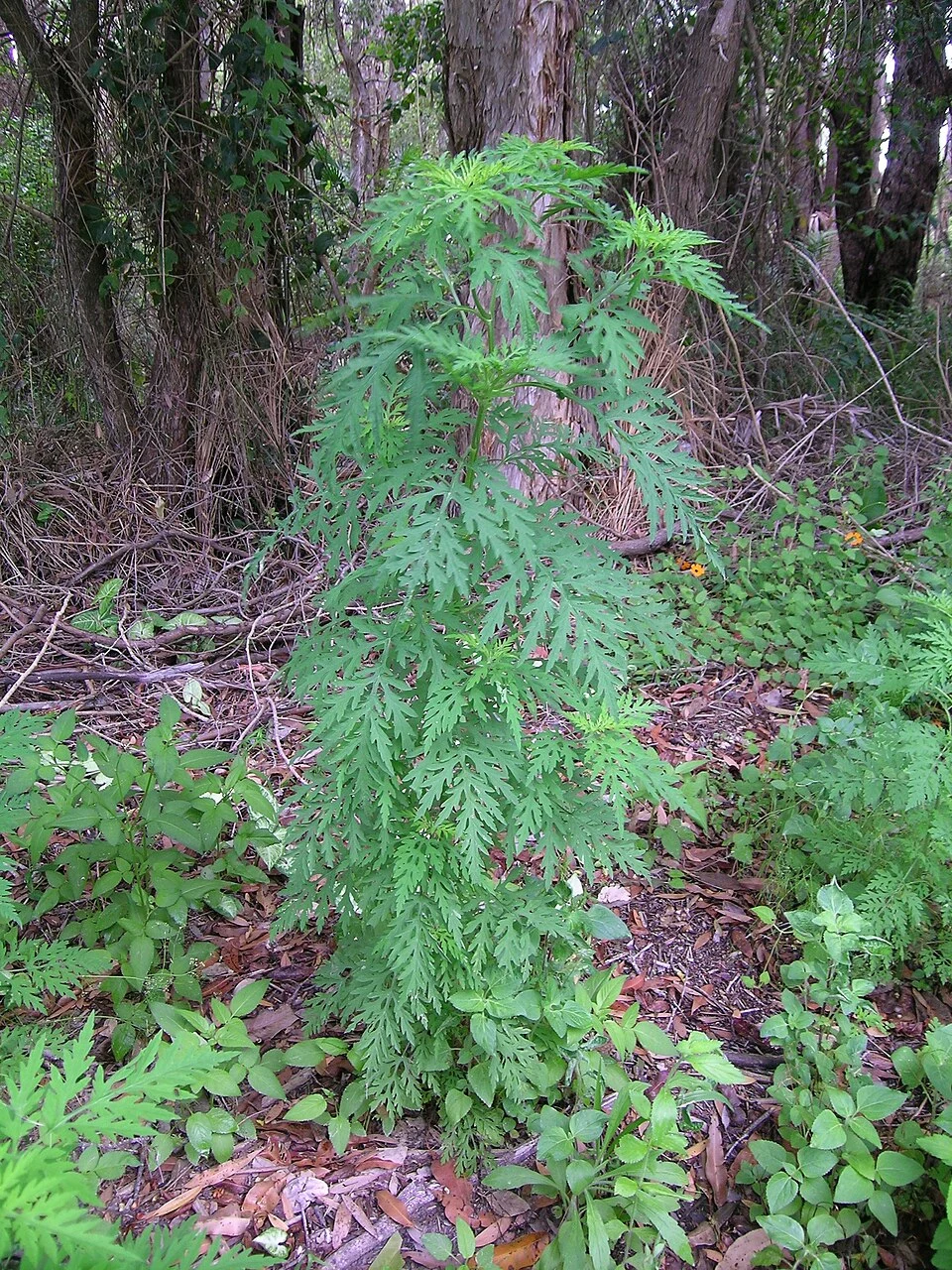
Image
source:https://florafinder.org/Species/Ambrosia_artemisiifolia.php
▍Morphological Features
- Height: Typically 30-90cm, but can reach up
to 2 meters
- Stem: Erect, branching, covered with fine
hairs
- Leaves: Opposite on lower parts, alternate
on upper;
pinnately divided into narrow segments, giving a ragged
appearance
- Flowers: Greenish, inconspicuous; male
flowers in
terminal
spikes, female flowers in the axils of the leaves below the
spikes
- Fruits: Small achenes, about 2-5mm long,
usually buried
within involucres
- Roots: Taproot system with strong lateral
roots
▍Cultivation Methods
| Parameter |
Specifications |
| Soil Type |
Well-drained soils, prefers sandy loam (pH 6.0-7.5) |
| Germination Temp |
15-25℃ (Optimal) |
| Planting Density |
30-40cm between plants, 60cm row spacing |
▍Pest Management
Diseases
- Rust: Use fungicides like mancozeb
- Mildew: Improve air circulation and use systemic
fungicides
Pests
- Aphids: Neem oil or insecticidal soap application
- Beetles: Use pyrethrin-based products
▍Applications
Allergenic Pollen
A significant source of allergens for hay fever
sufferers.
Phytoremediation
Used in phytoremediation due to its ability to
absorb heavy
metals from soil.
Research
Subject of research for allergy treatments and
environmental
applications.
Ambrosia trifida
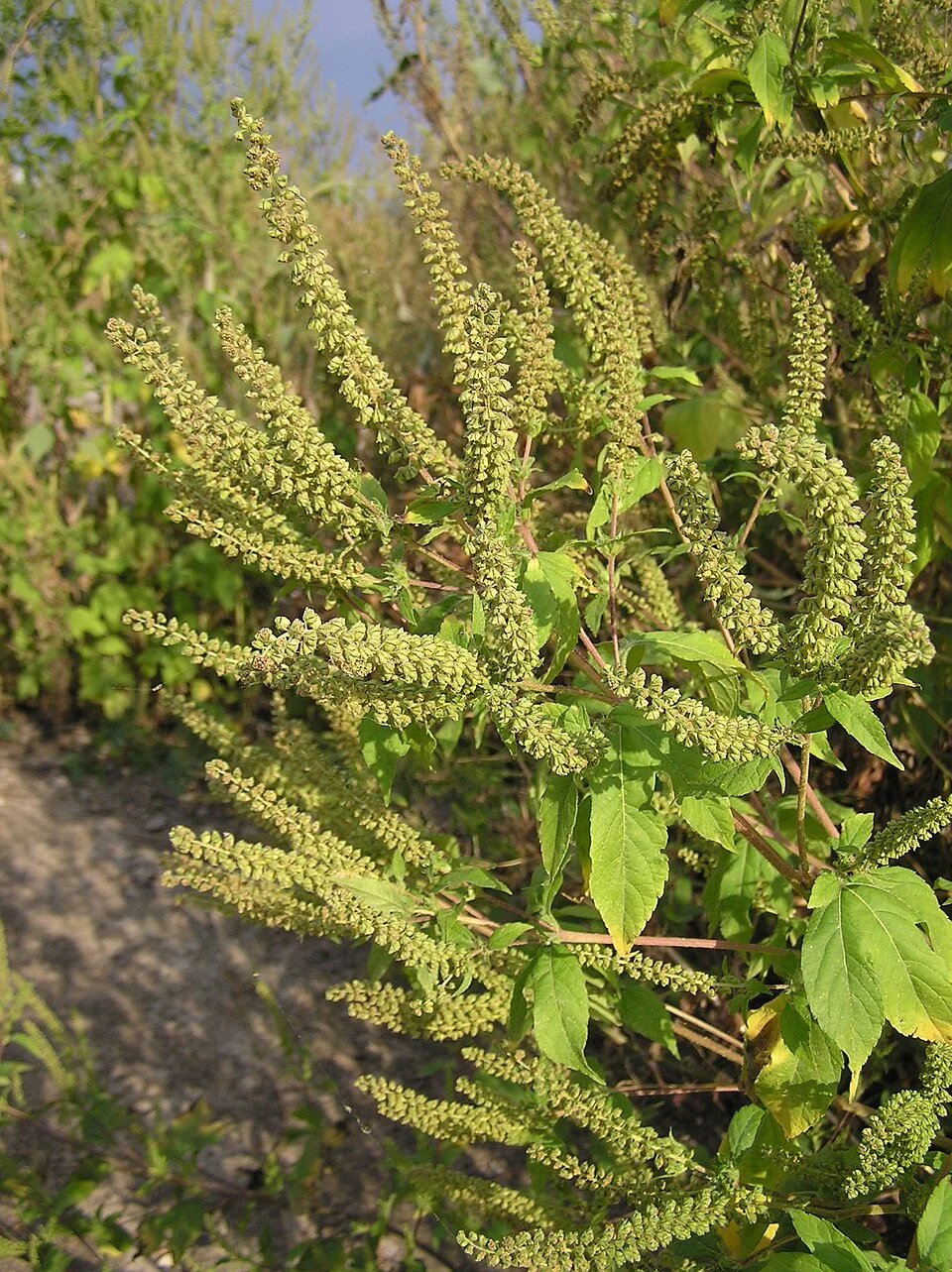
Image
source:https://medivetus.com/botanic/ambrosia-trifida-giant-ragweed-medicinal-uses/
▍Morphological Features
- Height: Typically 1.5-3 meters tall, but
can reach up
to 5
meters
- Stem: Erect, robust, branching, covered
with fine
hairs,
often reddish in color
- Leaves: Opposite on lower parts, alternate
on upper;
large,
deeply lobed, with coarse teeth, giving a rough texture
- Flowers: Greenish, inconspicuous; male
flowers in
terminal
spikes, female flowers in the axils of the leaves below the
spikes
- Fruits: Small achenes, about 3-5mm long,
typically
buried
within involucres
- Roots: Strong taproot system with lateral
roots
extending
broadly
▍Cultivation Methods
| Parameter |
Specifications |
| Soil Type |
Well-drained loam or sandy loam (pH 6.0-7.5) |
| Germination Temp |
20-25℃ (Optimal) |
| Planting Density |
50-60cm between plants, 80cm row spacing |
▍Pest Management
Diseases
- Rust: Use fungicides like mancozeb
- Mildew: Improve air circulation and use systemic
fungicides
Pests
- Aphids: Neem oil or insecticidal soap application
- Beetles: Use pyrethrin-based products
▍Applications
Allergenic Pollen
A significant source of allergens for hay fever
sufferers.
Phytoremediation
Used in phytoremediation due to its ability to
absorb heavy
metals from soil.
Research
Subject of research for allergy treatments and
environmental
applications.
Arctium lappa
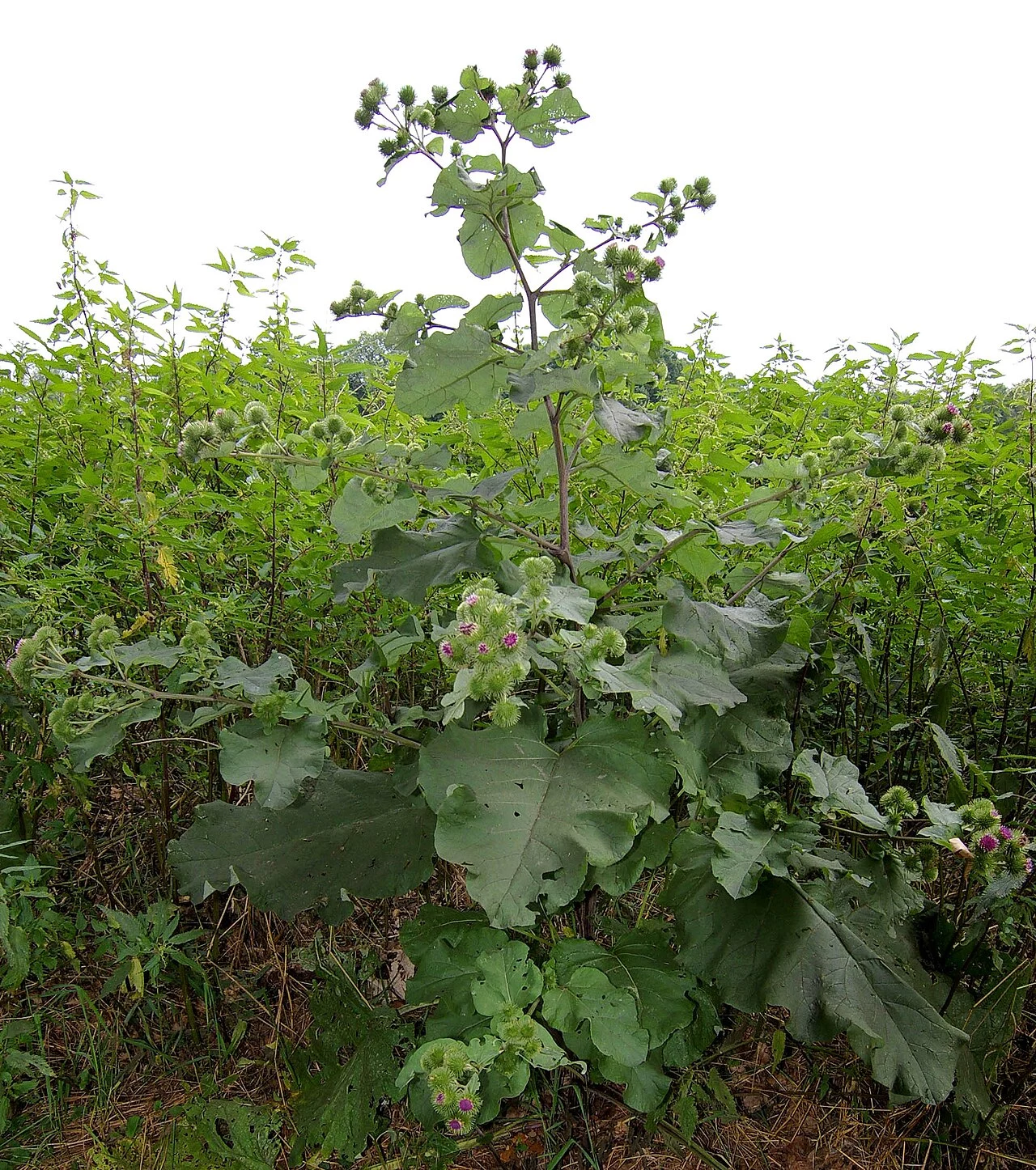
Image
source:https://plants.ces.ncsu.edu/plants/arctium-lappa/
▍Morphological Features
- Height: Typically 1-2 meters tall
- Stem: Erect, branched, hollow and ribbed,
covered with
fine
hairs
- Leaves: Large, heart-shaped to broadly
ovate, dark
green on
top, lighter underneath, with wavy margins
- Flowers: Purple to pinkish, thistle-like
heads (3-4cm
in
diameter), clustered at the ends of branches
- Fruits: Burrs with hooked bristles,
containing small,
elongated seeds
- Roots: Long, thick taproot, brownish-grey
outside,
white
inside
▍Cultivation Methods
| Parameter |
Specifications |
| Soil Type |
Deep, fertile loam or sandy loam (pH 6.0-7.5) |
| Germination Temp |
20-25℃ (Optimal) |
| Planting Density |
30-40cm between plants, 60-80cm row spacing |
▍Pest Management
Diseases
- Leaf Spot: Use copper-based fungicides
- Root Rot: Improve drainage and avoid overwatering
Pests
- Aphids: Neem oil or insecticidal soap application
- Cutworms: Bacillus thuringiensis (Bt) or phoxim granules
▍Applications
Medicinal Use
Used in traditional medicine for detoxification
and treating
skin conditions
Culinary Use
Young leaves and stems are edible; roots used as
a vegetable
in
various cuisines
Other Uses
Seeds can be roasted and used as a coffee
substitute
Arctium minus
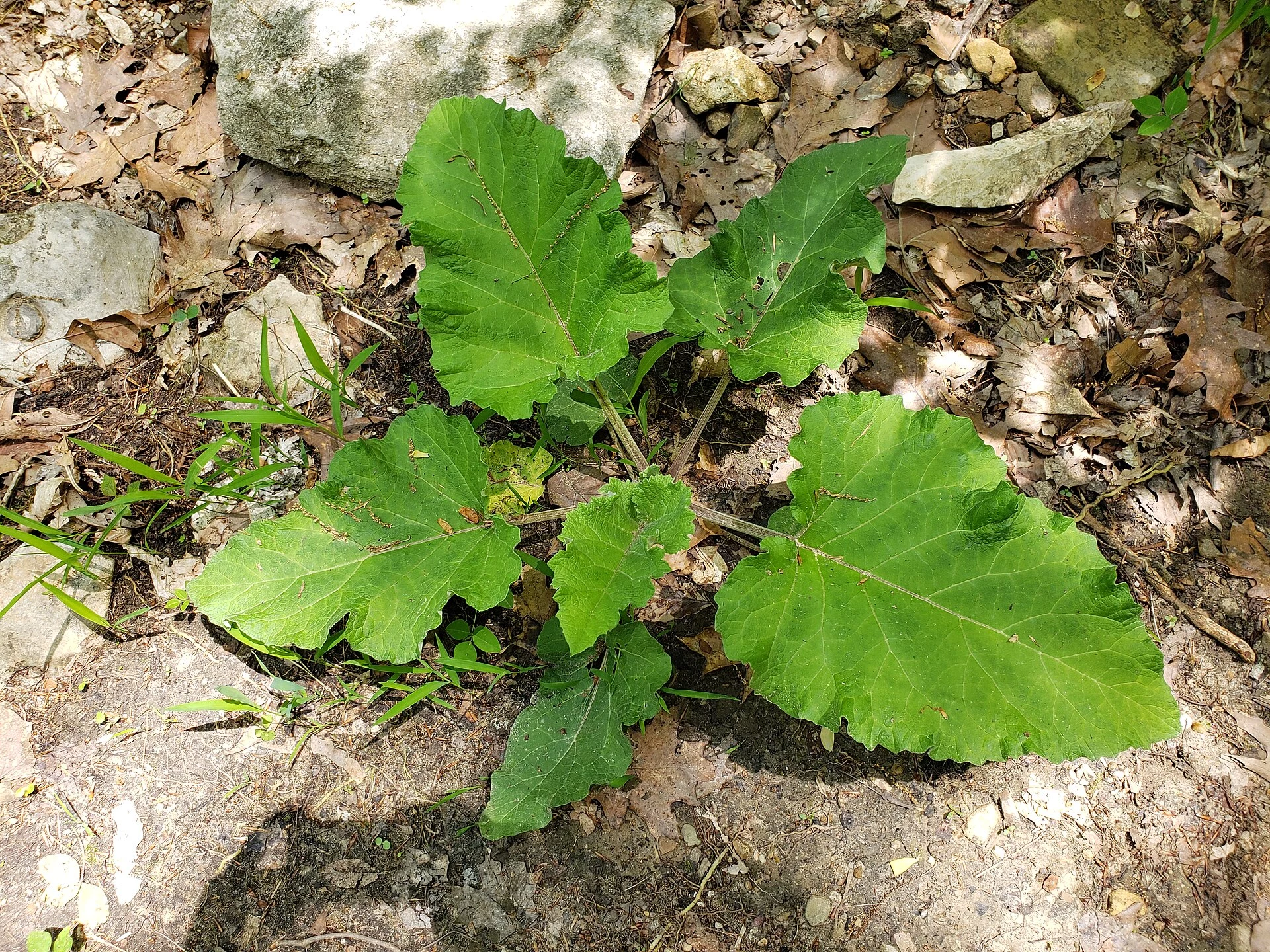
Image
source:https://plants.ces.ncsu.edu/plants/arctium-minus/
▍Morphological Features
- Height: Typically 0.5-1.5 meters tall
- Stem: Erect, branched, hollow with fine
ridges, covered
with short hairs
- Leaves: Large, cordate to ovate, dark green
above and
lighter below, with wavy or toothed margins
- Flowers: Purple to pinkish thistle-like
heads (1.5-2cm
in
diameter), usually clustered at the ends of branches
- Fruits: Burrs with hooked prickles,
containing small,
elongated seeds
- Roots: Long taproot, brownish on the
outside, white
inside
▍Cultivation Methods
| Parameter |
Specifications |
| Soil Type |
Well-drained loam or sandy loam (pH 6.0-7.5) |
| Germination Temp |
18-25℃ (Optimal) |
| Planting Density |
30-40cm between plants, 60-80cm row spacing |
▍Pest Management
Diseases
- Leaf Spot: Use copper-based fungicides
- Root Rot: Ensure good drainage and avoid waterlogging
Pests
- Aphids: Neem oil or insecticidal soap application
- Cutworms: Bacillus thuringiensis (Bt) or phoxim granules
▍Applications
Medicinal Use
Used in traditional medicine for its diuretic
and
detoxifying
properties
Culinary Use
Young leaves can be eaten as a vegetable; roots
are also
edible
and used in various dishes
Other Uses
Seeds have been roasted and used as a coffee
substitute
Artemisia tridentata
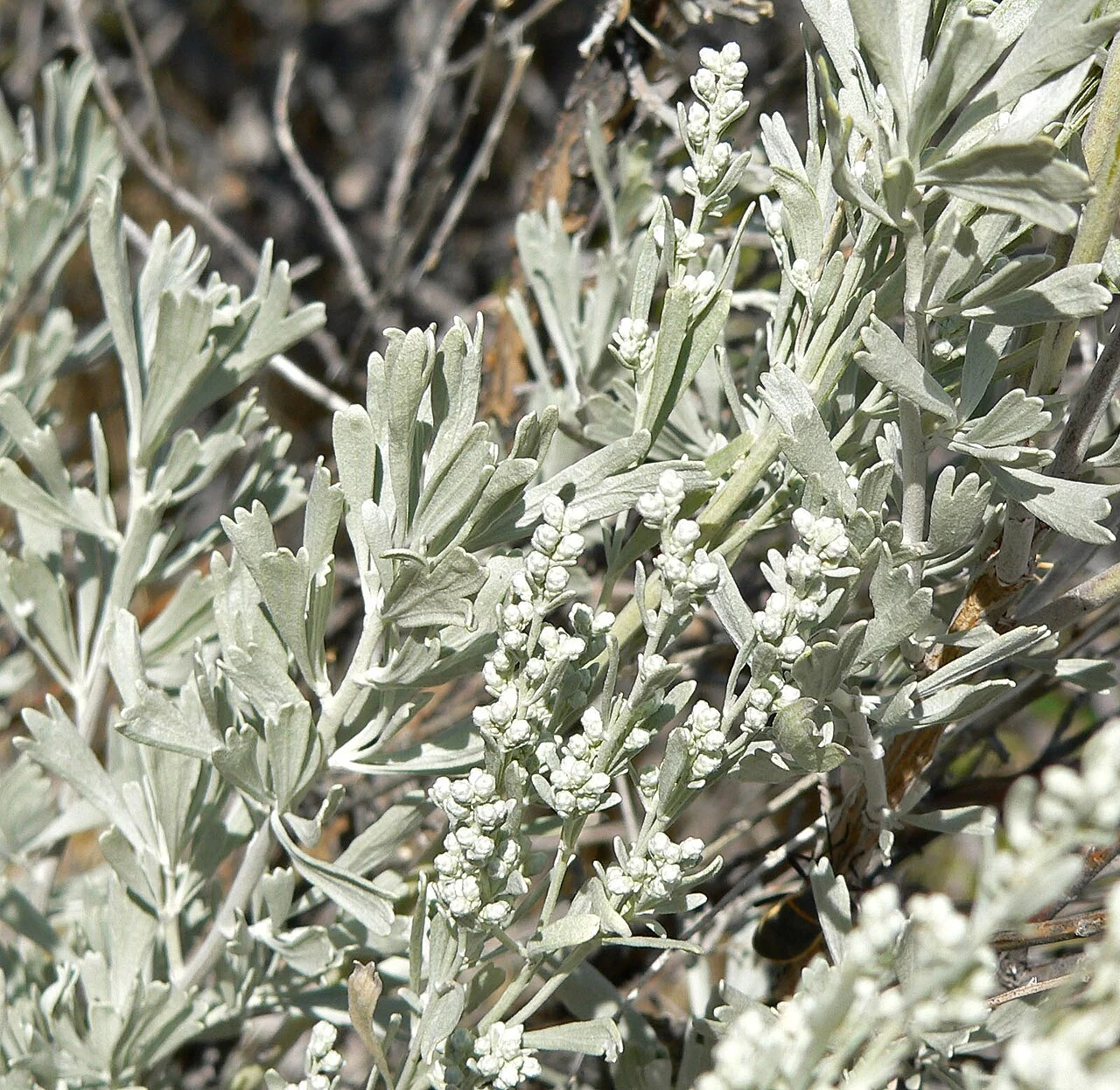
Image
source:http://www.highplainsgardening.com/plant-profiles/artemisia-tridentata
▍Morphological Features
- Height: Typically 0.3-2 meters tall, but
can reach up
to 3
meters in favorable conditions
- Stem: Woody at the base, branching from the
ground,
covered
with fine hairs giving a grayish appearance
- Leaves: Alternate, narrow, and deeply
three-lobed
(trident
shape), silvery-green due to dense covering of fine hairs
- Flowers: Small, yellowish, tubular flowers
clustered in
panicles, blooming late summer to early fall
- Fruits: Tiny, one-seeded achenes without
pappus
- Roots: Deep taproot system allowing for
drought
resistance
▍Cultivation Methods
| Parameter |
Specifications |
| Soil Type |
Well-drained sandy or gravelly soils, tolerant of poor nutrient
conditions
(pH
6.0-8.0)
|
| Germination Temp |
15-20℃ (Optimal) |
| Planting Density |
1 meter between plants, 2 meters row spacing |
▍Pest Management
Diseases
- Rust: Control by removing affected parts and using
appropriate
fungicides
- Mildew: Improve air circulation and avoid excessive
moisture
Pests
- Aphids: Use neem oil or insecticidal soap
- Spider Mites: Water sprays and natural predators like
ladybugs
▍Applications
Medicinal Use
Used traditionally by Native Americans for
various ailments,
including colds and infections
Ecosystem Services
Important for soil stabilization and providing
habitat for
wildlife in arid regions
Cultural Significance
Has significant cultural value among indigenous
peoples for
ceremonies and traditional practices
Bidens alba
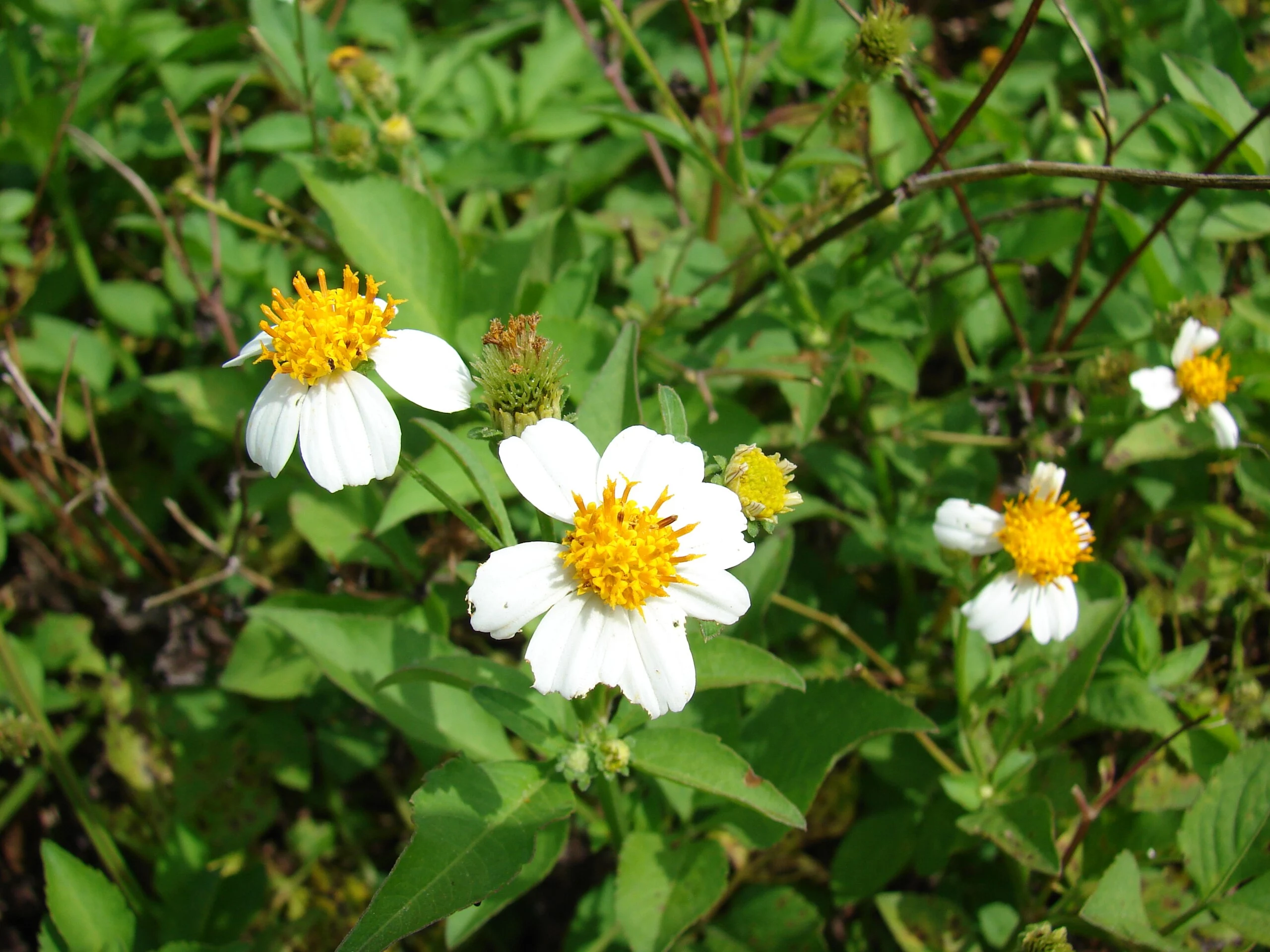
Image
source:https://www.picturethisai.com/id/wiki/Bidens_alba.html
▍Morphological Features
- Height: Typically 0.3-1.5 meters tall, but
can grow
taller
under favorable conditions
- Stem: Erect, branched, often with a reddish
tint,
covered
with fine hairs
- Leaves: Opposite, pinnately compound with
serrated
leaflets, dark green in color
- Flowers: White to pale yellow daisy-like
flowers,
approximately 2-3 cm in diameter, blooming throughout the
year in
tropical
regions
- Fruits: Black or dark brown achenes with
two barbed
awns,
aiding in seed dispersal by attaching to animals
- Roots: Fibrous root system that supports
rapid growth
and
spread
▍Cultivation Methods
| Parameter |
Specifications |
| Soil Type |
Well-drained soils, adaptable to various soil types including
sandy loam (pH
5.5-7.5)
|
| Germination Temp |
20-30℃ (Optimal) |
| Planting Density |
20-30cm between plants, 50cm row spacing |
▍Pest Management
Diseases
- Leaf Spot: Apply copper-based fungicides as needed
- Root Rot: Ensure proper drainage and avoid overwatering
Pests
- Aphids: Use neem oil or insecticidal soap for control
- Whiteflies: Introduce natural predators such as ladybugs or
use sticky
traps
▍Applications
Medicinal Use
Traditionally used for treating wounds, fever,
and digestive
issues due to its anti-inflammatory properties
Ecosystem Services
Attracts pollinators like bees and butterflies,
enhancing
biodiversity
Cultural Significance
Used in some cultures as an edible plant, both
raw and
cooked
Buxus sinica
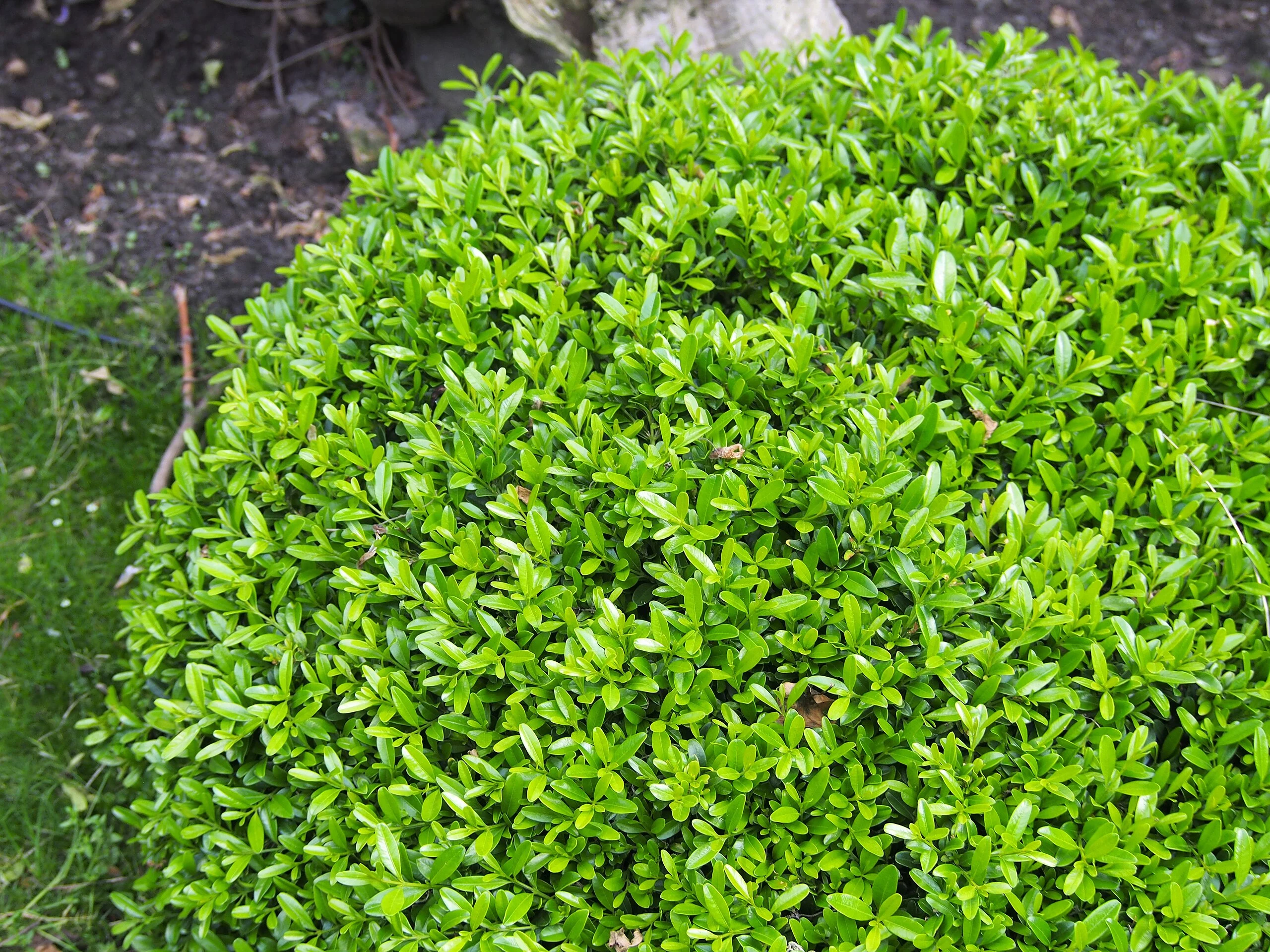
Image source:https://plants.ces.ncsu.edu/plants/buxus-sinica/
▍Morphological Features
- Height: Typically 1-3 meters tall, but can
be pruned to
maintain lower heights
- Stem: Erect with numerous branches; bark is
grayish-brown
and smooth when young, becoming fissured with age
- Leaves: Small, oval to elliptical, dark
green and
glossy on
the upper surface, lighter underneath, about 1-2 cm long
- Flowers: Small, yellowish-green,
inconspicuous flowers
in
axillary clusters or cymes, appearing in spring
- Fruits: Capsules that split open to release
small black
seeds
- Roots: Fibrous root system that is fairly
shallow but
extensive
▍Cultivation Methods
| Parameter |
Specifications |
| Soil Type |
Well-drained loam or sandy loam, tolerant of various soil types
(pH 6.0-7.5)
|
| Germination Temp |
18-24℃ (Optimal) |
| Planting Density |
40-60cm between plants for hedges, 1 meter or more for
individual
specimens
|
▍Pest Management
Diseases
- Dieback: Prune affected parts and apply fungicides if
necessary
- Root Rot: Ensure good drainage and avoid overwatering
Pests
- Boxwood Leafminer: Use systemic insecticides or prune
infested leaves
- Spider Mites: Control by increasing humidity and using
insecticidal soap
or
neem oil
▍Applications
Landscape Design
Commonly used for hedges, borders, topiaries,
and as a
formal
garden element due to its dense foliage and tolerance to
pruning
Erosion Control
Its extensive root system helps prevent soil
erosion, making
it
suitable for slopes and banks
Cultural Significance
Valued in traditional Chinese gardens for its
evergreen
nature
and ability to shape into artistic forms
Carthamus tinctorius
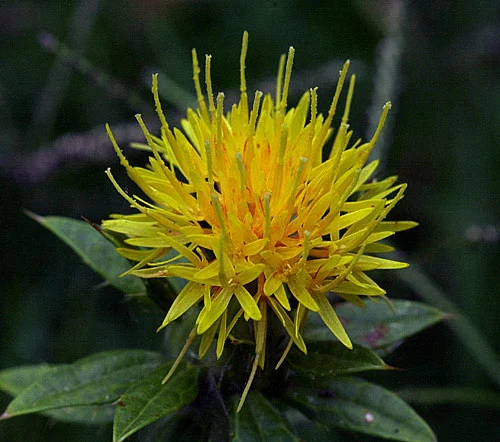
Image
source:https://www.feedipedia.org/content/safflower-carthamus-tinctorius-flower
▍Morphological Features
- Height: Typically 0.5-1 meter tall, but can
grow up to
1.5
meters under optimal conditions
- Stem: Erect, branching, often with a
reddish hue and
covered with fine hairs
- Leaves: Long, narrow, deeply lobed, spiny
along the
edges,
arranged alternately on the stem
- Flowers: Bright orange to deep red
thistle-like
flowers,
solitary at the end of branches, blooming from late spring
to early
summer
- Fruits: Small, white or light brown achenes
(seeds)
without
pappus
- Roots: Taproot system that is relatively
deep for
efficient
water uptake
▍Cultivation Methods
| Parameter |
Specifications |
| Soil Type |
Well-drained loam or sandy loam, prefers neutral to slightly
alkaline soil
(pH
6.0-7.5)
|
| Germination Temp |
15-20℃ (Optimal) |
| Planting Density |
30-40cm between plants, 60-80cm row spacing |
▍Pest Management
Diseases
- Root Rot: Ensure proper drainage and avoid overwatering
- Mildew: Improve air circulation and use fungicides as
needed
Pests
- Aphids: Apply neem oil or insecticidal soap
- Cutworms: Use Bacillus thuringiensis (Bt) or phoxim
granules
▍Applications
Medicinal Use
Traditionally used in herbal medicine for
promoting blood
circulation and treating menstrual disorders
Dye Production
The petals are used to produce a natural red
dye,
historically
important in textile industry
Culinary Use
Used as a food coloring agent and spice in
various cuisines
around the world
Cynara cardunculus
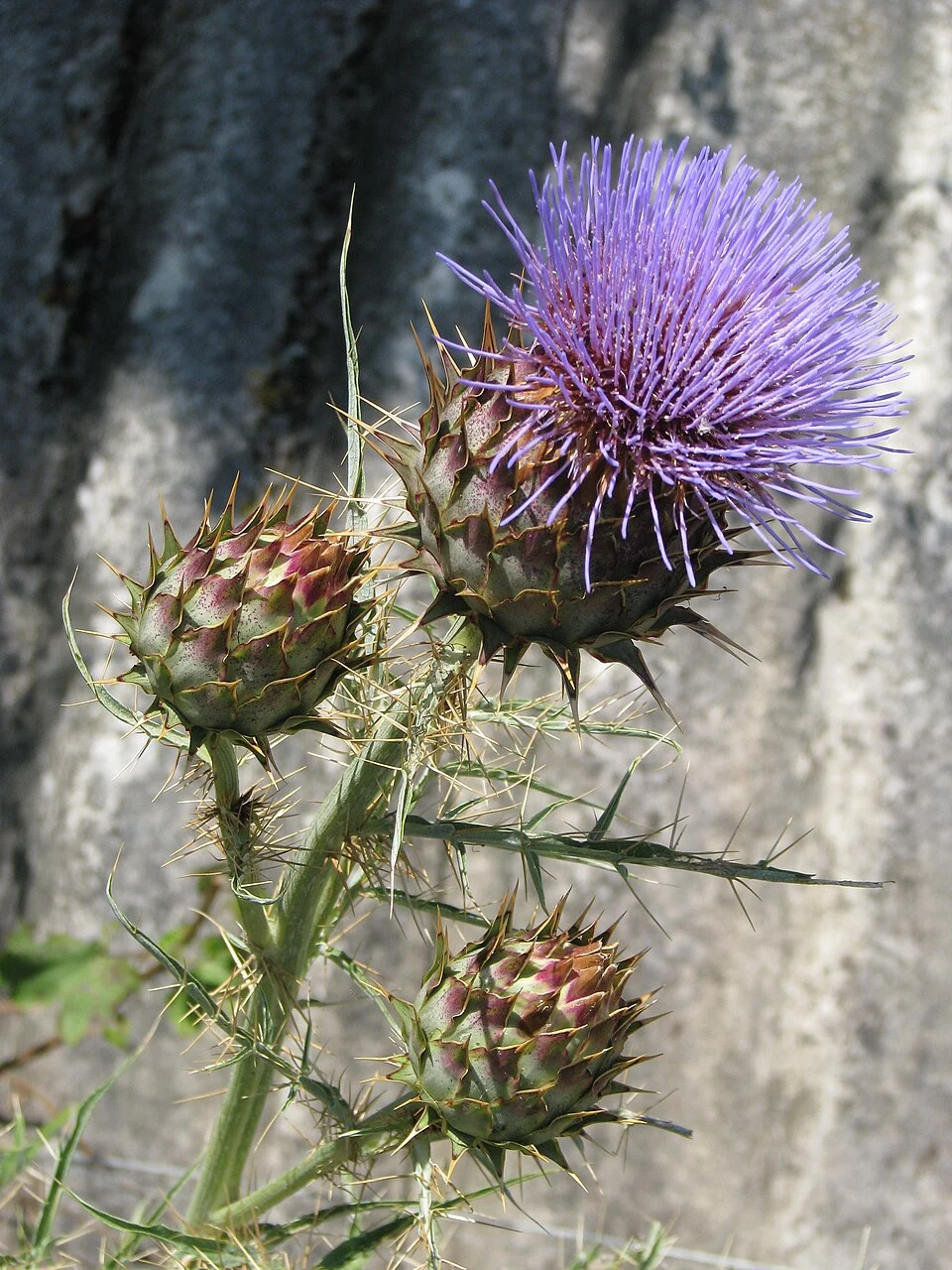
Image
source:https://plants.ces.ncsu.edu/plants/cynara-cardunculus/
▍Morphological Features
- Height: Typically 1-1.5 meters tall, but
can grow up to
2
meters in optimal conditions
- Stem: Strong and upright, branching near
the top,
covered
with fine hairs or spines depending on variety
- Leaves: Large, deeply lobed, grey-green in
color, with
sharp spines at leaf edges; basal leaves are larger and more
pronounced
- Flowers: Large, violet-purple thistle-like
heads
(capitula), approximately 7-15 cm in diameter, enclosed by
tough,
overlapping bracts
- Fruits: Small achenes (often referred to as
seeds) that
develop after flowering
- Roots: Extensive root system designed for
efficient
water
and nutrient absorption
▍Cultivation Methods
| Parameter |
Specifications |
| Soil Type |
Deep, fertile, well-drained loam or sandy loam soil (pH
6.5-7.0)
|
| Germination Temp |
20-25℃ (Optimal) |
| Planting Density |
60-90cm between plants, 1 meter row spacing |
▍Pest Management
Diseases
- Gray Mold: Control humidity and use fungicides if
necessary
- Root Rot: Ensure good drainage and avoid overwatering
Pests
- Aphids: Use neem oil or insecticidal soap for control
- Snails and Slugs: Manual removal or application of snail
baits
▍Applications
Culinary Use
The flower buds are eaten as a vegetable, prized
for their
delicate flavor and texture
Medicinal Use
Traditionally used for digestive issues due to
its ability
to
stimulate bile production
Ecosystem Services
Serves as a nectar source for bees and other
pollinators,
contributing to biodiversity
Centaurea solstitialis
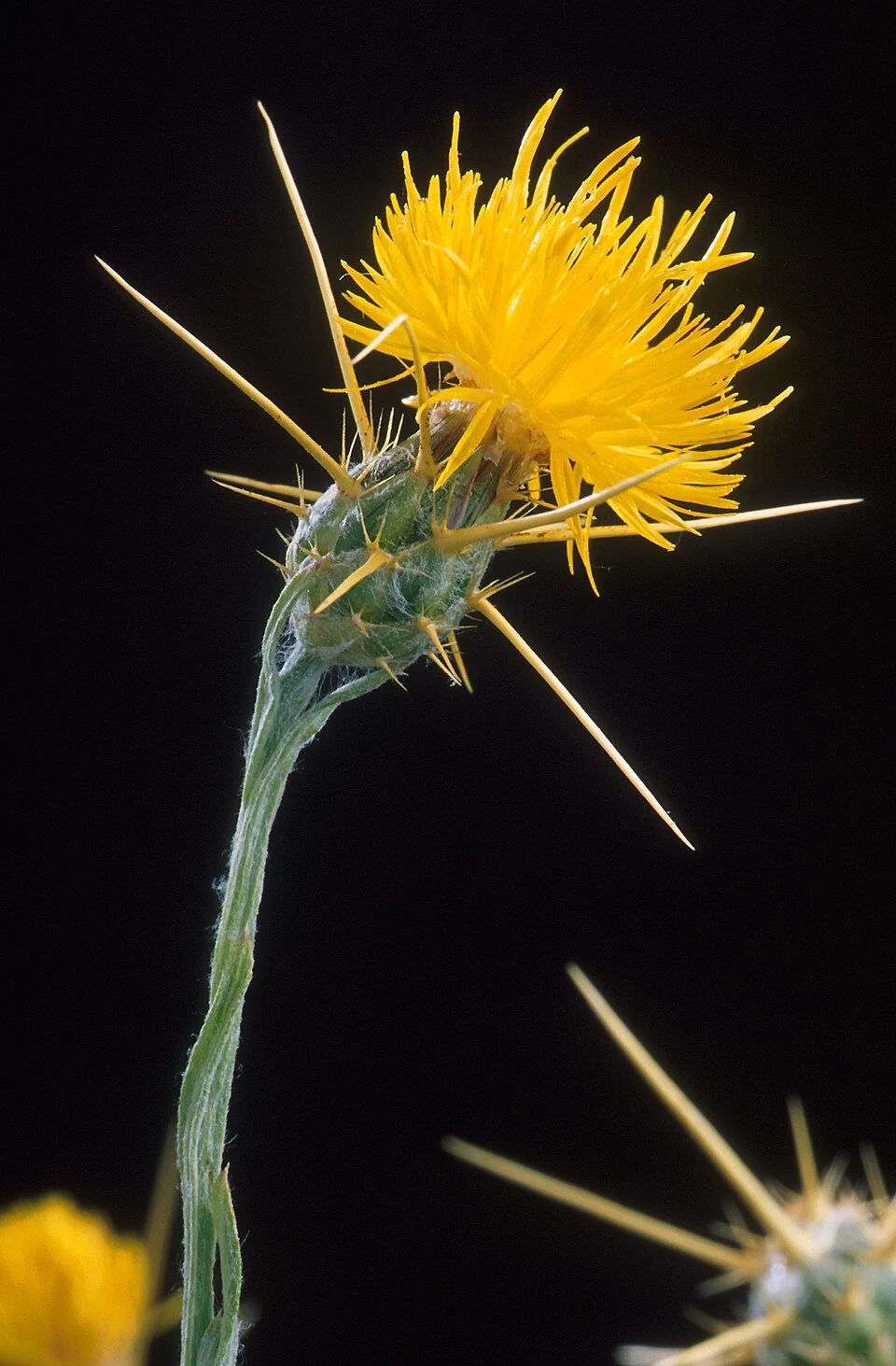
Image
source:https://www.lepetitherboriste.net/photos/centaureedusolstice1.html
▍Morphological Features
- Height: Typically 0.3-1 meter tall, but can
grow up to
2
meters under favorable conditions
- Stem: Erect and branching, often with a
winged
appearance
due to leaf-like structures along the stem
- Leaves: Basal leaves are deeply lobed while
upper
leaves
are narrow and undivided; covered with fine hairs giving a
grayish tint
- Flowers: Bright yellow flowers surrounded
by sharp,
stiff
spines that form a distinctive "star" pattern around the
flower head,
blooming from late spring through summer
- Fruits: Small achenes (seeds) with a pappus
for wind
dispersal
- Roots: Taproot system with lateral roots
for efficient
water uptake
▍Cultivation Methods
| Parameter |
Specifications |
| Soil Type |
Prefers well-drained soils, adaptable to various soil types
including sandy
and
gravelly soils (pH 6.0-7.5)
|
| Germination Temp |
15-25℃ (Optimal) |
| Planting Density |
30-40cm between plants, 60-80cm row spacing |
▍Pest Management
Diseases
- Rust: Apply sulfur-based fungicides as needed
- Root Rot: Ensure proper drainage and avoid overwatering
Pests
- Aphids: Use neem oil or insecticidal soap for control
- Spider Mites: Control by increasing humidity and using
insecticidal soap
or
neem oil
▍Applications
Invasive Species
Despite its ornamental value, Centaurea
solstitialis is
considered an invasive species in many parts of the world,
where it
outcompetes native vegetation.
Ecosystem Impact
It can significantly alter natural habitats,
reducing
biodiversity and changing fire regimes due to its high
flammability when
dry.
Historical Uses
Traditionally used in some regions for medicinal
purposes,
though caution should be exercised due to potential
toxicity.
Chrysanthemum lavandulifolium
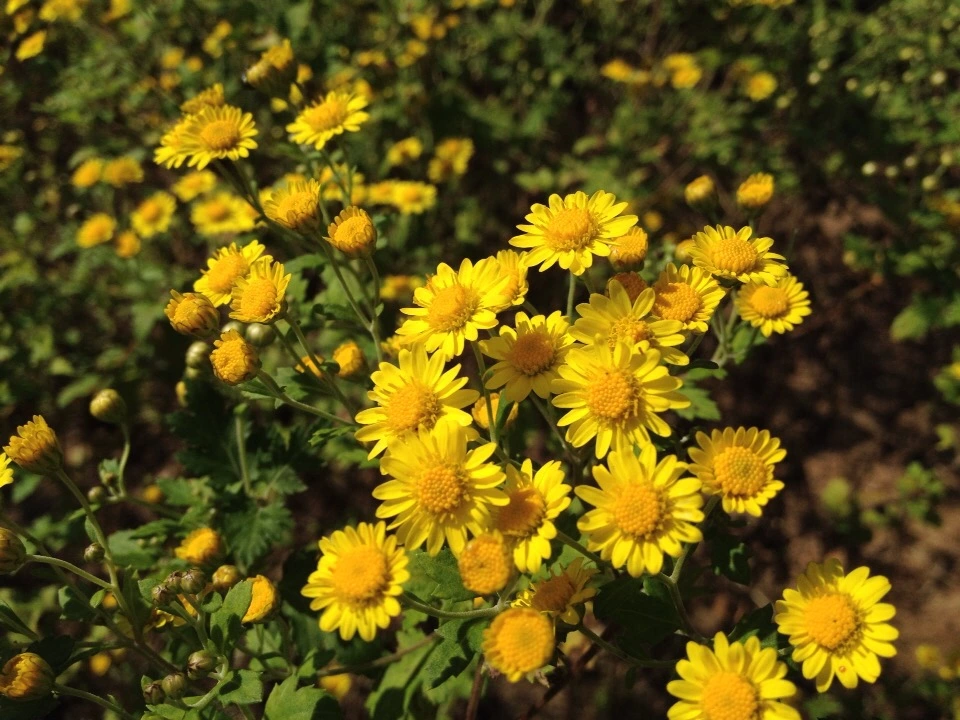
Image
source:https://www.xiaohuasheng.cn/blog/764a04de9bfdaa09
▍Morphological Features
- Height: Typically 0.3-1 meter tall, but can
reach up to
1.5
meters in optimal conditions
- Stem: Erect and branching, often covered
with fine
hairs or
a woolly texture
- Leaves: Narrow, linear to lanceolate,
resembling
lavender
leaves, grayish-green in color, and alternately arranged
along the stem
- Flowers: Small daisy-like flowers, usually
white or
pale
yellow, appearing in clusters at the ends of branches,
blooming from
late
spring to early summer
- Fruits: Tiny achenes without pappus,
dispersed by wind
or
animals
- Roots: Fibrous root system that supports
growth and
spread
▍Cultivation Methods
| Parameter |
Specifications |
| Soil Type |
Well-drained loam or sandy soil; tolerant of poor soils (pH
6.0-7.5)
|
| Germination Temp |
18-22℃ (Optimal) |
| Planting Density |
30-40cm between plants, 60-70cm row spacing |
▍Pest Management
Diseases
- Rust: Apply appropriate fungicides as needed and ensure good
air
circulation
- Root Rot: Ensure proper drainage and avoid overwatering
Pests
- Aphids: Use neem oil or insecticidal soap for control
- Spider Mites: Control by increasing humidity and using
insecticidal soap
or
neem oil
▍Applications
Medicinal Use
Traditionally used in herbal medicine for its
anti-inflammatory
properties and to treat colds and headaches
Landscape Design
Used in borders, rock gardens, or as ground
cover due to its
attractive foliage and flowers
Cultural Significance
Valued in traditional Chinese medicine and has
cultural
importance in certain regions for its medicinal uses
Chrysanthemum makinoi
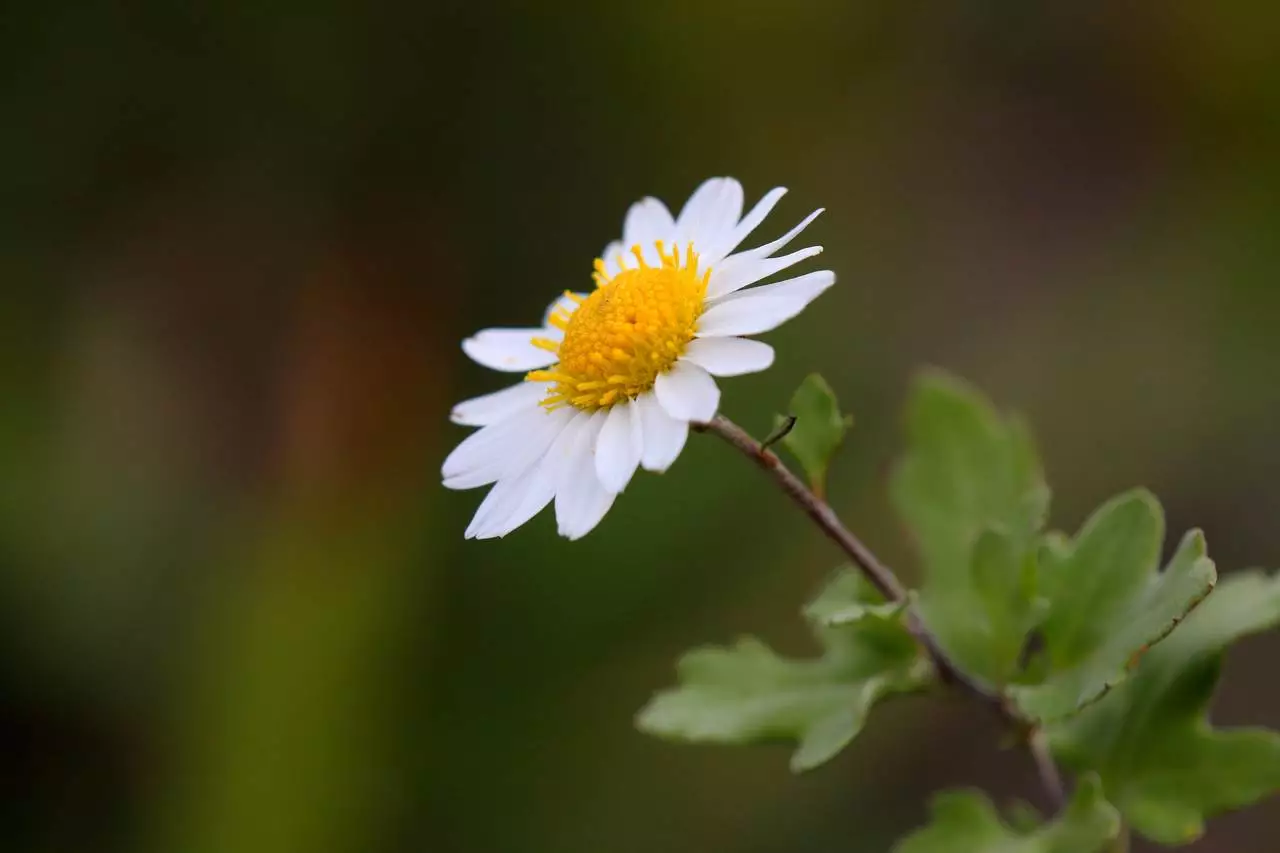
Image
source:http://wildplantsshimane.jp/Plates/Chrysanthemum_makinoi.htm
▍Morphological Features
- Height: Typically 0.3-0.6 meters tall,
forming compact
mounds or low-growing mats
- Stem: Multiple branching stems that are
often woody at
the
base, covered with fine hairs
- Leaves: Small, ovate to elliptical leaves,
dark green
in
color, with slightly serrated edges; arranged alternately
along the stem
- Flowers: Small, daisy-like flowers with
white or pale
yellow ray florets and a yellow center disk, blooming from
late spring
to
early summer
- Fruits: Tiny achenes without pappus,
dispersed by wind
or
animals
- Roots: Shallow but dense root system,
aiding in
stability
and nutrient absorption
▍Cultivation Methods
| Parameter |
Specifications |
| Soil Type |
Well-drained sandy loam or loam soil, prefers neutral to
slightly acidic
soil
(pH 6.0-7.0)
|
| Germination Temp |
18-22℃ (Optimal) |
| Planting Density |
20-30cm between plants, 40-50cm row spacing for mass planting
|
▍Pest Management
Diseases
- Fungal Diseases: Ensure good air circulation and avoid
overhead
watering;
apply fungicides as needed
- Root Rot: Improve drainage and avoid overwatering
Pests
- Aphids: Use neem oil or insecticidal soap for control
- Spider Mites: Increase humidity around plants and use
appropriate
pesticides
▍Applications
Landscape Design
Ideal for borders, rock gardens, and ground
cover due to its
compact size and attractive foliage
Erosion Control
Its dense growth habit makes it useful for
stabilizing
slopes
and preventing soil erosion
Cultural Significance
While not widely known outside of its native
habitat, it
holds
potential for traditional uses and ornamental gardening
Chrysanthemum morifolium
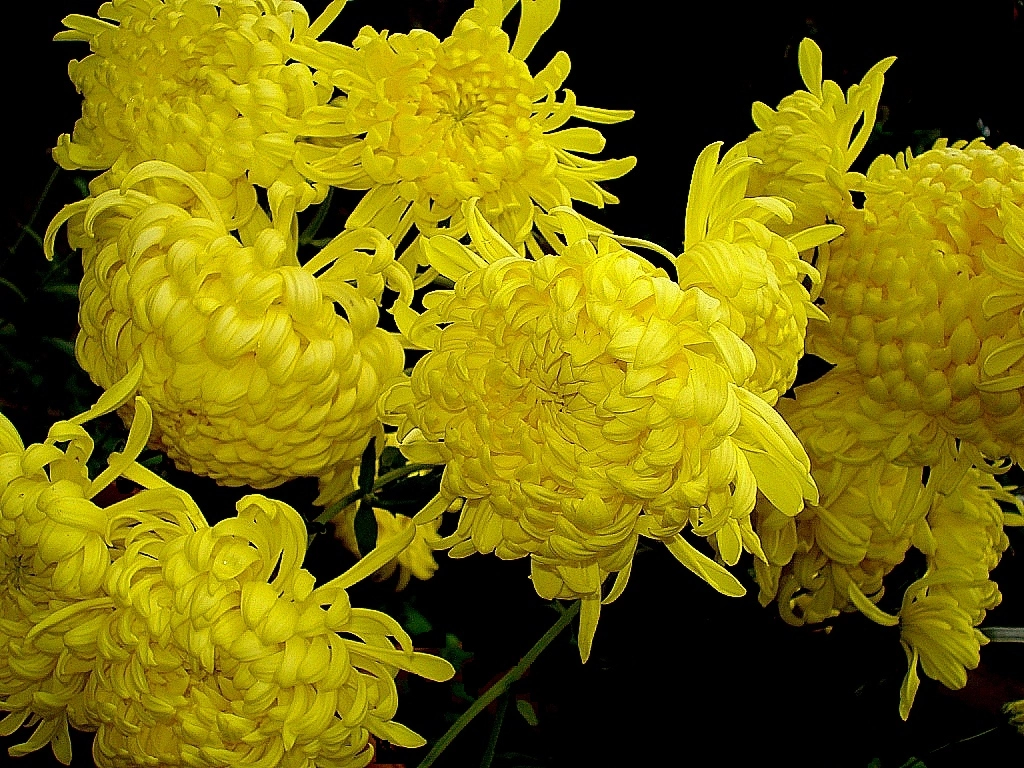
Image
source:https://www.cramer.ca/fr/plantes/chrysanthemum-morifolium-5/
▍Morphological Features
- Height: Ranges from 0.5 to 1 meter, but can
be pruned
or
trained to different shapes and sizes
- Stem: Upright and branching, often with a
woody base;
covered in fine hairs or glabrous depending on variety
- Leaves: Broadly ovate to lanceolate, deeply
lobed or
toothed, dark green and somewhat glossy, arranged
alternately along the
stem
- Flowers: Large, showy blooms available in
various
colors
including yellow, white, red, purple, and pink. Flowers are
composite,
consisting of ray florets surrounding disc florets
- Fruits: Tiny achenes without pappus,
dispersed by wind
or
animals
- Roots: Fibrous root system that is
relatively shallow
but
extensive for nutrient uptake
▍Cultivation Methods
| Parameter |
Specifications |
| Soil Type |
Well-drained loam or sandy loam soil with high organic matter
content (pH
6.5-7.5)
|
| Germination Temp |
20-25℃ (Optimal) |
| Planting Density |
30-50cm between plants, 60-90cm row spacing depending on desired
size and
shape
|
▍Pest Management
Diseases
- Gray Mold (Botrytis): Ensure good air circulation, avoid
overhead
watering,
and use fungicides if necessary
- Rust: Apply sulfur-based fungicides as needed and ensure
proper plant
hygiene
Pests
- Aphids: Use neem oil or insecticidal soap for control
- Spider Mites: Increase humidity around plants and use
appropriate
pesticides
▍Applications
Cultural Significance
Highly valued in Chinese culture, particularly
during the
Double
Ninth Festival, symbolizing longevity and vitality
Medicinal Uses
Used in traditional Chinese medicine for its
cooling
properties
and ability to treat eye diseases, headaches, and other
ailments
Landscape Design
Widely used in gardens and landscaping due to
its beautiful
flowers, making it perfect for borders, beds, and
containers
Chrysanthemum nankingense
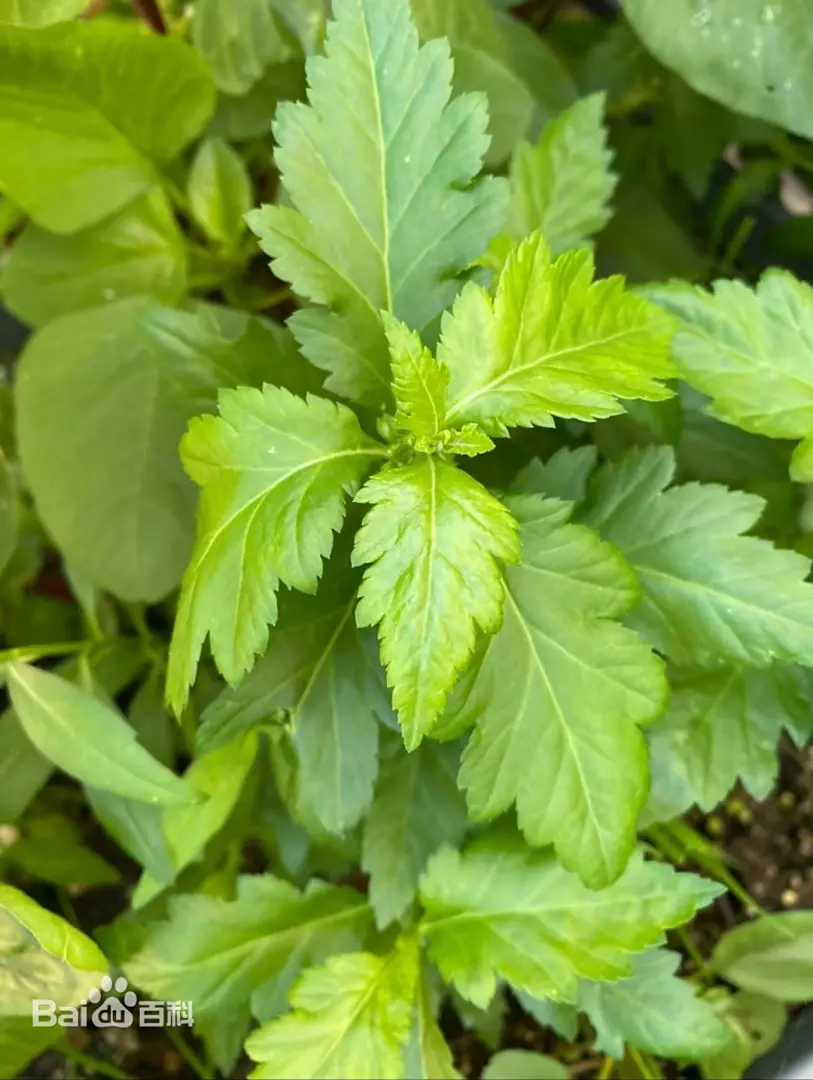
Image
source:https://www.labouichere.com/product-page/chrysanthemum-nankingense
▍Morphological Features
- Height: Typically 0.5 to 1 meter tall, but
can be
pruned
for desired height and shape
- Stem: Upright and branching, often with a
woody base;
may
have fine hairs or be smooth depending on the variety
- Leaves: Lobed or toothed leaves, medium
green in color,
arranged alternately along the stem
- Flowers: Small to medium-sized daisy-like
flowers,
typically white or pale yellow with yellow centers, blooming
from late
summer to autumn
- Fruits: Tiny achenes without pappus,
dispersed by wind
or
animals
- Roots: Fibrous root system that is
relatively shallow
but
spreads widely to support growth
▍Cultivation Methods
| Parameter |
Specifications |
| Soil Type |
Well-drained loam or sandy soil enriched with organic matter (pH
6.0-7.5)
|
| Germination Temp |
20-25℃ (Optimal) |
| Planting Density |
40-50cm between plants, 60-80cm row spacing for optimal growth
|
▍Pest Management
Diseases
- Fungal Diseases: Ensure good air circulation and avoid
overhead
watering;
use fungicides as necessary
- Root Rot: Ensure proper drainage and avoid overwatering
Pests
- Aphids: Use neem oil or insecticidal soap for control
- Spider Mites: Control by increasing humidity and using
appropriate
pesticides
▍Applications
Landscape Design
Used in borders, rock gardens, and naturalistic
settings due
to
its attractive foliage and long-lasting blooms
Medicinal Uses
Traditionally valued in Chinese medicine for
treating
various
ailments including colds, headaches, and eye problems
Cultural Significance
Has historical significance in China,
particularly
associated
with the city of Nanjing and its cultural heritage
Cichorium intybus
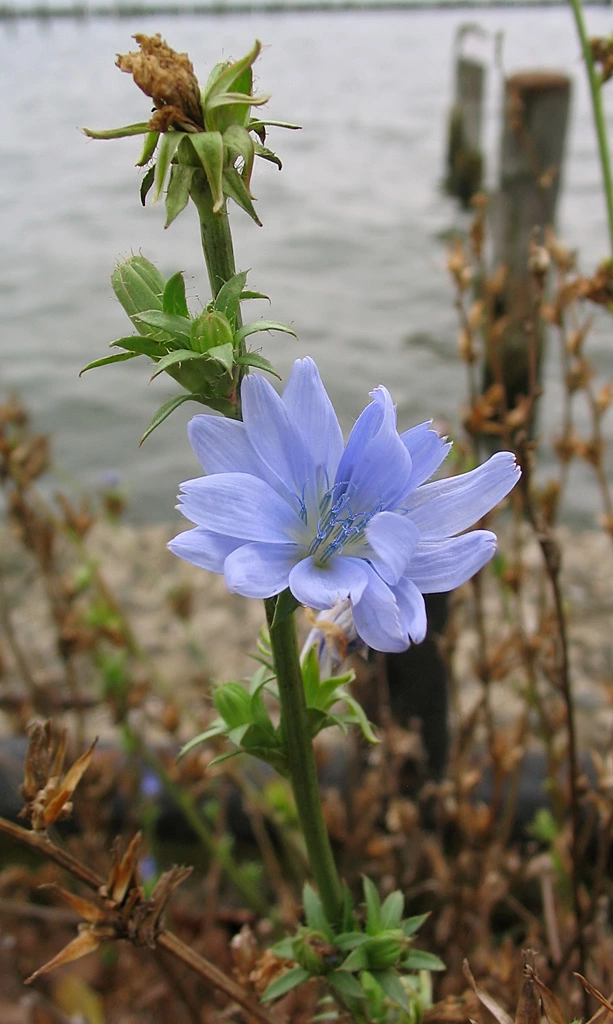
Image
source:https://mywildflowers.com/detail.asp?photo=2019/mtr205
▍Morphological Features
- Height: Typically 30-100 cm tall, with some
varieties
growing taller under favorable conditions
- Stem: Erect and branching, often tinged
with purple or
red;
covered with small hairs
- Leaves: Basal leaves are large, lobed or
toothed, while
stem leaves are smaller and less divided. Leaves are dark
green and have
a
slightly bitter taste
- Flowers: Bright blue flowers, occasionally
white or
pink,
arranged in solitary heads on long stalks. Blooms from July
to October
- Fruits: Small achenes (often referred to as
seeds),
dispersed by wind
- Roots: Deep taproot that can reach depths
of up to 2
meters, aiding in drought tolerance
▍Cultivation Methods
| Parameter |
Specifications |
| Soil Type |
Well-drained soils, prefers loamy or sandy soils but adaptable
to various
soil
types (pH 5.5-7.5)
|
| Germination Temp |
15-20℃ (Optimal) |
| Planting Density |
30-40cm between plants, 60-90cm row spacing for optimal growth
|
▍Pest Management
Diseases
- Rust: Use fungicides as needed and ensure good air
circulation around
plants
- Root Rot: Improve drainage and avoid overwatering
Pests
- Aphids: Use neem oil or insecticidal soap for control
- Snails and Slugs: Manual removal or application of snail
baits
▍Applications
Culinary Uses
Used as a salad vegetable, particularly the
young leaves
which
are less bitter. Roots are roasted and used as a coffee
substitute
Medicinal Uses
Traditionally used to treat digestive issues,
liver
problems,
and as a general tonic due to its high inulin content
Ecosystem Services
Serves as an important nectar source for bees
and other
pollinators, contributing to biodiversity
Cichorium endivia
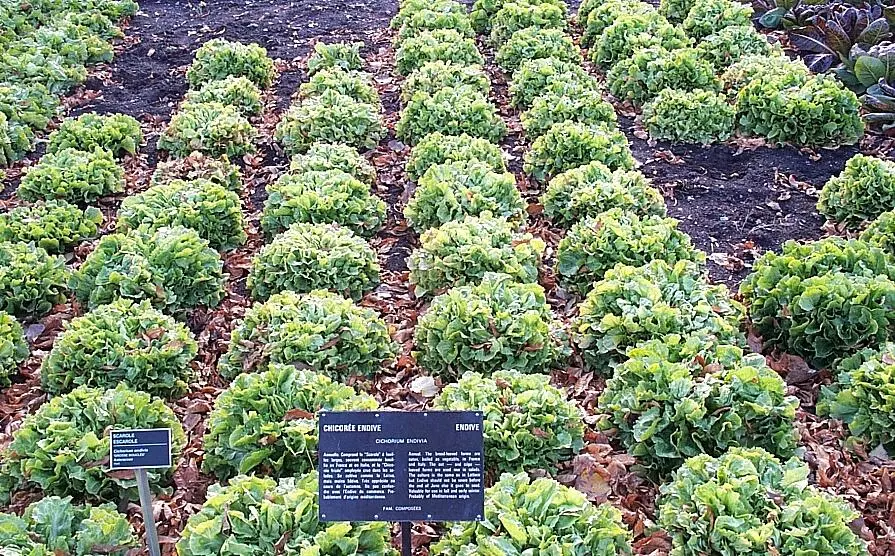
Image source:https://www.wildfind.com/pflanzen/endivie
▍Morphological Features
- Height: Typically grows to about 30-60 cm
tall, with a
compact growth habit
- Stem: Upright and branching, often with a
smooth
surface
- Leaves: Leaves are deeply lobed or finely
divided,
depending on the variety. The color ranges from light green
to dark
green,
sometimes with red tinges
- Flowers: Small, blue flowers similar to
other members
of
the Asteraceae family. Blooming occurs in the second year if
grown as a
biennial
- Fruits: Achenes (often called seeds), which
are
dispersed
by wind
- Roots: Taproot system that is relatively
shallow
compared
to its wild relatives
▍Cultivation Methods
| Parameter |
Specifications |
| Soil Type |
Well-drained soil rich in organic matter; prefers slightly
acidic to neutral
soils (pH 6.0-7.0)
|
| Germination Temp |
18-22℃ (Optimal) |
| Planting Density |
20-30cm between plants, 40-50cm row spacing for optimal growth
|
▍Pest Management
Diseases
- Downy Mildew: Ensure good air circulation and avoid overhead
watering;
apply
fungicides as necessary
- Rust: Apply sulfur-based fungicides and ensure proper plant
hygiene
Pests
- Aphids: Use neem oil or insecticidal soap for control
- Cabbage Worms: Handpick or use Bacillus thuringiensis (Bt)
products
▍Applications
Culinary Uses
Popular in salads for its slightly bitter taste
and crunchy
texture; can be cooked as well, offering a more mild
flavor
Nutritional Value
High in fiber, vitamins A and K, and
antioxidants, making it
a
healthy addition to any diet
Ecosystem Services
Can attract beneficial insects like bees and
butterflies,
supporting local pollinator populations
Chrysanthemum indicum
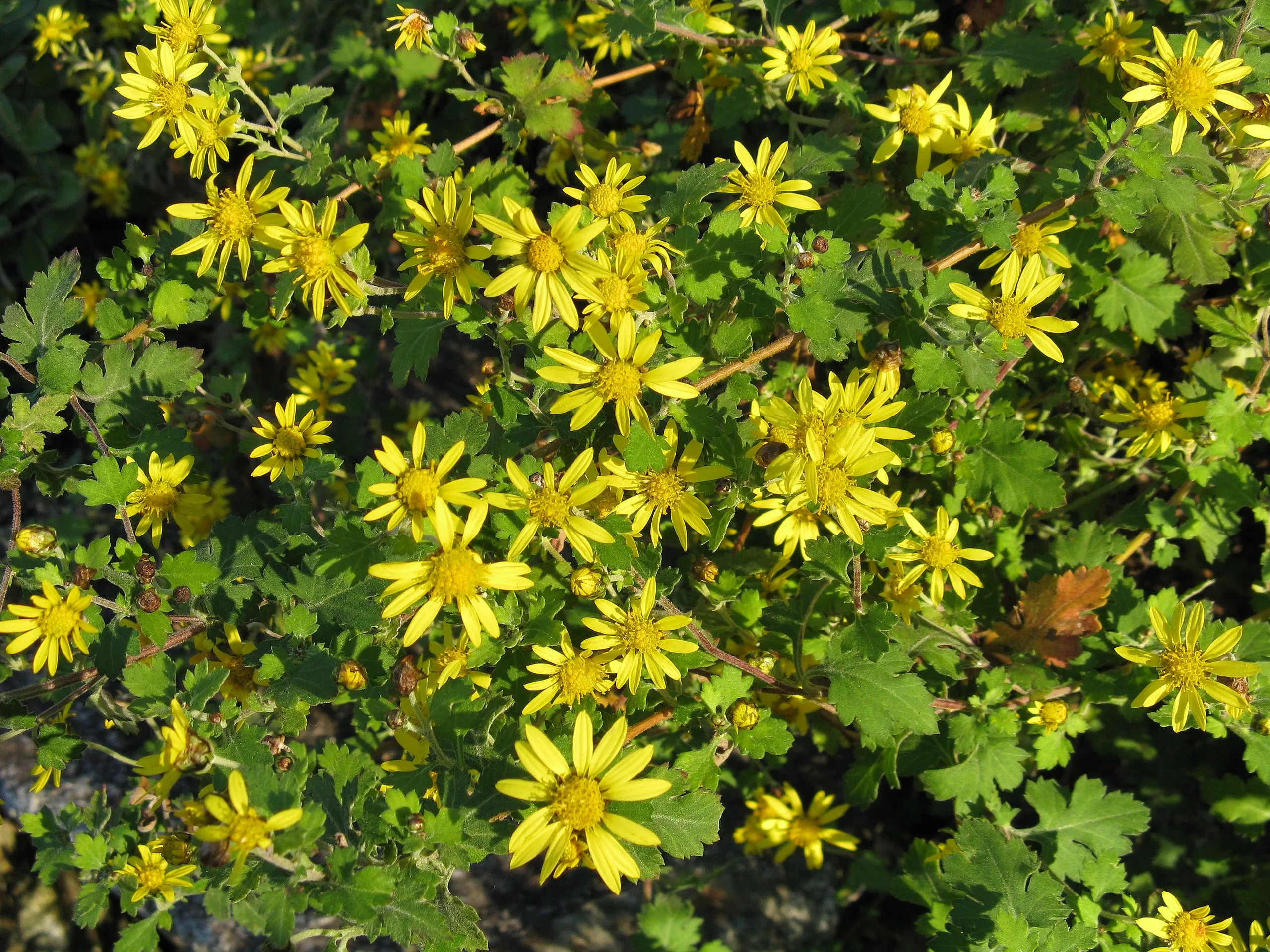
Image
source:https://tracuuduoclieu.vn/chrysanthemum-indicum-l.html
▍Morphological Features
- Height: Typically grows from 30 to 100 cm
tall, forming
a
bushy shape.
- Stem: Erect and branching, covered with
fine hairs or
glabrous depending on the variety.
- Leaves: Pinnately divided leaves that are
dark green in
color, with each lobe being ovate to lanceolate.
- Flowers: Small daisy-like flowers, usually
yellow but
can
also be white. Blooms appear in late summer to autumn,
growing in
clusters
at the end of branches.
- Fruits: Tiny achenes without pappus,
dispersed by wind
or
animals.
- Roots: Fibrous root system that supports
growth and
spread.
▍Cultivation Methods
| Parameter |
Specifications |
| Soil Type |
Well-drained loam or sandy soil; tolerates poor soils (pH
6.0-7.5)
|
| Germination Temp |
18-22℃ (Optimal) |
| Planting Density |
30-40cm between plants, 60-70cm row spacing for mass planting
|
▍Pest Management
Diseases
- Fungal Diseases: Ensure good air circulation and avoid
overhead
watering;
apply fungicides as needed
- Root Rot: Improve drainage and avoid overwatering
Pests
- Aphids: Use neem oil or insecticidal soap for control
- Spider Mites: Increase humidity around plants and use
appropriate
pesticides
▍Applications
Medicinal Use
Traditionally used in herbal medicine for its
anti-inflammatory
properties and to treat colds, fever, and other
ailments.
Landscape Design
Used in borders, wild gardens, or naturalistic
settings due
to
its attractive foliage and flowers.
Cultural Significance
Valued in traditional Chinese medicine and has
cultural
importance in certain regions for its medicinal uses.
Cosmos bipinnatus
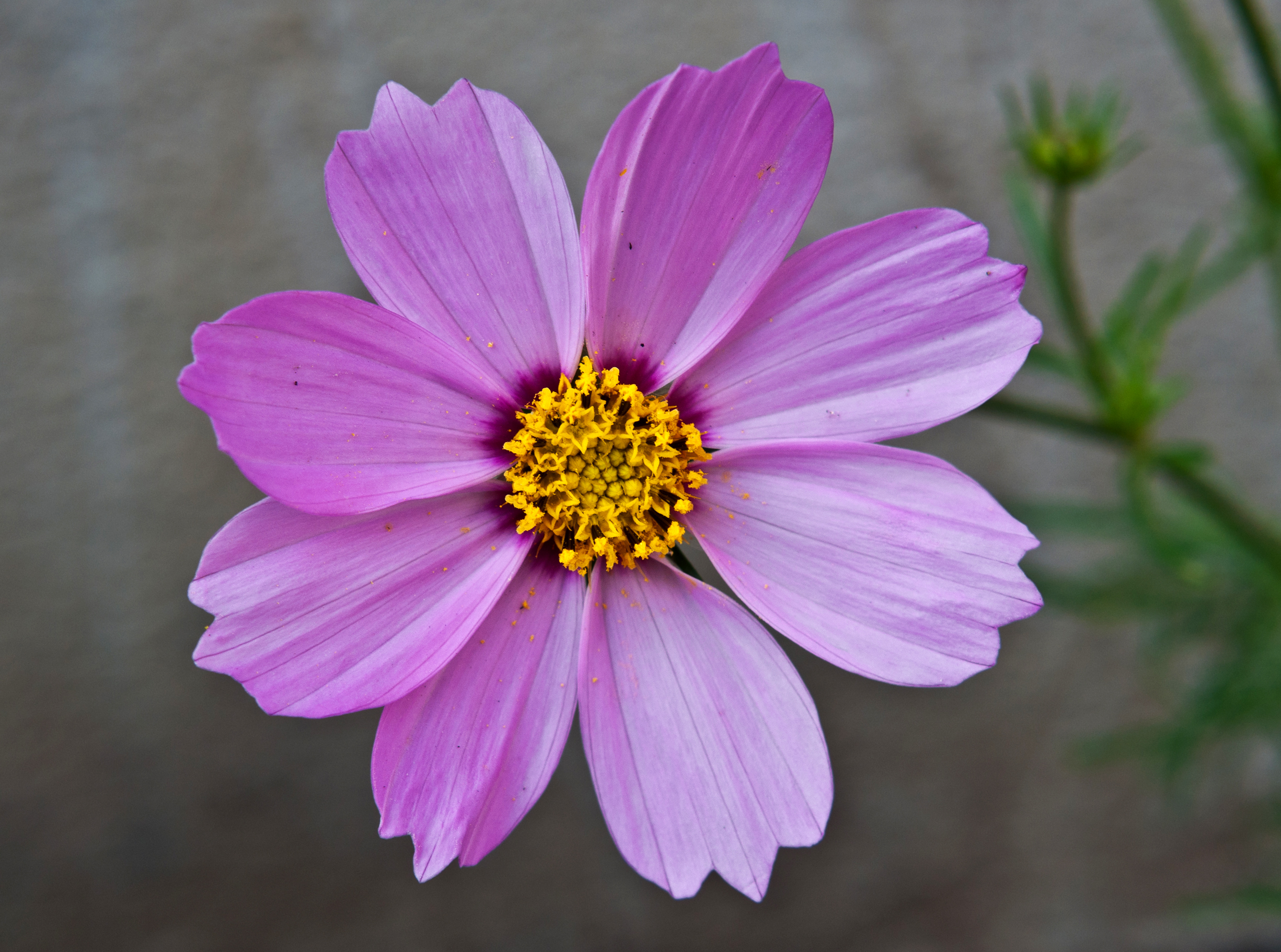
Image
source:https://www.publicdomainpictures.net/en/view-image.php?image=471480&picture=cosmos-bipinnatus
▍Morphological Features
- Height: Typically grows from 0.3 to 2
meters tall,
depending on the variety and growing conditions.
- Stem: Upright and branching stems that are
somewhat
hairy.
- Leaves: Pinnately divided leaves that are
finely cut
into
linear segments, giving them a delicate appearance.
- Flowers: Daisy-like flowers in a wide range
of colors
including white, pink, red, and purple with yellow centers.
Blooms
appear
from early summer until the first frost.
- Fruits: Small achenes without pappus,
dispersed by wind
or
animals.
- Roots: Fibrous root system supporting its
upright
growth.
▍Cultivation Methods
| Parameter |
Specifications |
| Soil Type |
Well-drained soil; adaptable to various soil types but prefers
slightly
acidic
to neutral soils (pH 6.0-7.0).
|
| Germination Temp |
18-24℃ (Optimal) |
| Planting Density |
30-45cm between plants, 45-60cm row spacing for optimal growth
and air
circulation.
|
▍Pest Management
Diseases
- Fungal Diseases: Ensure good air circulation and avoid
overhead
watering;
apply fungicides as necessary.
- Viral Diseases: Control aphids which can transmit viruses;
remove
infected
plants promptly.
Pests
- Aphids: Use neem oil or insecticidal soap for control.
- Leaf Miners: Remove affected leaves and use appropriate
pesticides if
infestation is severe.
▍Applications
Landscape Design
Ideal for borders, beds, wildflower gardens, and
as cut
flowers
due to their long blooming period and vibrant colors.
Ecological Value
Attracts pollinators such as bees and
butterflies,
contributing
to biodiversity in the garden.
Cultural Significance
Often used in cultural celebrations and floral
decorations
around the world for its beauty and symbolism of order,
peace, and
tranquility.
Centrapalus pauciflorus
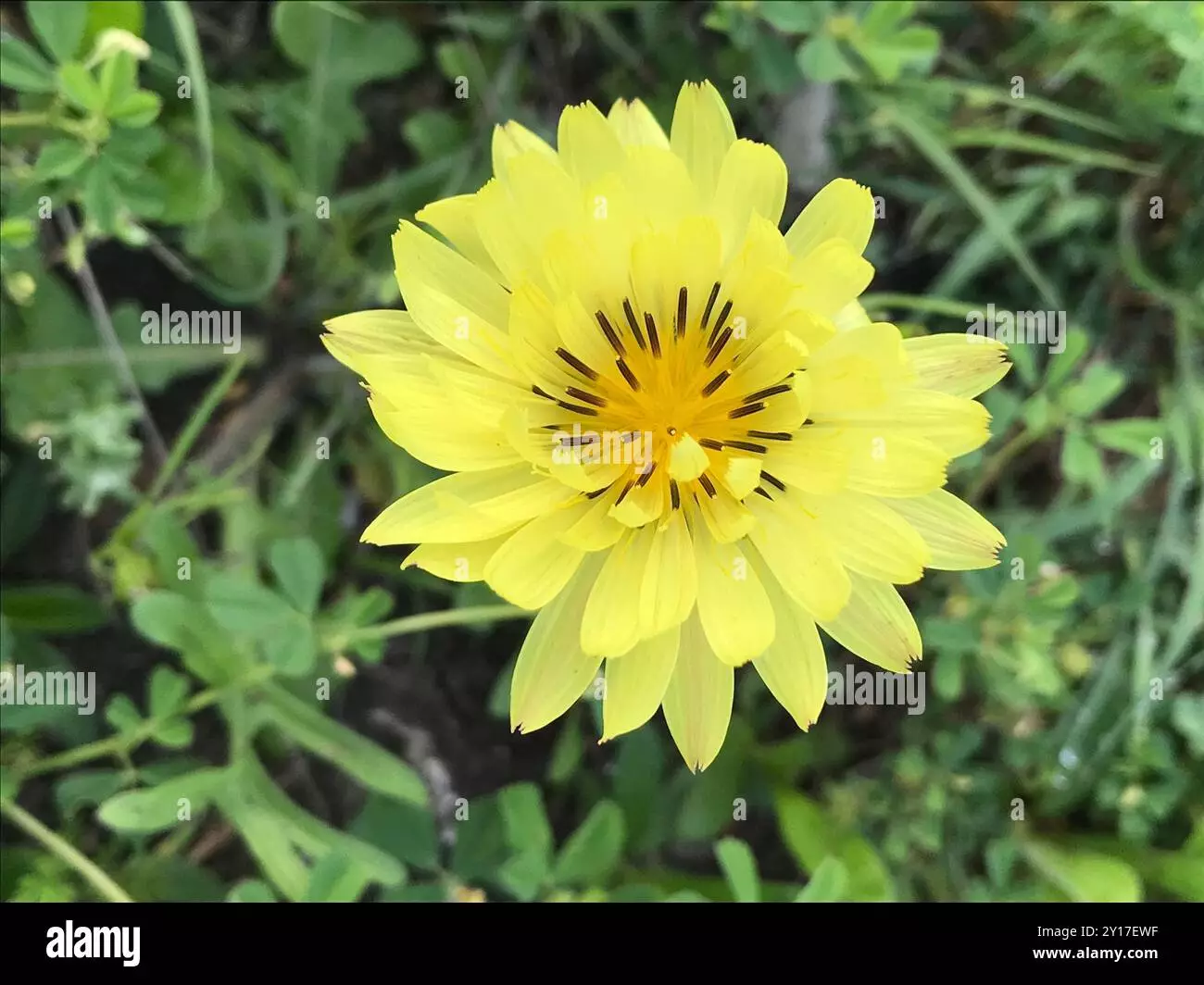
Image source: Internet. Removed if infringing.
▍Morphological Features
- Height: Typically grows from 0.5 to 1 meter
tall, but
can
reach up to 2 meters under optimal conditions.
- Stem: Upright and branched stems, often
covered with
fine
hairs giving them a rough texture.
- Leaves: Narrow, lance-shaped leaves that
are
alternately
arranged along the stem, typically dark green in color.
- Flowers: Small purple flowers grouped into
dense
clusters
or heads, blooming mainly during late summer to early
autumn.
- Fruits: Tiny achenes with pappus attached
for wind
dispersal.
- Roots: Deep taproot system which helps it
survive in
various environmental conditions.
▍Cultivation Methods
| Parameter |
Specifications |
| Soil Type |
Prefers well-drained soils; adaptable to sandy or loamy soil
types (pH
6.0-7.5).
|
| Germination Temp |
20-25℃ (Optimal) |
| Planting Density |
40-50cm between plants, 60-80cm row spacing for best growth and
flowering.
|
▍Pest Management
Diseases
- Fungal Diseases: Ensure good air circulation around the
plants and avoid
overhead watering; apply fungicides if necessary.
- Root Rot: Improve drainage and avoid overwatering.
Pests
- Aphids: Use neem oil or insecticidal soap for control.
- Spider Mites: Increase humidity around plants and use
appropriate
pesticides.
▍Applications
Landscape Design
Suitable for wild gardens, borders, and
naturalistic
settings
due to its attractive purple blooms and ability to attract
pollinators.
Medicinal Uses
Traditionally used in herbal medicine for
treating digestive
issues and skin ailments due to its anti-inflammatory
properties.
Ecosystem Services
Serves as an important nectar source for bees
and
butterflies,
contributing positively to local biodiversity.
Dahlia pinnata
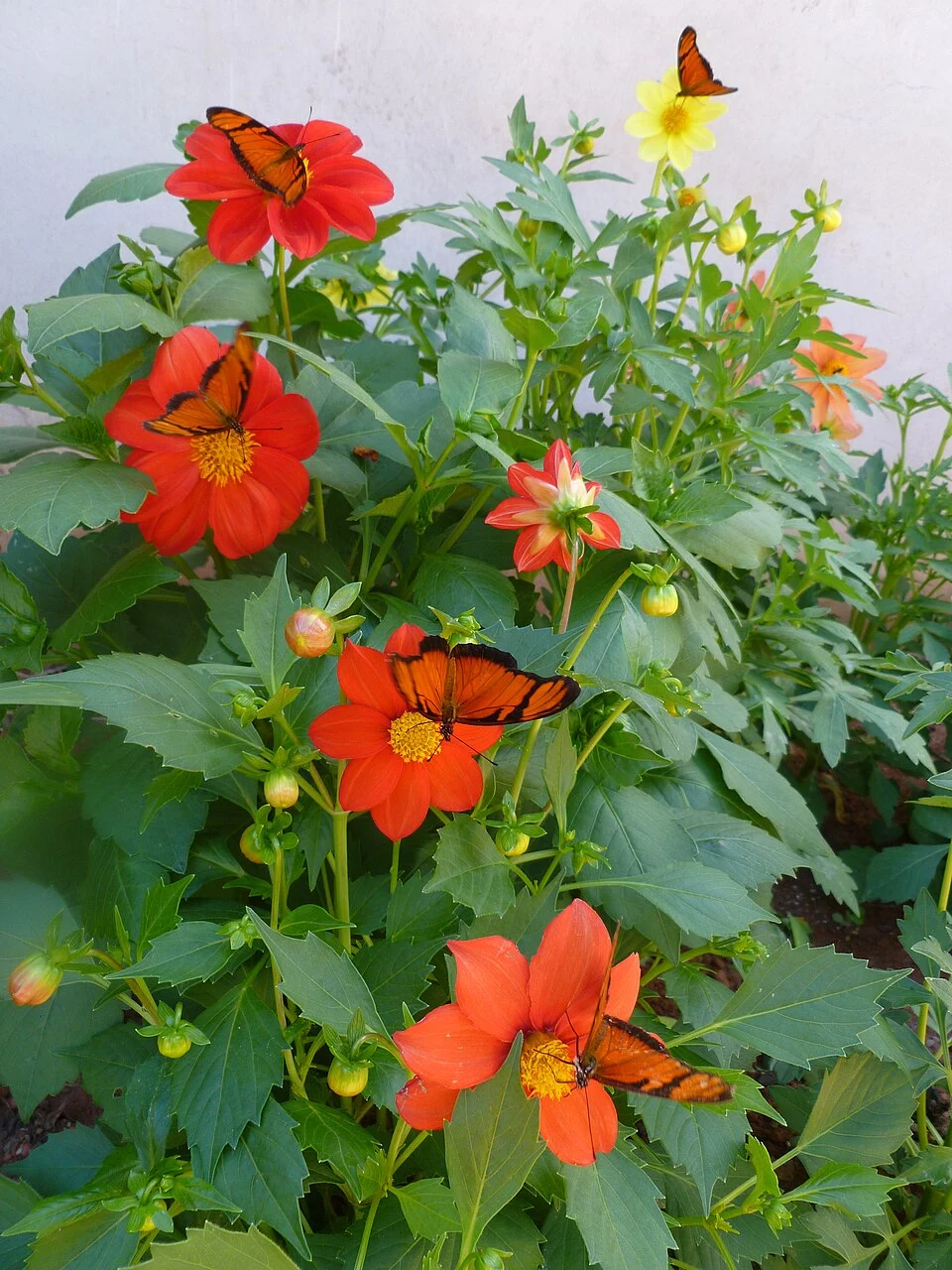
Image
source:https://worldoffloweringplants.com/dahlia-pinnata-garden-dahlia/
▍Morphological Features
- Height: Ranges from 30 cm to over 1.5
meters tall,
depending on the variety.
- Stem: Upright and sturdy, often with a
branching habit
that
supports multiple flowers.
- Leaves: Pinnate leaves composed of numerous
leaflets,
which
are usually dark green and slightly hairy.
- Flowers: Large, showy blooms in a wide
range of colors
including red, pink, orange, yellow, white, and bi-colors.
Flower shapes
vary widely from simple daisy-like forms to complex cactus
types.
- Fruits: Small dry fruits known as achenes,
typically
dispersed by wind or animals.
- Roots: Tuberous roots that store nutrients
for growth
during the next season.
▍Cultivation Methods
| Parameter |
Specifications |
| Soil Type |
Rich, well-drained soil; prefers loamy soils (pH 6.0-7.0). |
| Germination Temp |
20-25℃ (Optimal) |
| Planting Density |
45-60cm between plants, 60-90cm row spacing for optimal growth
and air
circulation.
|
▍Pest Management
Diseases
- Fungal Diseases: Ensure good air circulation around the
plants and avoid
overhead watering; apply fungicides if necessary.
- Viral Diseases: Control aphids which can transmit viruses;
remove
infected
plants promptly.
Pests
- Aphids: Use neem oil or insecticidal soap for control.
- Thrips: Monitor regularly and use appropriate pesticides if
necessary.
▍Applications
Garden Design
Popular for garden beds, borders, and containers
due to its
spectacular blooms and varied flower forms.
Cut Flowers
Widely used in floral arrangements because of
their long
vase
life and vibrant colors.
Ecosystem Services
Attracts pollinators like bees and butterflies,
contributing
positively to local biodiversity.
Deinandra increscens
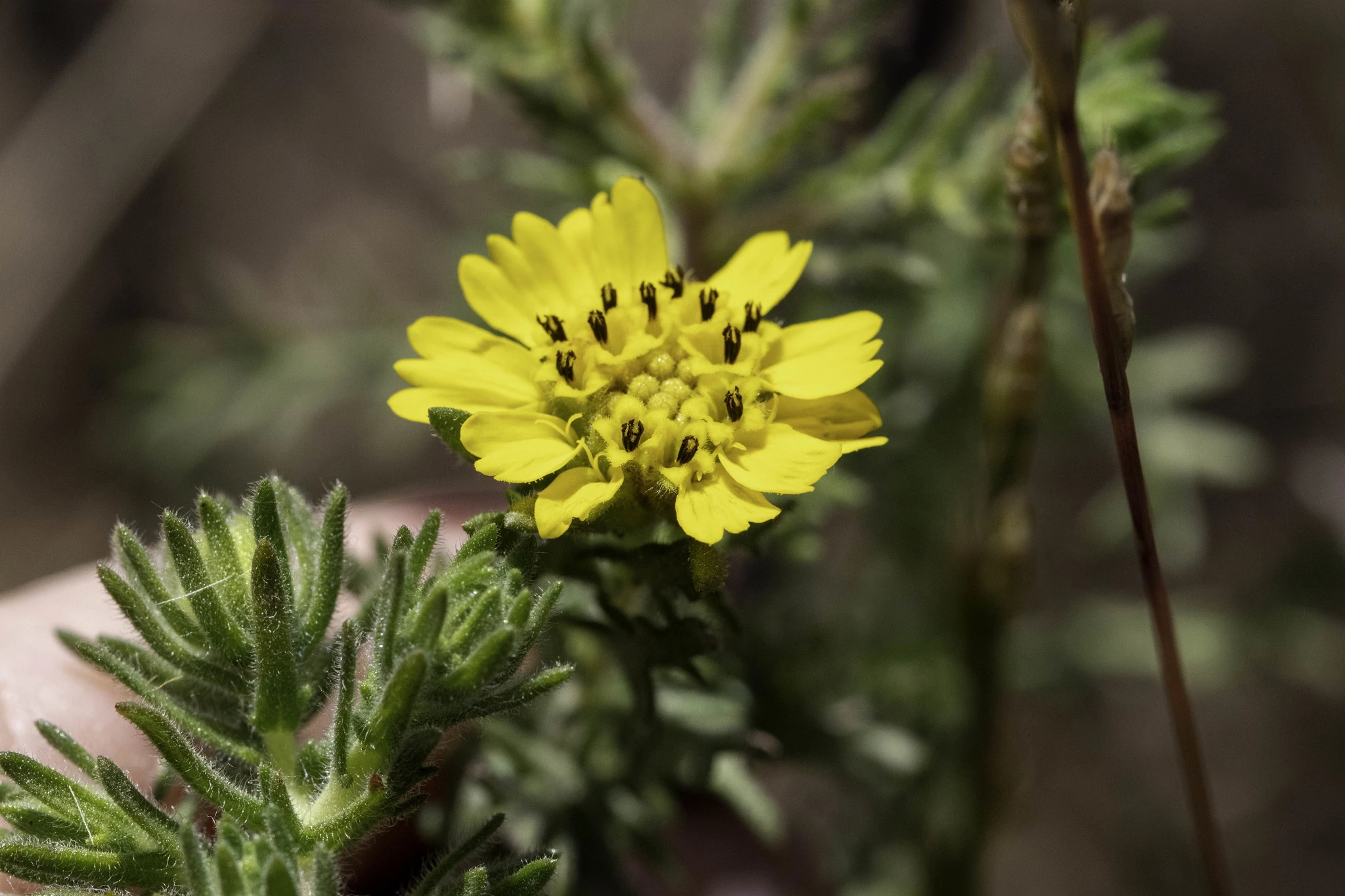
Image
source:https://calphotos.berkeley.edu/cgi/img_query?enlarge=0000+0000+1103+0225
▍Morphological Features
- Height: Typically grows from 30 cm to 1
meter tall,
depending on environmental conditions.
- Stem: Upright and branching stems that are
typically
green
but can have a reddish hue in some varieties.
- Leaves: Narrow, linear leaves that are
usually covered
with
fine hairs, giving them a slightly rough texture.
- Flowers: Bright yellow flowers that are
daisy-like,
with a
darker center. Blooms appear mainly during late spring
through summer.
- Fruits: Small achenes without pappus,
dispersed by wind
or
animals.
- Roots: Fibrous root system that helps it
thrive in
various
soil types.
▍Cultivation Methods
| Parameter |
Specifications |
| Soil Type |
Adaptable to a variety of soils including sandy and loamy;
prefers
well-drained
soils (pH 6.0-7.5).
|
| Germination Temp |
18-22℃ (Optimal) |
| Planting Density |
20-30cm between plants, 40-50cm row spacing for optimal growth
and
flowering.
|
▍Pest Management
Diseases
- Fungal Diseases: Ensure good air circulation around the
plants and avoid
overhead watering; apply fungicides if necessary.
- Root Rot: Improve drainage and avoid overwatering.
Pests
- Aphids: Use neem oil or insecticidal soap for control.
- Spider Mites: Increase humidity around plants and use
appropriate
pesticides.
▍Applications
Landscape Design
Ideal for wild gardens, borders, and
naturalistic settings
due
to its bright yellow blooms and ability to attract
pollinators.
Ecosystem Services
Provides an important nectar source for bees and
butterflies,
enhancing local biodiversity.
Restoration Projects
Used in habitat restoration projects due to its
adaptability
and
ecological benefits.
Erigeron canadensis
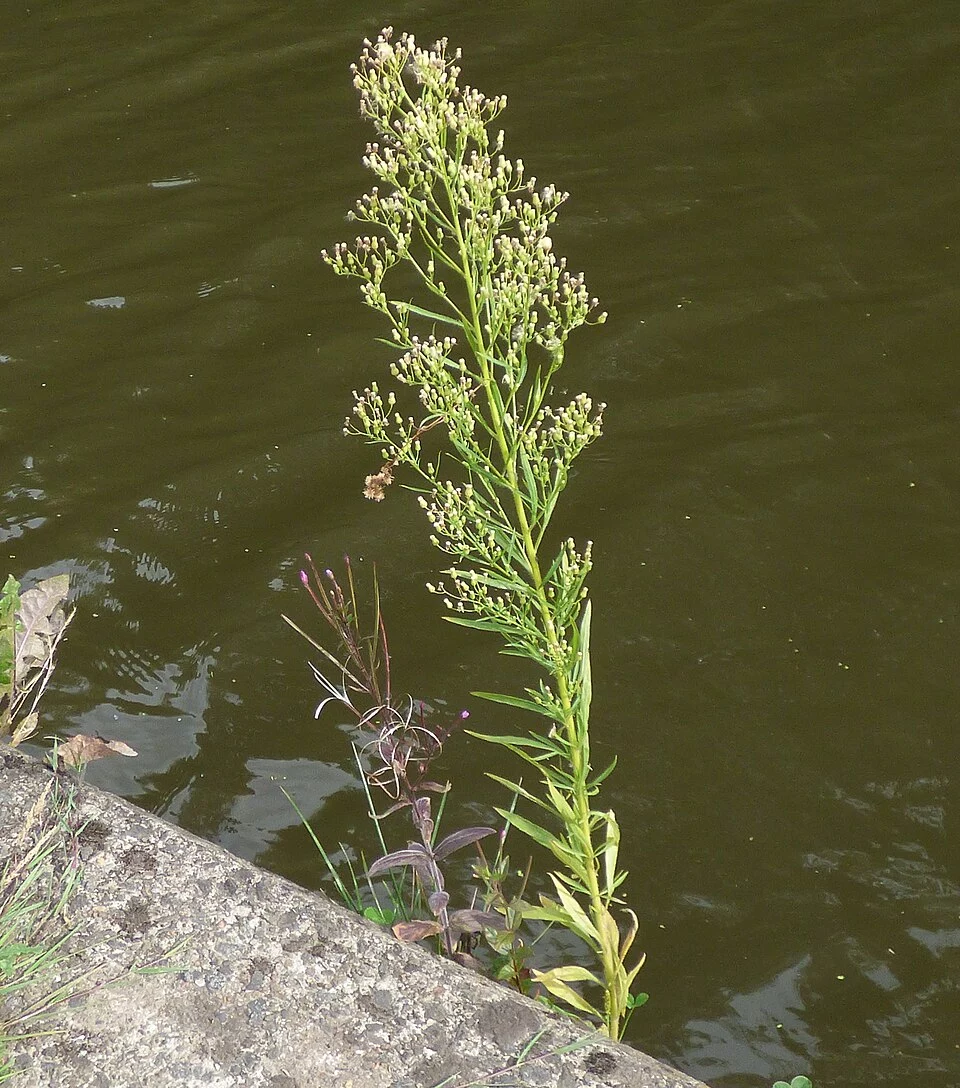
Image
source:https://gobotany.nativeplanttrust.org/species/erigeron/canadensis/
▍Morphological Features
- Height: Typically grows from 30 cm to 2
meters tall,
depending on growing conditions.
- Stem: Upright and branched stems that are
often covered
with fine hairs, giving them a rough texture.
- Leaves: Alternate, lance-shaped leaves with
serrated
edges;
lower leaves may be more rounded and larger than upper
leaves.
- Flowers: Small daisy-like flowers with
white or pale
pink
ray florets surrounding a yellow disk center. Blooms appear
throughout
summer into fall.
- Fruits: Tiny achenes without pappus,
dispersed by wind
or
animals.
- Roots: Fibrous root system that supports
its rapid
growth.
▍Cultivation Methods
| Parameter |
Specifications |
| Soil Type |
Adaptable to various soil types including poor soils; prefers
well-drained
soils
(pH 6.0-7.5).
|
| Germination Temp |
18-22℃ (Optimal) |
| Planting Density |
20-30cm between plants, 40-50cm row spacing for optimal growth
and
flowering.
|
▍Pest Management
Diseases
- Fungal Diseases: Ensure good air circulation around the
plants and avoid
overhead watering; apply fungicides if necessary.
- Root Rot: Improve drainage and avoid overwatering.
Pests
- Aphids: Use neem oil or insecticidal soap for control.
- Spider Mites: Increase humidity around plants and use
appropriate
pesticides.
▍Applications
Ecosystem Services
Despite being considered a weed in some regions,
it serves
as an
important nectar source for bees and butterflies,
contributing
positively to
local biodiversity.
Medicinal Uses
Traditionally used in herbal medicine for its
anti-inflammatory
properties and to treat digestive issues.
Restoration Projects
Due to its adaptability and ability to grow in
disturbed
areas,
it's sometimes used in habitat restoration projects.
Erigeron breviscapus
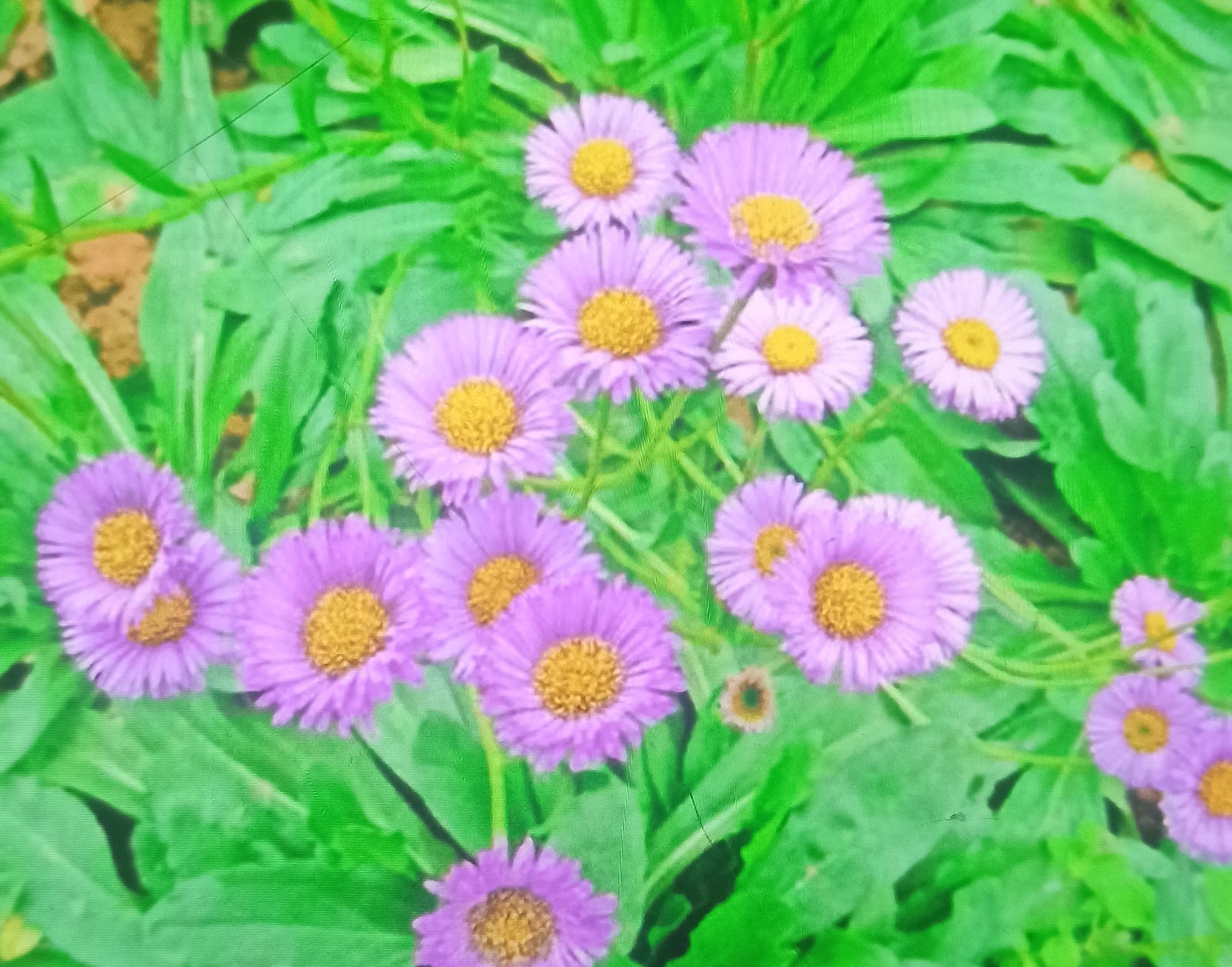
Image source: Internet. Removed if infringing.
▍Morphological Features
- Height: Typically grows from 20 cm to 80 cm
tall, with
a
compact growth habit.
- Stem: Upright stems that are often densely
covered with
fine hairs, giving them a soft texture.
- Leaves: Basal rosette of leaves at the
base, with stem
leaves being smaller and fewer. Leaves are lance-shaped to
elliptic,
with
serrated edges.
- Flowers: Small, daisy-like flowers with
purple or
lavender
ray florets surrounding a yellow disk center. Blooms appear
in late
spring
through summer.
- Fruits: Tiny achenes without pappus,
dispersed by wind
or
animals.
- Roots: Fibrous root system that supports
its growth in
various conditions.
▍Cultivation Methods
| Parameter |
Specifications |
| Soil Type |
Prefers well-drained soils; adaptable to sandy, loamy soil types
(pH
6.0-7.5).
|
| Germination Temp |
15-20℃ (Optimal) |
| Planting Density |
30-40cm between plants, 50-60cm row spacing for optimal growth
and
flowering.
|
▍Pest Management
Diseases
- Fungal Diseases: Ensure good air circulation around the
plants and avoid
overhead watering; apply fungicides if necessary.
- Root Rot: Improve drainage and avoid overwatering.
Pests
- Aphids: Use neem oil or insecticidal soap for control.
- Spider Mites: Increase humidity around plants and use
appropriate
pesticides.
▍Applications
Landscape Design
Suitable for borders, wild gardens, and
naturalistic
settings
due to its attractive purple blooms and ability to attract
pollinators
like
bees and butterflies.
Medicinal Uses
Traditionally used in Chinese herbal medicine
for its
cardiovascular benefits, particularly in improving blood
circulation and
treating cerebrovascular diseases.
Ecosystem Services
Serves as an important nectar source for local
pollinators,
contributing positively to biodiversity.
Euptelea pleiosperma
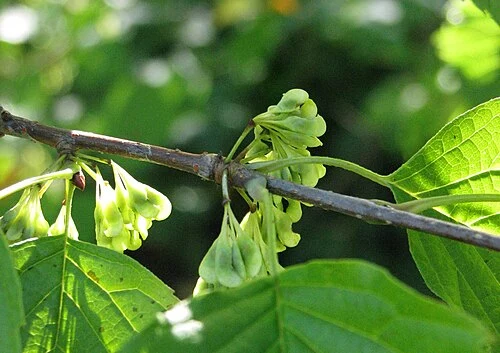
Image source:https://baike.sogou.com/v38531.htm
▍Morphological Features
- Height: Can grow up to 10 meters tall,
forming a small
tree
or large shrub.
- Stem: Smooth bark with a greyish-brown
color; young
branches are often reddish-brown and smooth.
- Leaves: Deciduous, alternate leaves that
are broadly
ovate
to elliptic in shape. The edges are finely serrated, and the
surface is
glossy green above and lighter underneath.
- Flowers: Small, greenish-yellow flowers
appear before
the
leaves in early spring. Flowers are unisexual on separate
plants
(dioecious).
- Fruits: Small, winged samaras that are
dispersed by
wind,
aiding in the plant's reproduction.
- Roots: A well-developed root system that
helps it
thrive in
moist environments.
▍Cultivation Methods
| Parameter |
Specifications |
| Soil Type |
Thrives in moist but well-drained soils; prefers loamy soil
types rich in
organic matter (pH 6.0-7.5).
|
| Germination Temp |
18-22℃ (Optimal) |
| Planting Density |
Space plants about 3-4 meters apart for optimal growth and air
circulation.
|
▍Pest Management
Diseases
- Fungal Diseases: Ensure good air circulation around the
plants and avoid
overhead watering; apply fungicides if necessary.
- Root Rot: Improve drainage and avoid waterlogged
conditions.
Pests
- Caterpillars: Monitor regularly and use appropriate
pesticides if
infestation occurs.
- Leaf Miners: Remove affected leaves and use insecticides as
needed.
▍Applications
Landscape Design
Suitable for woodland gardens, naturalistic
settings, and as
a
specimen tree due to its attractive foliage and early spring
blooms.
Ecosystem Services
Provides habitat and food for wildlife,
including birds
which
eat its seeds. Also contributes to biodiversity in forest
ecosystems.
Conservation Value
As a rare species, conservation efforts are
important to
protect
its natural habitats and genetic diversity.
Flaveria bidentis
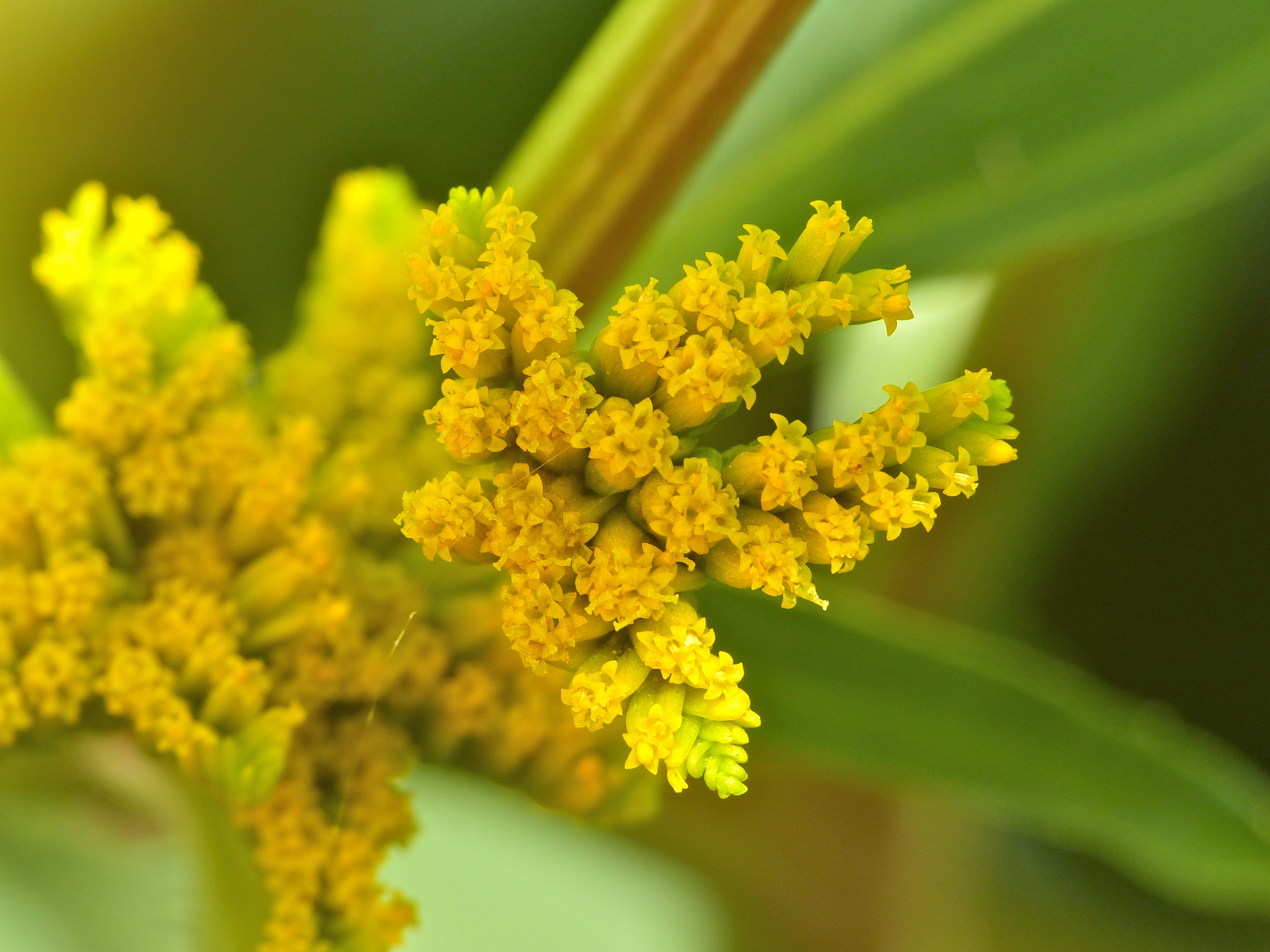
Image
source:http://publish.plantnet-project.org/project/plantinvasivekruger/collection/collection/synthese/taxo_view_gallery/Asteraceae%20-%20Flaveria%20bidentis%20(L.)%20Kuntze/page2
▍Morphological Features
- Height: Typically grows from 30 cm to 1.5
meters tall,
depending on environmental conditions.
- Stem: Upright stems that can be branched or
unbranched,
covered with fine hairs.
- Leaves: Opposite leaves that are lanceolate
to
elliptical
in shape, often serrated along the edges, and have a
characteristic pair
of
teeth near the base.
- Flowers: Small yellow flowers arranged in
dense
clusters at
the top of the stems. Blooms appear during late summer
through fall.
- Fruits: Tiny achenes without pappus,
dispersed by wind
or
animals.
- Roots: Fibrous root system that helps it
thrive in
disturbed areas and various soil types.
▍Cultivation Methods
| Parameter |
Specifications |
| Soil Type |
Adaptable to various soil types including poor soils; prefers
well-drained
soils
(pH 6.0-7.5).
|
| Germination Temp |
20-25℃ (Optimal) |
| Planting Density |
30-50cm between plants, 60-80cm row spacing for optimal growth
and
flowering.
|
▍Pest Management
Diseases
- Fungal Diseases: Ensure good air circulation around the
plants and avoid
overhead watering; apply fungicides if necessary.
- Root Rot: Improve drainage and avoid waterlogged
conditions.
Pests
- Aphids: Use neem oil or insecticidal soap for control.
- Caterpillars: Monitor regularly and use appropriate
pesticides if
infestation occurs.
▍Applications
Ecosystem Services
Despite being considered an invasive species in
some
regions, it
provides an important nectar source for bees and other
pollinators,
contributing positively to local biodiversity.
Phytoremediation
Due to its ability to grow in disturbed areas
and tolerate
harsh
conditions, it has potential uses in phytoremediation
projects.
Research Value
Used in scientific research for studying C4
photosynthesis
pathways due to its unique biochemical properties.
Flaveria brownii
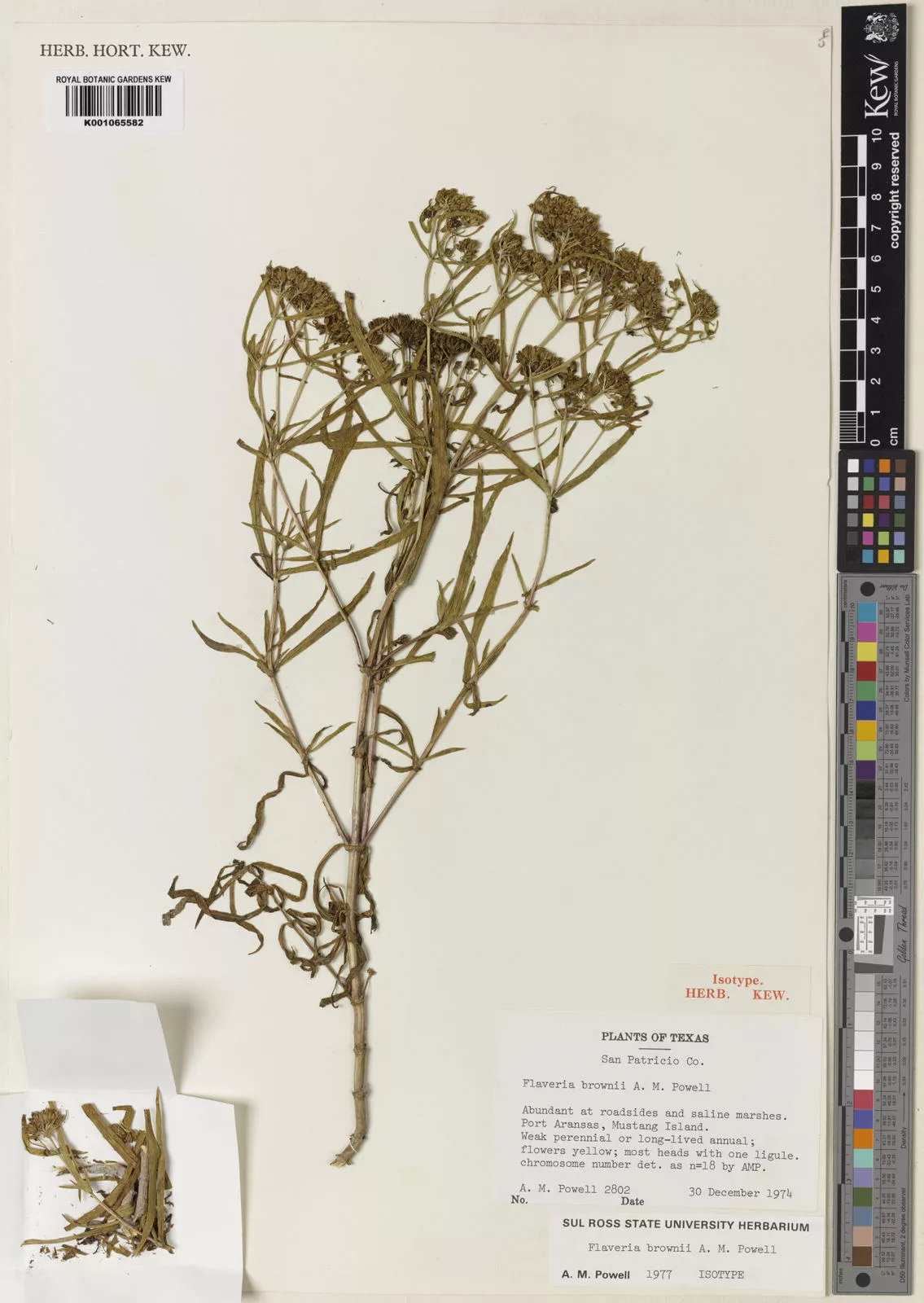
Image source:https://dunescience.com/flaveria-brownii/
▍Morphological Features
- Height: Grows up to 1 meter tall, forming a
compact
bushy
appearance.
- Stem: Erect stems that are branched near
the top,
covered
with fine hairs giving them a slightly rough texture.
- Leaves: Opposite leaves that are lanceolate
to
elliptical
in shape, often serrated along the edges. Leaves are usually
green and
can
be somewhat hairy.
- Flowers: Small yellow flowers arranged in
dense
clusters at
the tops of the stems. Blooms appear from late spring
through early
fall.
- Fruits: Tiny achenes without pappus,
dispersed by wind
or
animals.
- Roots: Fibrous root system that helps it
thrive in
various
soil types and conditions.
▍Cultivation Methods
| Parameter |
Specifications |
| Soil Type |
Adaptable to different soil types including sandy soils; prefers
well-drained
soils (pH 6.0-7.5).
|
| Germination Temp |
20-25℃ (Optimal) |
| Planting Density |
30-40cm between plants, 50-60cm row spacing for optimal growth
and
flowering.
|
▍Pest Management
Diseases
- Fungal Diseases: Ensure good air circulation around the
plants and avoid
overhead watering; apply fungicides if necessary.
- Root Rot: Improve drainage and avoid overwatering.
Pests
- Aphids: Use neem oil or insecticidal soap for control.
- Caterpillars: Monitor regularly and use appropriate
pesticides if
infestation occurs.
▍Applications
Landscape Design
Suitable for wild gardens, borders, and
naturalistic
settings
due to its bright yellow blooms and ability to attract
pollinators like
bees
and butterflies.
Ecosystem Services
Provides an important nectar source for bees and
other
pollinators, enhancing local biodiversity.
Scientific Research
Used in scientific studies focusing on C4
photosynthesis
pathways and adaptation mechanisms due to its unique
biochemical
properties.
Flaveria floridana
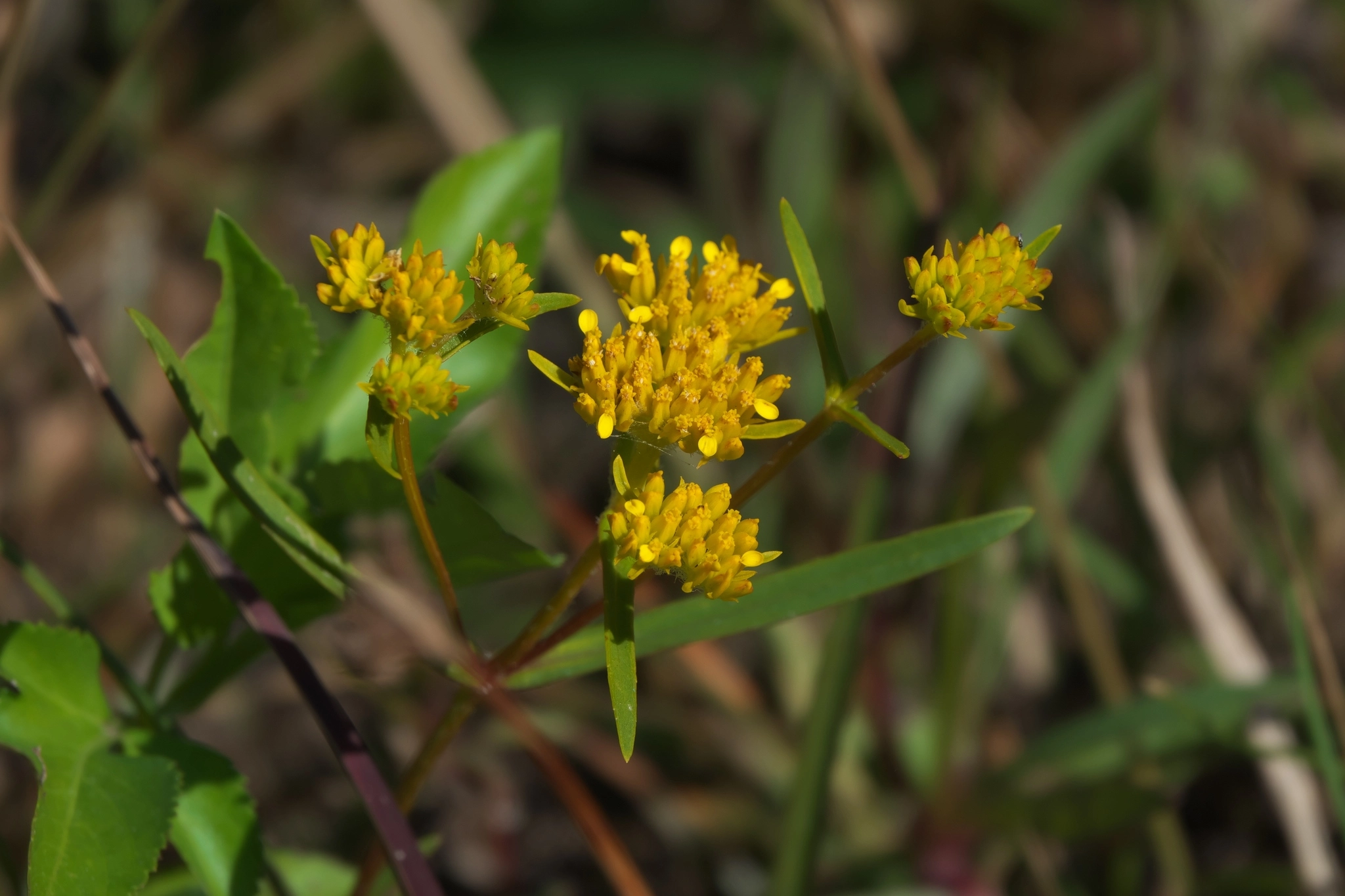
Image source:https://www.fnps.org/plant/flaveria-linearis
▍Morphological Features
- Height: Typically grows from 30 cm to 1
meter tall,
forming
a relatively compact bush.
- Stem: Upright stems that are often branched
near the
top,
covered with fine hairs giving them a slightly rough
texture.
- Leaves: Opposite leaves that are lanceolate
to
elliptical
in shape, with serrated edges. The leaves are usually green
and can be
hairy
or smooth depending on the variety.
- Flowers: Small, bright yellow flowers
arranged in dense
clusters at the tops of the stems. Blooms appear throughout
spring and
summer.
- Fruits: Tiny achenes without pappus,
dispersed by wind
or
animals.
- Roots: A fibrous root system that supports
its growth
in
various soil conditions.
▍Cultivation Methods
| Parameter |
Specifications |
| Soil Type |
Adaptable to various soil types but prefers well-drained soils;
tolerates
sandy
soils (pH 6.0-7.5).
|
| Germination Temp |
20-25℃ (Optimal) |
| Planting Density |
25-35cm between plants, 40-50cm row spacing for optimal growth
and
flowering.
|
▍Pest Management
Diseases
- Fungal Diseases: Ensure good air circulation around the
plants and avoid
overhead watering; apply fungicides if necessary.
- Root Rot: Improve drainage and avoid waterlogged
conditions.
Pests
- Aphids: Use neem oil or insecticidal soap for control.
- Caterpillars: Monitor regularly and use appropriate
pesticides if
infestation occurs.
▍Applications
Landscape Design
Suitable for wild gardens, borders, and
naturalistic
settings
due to its vibrant yellow blooms which attract pollinators
like bees and
butterflies.
Ecosystem Services
Serves as an important nectar source for local
pollinators,
contributing positively to biodiversity.
Research Value
Used in scientific research focusing on C4
photosynthesis
pathways due to its unique biochemical properties.
Flaveria linearis
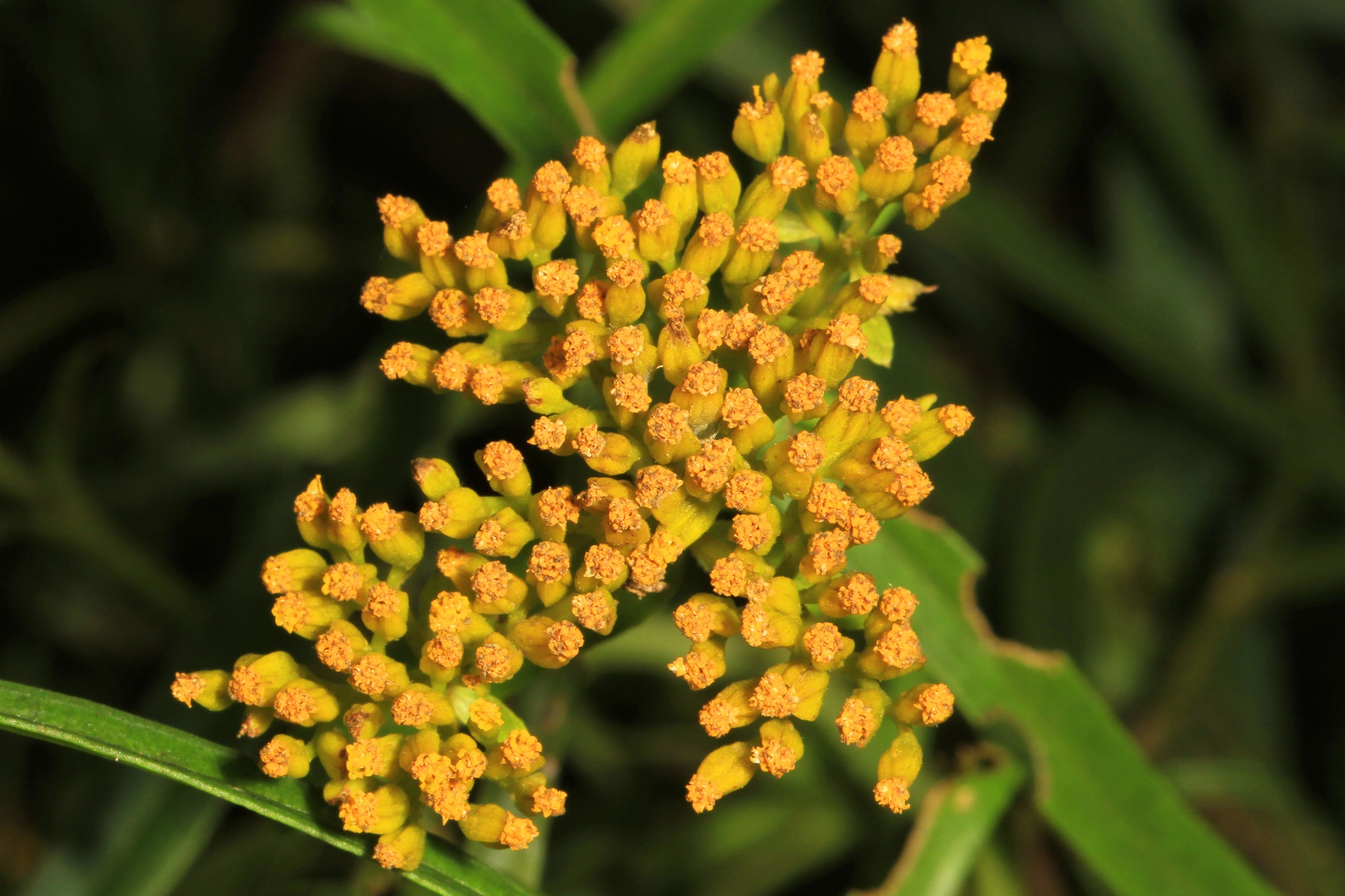
Image source:https://www.uniprot.org/taxonomy/4225
▍Morphological Features
- Height: Grows up to 1 meter tall, forming a
slender and
upright plant.
- Stem: Erect stems that are usually
unbranched or
slightly
branched towards the top. They can be smooth or sparsely
covered with
fine
hairs.
- Leaves: Narrow leaves, linear to lanceolate
in shape,
with
entire margins. Leaves are typically green and can grow up
to 10 cm
long.
- Flowers: Small yellow flowers arranged in
dense
clusters at
the tops of the stems. Blooms appear from late spring
through early
fall.
- Fruits: Tiny achenes without pappus,
dispersed by wind
or
animals.
- Roots: A well-developed fibrous root system
that
supports
its growth in various soil conditions.
▍Cultivation Methods
| Parameter |
Specifications |
| Soil Type |
Adaptable to different soil types but prefers well-drained
soils; tolerates
sandy soils (pH 6.0-7.5).
|
| Germination Temp |
20-25℃ (Optimal) |
| Planting Density |
20-30cm between plants, 40-50cm row spacing for optimal growth
and
flowering.
|
▍Pest Management
Diseases
- Fungal Diseases: Ensure good air circulation around the
plants and avoid
overhead watering; apply fungicides if necessary.
- Root Rot: Improve drainage and avoid waterlogged
conditions.
Pests
- Aphids: Use neem oil or insecticidal soap for control.
- Caterpillars: Monitor regularly and use appropriate
pesticides if
infestation occurs.
▍Applications
Landscape Design
Suitable for wild gardens, borders, and
naturalistic
settings
due to its bright yellow blooms which attract pollinators
like bees and
butterflies.
Ecosystem Services
Provides an important nectar source for local
pollinators,
enhancing biodiversity and supporting ecological
balance.
Research Value
Used in scientific research focusing on C4
photosynthesis
pathways and environmental adaptation mechanisms due to its
unique
biochemical properties.
Flaveria ramosissima
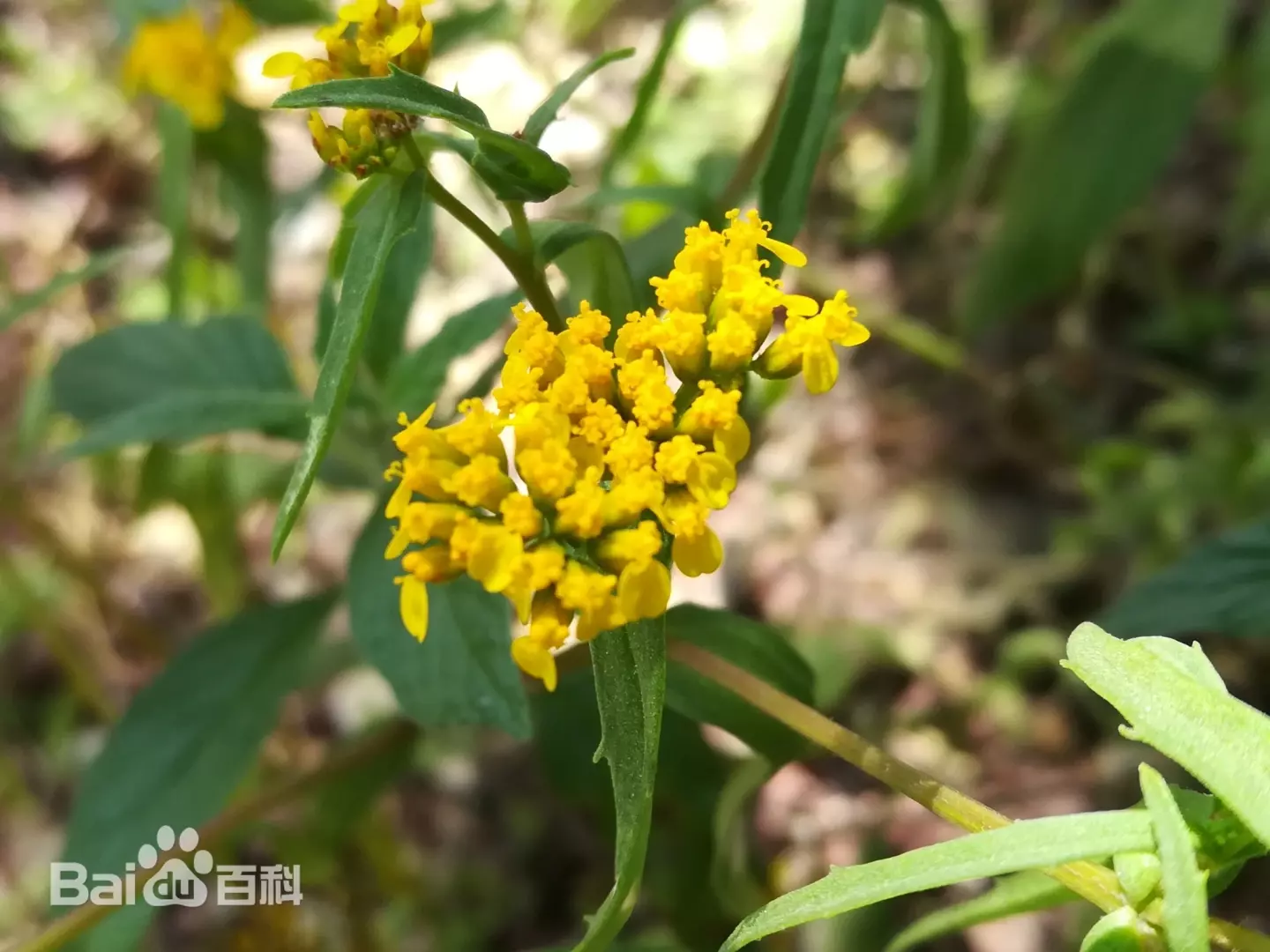
Image
source:http://www.conabio.gob.mx/malezasdemexico/asteraceae/flaveria-ramosissima/fichas/ficha.htm
▍Morphological Features
- Height: Can grow up to 1.5 meters tall,
forming a
multi-branched shrub-like appearance.
- Stem: Numerous erect stems that are highly
branched,
giving
the plant its characteristic bushy form. Stems may be smooth
or slightly
hairy.
- Leaves: Narrow leaves that are linear to
lanceolate in
shape, with entire margins. Leaves can reach lengths of up
to 8 cm and
are
typically arranged oppositely along the stem.
- Flowers: Small yellow flowers that are
clustered
densely at
the ends of branches. Blooming period extends from late
spring through
early
fall.
- Fruits: Tiny achenes without pappus,
dispersed by wind
or
animals.
- Roots: Fibrous root system that helps it
thrive in
various
soil conditions.
▍Cultivation Methods
| Parameter |
Specifications |
| Soil Type |
Adapts well to different soil types but prefers well-drained
soils;
tolerates
sandy and loamy soils (pH 6.0-7.5).
|
| Germination Temp |
20-25℃ (Optimal) |
| Planting Density |
30-40cm between plants, 50-60cm row spacing for optimal growth
and
flowering.
|
▍Pest Management
Diseases
- Fungal Diseases: Ensure good air circulation around the
plants and avoid
overhead watering; apply fungicides if necessary.
- Root Rot: Improve drainage and avoid waterlogged
conditions.
Pests
- Aphids: Use neem oil or insecticidal soap for control.
- Caterpillars: Monitor regularly and use appropriate
pesticides if
infestation occurs.
▍Applications
Landscape Design
Suitable for wild gardens, borders, and
naturalistic
settings
due to its vibrant yellow blooms which attract pollinators
like bees and
butterflies.
Ecosystem Services
Serves as an important nectar source for local
pollinators,
contributing positively to biodiversity.
Research Value
Used in scientific research focusing on C4
photosynthesis
pathways and environmental adaptation mechanisms due to its
unique
biochemical properties.
Flaveria robusta
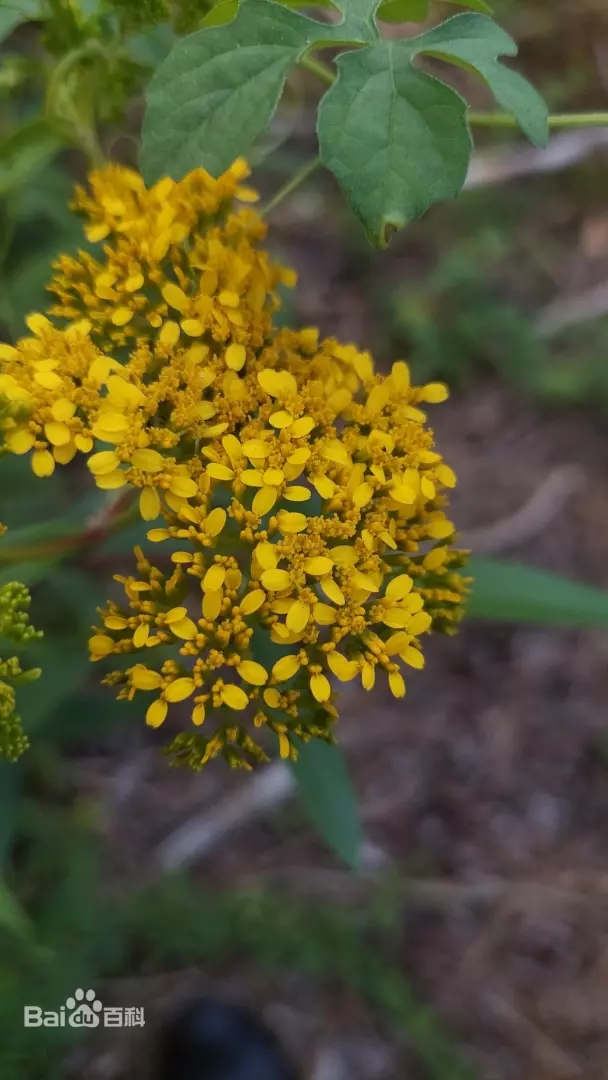
Image source: Internet. Removed if infringing.
▍Morphological Features
- Height: Typically grows up to 1.2 meters
tall, forming
a
robust and upright plant.
- Stem: Strong, erect stems that are usually
branched
near
the top. The stems may be covered with fine hairs.
- Leaves: Broad leaves that are lanceolate to
elliptical
in
shape, with serrated margins. Leaves can grow up to 15 cm
long and are
arranged oppositely along the stem.
- Flowers: Small yellow flowers clustered
densely at the
tops
of the stems. Blooming period is from late spring through
summer.
- Fruits: Tiny achenes without pappus,
dispersed by wind
or
animals.
- Roots: A well-developed fibrous root system
that
supports
its growth in various soil conditions.
▍Cultivation Methods
| Parameter |
Specifications |
| Soil Type |
Adapts well to different soil types but prefers well-drained
soils;
tolerates
sandy and loamy soils (pH 6.0-7.5).
|
| Germination Temp |
20-25℃ (Optimal) |
| Planting Density |
35-45cm between plants, 60-70cm row spacing for optimal growth
and
flowering.
|
▍Pest Management
Diseases
- Fungal Diseases: Ensure good air circulation around the
plants and avoid
overhead watering; apply fungicides if necessary.
- Root Rot: Improve drainage and avoid waterlogged
conditions.
Pests
- Aphids: Use neem oil or insecticidal soap for control.
- Caterpillars: Monitor regularly and use appropriate
pesticides if
infestation occurs.
▍Applications
Landscape Design
Suitable for wild gardens, borders, and
naturalistic
settings
due to its bright yellow blooms which attract pollinators
like bees and
butterflies.
Ecosystem Services
Provides an important nectar source for local
pollinators,
contributing positively to biodiversity.
Research Value
Used in scientific research focusing on C4
photosynthesis
pathways and environmental adaptation mechanisms due to its
unique
biochemical properties.
Flaveria sonorensis
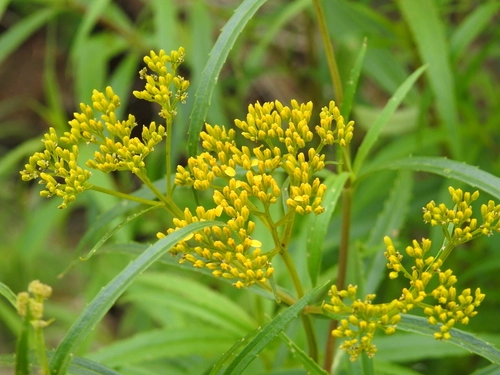
Image source: Internet. Removed if infringing.
▍Morphological Features
- Height: Grows up to 1 meter tall, forming a
somewhat
sprawling or upright plant depending on conditions.
- Stem: Stems are typically erect but can be
somewhat
branched, covered with fine hairs giving them a slightly
rough texture.
- Leaves: Opposite leaves that are linear to
lanceolate
in
shape, often with entire margins. The leaves are usually
green and can
reach
lengths of up to 10 cm.
- Flowers: Small yellow flowers arranged in
dense
clusters at
the tops of the stems. Blooms appear from late spring
through early
fall.
- Fruits: Tiny achenes without pappus,
dispersed by wind
or
animals.
- Roots: A fibrous root system that helps it
thrive in
various soil types and conditions.
▍Cultivation Methods
| Parameter |
Specifications |
| Soil Type |
Adaptable to different soil types including sandy soils; prefers
well-drained
soils (pH 6.0-7.5).
|
| Germination Temp |
20-25℃ (Optimal) |
| Planting Density |
30-40cm between plants, 50-60cm row spacing for optimal growth
and
flowering.
|
▍Pest Management
Diseases
- Fungal Diseases: Ensure good air circulation around the
plants and avoid
overhead watering; apply fungicides if necessary.
- Root Rot: Improve drainage and avoid overwatering.
Pests
- Aphids: Use neem oil or insecticidal soap for control.
- Caterpillars: Monitor regularly and use appropriate
pesticides if
infestation occurs.
▍Applications
Landscape Design
Suitable for wild gardens, borders, and
naturalistic
settings
due to its bright yellow blooms which attract pollinators
like bees and
butterflies.
Ecosystem Services
Provides an important nectar source for local
pollinators,
enhancing biodiversity and supporting ecological
balance.
Research Value
Used in scientific research focusing on C4
photosynthesis
pathways and environmental adaptation mechanisms due to its
unique
biochemical properties.
Flaveria trinervia
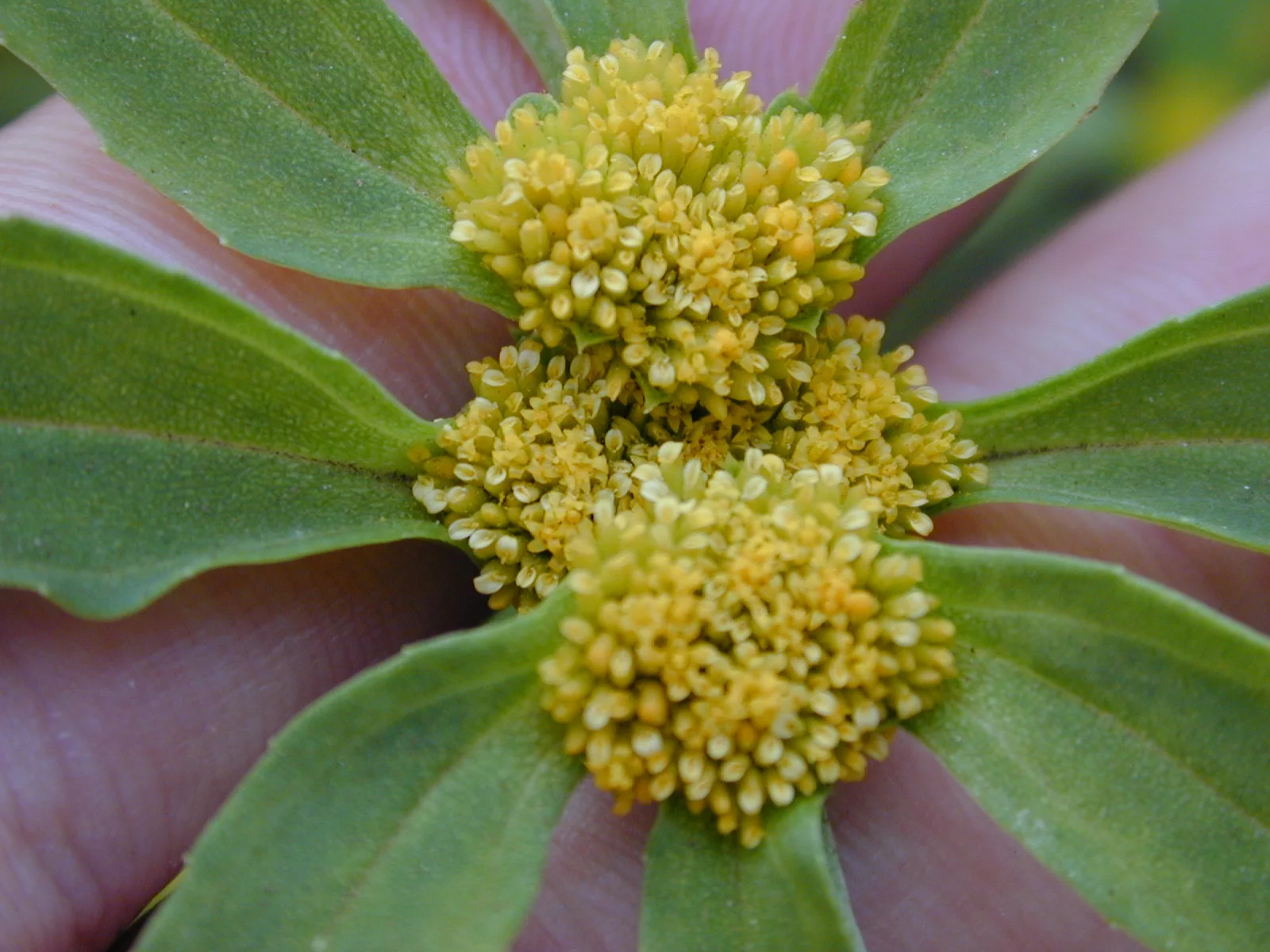
Image
source:https://www.picturethisai.com/fr/wiki/Flaveria_trinervia.html
▍Morphological Features
- Height: Can grow up to 1.5 meters tall,
forming an
upright
and branched plant.
- Stem: Sturdy stems that are erect and may
be branched,
especially near the top. The surface of the stems can be
smooth or
covered
with fine hairs.
- Leaves: Leaves are lanceolate to elliptical
in shape,
with
distinct three veins running from base to tip. They have
serrated
margins
and are arranged oppositely along the stem.
- Flowers: Small yellow flowers gathered in
dense
clusters at
the tops of the stems. Flowering occurs during late spring
through
summer.
- Fruits: Tiny achenes without pappus,
dispersed by wind
or
animals.
- Roots: A fibrous root system which helps it
adapt to
various soil conditions.
▍Cultivation Methods
| Parameter |
Specifications |
| Soil Type |
Adapts well to different soil types but prefers well-drained
soils;
tolerates
sandy and loamy soils (pH 6.0-7.5).
|
| Germination Temp |
20-25℃ (Optimal) |
| Planting Density |
30-40cm between plants, 50-60cm row spacing for optimal growth
and
flowering.
|
| Propagation Method |
Mainly through seeds; direct sowing after the last frost is
recommended.
|
▍Pest Management
Diseases
- Fungal Diseases: Ensure good air circulation around the
plants and avoid
overhead watering; apply fungicides if necessary.
- Root Rot: Improve drainage and avoid waterlogged
conditions.
Pests
- Aphids: Use neem oil or insecticidal soap for control.
- Caterpillars: Monitor regularly and use appropriate
pesticides if
infestation occurs.
▍Applications
Landscape Design
Suitable for wild gardens, borders, and
naturalistic
settings
due to its bright yellow blooms which attract pollinators
like bees and
butterflies.
Ecosystem Services
Provides an important nectar source for local
pollinators,
contributing positively to biodiversity.
Research Value
Used in scientific research focusing on C4
photosynthesis
pathways and environmental adaptation mechanisms due to its
unique
biochemical properties.
Glebionis coronaria
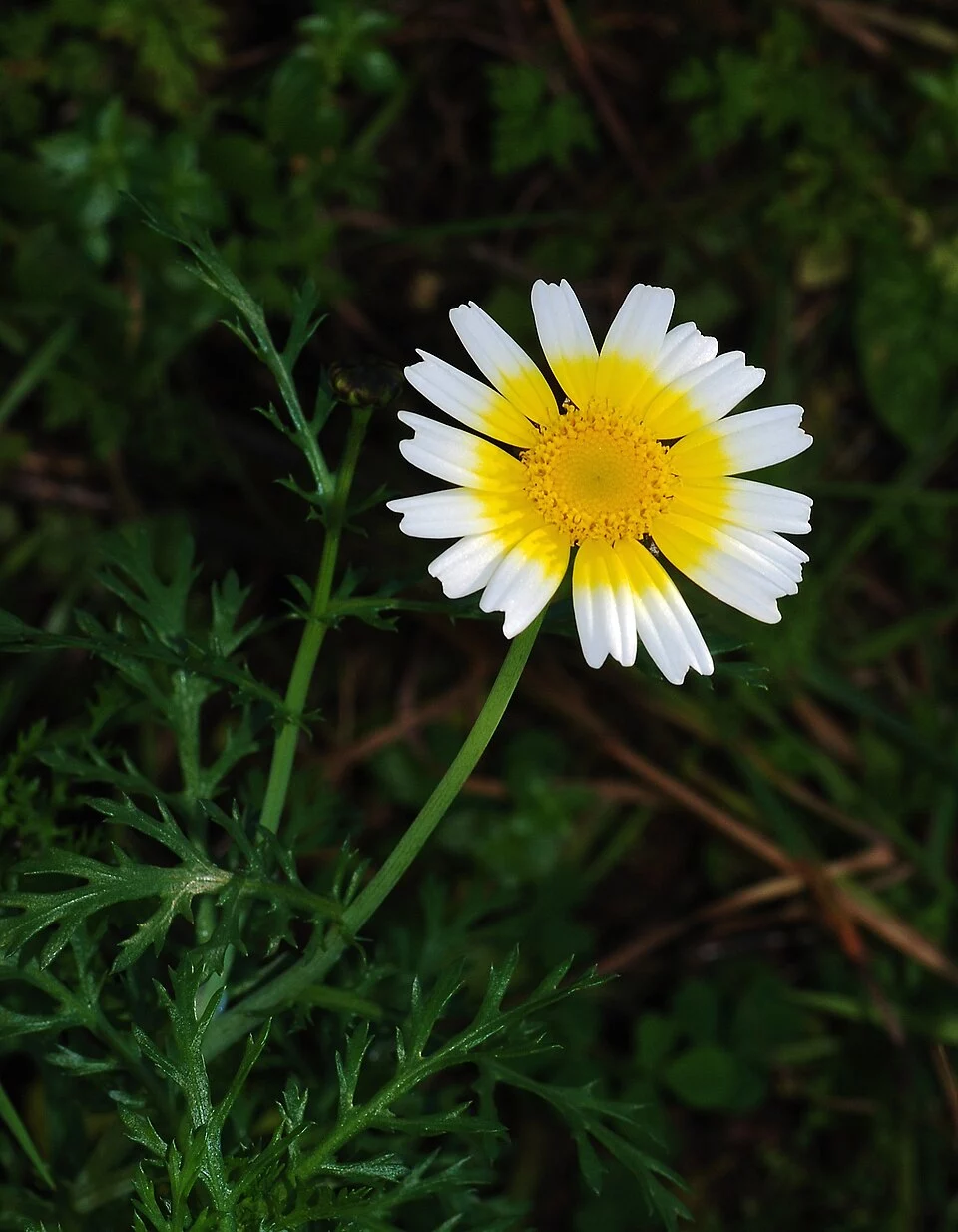
Image
source:https://www.cal-ipc.org/plants/profile/chrysanthemum-coronarium-profile/
▍Morphological Features
- Height: Grows up to 40-80 cm tall, forming
a bushy
plant
with numerous branches.
- Stem: Stems are erect and slightly
branching. They are
often green or with a hint of red, sometimes covered with
fine hairs.
- Leaves: The leaves are deeply lobed,
resembling those
of
dandelions but larger and greener. They grow in a rosette at
the base
and
along the stem.
- Flowers: Large, showy flowers that are
typically
yellow,
appearing in solitary heads atop long stalks. Flowering
occurs from
early
spring through summer.
- Fruits: Small achenes with pappus for wind
dispersal.
- Roots: A taproot system that can penetrate
deep into
the
soil, aiding in drought tolerance.
▍Cultivation Methods
| Parameter |
Specifications |
| Soil Type |
Adapts well to various soil types but prefers rich, well-drained
loamy soils
(pH
6.0-7.5).
|
| Germination Temp |
15-20℃ (Optimal) |
| Planting Density |
20-30cm between plants, 40-50cm row spacing for optimal growth
and
flowering.
|
▍Pest Management
Diseases
- Fungal Diseases: Ensure good air circulation around the
plants and avoid
overhead watering; apply fungicides if necessary.
- Root Rot: Improve drainage and avoid overwatering.
Pests
- Aphids: Use neem oil or insecticidal soap for control.
- Caterpillars: Monitor regularly and use appropriate
pesticides if
infestation occurs.
▍Applications
Landscape Design
Suitable for borders, wild gardens, and as cut
flowers due
to
its attractive blooms which attract pollinators like bees
and
butterflies.
Ecosystem Services
Provides an important nectar source for local
pollinators,
enhancing biodiversity and supporting ecological
balance.
Edible Uses
Young leaves and stems are edible and commonly
used in Asian
cuisine, providing a mild, slightly bitter flavor.
Helianthus annuus
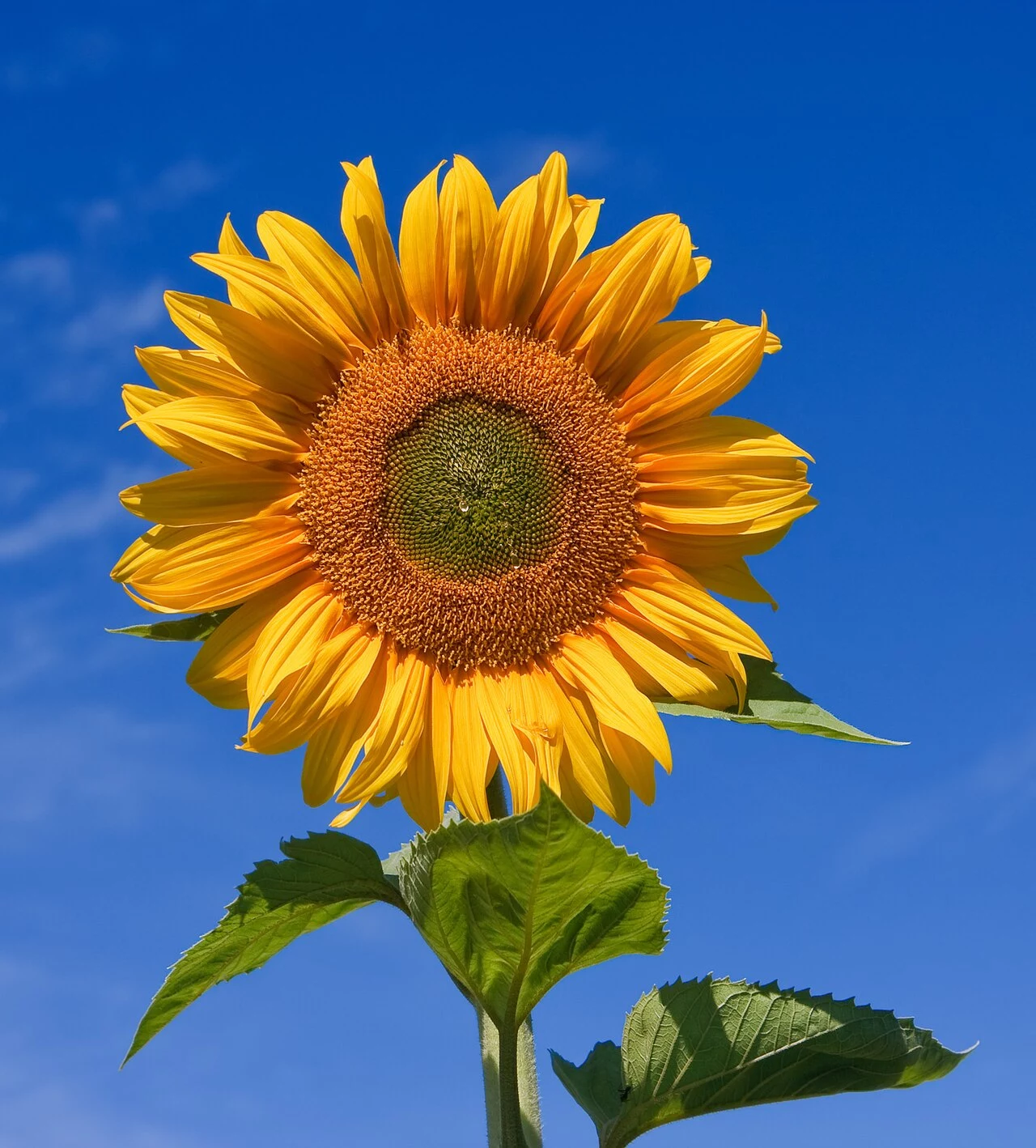
Image source:Original work
▍Morphological Features
- Height: Can grow up to 3-5 meters tall, but
varies
greatly
depending on variety.
- Stem: Sturdy, upright stems that can be
hairy and may
branch out in some varieties. The stem grows rapidly during
the
vegetative
phase.
- Leaves: Large, rough leaves that are
heart-shaped at
the
base and tapering towards the tip. Leaves are arranged
alternately along
the
stem.
- Flowers: Iconic large flower heads with
bright yellow
petals surrounding a brown center disk of florets. Flowering
occurs
during
mid-summer to early fall.
- Fruits: Sunflower seeds (achenes) develop
within the
head
after pollination. These seeds vary in size and color
depending on the
cultivar.
- Roots: A strong taproot system that
penetrates deep
into
the soil, aiding in drought resistance.
▍Cultivation Methods
| Parameter |
Specifications |
| Soil Type |
Thrives in well-drained soils with high organic matter; prefers
slightly
acidic
to neutral pH (6.0-7.5).
|
| Germination Temp |
18-28℃ (Optimal) |
| Planting Density |
60-90cm between plants, 75-120cm row spacing for optimal growth
and
flowering.
|
▍Pest Management
Diseases
- Fungal Diseases: Ensure good air circulation around the
plants and avoid
overhead watering; apply fungicides if necessary.
- Root Rot: Improve drainage and avoid overwatering.
Pests
- Cutworms: Use collars around young seedlings or apply
insecticides as
needed.
- Birds: Protect ripening heads with netting to prevent damage
from birds.
▍Applications
Landscape Design
Popular in gardens and landscapes for its
striking
appearance
and ability to attract pollinators like bees and
butterflies.
Ecosystem Services
Provides an important nectar source for
pollinators and
contributes to biodiversity.
Edible Uses
Sunflower seeds are edible and widely used for
snacks, oils,
and
birdseed. They are rich in healthy fats and nutrients.
Helianthus tuberosus
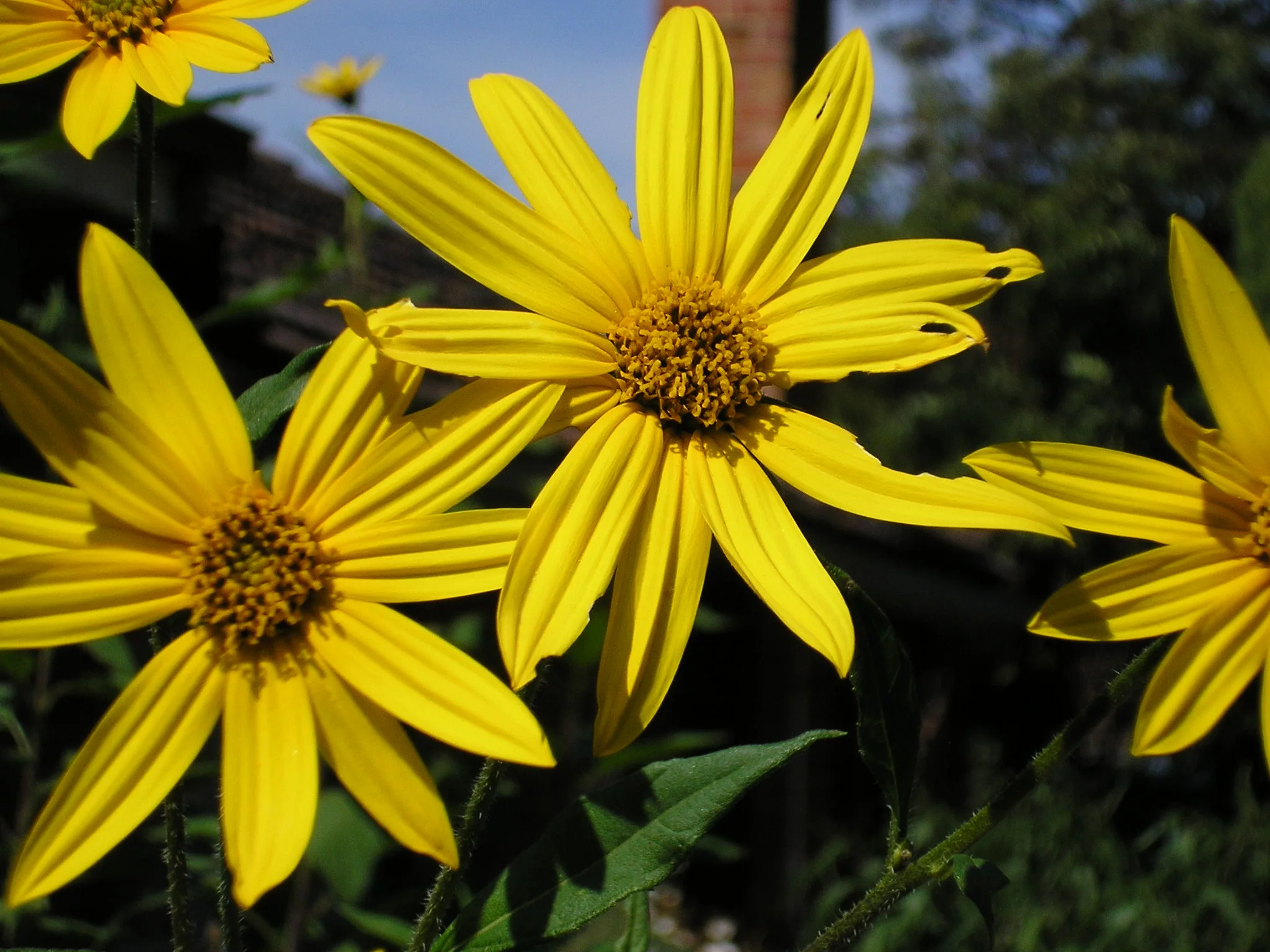
Image
source:https://www.florafinder.org/Species/Helianthus_tuberosus.php
▍Morphological Features
- Height: Typically grows to a height of
1.5-3 meters,
forming tall, sturdy stems.
- Stem: Stems are thick and can be hairy,
often branching
out
near the top. They grow rapidly during the vegetative phase.
- Leaves: Leaves are large, rough, and have a
shape that
varies from ovate to heart-shaped with toothed edges. The
leaves are
arranged alternately along the stem.
- Flowers: Flowers resemble small sunflowers,
typically
yellow in color, appearing in clusters at the end of
branches. Blooming
occurs late summer to fall.
- Fruits: Small achenes similar to those of
sunflowers
but
not commonly harvested for consumption.
- Tubers: The edible part is the underground
tuber, which
is
knobby and irregularly shaped. Tubers can vary greatly in
size and color
depending on the cultivar.
▍Cultivation Methods
| Parameter |
Specifications |
| Soil Type |
Adapts well to various soil types but prefers loose,
well-drained soils rich
in
organic matter; tolerates slightly acidic to neutral pH
(6.0-7.5).
|
| Germination Temp |
15-20℃ (Optimal) |
| Planting Density |
30-60cm between plants, 90-120cm row spacing for optimal growth
and
development
of tubers.
|
▍Pest Management
Diseases
- Fungal Diseases: Ensure good air circulation around the
plants and avoid
overhead watering; apply fungicides if necessary.
- Root Rot: Improve drainage and avoid waterlogged
conditions.
Pests
- Aphids: Use neem oil or insecticidal soap for control.
- Cutworms: Protect young plants by placing collars around
them or
applying
appropriate pesticides.
▍Applications
Landscape Design
Suitable for naturalistic gardens and as
windbreaks due to
its
tall stature and attractive flowers.
Ecosystem Services
Provides an important nectar source for
pollinators and
contributes to biodiversity.
Edible Uses
The tubers are edible and commonly used in
cooking,
providing a
sweet, nutty flavor. They are also valued for their dietary
fiber and
health
benefits.
Helichrysum umbraculigerum
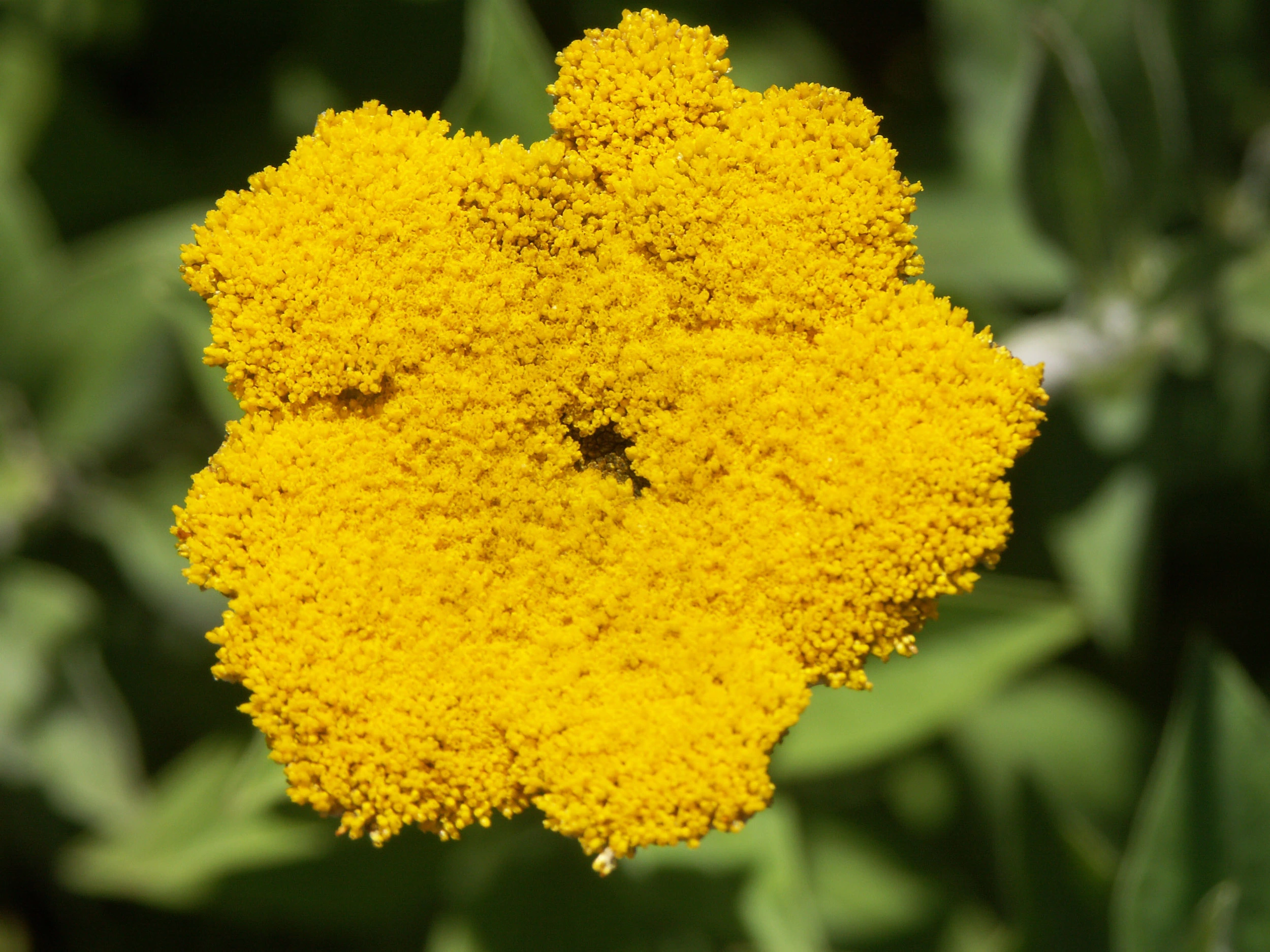
Image
source:https://www.theindigenousgardener.co.za/fullscreen-page/comp-jda3kkf6/ed5f4853-851d-4404-84bc-41e9d2aaae69/9/?i=9&p=tthjs&s=style-japj72oo
▍Morphological Features
- Height: Grows up to 1 meter in height,
forming a
compact
and bushy plant.
- Stem: Stems are upright and slightly woody,
covered
with
fine hairs which give them a silver-gray appearance.
- Leaves: The leaves are narrow and
elongated, covered
with
soft hairs giving the plant a velvety texture. They are
arranged
alternately
along the stem and can vary in color from green to
grayish-green.
- Flowers: Small, bright yellow flowers that
form dense
clusters resembling umbrellas, hence its name
"umbra-culigerum" meaning
"bearing an umbrella". Flowering occurs during late spring
to early
autumn.
- Fruits: Small achenes without pappus,
dispersed by wind
or
animals.
- Roots: A fibrous root system which helps it
adapt to
various soil conditions.
▍Cultivation Methods
| Parameter |
Specifications |
| Soil Type |
Adapts well to different soil types but prefers well-drained
soils; thrives
in
sandy or loamy soils (pH 6.0-7.5).
|
| Germination Temp |
18-22℃ (Optimal) |
| Planting Density |
30-40cm between plants, 50-60cm row spacing for optimal growth
and
flowering.
|
▍Pest Management
Diseases
- Fungal Diseases: Ensure good air circulation around the
plants and avoid
overhead watering; apply fungicides if necessary.
- Root Rot: Improve drainage and avoid overwatering.
Pests
- Aphids: Use neem oil or insecticidal soap for control.
- Spider Mites: Monitor regularly and use appropriate
pesticides if
infestation occurs.
▍Applications
Landscape Design
Suitable for borders, rock gardens, and as cut
flowers due
to
its attractive, long-lasting blooms which attract
pollinators like bees
and
butterflies.
Ecosystem Services
Provides an important nectar source for local
pollinators,
contributing positively to biodiversity.
Medicinal Uses
Used in traditional medicine for its
anti-inflammatory
properties and potential benefits for skin health.
Lactuca saligna
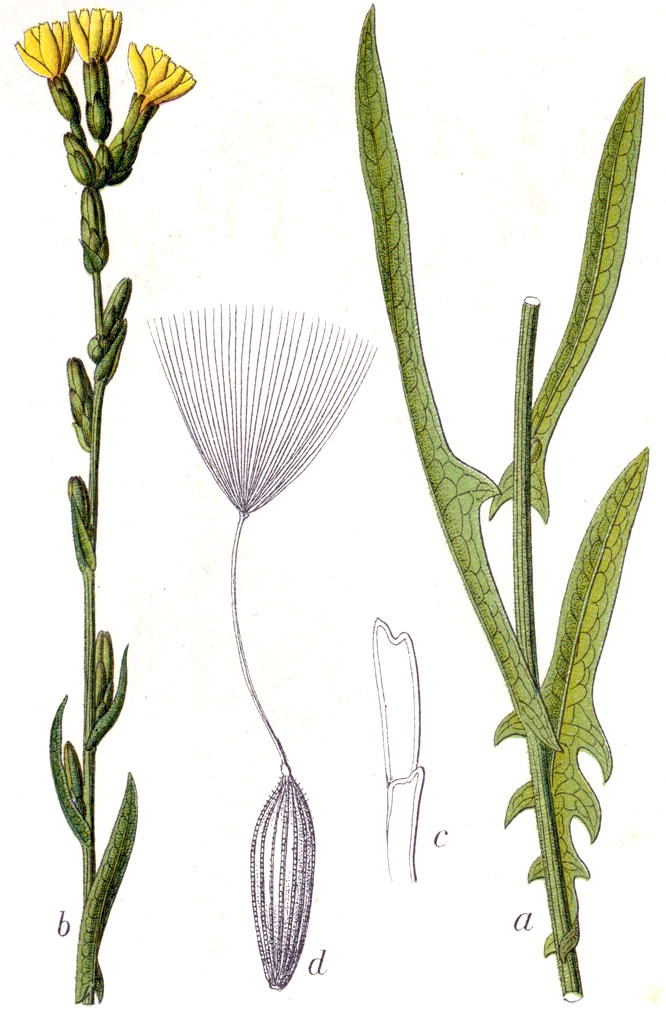
Image
source:http://wildflowers.clockwork-orrery.com/2017/08/04/lactuca-saligna/
▍Morphological Features
- Height: Can grow up to 1.5 meters tall,
forming a
robust
plant with upright stems.
- Stem: Stems are usually hollow and
branched, covered
with
fine hairs which give them a slightly rough texture.
- Leaves: Leaves are variable in shape,
ranging from
deeply
lobed to entire margins, often narrower than those of garden
lettuce.
They
tend to be more elongated and less succulent.
- Flowers: Small, yellow flowers that appear
in loose
clusters at the top of the plant. Flowering occurs during
late spring
through summer.
- Fruits: The fruits are small achenes
equipped with a
pappus
for wind dispersal.
- Roots: A taproot system that can penetrate
deep into
the
soil, aiding in drought tolerance.
▍Cultivation Methods
| Parameter |
Specifications |
| Soil Type |
Thrives in well-drained soils with high organic matter; prefers
slightly
acidic
to neutral pH (6.0-7.0).
|
| Germination Temp |
15-20℃ (Optimal) |
| Planting Density |
20-30cm between plants, 40-50cm row spacing for optimal growth
and
flowering.
|
▍Pest Management
Diseases
- Fungal Diseases: Ensure good air circulation around the
plants and avoid
overhead watering; apply fungicides if necessary.
- Root Rot: Improve drainage and avoid waterlogged
conditions.
Pests
- Aphids: Use neem oil or insecticidal soap for control.
- Caterpillars: Monitor regularly and use appropriate
pesticides if
infestation occurs.
▍Applications
Landscape Design
Suitable for naturalistic gardens and as ground
cover due to
its
rapid growth and attractive foliage.
Ecosystem Services
Provides an important nectar source for
pollinators like
bees
and butterflies, contributing positively to
biodiversity.
Medicinal Uses
Traditionally used in herbal medicine for its
sedative and
analgesic properties.
Logfia minima
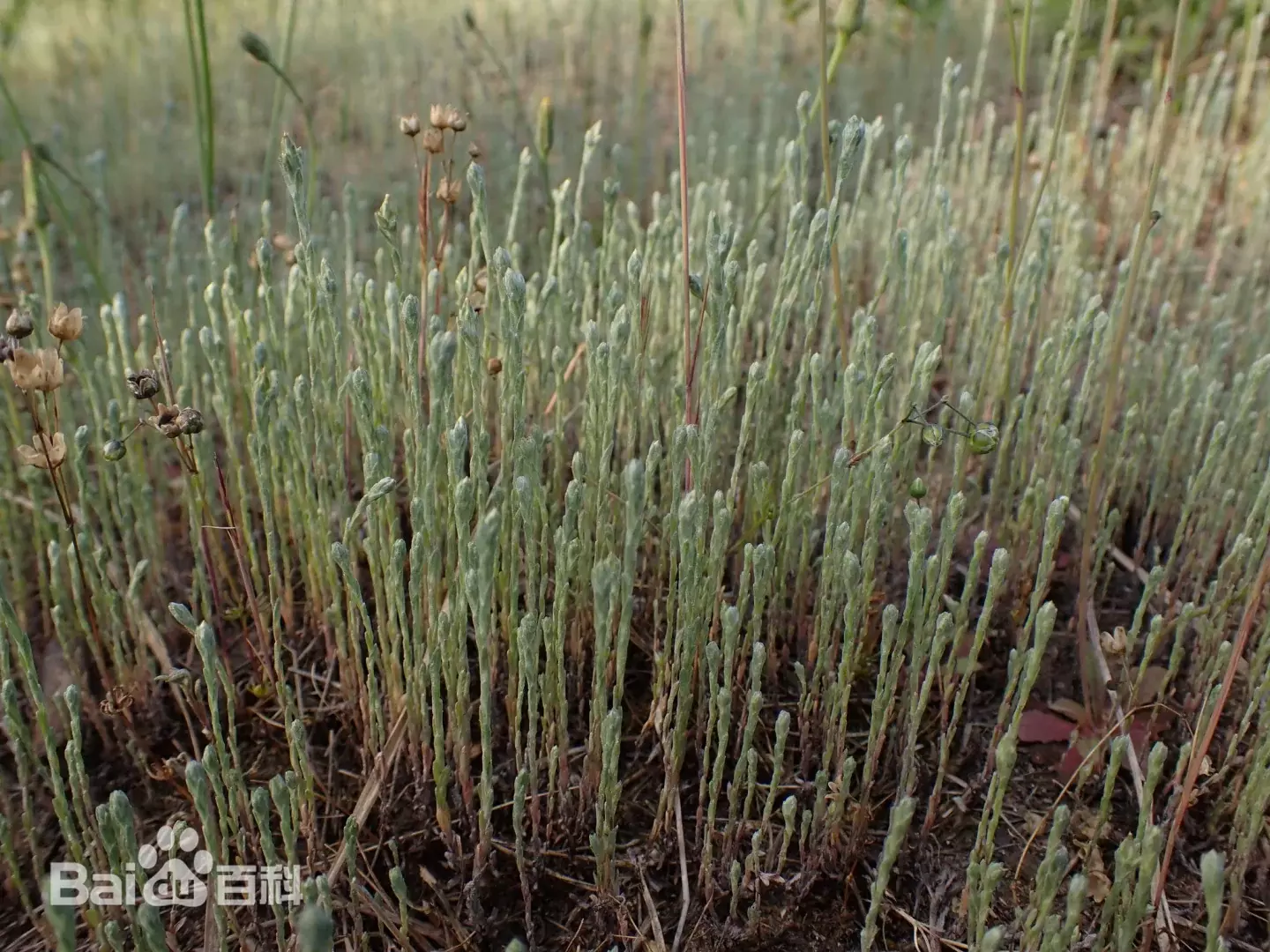
Image source:https://www.preservons-la-nature.fr/blog/?p=3796
▍Morphological Features
- Height: Typically grows to a height of
10-30 cm,
forming
small, compact plants.
- Stem: Thin and erect stems that may branch
from the
base.
They are covered with fine white hairs giving them a woolly
appearance.
- Leaves: The leaves are narrow and linear,
often less
than 2
cm in length, densely covered with soft white hairs, making
the plant
appear
fuzzy.
- Flowers: Small, pale yellow or white
flowers that form
at
the ends of the branches. Flowering typically occurs in late
spring to
early
summer.
- Fruits: The fruits are small achenes
without pappus,
designed for wind dispersal.
- Roots: A shallow root system which is
adapted to dry
conditions.
▍Cultivation Methods
| Parameter |
Specifications |
| Soil Type |
Thrives in well-drained soils; prefers sandy or loamy soils (pH
6.0-7.5).
|
| Germination Temp |
15-20℃ (Optimal) |
| Planting Density |
15-25cm between plants, suitable for dense planting as ground
cover.
|
▍Pest Management
Diseases
- Fungal Diseases: Ensure good air circulation around the
plants and avoid
overhead watering; apply fungicides if necessary.
- Root Rot: Improve drainage and avoid waterlogged
conditions.
Pests
- Aphids: Use neem oil or insecticidal soap for control.
- Snails and Slugs: Monitor regularly and use appropriate
barriers or
baits if
needed.
▍Applications
Landscape Design
Suitable for rock gardens, borders, or as ground
cover due
to
its compact size and attractive, woolly texture.
Ecosystem Services
Provides habitat and nectar for pollinators such
as bees and
butterflies, enhancing biodiversity.
Environmental Uses
Due to its drought tolerance and ability to grow
in poor
soils,
it can be used in restoration projects or erosion control on
slopes.
Lactuca sativa
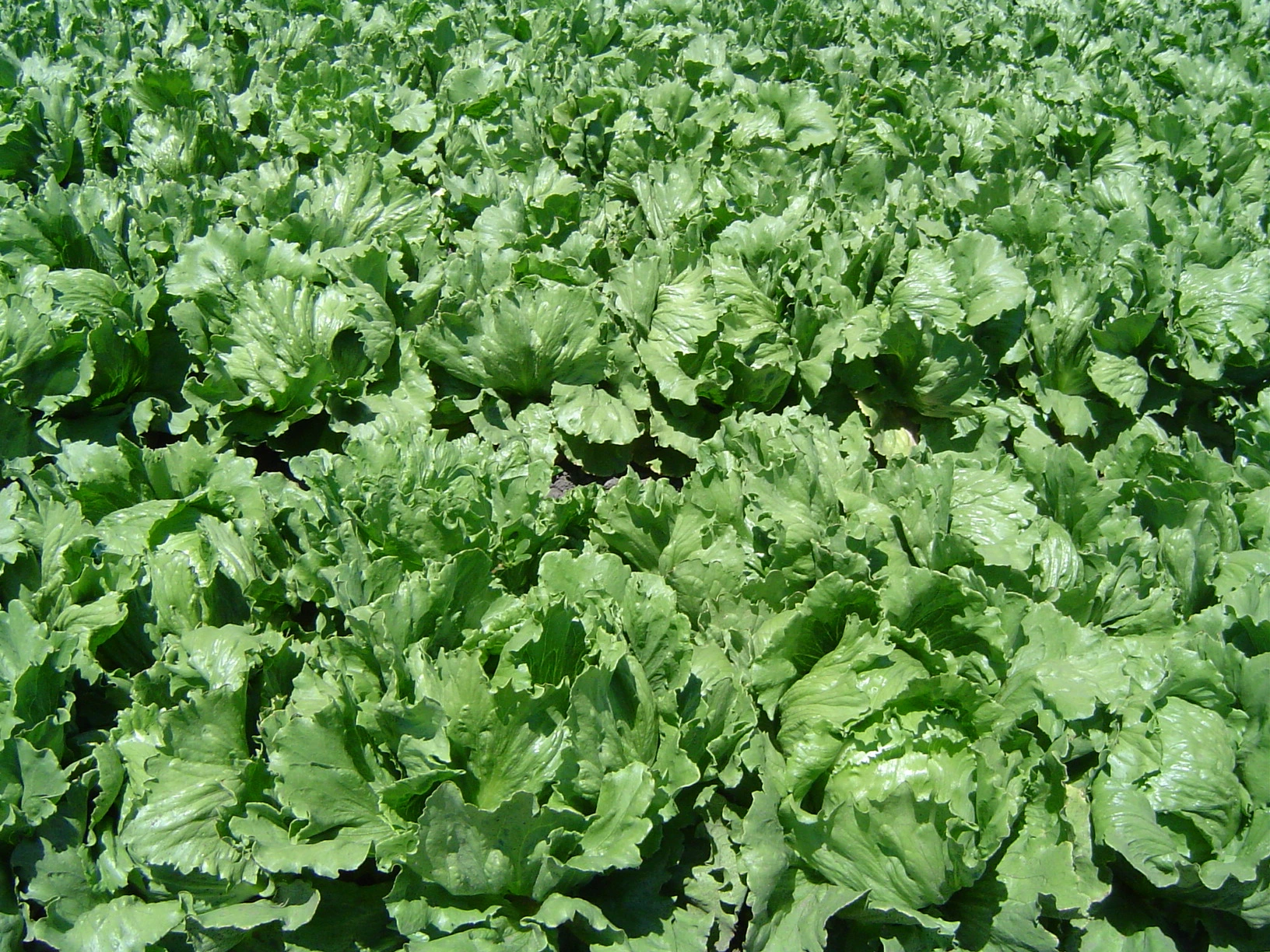
Image source:https://www.dearplants.com/how-to-plant-lettuce/
▍Morphological Features
- Height: Varies greatly depending on the
variety,
typically
ranging from 15 to 30 cm for head lettuces and up to 60 cm
for
loose-leaf
varieties.
- Stem: Short stem in most cultivated
varieties; however,
bolting varieties develop a longer flowering stem.
- Leaves: The leaves are the main edible part
of the
plant.
They can be smooth or crinkled, green or red in color, and
vary in shape
from oblong to round depending on the cultivar.
- Flowers: Small, yellow flowers appear in
clusters when
the
plant bolts. These are less commonly seen in cultivation as
lettuce is
usually harvested before it reaches this stage.
- Fruits: Small achenes without pappus,
similar to those
of
other members of the Asteraceae family.
- Roots: A shallow fibrous root system that
prefers
consistent moisture but not waterlogged soil.
▍Cultivation Methods
| Parameter |
Specifications |
| Soil Type |
Thrives in well-drained soils with high organic matter content;
prefers
slightly
acidic to neutral pH (6.0-7.0).
|
| Germination Temp |
18-22℃ (Optimal) |
| Planting Density |
Depends on variety, but generally 20-30cm between plants for
head types and
closer spacing for loose-leaf varieties.
|
▍Pest Management
Diseases
- Fungal Diseases: Ensure good air circulation around the
plants and avoid
overhead watering; apply fungicides if necessary.
- Downy Mildew: Use resistant varieties and maintain proper
plant spacing.
Pests
- Aphids: Use neem oil or insecticidal soap for control.
- Slugs and Snails: Monitor regularly and use appropriate
barriers or
baits if
needed.
▍Applications
Culinary Uses
Widely used in salads, sandwiches, wraps, and
garnishes due
to
its mild flavor and crisp texture. Different varieties offer
different
flavors and textures.
Nutritional Value
Rich in vitamins A and K, dietary fiber, and
antioxidants.
It's
low in calories, making it an excellent choice for
health-conscious
diets.
Commercial Production
One of the most widely cultivated leafy
vegetables globally,
with significant commercial importance in fresh produce
markets.
Mikania micrantha
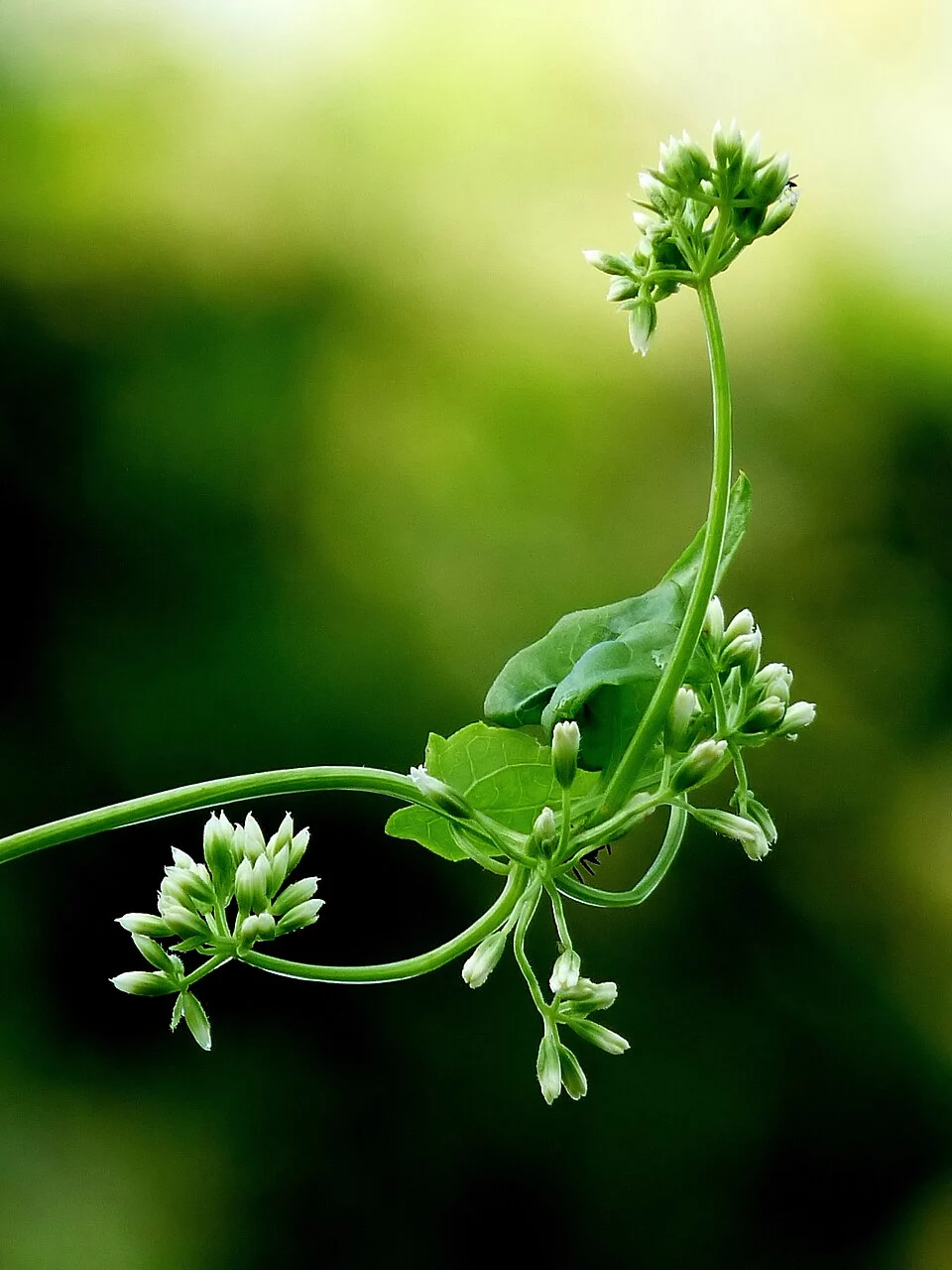
Image
source:https://housing.com/news/all-about-mikania-micrantha/
▍Morphological Features
- Height: Can grow up to 5 meters or more in
height,
forming
dense thickets that can smother other vegetation.
- Stem: Slender, twining stems that are green
when young
and
turn brown with age. They are capable of rapid growth and
climbing over
other plants.
- Leaves: Heart-shaped leaves with serrated
margins,
typically measuring 3-10 cm long and 2-7 cm wide. The leaves
are
arranged
oppositely along the stem.
- Flowers: Small, white flowers about 4-6 mm
in diameter,
grouped in clusters at the end of branches. Flowering occurs
year-round
in
tropical climates.
- Fruits: Small achenes equipped with fine
bristles
(pappus),
aiding in wind dispersal.
- Roots: Shallow root system that helps it
quickly
establish
in disturbed areas.
▍Cultivation Methods
Note: Mikania micrantha is considered an invasive species in many
regions. Planting
should be avoided outside controlled environments where eradication or
management is
intended.
| Parameter |
Specifications |
| Soil Type |
Grows in a variety of soil types but prefers moist, well-drained
soils; can
tolerate poor soil conditions.
|
| Germination Temp |
20-30℃ (Optimal) |
▍Pest Management
Diseases
Mikania micrantha is relatively resistant to diseases due to its
vigorous
growth
habit. However, in managed settings, fungal infections may occur
under
certain
conditions.
Pests
While not usually affected by pests, some insects might feed on
its foliage
in
its native range. Biological control agents have been studied
for managing
this
invasive plant.
▍Applications
Ecological Impact
Despite being an invasive species, it has been
studied for
its
potential use in phytoremediation projects due to its
ability to rapidly
cover and stabilize disturbed soils.
Medicinal Uses
In traditional medicine in some parts of its
native range,
it
has been used for treating various ailments, including skin
diseases and
wounds.
Research
Due to its invasive nature, much research
focuses on
understanding its biology and developing effective control
strategies.
Nelumbo nucifera
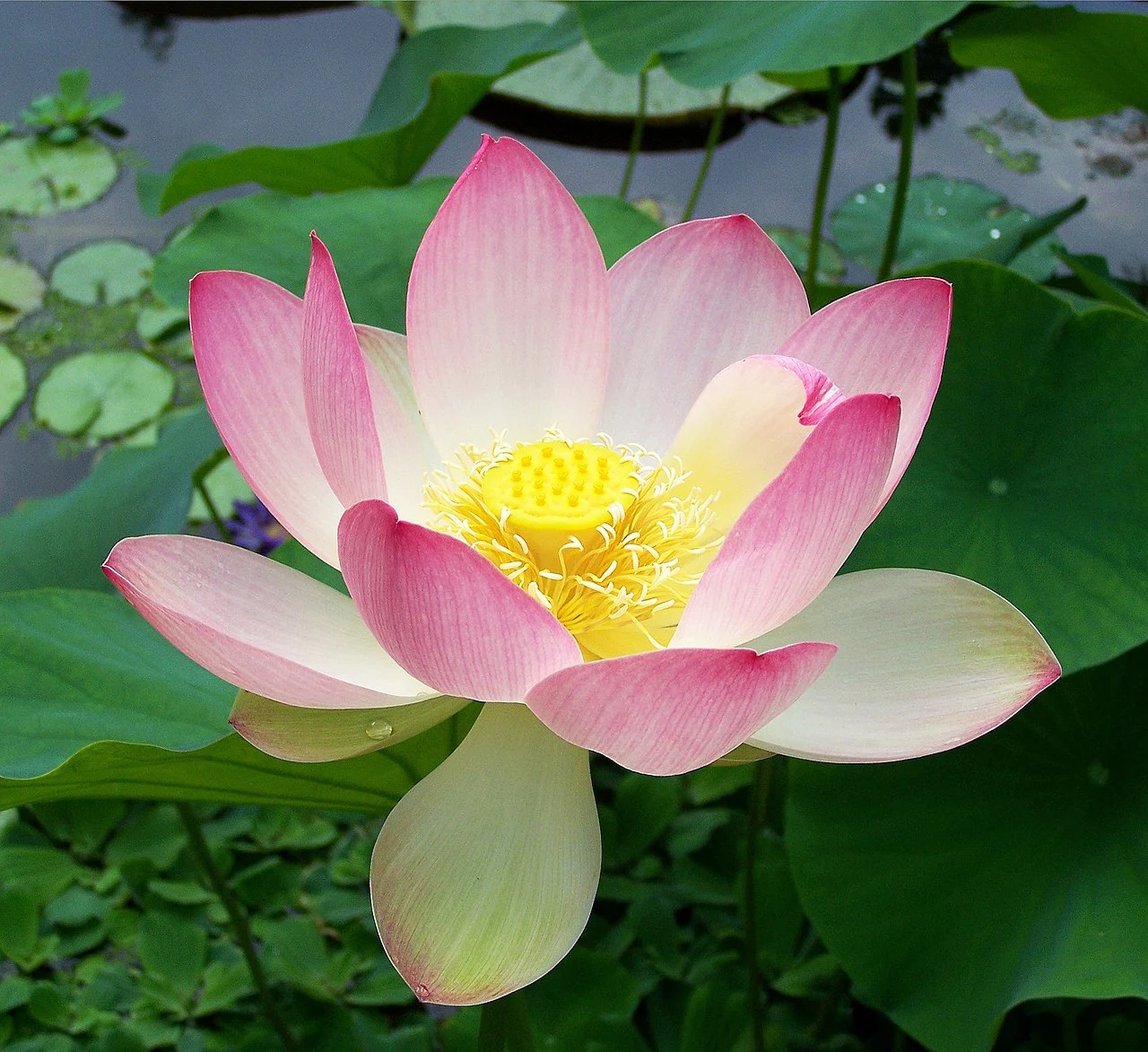
Image
source:http://www.walliscreekwatergarden.com.au/products-page/lotus/nelumbo-nucifera-sunburst/
▍Morphological Features
- Height: Emergent parts can reach up to 1.8
meters in
height, with leaves and flowers floating or rising above the
water
surface.
- Stem: Sturdy, hollow stems that allow
leaves and
flowers to
rise above water; connected to a robust rhizome system.
- Leaves: Large, circular leaves ranging from
20 to 90 cm
in
diameter, featuring a hydrophobic surface which causes water
droplets to
bead up and roll off.
- Flowers: Highly ornamental flowers in
various colors
including white, pink, red, and yellow. Flowers bloom for
about three
days
during summer to early autumn.
- Fruits: After flowering, a conical fruit
pod forms
containing seeds. These seeds are known for their longevity
and
viability.
- Roots: A thick rhizome system that grows in
the mud at
the
bottom of ponds or slow-moving waters.
▍Cultivation Methods
| Parameter |
Specifications |
| Soil Type |
Thrives in rich, loamy soil with good drainage; prefers aquatic
environments
such as ponds or slow-moving waters (pH 6.0-7.5).
|
| Water Depth |
Optimal water depth varies by variety but typically ranges from
30 to 90 cm.
Shallower depths may be suitable for smaller varieties.
|
| Planting Density |
Depends on variety, but generally spacing should allow each
plant enough
room to
grow without overcrowding, approximately 1 to 2 meters apart.
|
▍Pest Management
Diseases
- Fungal Diseases: Ensure proper air circulation around plants
and avoid
overhead watering; apply fungicides if necessary.
- Rhizome Rot: Improve water circulation and avoid stagnant
water
conditions.
Pests
- Aphids: Use neem oil or insecticidal soap for control.
- Snails and Slugs: Monitor regularly and use appropriate
barriers or
baits if
needed.
▍Applications
Ornamental Uses
Widely used in gardens and water features for
its beautiful
flowers and foliage, symbolizing purity and enlightenment in
many
cultures.
Cultural Significance
In Asian cultures, especially in Buddhism and
Hinduism, the
lotus represents spiritual purity and rebirth. It is often
depicted in
art
and literature.
Medicinal and Culinary Uses
All parts of the plant have been used in
traditional
medicine
and cuisine. Seeds, roots, and leaves are consumed for their
nutritional
value and health benefits.
Nymphoides indica
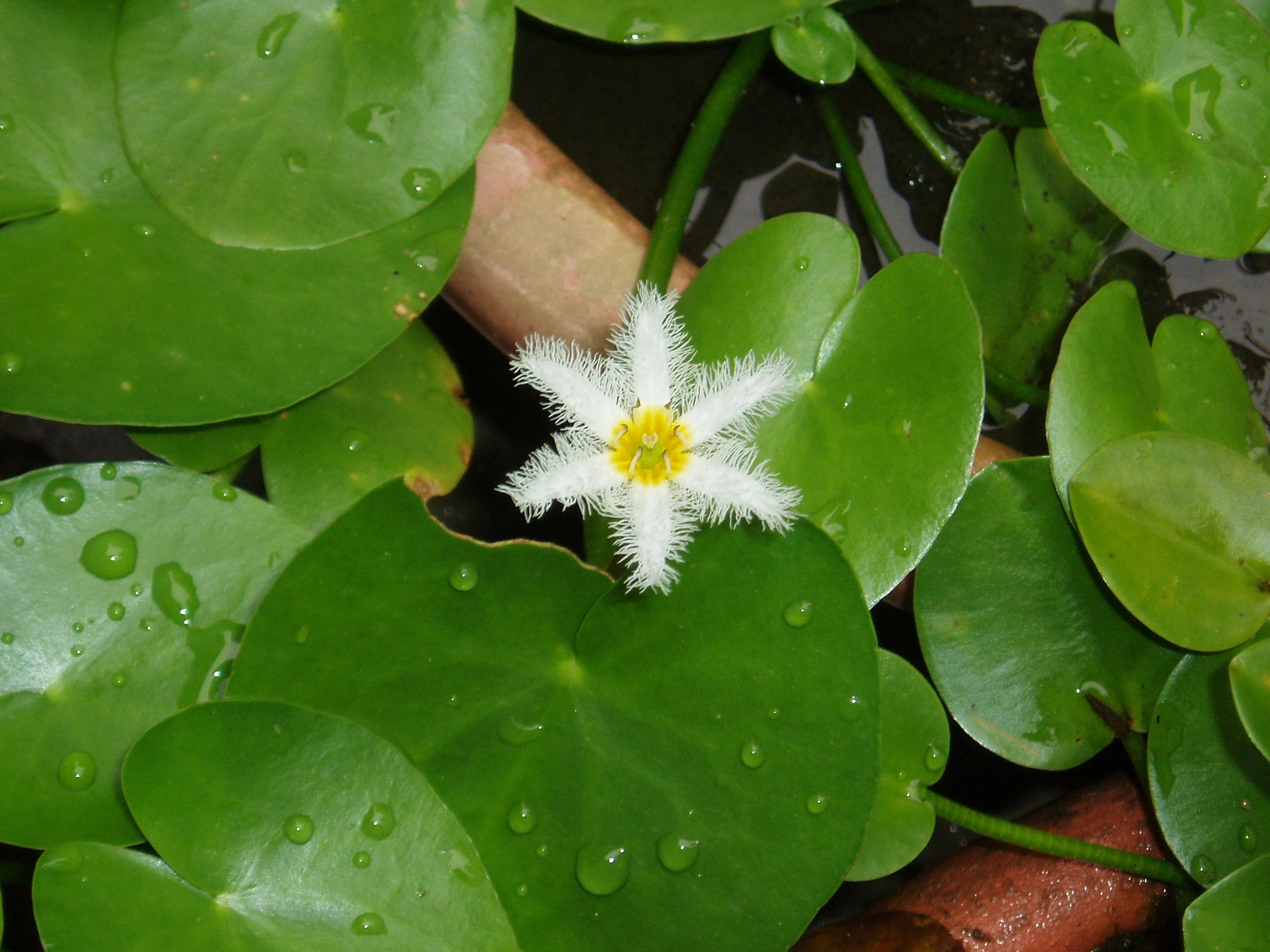
Image source:https://www.floridaaquatic.com/nymphoides-indica
▍Morphological Features
- Height: Typically grows to about 5-10 cm
above water
level,
with floating leaves that can spread up to 30 cm in
diameter.
- Stem: Short stems or stolons that float on
the water
surface or just beneath it, from which roots and leaves
emerge.
- Leaves: Rounded to slightly heart-shaped
leaves,
approximately 2-8 cm in diameter, with a smooth texture and
glossy
appearance. Leaves are borne on long petioles that arise
directly from
the
rhizome.
- Flowers: Small white flowers with five
petals, each
petal
deeply notched at the tip, giving the flower a fringed look.
Flowers
bloom
during summer months.
- Fruits: Capsules containing numerous small
seeds,
dispersed
by water currents.
- Roots: Fine root system that anchors the
plant into the
substrate while also absorbing nutrients from the water.
▍Cultivation Methods
| Parameter |
Specifications |
| Soil Type |
Prefers loamy or clayey soils rich in organic matter; thrives in
shallow
waters
(up to 30 cm deep).
|
| Water Depth |
Optimal depth is between 10 to 30 cm, but can tolerate deeper
waters for
short
periods.
|
| Planting Density |
For best coverage, space plants about 20-30 cm apart, allowing
enough room
for
growth.
|
▍Pest Management
Diseases
- Fungal Diseases: Avoid overcrowding and ensure good air
circulation
around
the plants; apply fungicides if necessary.
Pests
- Aphids: Use neem oil or insecticidal soap for control.
- Snails and Slugs: Monitor regularly and use appropriate
barriers or
baits if
needed.
▍Applications
Ornamental Uses
Popularly used in garden ponds and water
features for its
attractive foliage and delicate white flowers, providing
aesthetic
appeal.
Ecosystem Services
Helps improve water quality by absorbing excess
nutrients
and
provides habitat for aquatic organisms.
Medicinal Uses
In some regions, parts of the plant have been
traditionally
used
for medicinal purposes, although scientific evidence may be
limited.
Pulicaria dysenterica
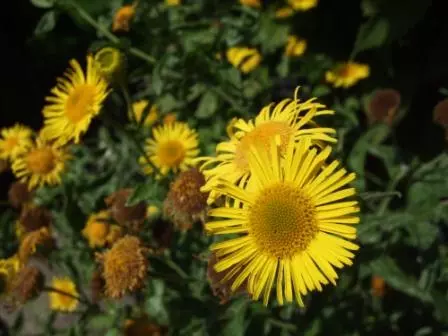
Image
source:http://www.freenatureimages.eu/Plants/Flora%20O-R/Pulicaria%20dysenterica,%20Common%20Fleabane/index.html
▍Morphological Features
- Height: Grows up to 30-100 cm tall, forming
upright
stems
that are often branched.
- Stem: Erect, sometimes woody at the base,
with fine
hairs
covering its surface.
- Leaves: Alternate leaves are lanceolate to
oblong in
shape,
measuring around 2-8 cm long. The edges of the leaves can be
smooth or
slightly toothed.
- Flowers: Small yellow flowers appear in
clusters at the
top
of the stems during summer and autumn. Each flower is about
5-10 mm
wide,
with ray florets surrounding disc florets.
- Fruits: Achenes (dry, one-seeded fruits)
are small and
typically dispersed by wind.
- Roots: Fibrous root system that supports
the plant in
various soil conditions.
▍Cultivation Methods
| Parameter |
Specifications |
| Soil Type |
Adaptable to a range of soils, but prefers well-drained loamy
soils. It can
tolerate poor soil conditions.
|
| Germination Temp |
Optimal germination occurs between 15-20℃. |
| Planting Density |
For best growth, space plants about 30-50 cm apart to ensure
adequate air
circulation and sunlight exposure.
|
▍Pest Management
Diseases
- Fungal Diseases: Maintain good air circulation and avoid
overwatering to
prevent fungal infections; apply fungicides if necessary.
Pests
- Aphids: Use neem oil or insecticidal soap for control.
- Leaf Miners: Remove affected leaves and use appropriate
pesticides if
infestation is severe.
▍Applications
Medicinal Uses
Traditionally used in herbal medicine to treat
diarrhea and
other digestive issues due to its reported anti-inflammatory
properties.
Ecosystem Services
Provides nectar and pollen for pollinators like
bees and
butterflies, supporting local biodiversity.
Research
Due to its medicinal potential, there is ongoing
research
into
understanding its active compounds and their effects on
human
health.
Pluchea indica
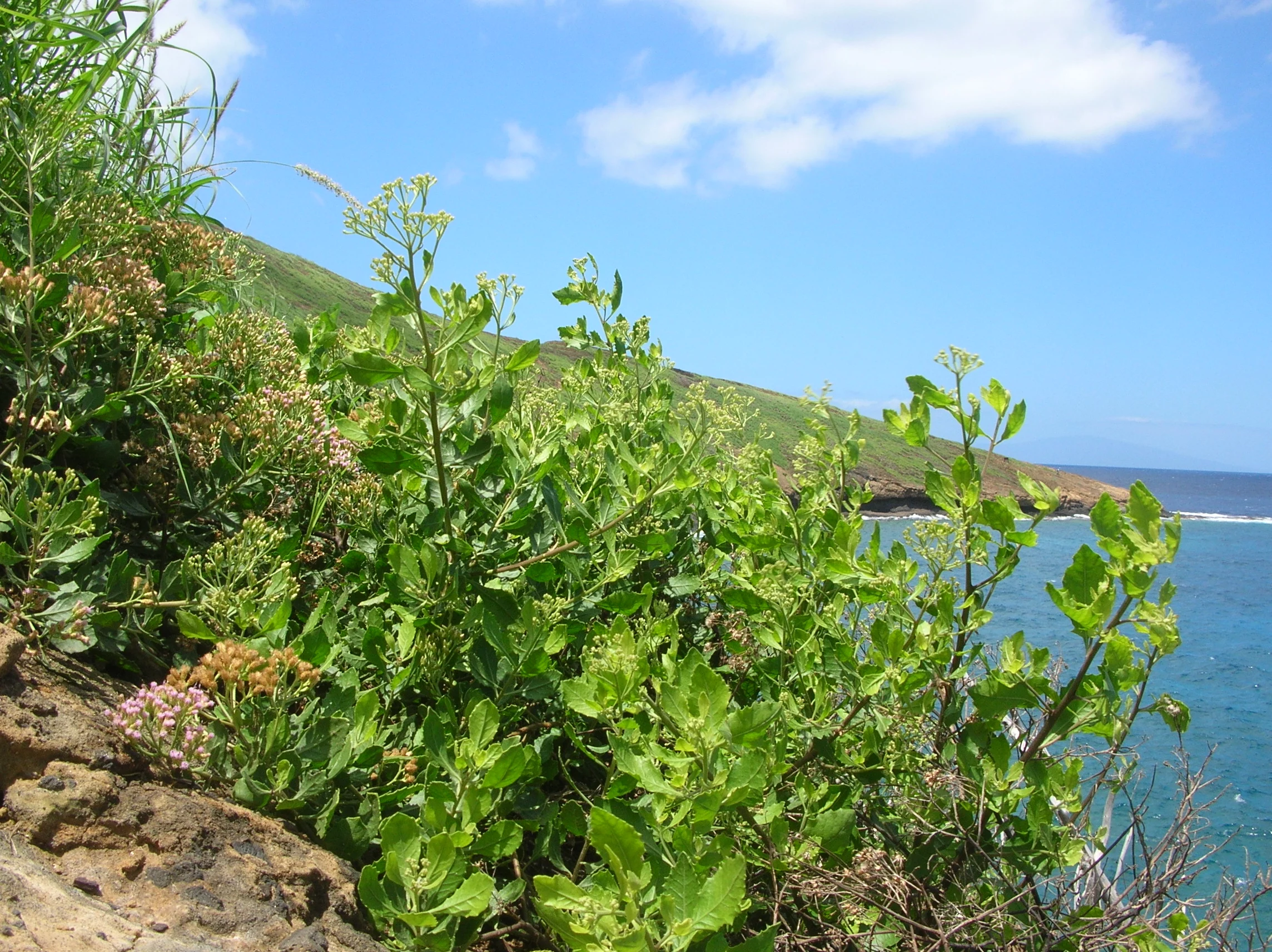
Image source:https://davesgarden.com/guides/pf/showimage/170258/
▍Morphological Features
- Height: Can grow up to 1-2 meters tall,
with a robust
and
erect growth habit.
- Stem: Stems are usually purple or reddish
in color,
especially when exposed to sunlight, and are covered with
fine hairs.
- Leaves: Leaves are lanceolate to oblong,
ranging from
8-20
cm long. The upper surface is green while the underside is
typically
purplish, giving it its common name "Purple Back."
- Flowers: Small pinkish to purplish flowers
appear in
dense
clusters at the top of stems during summer and autumn.
Flowers have a
pleasant fragrance.
- Fruits: Achenes (dry, one-seeded fruits)
are small and
dispersed by wind.
- Roots: Strong root system that helps
stabilize the
plant in
various soil conditions.
▍Cultivation Methods
| Parameter |
Specifications |
| Soil Type |
Adaptable to a wide range of soils but prefers well-drained
loamy soils. It
can
tolerate poor soil conditions.
|
| Water Requirement |
Moderate water needs; prefers moist soils but can withstand
short periods of
drought.
|
| Planting Density |
For optimal growth, space plants about 50-70 cm apart to ensure
good air
circulation and light penetration.
|
▍Pest Management
Diseases
- Fungal Diseases: Ensure proper spacing between plants and
avoid
overwatering
to reduce fungal infection risks.
Pests
- Aphids: Use neem oil or insecticidal soap for control.
- Spider Mites: Regularly inspect leaves and apply appropriate
pesticides
if
necessary.
▍Applications
Medicinal Uses
Used in traditional medicine for treating
various ailments
including fever, cough, and inflammation due to its
anti-inflammatory
and
antipyretic properties.
Ecosystem Services
Provides habitat and food source for pollinators
like bees
and
butterflies, contributing positively to local
biodiversity.
Ornamental Value
Its attractive foliage and fragrant flowers make
it suitable
for
ornamental purposes in gardens and landscapes.
Pseudognaphalium luteoalbum
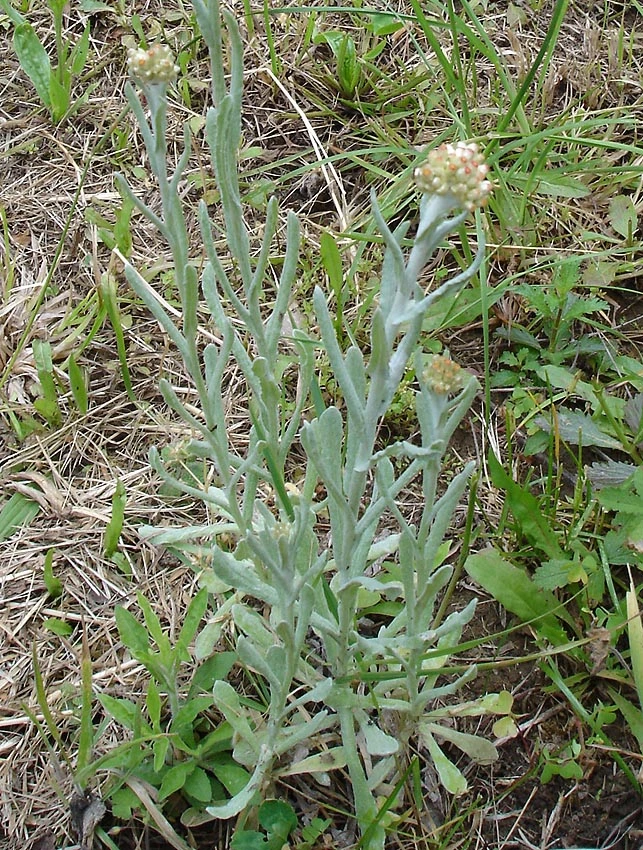
Image
source:https://www.inaturalist.org/taxa/53083-Pseudognaphalium-luteoalbum
▍Morphological Features
- Height: Typically grows to a height of
30-100 cm,
forming
an erect stem that is densely covered with white woolly
hairs.
- Stem: Erect and branching near the top,
often becoming
woody towards the base. The stems are covered in dense, soft
hairs
giving it
a silvery appearance.
- Leaves: Alternate leaves are linear to
lanceolate,
measuring around 5-15 cm long. The upper surface of the leaf
is green
but
can appear grayish due to the fine hairs covering it.
- Flowers: Small yellow flowers form in dense
clusters at
the
tips of branches during late summer to early autumn. Each
flower head
consists of tubular disc florets surrounded by ray florets.
- Fruits: Achenes (dry, one-seeded fruits)
are small and
have
a pappus attached to aid in wind dispersal.
- Roots: Fibrous root system that helps the
plant
establish
itself in various soil types.
▍Cultivation Methods
| Parameter |
Specifications |
| Soil Type |
Prefers well-drained sandy or loamy soils but is adaptable to a
range of
soil
conditions including slightly acidic to neutral pH levels.
|
| Water Requirement |
Moderate water needs; prefers moist soils but can tolerate short
periods of
drought once established.
|
| Planting Density |
For optimal growth, space plants about 30-40 cm apart to ensure
good air
circulation and light penetration.
|
▍Pest Management
Diseases
- Fungal Diseases: Avoid overcrowding and ensure good air
circulation
around
the plants; apply fungicides if necessary.
Pests
- Aphids: Use neem oil or insecticidal soap for control.
- Leaf Miners: Remove affected leaves and use appropriate
pesticides if
infestation is severe.
▍Applications
Medicinal Uses
Traditionally used in herbal medicine to treat
respiratory
issues, such as coughs and bronchitis, due to its
expectorant
properties.
Ecosystem Services
Provides nectar and pollen for pollinators like
bees and
butterflies, supporting local biodiversity.
Ornamental Value
Its attractive foliage and bright yellow flowers
make it
suitable for ornamental purposes in gardens and naturalized
landscapes.
Saussurea involucrata
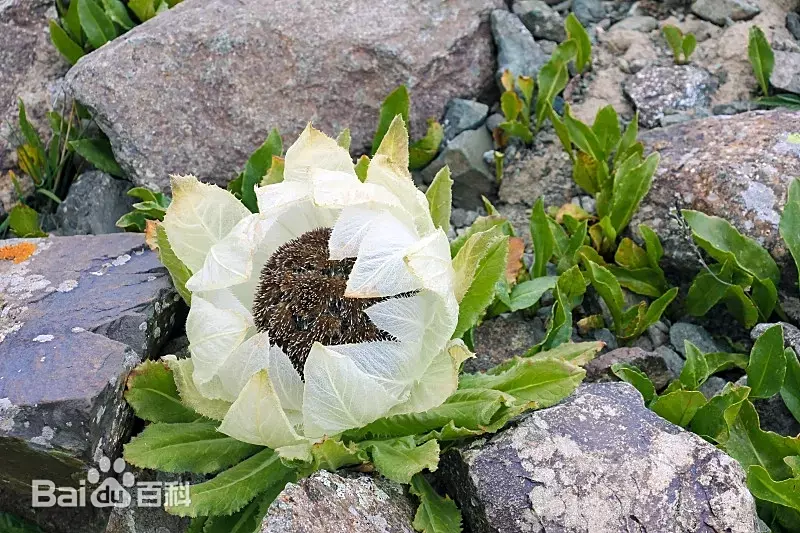
Image
source:https://www.theplantaide.com/articles/culture-method-of-saussurea-involucrata3.html
▍Morphological Features
- Height: Grows up to 15-30 cm in height,
adapting to
high
altitude environments.
- Stem: Sturdy and covered with dense white
hairs that
protect it from harsh weather conditions.
- Leaves: Thick, leathery leaves are oblong
or
lanceolate,
typically measuring 5-20 cm long. The leaf edges may be
entire or
slightly
serrated.
- Flowers: Purple or pinkish flowers appear
in dense
clusters
surrounded by large, showy bracts, giving the plant its name
"involucrata".
Flowering occurs during summer months.
- Fruits: Small achenes (dry fruits) that are
dispersed
by
wind.
- Roots: A thickened root system that helps
store
nutrients
and water for survival in harsh mountainous environments.
▍Cultivation Methods
| Parameter |
Specifications |
| Soil Type |
Requires well-drained sandy or loamy soils with good organic
matter content;
prefers neutral to slightly alkaline pH levels.
|
| Altitude Requirement |
Grows naturally at altitudes between 2,400 to 4,000 meters above
sea
level.
|
| Planting Density |
For best growth, space plants about 20-30 cm apart to ensure
adequate room
for
expansion and nutrient absorption.
|
▍Pest Management
Diseases
- Fungal Diseases: Avoid overwatering and ensure good air
circulation
around
the plants to prevent fungal infections.
Pests
- Aphids: Use neem oil or insecticidal soap for control.
- Snails and Slugs: Monitor regularly and use appropriate
barriers or
baits if
needed.
▍Applications
Medicinal Uses
Highly valued in traditional medicine for
treating various
ailments including arthritis, inflammation, and respiratory
issues due
to
its potent anti-inflammatory properties.
Cultural Significance
In many Asian cultures, especially in Tibet and
China,
Saussurea
involucrata is considered sacred and symbolizes purity and
endurance
under
harsh conditions.
Ornamental Value
Due to its unique appearance and rarity, it's
also
appreciated
as an ornamental plant in specialized botanical gardens and
collections.
Solidago caesia
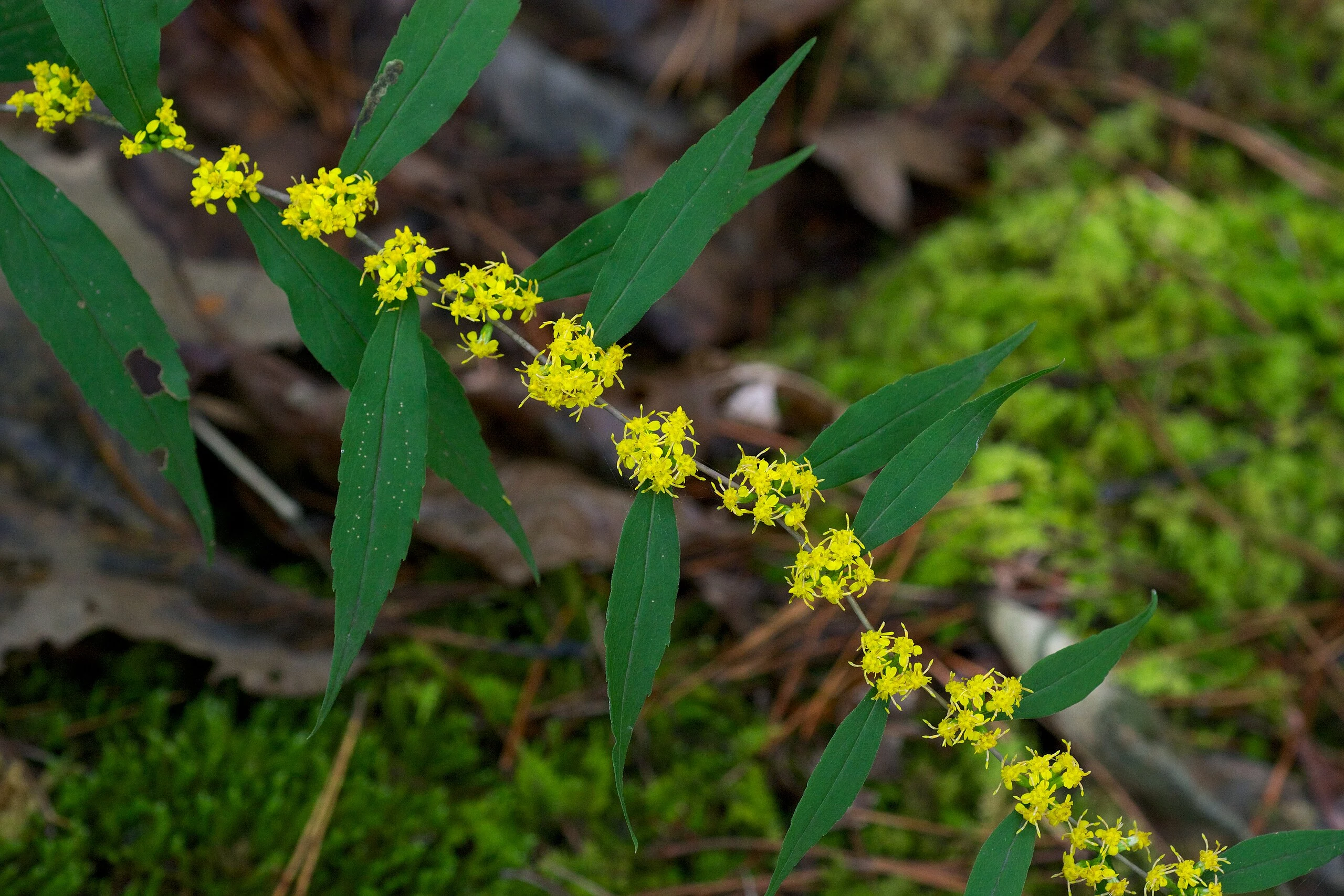
Image source:https://mywildflowers.com/detail.asp?photo=ar54
▍Morphological Features
- Height: Grows to a height of 60-120 cm,
forming an
erect
and often unbranched stem.
- Stem: The distinctive blue-green or
purplish stems are
smooth and arching, giving the plant its common name
"Blue-stemmed
Goldenrod".
- Leaves: Narrow, lance-shaped leaves
measuring about
7-15 cm
long. They are arranged alternately along the stem and have
serrated
edges.
- Flowers: Small yellow flowers appear in
clusters along
one
side of curved branches, creating a showy display from late
summer into
autumn.
- Fruits: Tiny achenes (dry fruits) with
small tufts of
hair
aiding in wind dispersal.
- Roots: Fibrous root system that helps
anchor the plant
and
absorb nutrients efficiently.
▍Cultivation Methods
| Parameter |
Specifications |
| Soil Type |
Grows well in most soils but prefers well-drained loamy soil.
Tolerates both
acidic and alkaline conditions.
|
| Sunlight Requirement |
Full sun to partial shade; best flowering occurs in full
sunlight.
|
| Water Requirement |
Moderate water needs; tolerates drought once established but
prefers moist
conditions.
|
▍Pest Management
Diseases
- Rust: Ensure good air circulation and avoid overhead
watering to reduce
rust
incidence. Apply fungicides if necessary.
Pests
- Aphids: Use neem oil or insecticidal soap for control.
- Spider Mites: Regularly inspect leaves and apply appropriate
pesticides
if
necessary.
▍Applications
Medicinal Uses
Traditionally used for treating wounds and
inflammations due
to
its anti-inflammatory properties. It is also believed to
help relieve
respiratory issues.
Ecosystem Services
Attracts pollinators like bees and butterflies,
supporting
local
biodiversity. It's also known to stabilize soil on
slopes.
Ornamental Value
Its attractive flowers and unique blue-green
stems make it a
desirable addition to naturalistic gardens and wildflower
meadows.
Senecio squalidus
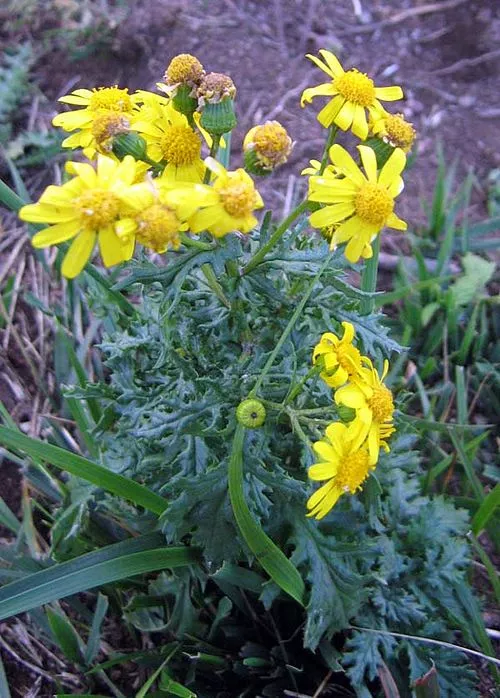
Image
source:http://www.dorsetnature.co.uk/pages-flower/wf-18.html
▍Morphological Features
- Height: Grows up to 30-80 cm tall, forming
an erect and
often branched stem.
- Stem: The stems are usually green but may
have a
purplish
hue, covered with fine hairs especially near the base.
- Leaves: Leaves are deeply lobed or
pinnatifid,
measuring
about 5-15 cm long. They are arranged alternately along the
stem and
tend to
be larger towards the base of the plant.
- Flowers: Bright yellow flowers appear in
clusters at
the
tips of branches from spring to early summer. Each flower
head is
composed
of ray florets surrounding disc florets.
- Fruits: Small achenes (dry fruits) equipped
with a
pappus
for wind dispersal.
- Roots: A fibrous root system that aids in
its
adaptability
to various soil conditions.
▍Cultivation Methods
| Parameter |
Specifications |
| Soil Type |
Adaptable to most soil types but prefers well-drained soils.
Tolerates both
acidic and alkaline conditions.
|
| Sunlight Requirement |
Full sun to partial shade; best growth and flowering occur in
full sunlight.
|
| Water Requirement |
Moderate water needs; can tolerate drought once established but
performs
best in
moist conditions.
|
▍Pest Management
Diseases
- Rust: Ensure good air circulation around plants and avoid
overhead
watering
to reduce rust incidence.
Pests
- Aphids: Use neem oil or insecticidal soap for control.
- Caterpillars: Regularly inspect leaves and remove by hand if
necessary;
use
appropriate pesticides if infestation is severe.
▍Applications
Medicinal Uses
Historically used in traditional medicine as a
diuretic and
for
treating skin conditions, though caution is advised due to
potential
toxicity.
Ecosystem Services
Provides nectar and pollen for pollinators like
bees and
butterflies, contributing positively to local
biodiversity.
Ornamental Value
Its bright yellow flowers make it a suitable
choice for
naturalizing landscapes and wildflower gardens, especially
in areas
where
other plants might struggle.
Smallanthus sonchifolius
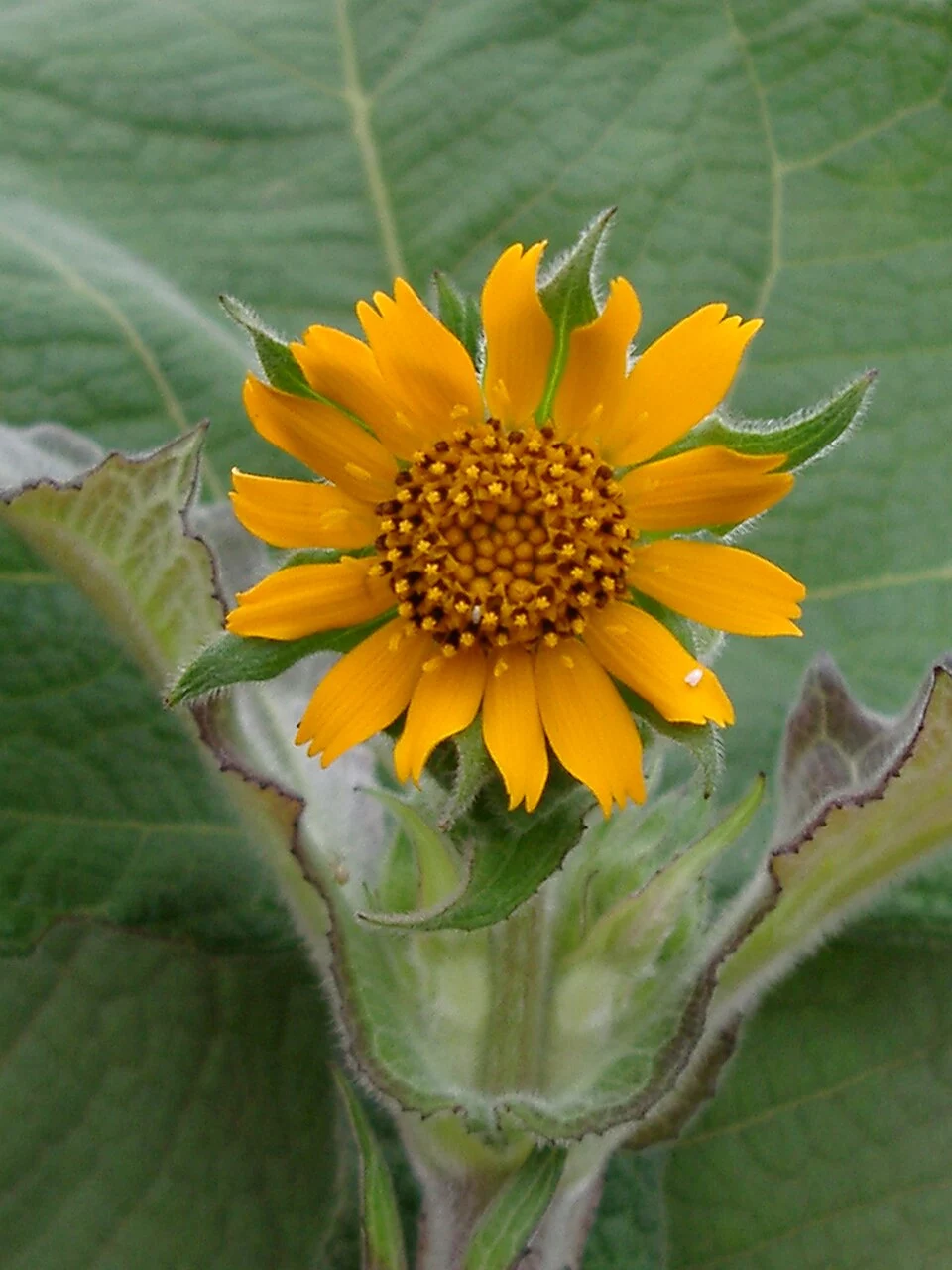
Image
source:https://www.vivercid.com/yacon-smallanthus_sonchifolius_-p/
▍Morphological Features
- Height: Typically grows to a height of
1.5-3 meters,
forming an erect and robust stem.
- Stem: Stems are sturdy and can be green or
tinged with
purple, branching towards the top.
- Leaves: Leaves are large, dark green, and
deeply lobed,
resembling those of dandelions, measuring up to 30 cm long
and wide.
- Flowers: Small yellow flowers appear in
clusters at the
ends of branches from late summer into autumn, similar to
sunflowers but
much smaller.
- Fruits: Fruits are small achenes (dry
fruits) that
contain
seeds for propagation.
- Tubers: The most valuable part of the
plant, tubers
grow
underground and resemble sweet potatoes. They can reach
sizes up to 20
cm
long and weigh up to 500 grams each.
▍Cultivation Methods
| Parameter |
Specifications |
| Soil Type |
Prefers well-drained sandy loam soil rich in organic matter.
Soil pH should
be
between slightly acidic to neutral.
|
| Sunlight Requirement |
Requires full sunlight for optimal growth and tuber
development.
|
| Water Requirement |
Moderate water needs; requires consistent moisture especially
during tuber
enlargement phase but does not tolerate waterlogged conditions.
|
▍Pest Management
Diseases
- Root Rot: Ensure good drainage and avoid overwatering to
prevent root
rot.
Pests
- Slugs and Snails: Use barriers or baits to control these
pests which can
damage young plants.
- Aphids: Regularly inspect plants and use neem oil or
insecticidal soap
if
aphid populations become problematic.
▍Applications
Nutritional Value
Rich in dietary fiber, vitamins, and minerals,
particularly
potassium. It is also a good source of inulin, a prebiotic
fiber
beneficial
for digestive health.
Medicinal Uses
Traditionally used to improve digestion and
boost immune
function due to its high antioxidant content.
Culinary Uses
Can be eaten raw or cooked, often used in salads
or as a
substitute for potatoes. Its taste is mildly sweet and crisp
when
fresh.
Solidago canadensis
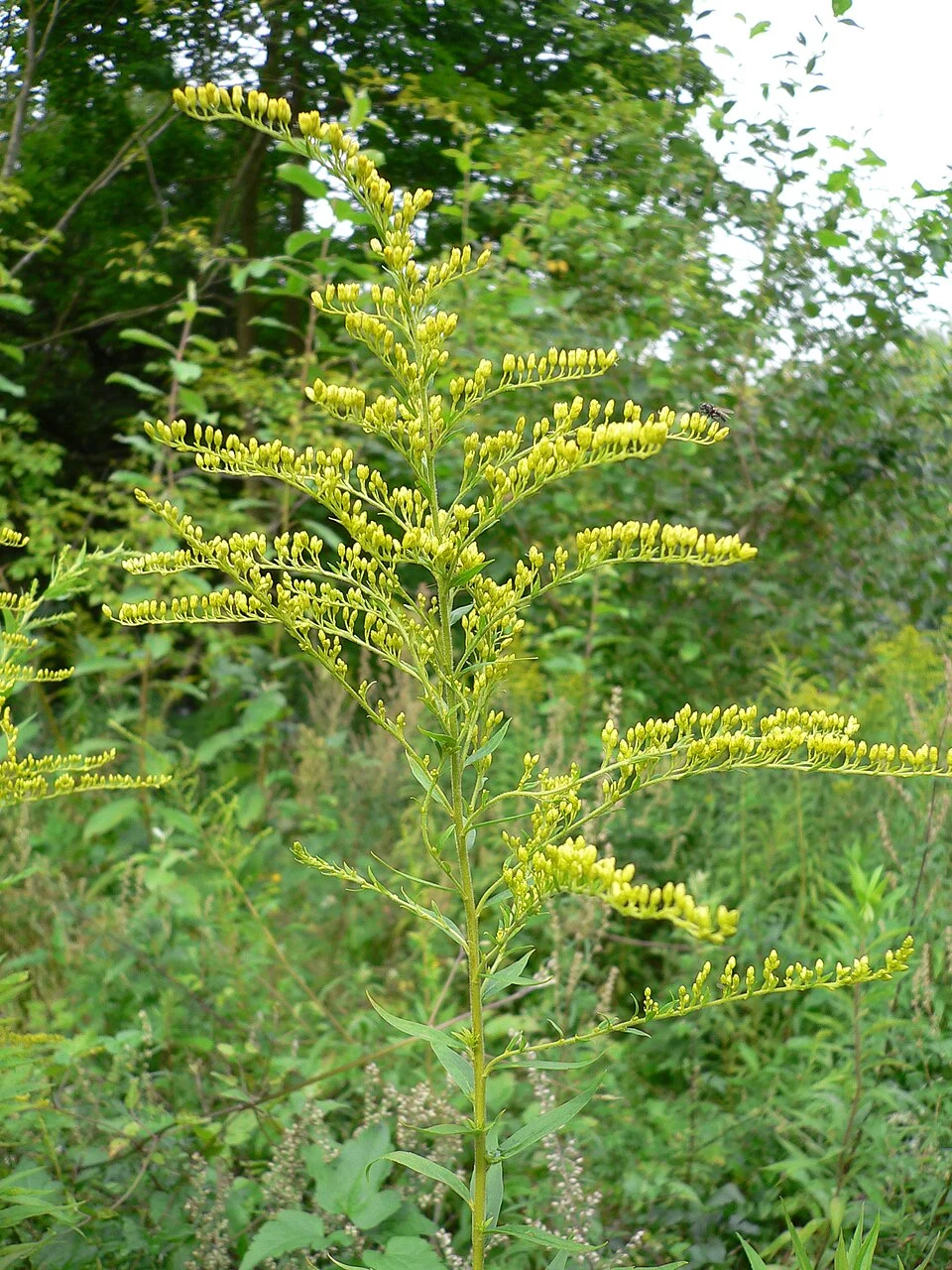
Image
source:https://worldoffloweringplants.com/solidago-canadensis-canadian-goldenrod/
▍Morphological Features
- Height: Grows up to 1.5-2 meters tall,
forming a robust
and
branching stem.
- Stem: Stems are erect and covered with fine
hairs,
often
green but may have a reddish hue especially towards the
base.
- Leaves: Leaves are narrow and lance-shaped,
measuring
about
5-15 cm long. They are arranged alternately along the stem
and have
serrated
edges.
- Flowers: Small yellow flowers appear in
dense clusters
at
the tips of branches from late summer into autumn, creating
a showy
display.
- Fruits: Tiny achenes (dry fruits) equipped
with small
tufts
of hair aiding in wind dispersal.
- Roots: A rhizomatous root system that helps
the plant
spread rapidly underground.
▍Cultivation Methods
| Parameter |
Specifications |
| Soil Type |
Grows well in most soil types but prefers moist, well-drained
soils.
Tolerates
both acidic and alkaline conditions.
|
| Sunlight Requirement |
Full sun to partial shade; best flowering occurs in full
sunlight.
|
| Water Requirement |
Moderate water needs; prefers moist conditions but can tolerate
short
periods of
drought once established.
|
▍Pest Management
Diseases
- Rust: Ensure good air circulation around plants and avoid
overhead
watering
to reduce rust incidence.
Pests
- Aphids: Use neem oil or insecticidal soap for control.
- Caterpillars: Regularly inspect leaves and remove by hand if
necessary;
use
appropriate pesticides if infestation is severe.
▍Applications
Ecosystem Services
Provides nectar and pollen for pollinators like
bees and
butterflies, contributing positively to local
biodiversity.
Medicinal Uses
Traditionally used in herbal medicine for
treating wounds,
inflammation, and respiratory issues due to its
anti-inflammatory
properties.
Ornamental Value
Its bright yellow flowers make it a suitable
choice for
naturalizing landscapes and wildflower gardens, particularly
in areas
where
other plants might struggle.
Stevia rebaudiana
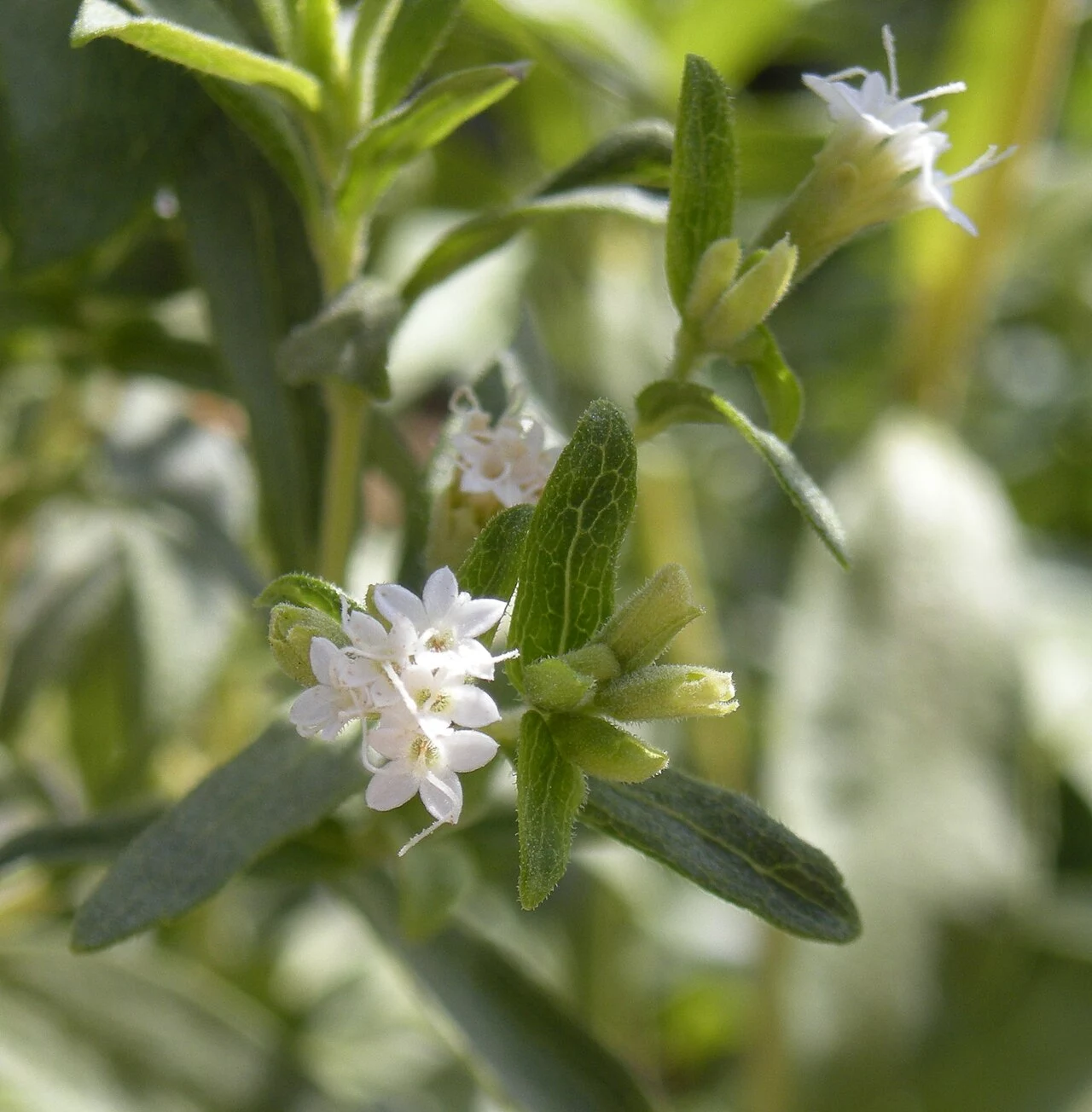
Image source:https://www.britannica.com/plant/stevia-plant
▍Morphological Features
- Height: Grows to a height of 30-80 cm,
forming a
compact
and bushy plant.
- Stem: The stems are erect and branching,
covered with
fine
hairs that give them a slightly fuzzy texture.
- Leaves: Leaves are opposite,
oblong-lanceolate,
measuring
about 2-3 cm wide and up to 7 cm long. They are dark green
and have a
slightly serrated edge.
- Flowers: Small white flowers appear in
clusters at the
tips
of branches from late summer into autumn, though stevia is
usually
harvested
before flowering for maximum sweetness.
- Fruits: Small dry fruits known as achenes,
containing
seeds
for propagation.
- Roots: A fibrous root system that supports
the plant's
growth and nutrient absorption.
▍Cultivation Methods
| Parameter |
Specifications |
| Soil Type |
Prefers well-drained sandy loam soil rich in organic matter.
Soil pH should
be
between 6.0 and 7.5.
|
| Sunlight Requirement |
Requires full sunlight for optimal growth and sweetener
production.
|
| Water Requirement |
Moderate water needs; prefers consistent moisture but does not
tolerate
waterlogged conditions.
|
▍Pest Management
Diseases
- Fungal Diseases: Ensure good air circulation around plants
and avoid
overhead watering to reduce fungal infections.
Pests
- Aphids: Use neem oil or insecticidal soap for control.
- Spider Mites: Monitor regularly and use appropriate
pesticides if
necessary.
▍Applications
Medicinal Uses
Traditionally used in South America for treating
various
ailments including diabetes due to its natural non-caloric
sweeteners,
primarily stevioside and rebaudioside A.
Culinary Uses
Widely used as a sugar substitute in foods and
beverages due
to
its high sweetness level and low caloric content. It is
suitable for
diabetics and those looking to reduce sugar intake.
Environmental Benefits
Its ability to grow in marginal soils reduces
the pressure
on
arable land and provides an alternative crop for sustainable
agriculture
practices.
Tagetes erecta
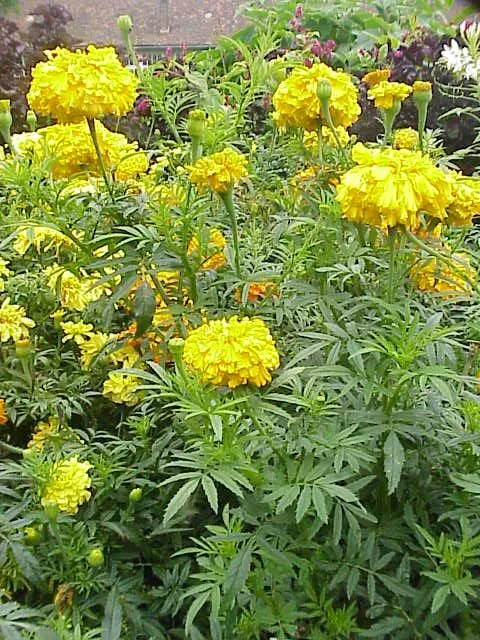
Image
source:https://ryelandgardens.com/plants/seasonal-tropicals/tagetes-erecta
▍Morphological Features
- Height: Grows up to 1 meter tall, forming a
robust and
bushy plant.
- Stem: The stems are sturdy, branching, and
covered with
fine hairs giving them a slightly rough texture.
- Leaves: Leaves are pinnately divided into
lance-shaped
segments, measuring about 5-15 cm long. They have a strong
scent which
can
repel certain pests.
- Flowers: Large, showy flowers in shades of
yellow,
orange,
or red appear from midsummer to autumn. Each flower head
consists of ray
florets surrounding disc florets.
- Fruits: Small dry fruits known as achenes
that contain
seeds for propagation.
- Roots: A fibrous root system that supports
the plant's
growth and nutrient absorption.
▍Cultivation Methods
| Parameter |
Specifications |
| Soil Type |
Grows well in most soil types but prefers well-drained loamy
soil. Soil pH
should be between 6.0 and 7.5.
|
| Sunlight Requirement |
Requires full sunlight for optimal growth and flowering. |
| Water Requirement |
Moderate water needs; prefers consistent moisture but does not
tolerate
waterlogged conditions.
|
▍Pest Management
Diseases
- Fungal Diseases: Ensure good air circulation around plants
and avoid
overhead watering to reduce fungal infections.
Pests
- Aphids: Use neem oil or insecticidal soap for control.
- Spider Mites: Monitor regularly and use appropriate
pesticides if
necessary.
▍Applications
Medicinal Uses
Traditionally used in herbal medicine for its
antiseptic and
anti-inflammatory properties. It is also believed to help
alleviate
digestive issues.
Culinary Uses
Flowers and leaves can be used to add color and
flavor to
salads
and other dishes. Its essential oils are also used in food
flavoring.
Ornamental Value
Its bright and vibrant flowers make it an
excellent choice
for
borders, containers, and mass plantings. It is widely used
in
landscaping
due to its ease of care and pest-repellent properties.
Taraxacum koksaghyz
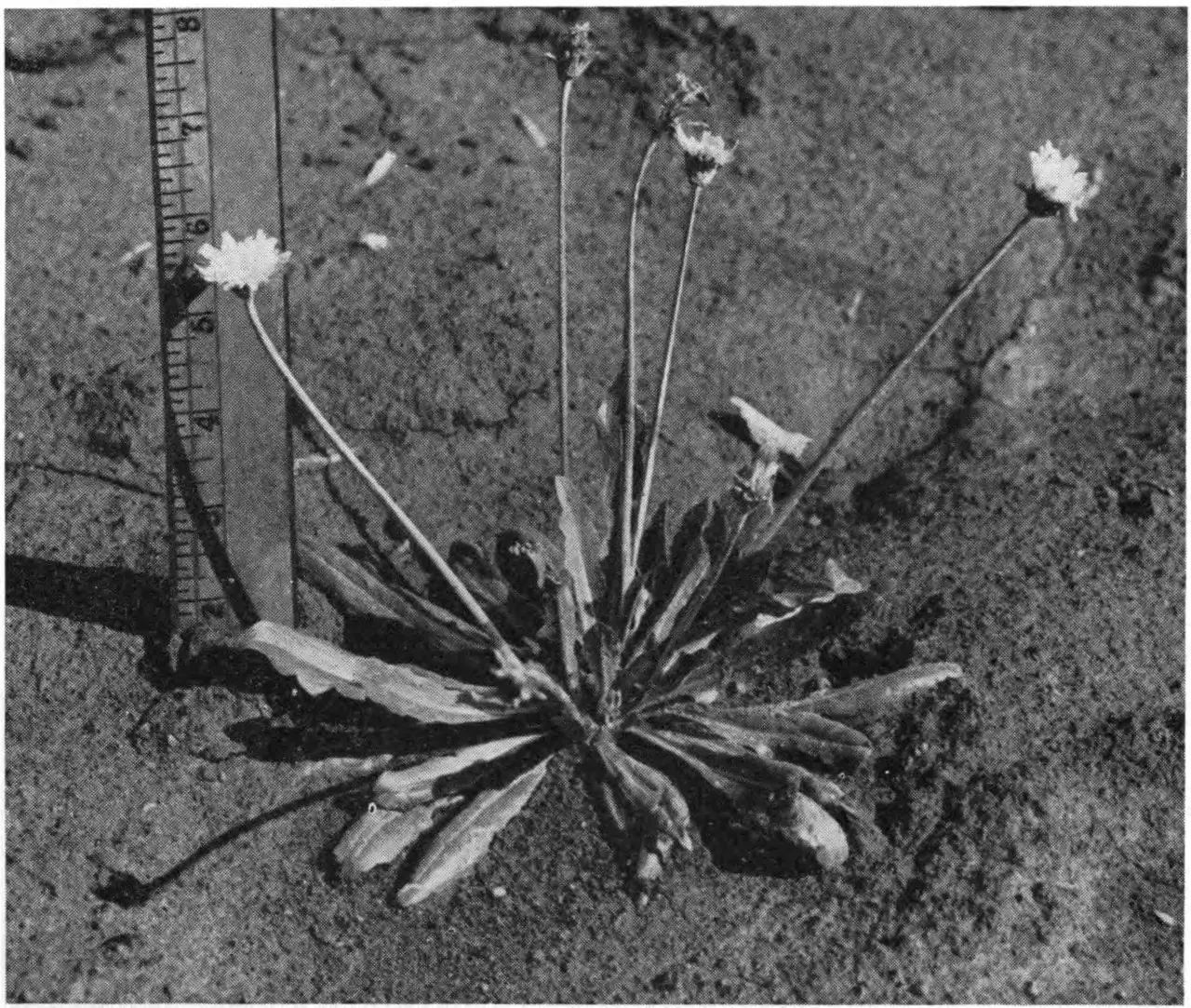
Image
source:https://www.inaturalist.org/taxa/897096-Taraxacum-kok-saghyz
▍Morphological Features
- Height: Typically grows to a height of
10-30 cm,
forming a
basal rosette of leaves.
- Leaves: Leaves are deeply lobed with jagged
edges,
growing
from the base in a rosette pattern. They are usually dark
green and can
grow
up to 20 cm long.
- Stem: The flower stalks are leafless and
hollow, rising
directly from the center of the leaf rosette.
- Flowers: Produces bright yellow flowers
that are
composite
heads consisting of ray florets only, typically blooming in
spring. Each
flower head is supported by a series of overlapping bracts.
- Fruits: Small, dry fruits known as achenes,
each
equipped
with a pappus (a tuft of hairs) for wind dispersal.
- Root: A deep taproot which stores nutrients
and water,
allowing it to survive under harsh conditions.
▍Cultivation Methods
| Parameter |
Specifications |
| Soil Type |
Prefers well-drained soils but is adaptable to various soil
types including
sandy or clay soils. Optimal growth occurs in slightly acidic to
neutral pH
levels.
|
| Sunlight Requirement |
Requires full sunlight for vigorous growth and flowering. |
| Water Requirement |
Moderate water needs; however, due to its deep root system, it
can tolerate
short periods of drought.
|
▍Pest Management
Diseases
- Rust: Avoid overcrowding and ensure good air circulation
around plants
to
prevent rust disease.
Pests
- Aphids: Regular monitoring and application of neem oil or
insecticidal
soap
can control aphid infestations.
- Caterpillars: Manual removal or use of biological controls
like Bacillus
thuringiensis can be effective.
▍Applications
Industrial Uses
Used as an alternative source for natural rubber
production
due
to its high latex content found in its roots, making it
valuable for
industrial applications.
Medicinal Uses
Traditionally used in herbal medicine for its
diuretic
properties and potential benefits for liver health. However,
caution
should
be exercised due to possible side effects.
Ecosystem Services
Its early blooming period provides an important
food source
for
pollinators like bees when other nectar sources may be
scarce.
Taraxacum mongolicum
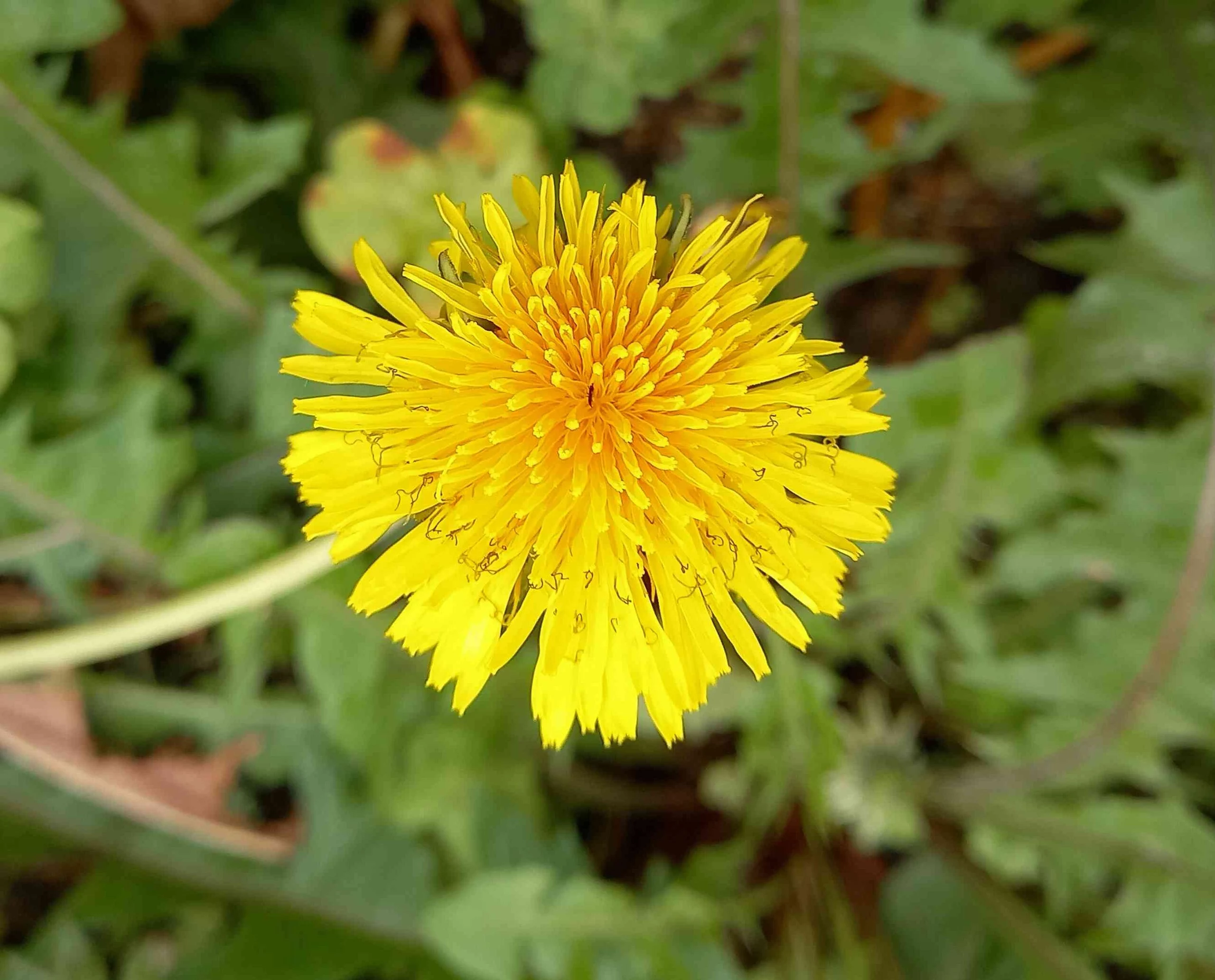
Image
source:https://www.innerpath.com.au/matmed/herbs/Taraxacum_officinale.htm
▍Morphological Features
- Height: Grows up to 10-20 cm tall, forming
a rosette of
leaves close to the ground.
- Leaves: Leaves are long and deeply lobed
with jagged
edges.
They grow from the base in a rosette pattern and can reach
lengths of up
to
20 cm.
- Stem: Flower stems are leafless, hollow,
and rise
directly
from the center of the leaf rosette.
- Flowers: Bright yellow flowers appear on
individual
stems,
each flower head composed entirely of ray florets, typically
blooming
from
spring through early summer.
- Fruits: Small, dry fruits known as achenes,
each
equipped
with a pappus (a tuft of hairs) for wind dispersal.
- Root: A thick taproot that stores nutrients
and water,
allowing the plant to survive harsh conditions.
▍Cultivation Methods
| Parameter |
Specifications |
| Soil Type |
Prefers well-drained loamy soils but is adaptable to various
soil types
including sandy or clay soils. Soil pH should be slightly acidic
to neutral.
|
| Sunlight Requirement |
Requires full sunlight for optimal growth and flowering. |
| Water Requirement |
Moderate water needs; however, due to its deep root system, it
can tolerate
short periods of drought.
|
▍Pest Management
Diseases
- Fungal Diseases: Avoid overwatering and ensure good air
circulation
around
plants to reduce fungal infections.
Pests
- Aphids: Regular inspection and use of neem oil or
insecticidal soap can
help
manage aphid populations.
- Slugs and Snails: Use barriers or baits to protect young
seedlings from
these pests.
▍Applications
Medicinal Uses
Traditionally used in Chinese medicine for
treating liver
disorders, detoxification, and as a diuretic. It is also
believed to
have
anti-inflammatory properties.
Culinary Uses
Young leaves can be eaten raw in salads or
cooked like
spinach.
Roots can be roasted and ground to make a coffee
substitute.
Ecosystem Services
Its early blooming period provides an important
food source
for
pollinators such as bees and butterflies when other nectar
sources may
be
limited.
Tetracentron sinense
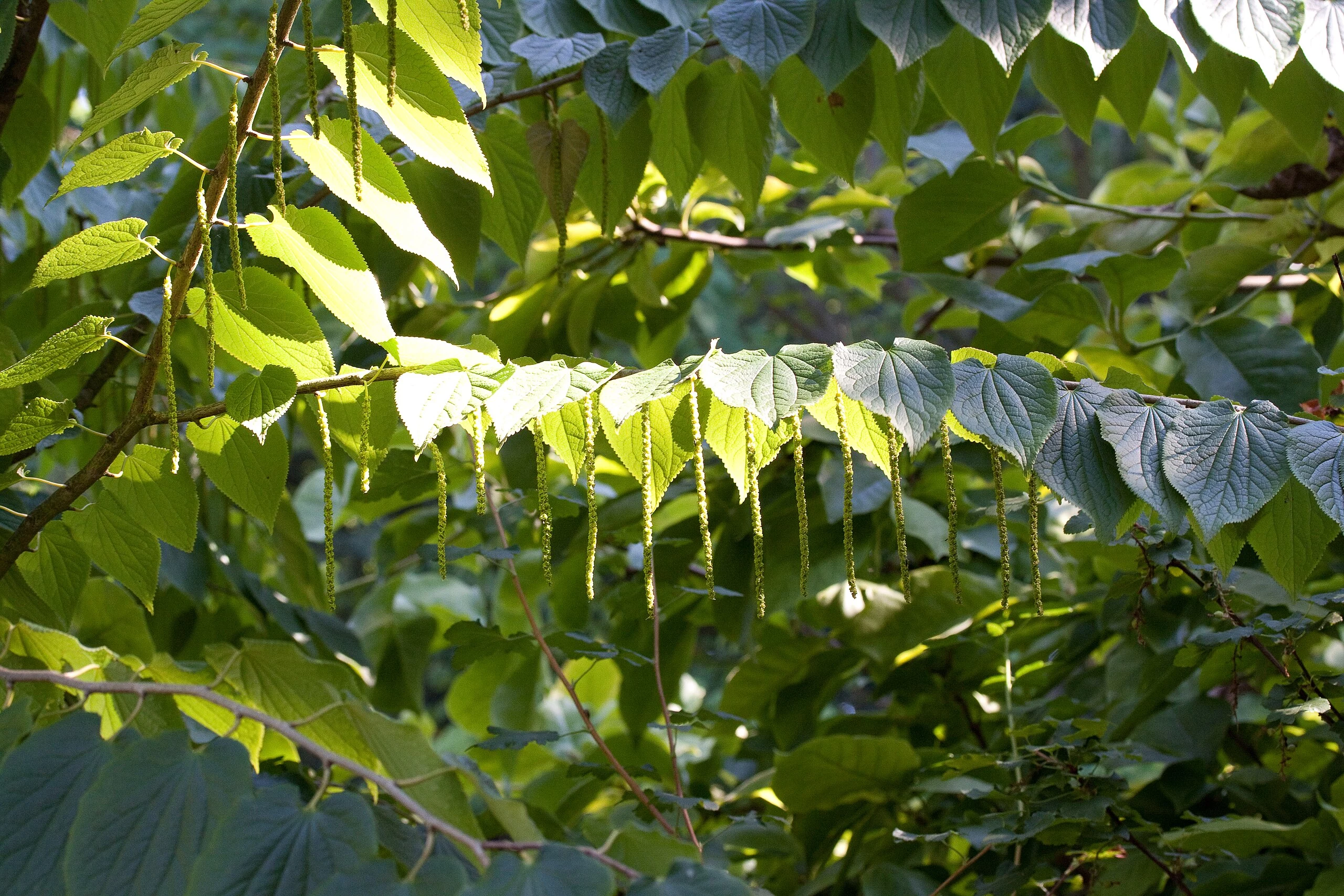
Image
source:https://baike.baidu.com/item/Tetracentron%20sinense/58338634
▍Morphological Features
- Height: Can grow up to 20 meters tall,
forming a large
tree
with a broad crown.
- Leaves: Leaves are simple, opposite or
whorled in
groups of
three to four, measuring about 8-15 cm long and 3-7 cm wide.
They are
elliptic to ovate in shape with serrated margins.
- Bark: The bark is grayish-brown and becomes
fissured as
the
tree matures.
- Flowers: Small, greenish-yellow flowers
appear in
clusters
at the ends of branches during late spring to early summer.
The species
is
dioecious, meaning male and female flowers are on separate
plants.
- Fruits: Fruits are small, woody capsules
that split
open
when ripe to release seeds.
- Roots: A deep root system supports the
tree's growth
and
stability, helping it withstand strong winds and soil
erosion.
▍Cultivation Methods
| Parameter |
Specifications |
| Soil Type |
Prefers well-drained loamy soils rich in organic matter but can
adapt to
various
soil types. Optimal pH range is between slightly acidic and
neutral.
|
| Sunlight Requirement |
Requires full sunlight to partial shade for healthy growth and
development.
|
| Water Requirement |
Moderate water needs; young trees require regular watering until
they become
established, after which they are more drought-tolerant.
|
▍Pest Management
Diseases
- Fungal Diseases: Ensure good air circulation around the
plant and avoid
overwatering to reduce the risk of fungal infections.
Pests
- Aphids: Regular monitoring and application of insecticidal
soap or neem
oil
can help control aphid populations.
- Caterpillars: Handpick caterpillars or use biological
controls such as
Bacillus thuringiensis for severe infestations.
▍Applications
Ecosystem Services
As a large tree, it provides significant
ecological benefits
including soil stabilization, carbon sequestration, and
habitat creation
for
wildlife.
Timber Uses
The wood is hard and durable, making it suitable
for
construction, furniture manufacturing, and crafting
high-quality
tools.
Ornamental Value
Its attractive foliage and form make it an
excellent choice
for
landscaping projects, especially in parks and gardens where
a large
canopy
is desired.
Vitis vinifera
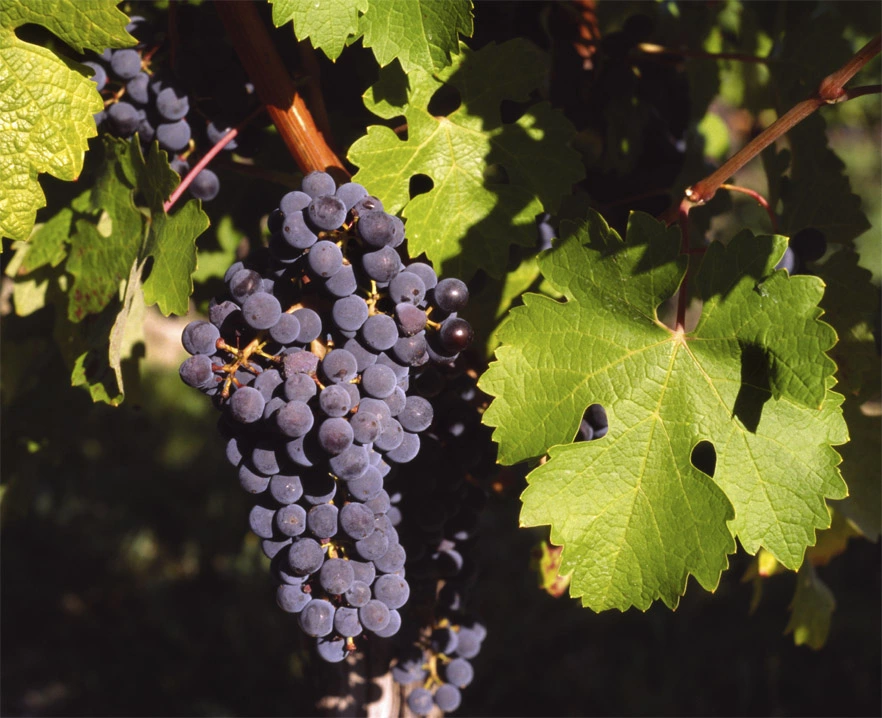
Image source:https://plantsam.com/vitis-vinifera-ssp-vinifera-cv/
▍Morphological Features
- Height: Vines can grow up to 30 meters in
length,
depending
on the support structure available.
- Leaves: Leaves are large, green, and
typically lobed
with
serrated edges. They provide an excellent canopy for grape
bunches.
- Stems: The stems are woody and produce
tendrils that
help
the vine climb and attach to supports.
- Grapes: Grapes come in a variety of colors
including
green,
red, and purple/black. Each cluster contains dozens of
small, round
fruits
rich in juice and sugars.
- Roots: A deep root system that allows the
plant to
access
water and nutrients from deeper soil layers, contributing to
its drought
tolerance.
- Flowers: Small, greenish-white flowers
appear in
clusters
and eventually develop into grapes after pollination.
▍Cultivation Methods
| Parameter |
Specifications |
| Soil Type |
Prefers well-drained loamy soils but is adaptable to various
types. Soil pH
should be between 5.5 and 7.0 for optimal growth.
|
| Sunlight Requirement |
Requires full sunlight for maximum fruit production and
quality.
|
| Water Requirement |
Moderate water needs; prefers consistent moisture but does not
tolerate
waterlogged conditions. Drip irrigation is recommended.
|
▍Pest Management
Diseases
- Fungal Diseases: Common diseases include powdery mildew and
downy
mildew.
Proper air circulation and fungicide applications are
essential for
control.
Pests
- Grapevine Moths: Use pheromone traps and insecticides as
needed to
manage
populations.
- Spider Mites: Regular monitoring and appropriate pesticide
application
can
keep infestations under control.
▍Applications
Wine Production
The primary use of Vitis vinifera is for wine
production,
with
different varieties suited to producing specific styles of
wine such as
red,
white, and sparkling wines.
Fresh Consumption
Many varieties are grown specifically for fresh
consumption,
offering a sweet and refreshing snack high in vitamins and
antioxidants.
Juice and Raisins
Used in the production of grape juice and
raisins, both of
which
are popular food items worldwide. Juice can also be
fermented to create
non-alcoholic beverages.
Ageratina adenophora
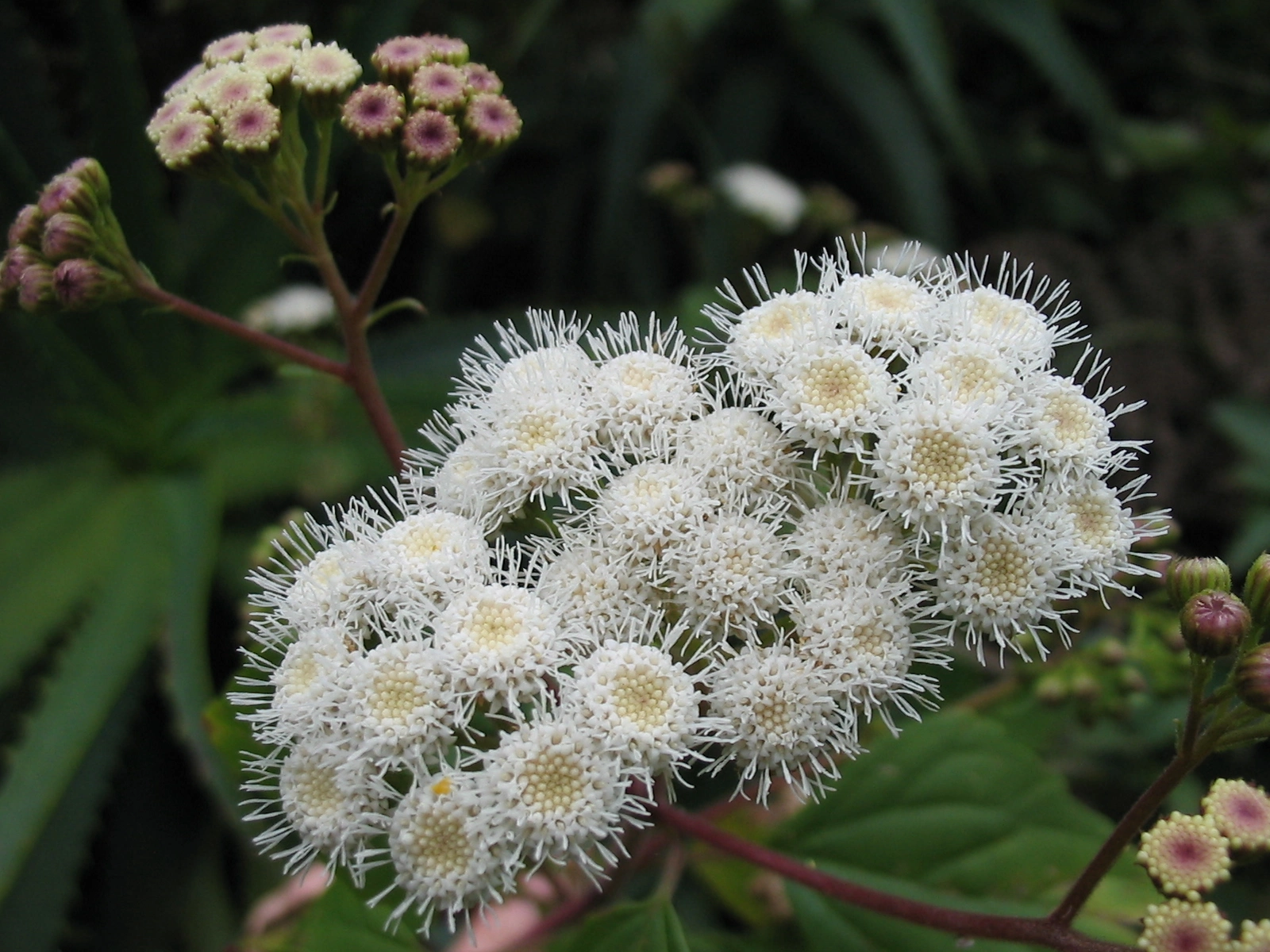
Image source:https://en.wikipedia.org/wiki/Main_Page
▍Morphological Features
- Height: Typically 30–90 cm tall, sometimes
reaching 1–2 meters
- Stem: Erect, branched, stem and petiole purple,
surfaces often pubescent with white or ferruginous short hairs
- Leaves: Opposite, thin, ovate to
triangular-ovate or rhombic-ovate, 4–13 cm long, margin with
coarse rounded teeth, base truncate or slightly cordate, petiole
4–5 cm long, sparsely hairy on both sides
- Flowers: White or pale purple,tubular florets
forming a capitulum,bisexual
- Fruits: Achene,dark brown, narrowly ellipsoidal
in shape
- Roots: Root system well-developed and
extensively spreading
▍Cultivation Methods
| Parameter |
Specifications |
| Soil Type |
sandy loam or red earth(pH 5.5-7.0) |
| Germination Temp |
20℃-28℃(Optimal) |
| Planting Density |
intensive planting |
▍Pest Management
Diseases
- leaf spot diseases:(mancozeb wettable powder)
Pests
- Procecidochares utilis
- Xuanpi Longhorn Beetle
▍Applications
Energy feed
solid fuel and pig feed
Allelochemicals
For the development of natural herbicide
Ecological
Soil conservation plant
Artemisia ludoviciana
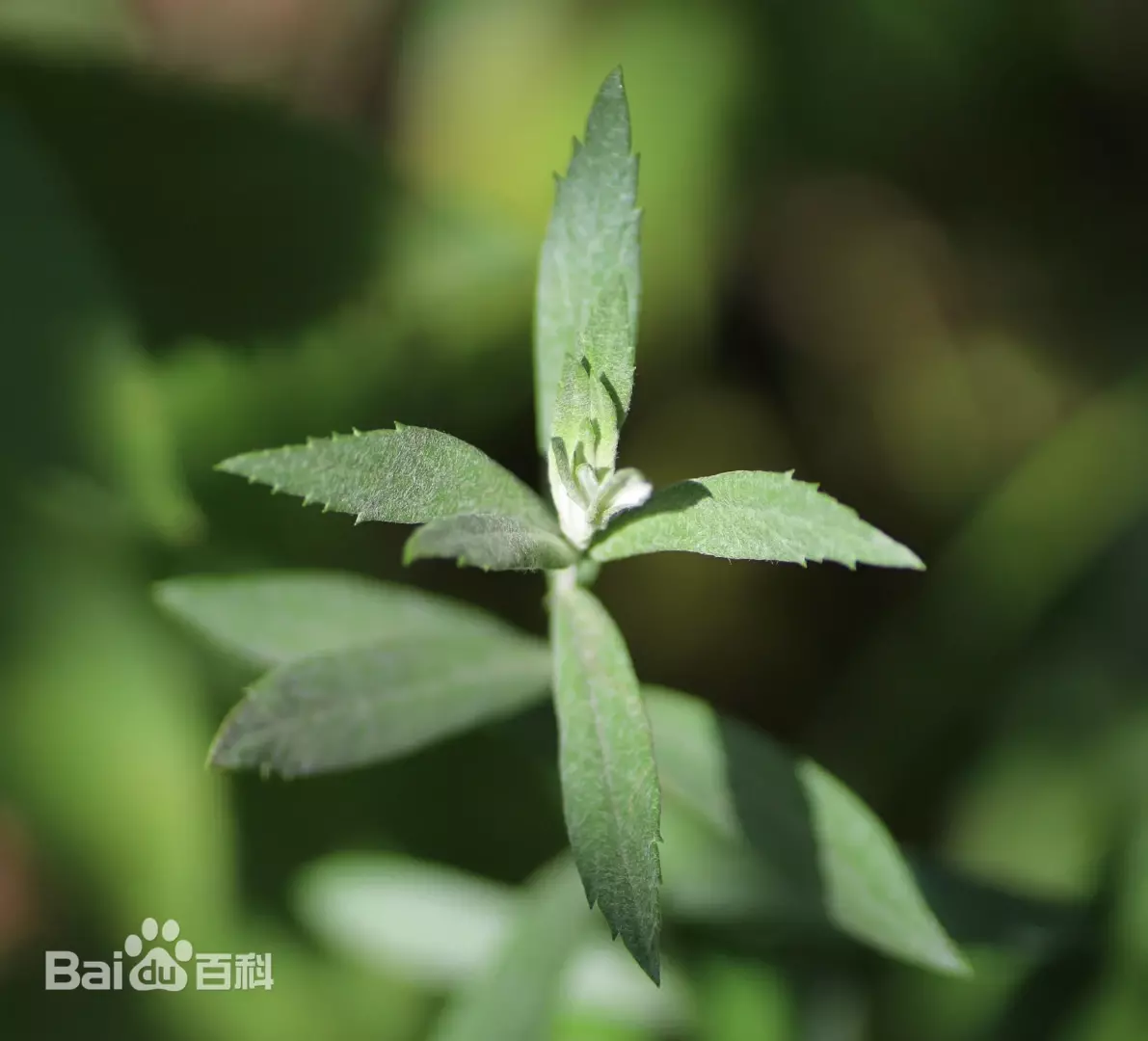
Image source:https://baike.baidu.com/
▍Morphological Features
- Height: Typically 30-100 cm tall
- Stem: erect
- Leaves: Pinnately lobed,covered with a
silvery-white fuzz.
- Flowers: White,tubular florets small,densely
arranged in spike-like clusters, forming an open panicle
- Fruits: Achene,elliptical,slightly flattened
- Roots: Root system well-developed,adaptable
▍Cultivation Methods
| Parameter |
Specifications |
| Soil Type |
Prefers well-drained sandy loam; tolerant of poor soils and highly
adaptable |
| Germination Temp |
Optimal temperature 18-24°C; avoids extreme temperatures |
| Planting Density |
4,800-10,000 plants per acre, balancing ventilation and growth space
|
▍Pest Management
Diseases
- Powdery Mildew:(50% Carbendazim)
- Leaf spot disease:(mancozeb wettable powder)
Pests
- Aphids:(10% Imidacloprid SC )
- Red spider mites:(Abamectin EC)
▍Applications
Widely used to relieve pain and treat gastrointestinal disorders
Artemisia princeps
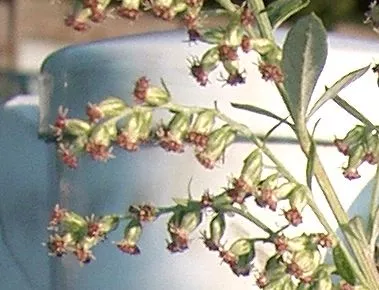
Image source:https://en.wikipedia.org/wiki/Main_Page
▍Morphological Features
- Height: Typically 60–150 cm tall
- Stem: Erect, purple-brown or brown, with
longitudinal ridges. Stems and branches initially covered with
spiderweb-like fine hairs; lower hairs gradually shed, becoming
glabrous.
- Leaves: Leaf surface glabrous, while underside
densely covered with grayish-white, arachnoid tomentum. Lower
leaves ovate or oblong-ovate, once or twice pinnately deeply
lobed, with 2 lobes per side, long-petiolate, withering during
flowering; middle leaves ovate or ovate-elliptic, 6–12 cm long,
pinnately deeply lobed or semi-lobed, rarely fully lobed, with
2(3) lobes per side. lobed segments elliptic-lanceolate or
elliptic, median lobe larger than lateral lobes; basal segments
of lateral lobes larger than lateral and median segments, entire
or with 1–2 sparse teeth per side; petiole 1–2(-3) cm long, with
small stipules at base; upper leaves pinnately deeply or
partially lobed, with 1–2 segments per side; Bract leaves 3,
deeply lobed or entire.
- Flowers: capitula oblong or oblong-ovate
- Fruits: Achene, elliptic or obovoid-elliptic
- Roots: The main root is slightly thick,
numerous lateral roots
▍Cultivation Methods
| Parameter |
Specifications |
| Soil Type |
sandy loam or loam soil(pH 6.5-8.0) |
| Germination Temp |
20℃-23℃(Optimal) |
| Planting Density |
0.8–1 plant per square meter |
▍Pest Management
Diseases
- Root Rot: Caused by poor soil drainage, leading to waterlogged
roots. Prevent by improving soil structure (e.g., adding
perlite, sand, or grit) and ensuring well-drained planting
sites.
- Leaf Spot: Fungal or bacterial infections resulting in
brown/black leaf spots. Manage by avoiding overhead watering (to
keep foliage dry) and ensuring good air circulation around
plants.
- Minimal Issues in Native Habitat: Japanese mugwort is native to
East Asia (China, Japan, Korea) and experiences few pest or
disease problems in its natural environment due to balanced
ecosystems and adaptive traits.
Pests
- Aphids & Whiteflies: Sap-sucking insects that cause leaf
distortion, yellowing, and honeydew secretion. Control with neem
oil (disrupts growth/reproduction) or insecticidal soap
(suffocates pests on contact). Both are organic and safe for
beneficial insects when used as directed.
- Caterpillars: Larvae that feed on leaves, creating holes and
defoliation. Remove manually (by hand or with tweezers) to
prevent damage, especially in small gardens or indoor settings.
▍Applications
Medicinal
Anti-inflammatory , Antioxidant Effects,Anti-cancer
Effects
Ecological
can be used as livestock feed
Cosmetics and Skincare antioxidant, skin conditioning,
anti-aging, skin brightening
Bidens hawaiensis
▍Morphological Features
- Height
- Stem: Erect, suffrutescent (woody at base),
branched; green to reddish; glabrous or sparsely hairy .
- Leaves: Simple, oblong-ovate, 7–16(–20) cm long
(incl. petiole), 2–6 cm wide; margins serrate; base broadly
cuneate; glabrous or sparsely pubescent on veins .
- Flowers: Heads in compound cymes , 3–5 cm
diameter; yellow ray florets (7–10, sterile); yellow disk
florets (22–32); blooms year-round (sporadic) .
- Fruit: Achenes black, straight, wingless, 8–13
mm long, 1–1.5 mm wide; glabrous;
- Root system: Taprooted, woody base,
well-branched; adapted to volcanic/rocky soils.
▍Cultivation Methods
| Parameter |
Specifications |
| Soil Type |
Prefers moist, fertile, well-drained sandy loam; tolerant of poor
soils but intolerant of waterlogging |
| Germination Temp |
Optimal temperature 18-25°C; can withstand extreme temperatures
briefly but prolonged exposure inhibits growth |
| Planting Density |
Approximately 200,000-300,000 plants per hectare (200-300 plants per
square meter); timely thinning required for adjustment |
▍Pest Management
Diseases
- Root rot: improve drainage
- leaf spot: avoid wet foliage
- minimal issues in native habitat.
Pests
- Aphids, whiteflies: neem oil/insecticidal soap
- caterpillars: manual removal.
▍Applications
Medicinal
Traditional Hawaiian use for herbal tea (ko?oko?olau
tea), digestive support, and general wellness .
Ecological
Hawai?i Island endemic; found in open shrubland, old
lava flows, mesic forests (50–1950 m); biodiversity conservation
subject .
Calendula officinalis
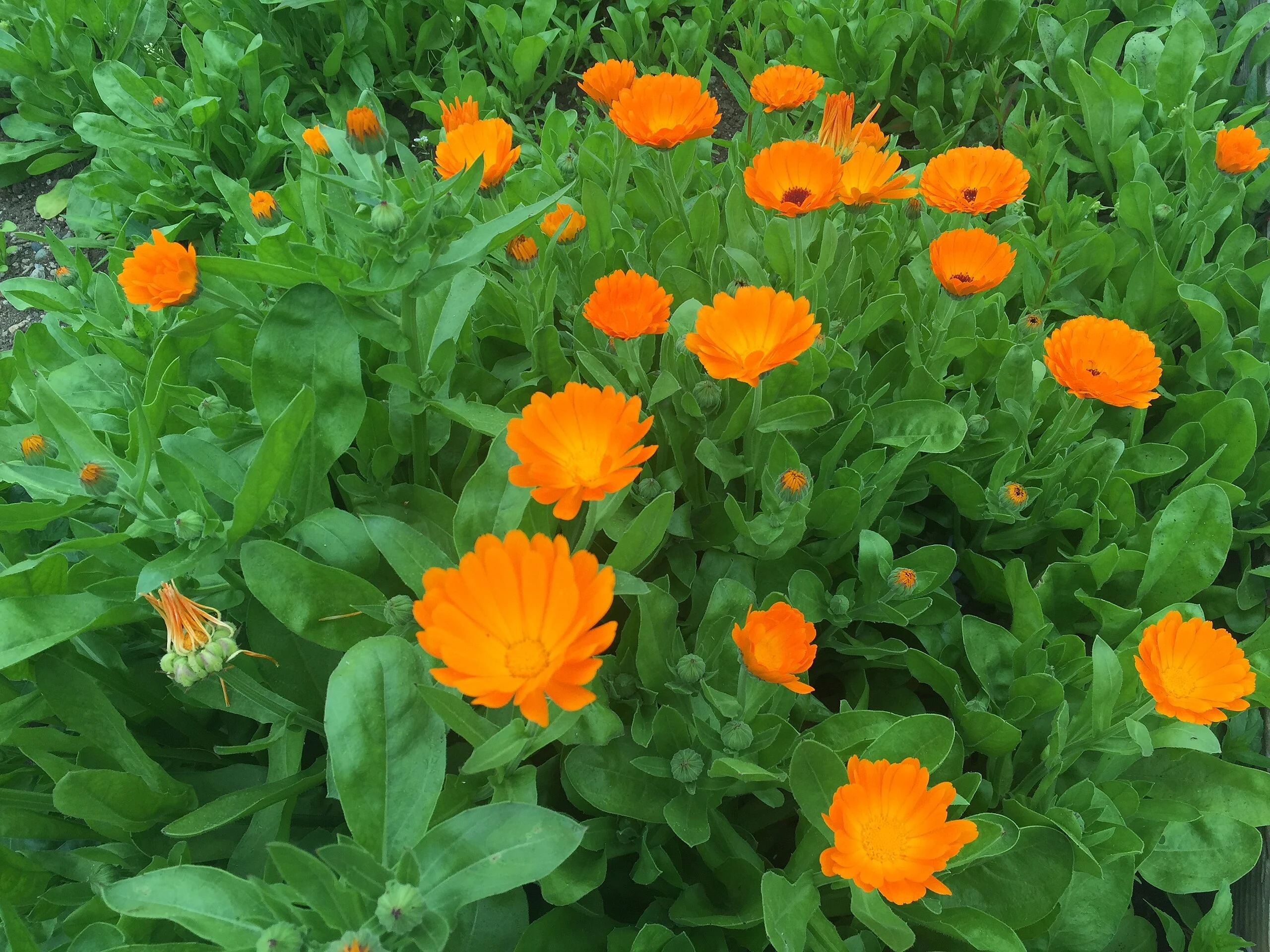
Image source:https://en.wikipedia.org/wiki/Main_Page
▍Morphological Features
- Height: Typically 30–60 cm tall (occasionally
to 75 cm) .
- Stem: Erect, angular, branched from base/upper
parts; green, glandular-pubescent (sticky hairs); ribbed.
- Leaves: Alternate; lower leaves
spatulate/oblong-obovate (15–20 cm, petiolate); upper leaves
lanceolate/oblong (5–15 cm, sessile, clasping); pale green,
hairy, aromatic;
- Flowers: Solitary capitula at stem apex, 4–5 cm
diameter; ray florets yellow/orange (sterile); disc florets
yellow (fertile); blooms April–September.
- Fruit: Achenes curved, nail-like, 1–1.5 cm;
pale yellow/brown; outer achenes incurved, with small
spines/ridges; no pappus;
- Root system: Fibrous root system, shallow,
well-branched; adapted to loose soils.
▍Cultivation Methods
| Parameter |
Specifications |
| Soil type |
Prefers loose, fertile, well-drained loam/sandy loam; (PH 6.0-7.0)
avoids waterlogging . |
| Germination temperature |
15–25°C (optimum ~20°C); |
| Planting density |
Ornamental: 30–40 cm row spacing, 20–30 cm plant spacing; dense
planting for ground cover. |
▍Pest Management
Diseases
- Root Rot: Improve soil drainage by adding perlite, sand, or grit
- avoid overwatering.
- Powdery Mildew: Ensure good air circulation
- avoid overhead watering to keep foliage dry.
- Leaf Spot: Remove infected leaves promptly
- avoid wetting foliage.
- Rust: Apply phosphorus-potassium fertilizer to boost plant
resistance
- maintain proper spacing for ventilation.
- Downy Mildew: Control soil moisture
- avoid dense planting.
Pests
- Aphids, Spider Mites, Mealybugs: Treat with neem oil or
insecticidal soap.
- Fungus Gnats: Reduce soil moisture
- use yellow sticky traps for adults.
- Cutworms: Handpick larvae at night
- apply soil treatments if necessary.
▍Applications
Medicinal
Anti-inflammatory, antimicrobial, wound-healing;
used in creams, teas, tinctures; treats skin irritations.
Ornamental
Popular garden/container flower; long bloom; cut
flowers; mass planting/edging.
Industrial
Natural yellow/orange food dye (petals); essential
oil for cosmetics.
Ecological
Pollinator-friendly; cover crop for soil protection;
phytoremediation potential.
Carduus pycnocephalus
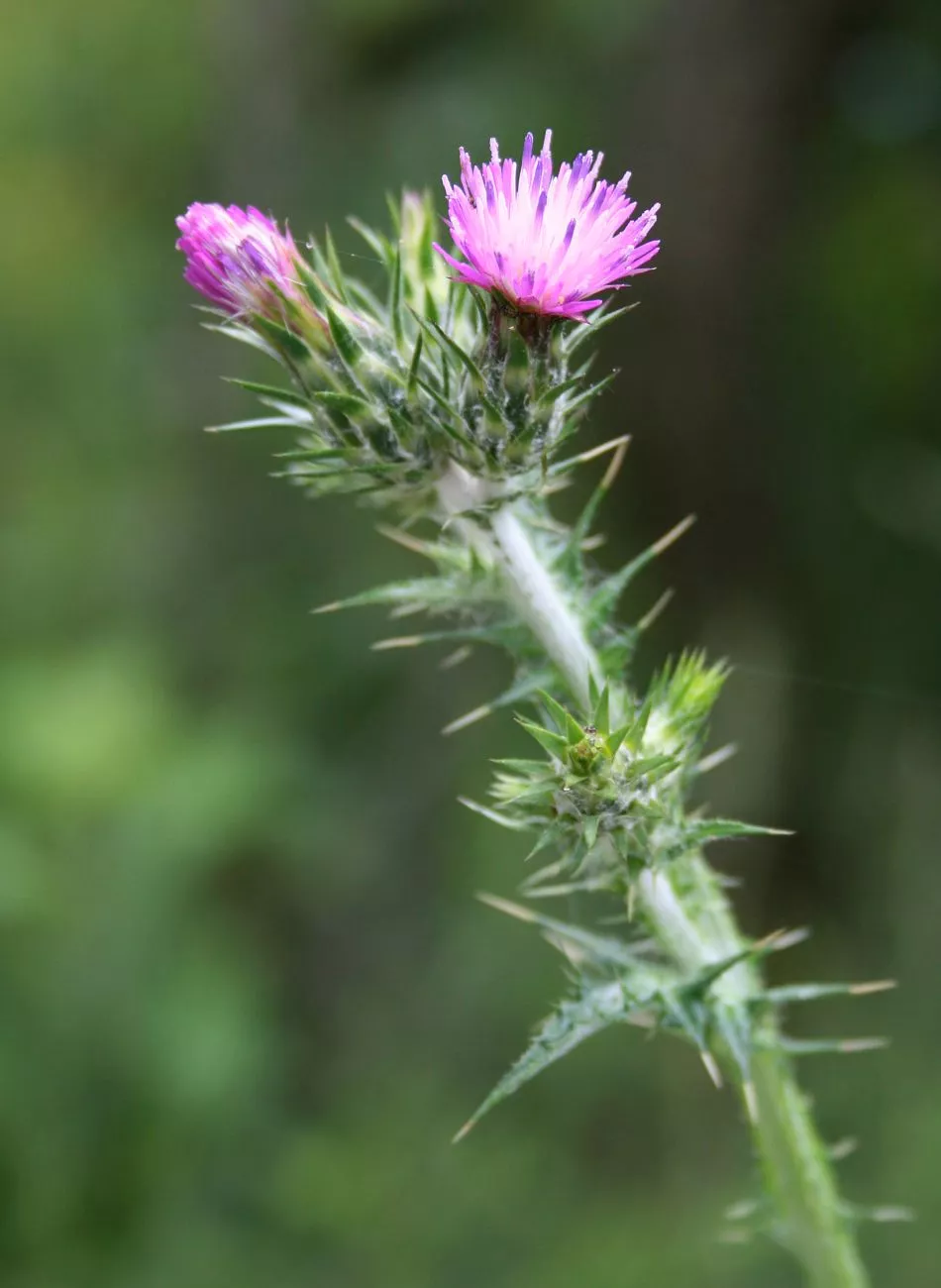
Image source:https://en.wikipedia.org/wiki/Main_Page
▍Morphological Features
- Height: 30-150 cm (commonly 50-100 cm)
- Stem: Erect, with longitudinal ridges and green
wing-like structures, densely covered with spines, branches
slender
- Leaves: Alternate; lower leaves pinnately
deep-lobed with spiny margins; upper leaves smaller, decurrent
into wings
- Flowers: Pendulous or nodding capitulum,
purplish-red tubular florets, multi-layered spiny involucral
bracts
- Fruit: Grayish-yellow wedge-shaped achene,
topped with white bristle-like pappus for wind dispersal
- Root System: Thick taproot with well-developed
lateral roots, secretes organic acids to dissolve minerals
▍Cultivation Methods
| Parameter |
Specifications |
| Soil Type |
Sandy loam or general soil (pH 6.0-7.5), tolerant of poor soils |
| Germination Temperature |
15-20°C (sprouts in ~10 days when sown in spring) |
| Planting Density |
Row spacing 45 cm, plant spacing 30 cm |
▍Pest Management
Diseases
- Powdery mildew: Spray 25% Triadimefon WP
- Root rot: Drainage in rainy season + soil sterilization
- Gray mold: Crop rotation + ventilation to reduce humidity
Pests
- Aphids: Spray 10% Imidacloprid SC
- Spider mites: Spray Abamectin EC
▍Applications
Clears heat and promotes diuresis (treats chyluria, urinary
infections)
Cools blood and stops bleeding (treats hematemesis, epistaxis,
menorrhagia)
Dispels wind and detoxifies (external use for boils and
abscesses)
Nectar plant for pollinators
Phytoremediation (tolerant to heavy metal pollution, accumulates
zinc up to 200× environmental levels)
Soil conservation (robust root system stabilizes soil)
Dittrichia graveolens
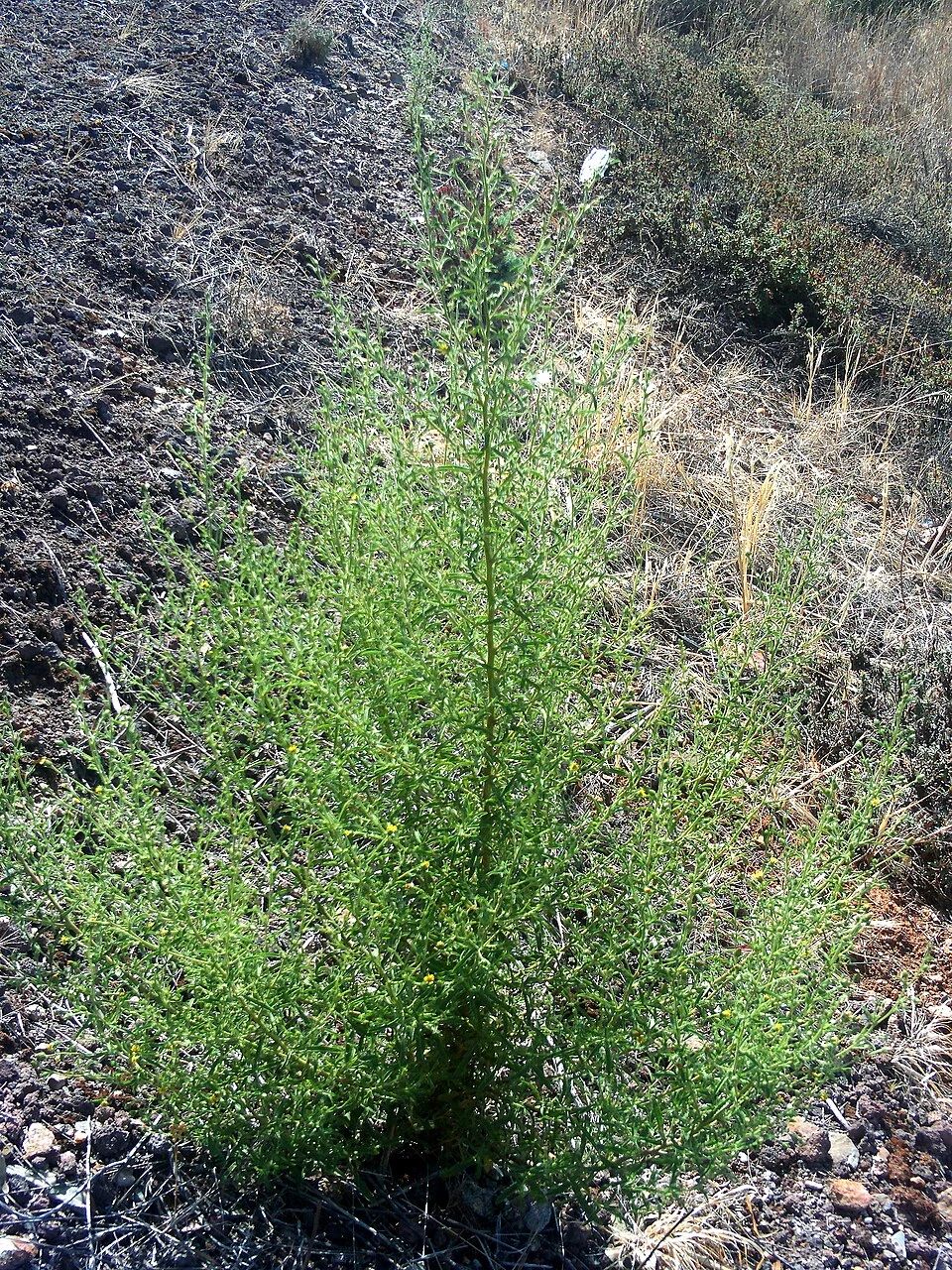
Image source:https://en.wikipedia.org/wiki/Main_Page
▍Morphological Features
- Height: Usually 30-70 cm tall, with some plants
reaching over 1 meter.
- Stem: Erect or multi-branched at the base,
prostrate in growth, smooth and glabrous on the surface,
slightly lignified at the lower part.
- Leaves: Alternate, fleshy, deeply divided into
filiform or narrowly linear leaflets, entire margin,
grayish-green.
- Flowers: Solitary at the apex of branches,
opposite to leaves; petals yellowish-white, obovate-oblong,
1.5-2 cm long.
- Fruit: Capsule subglobose, brown, splitting
into 3 valves when mature; seeds triquetrous, blackish-brown,
with small tuberculate protrusions on the surface.
- Root system: Taproot stout, up to 2 cm in
diameter, with well-developed lateral roots extending deep
underground, adapted to arid environments.
▍Cultivation Methods
| Parameter |
Specifications |
| Soil type |
Sandy loam or desert sandy soil, saline-alkali tolerant, pH 7.5-8.5,
with good drainage. |
| Germination temperature |
15-25°C (optimal), suitable for sowing in spring. |
| Planting density |
Row spacing 40-50 cm, plant spacing 30-40 cm, about 3000-4000 plants
per mu. |
▍Pest Management
Diseases
- Powdery mildew: Spray with 50% Tricyclazole WP or 25%
Triadimefon WP at 1500x dilution
- Root rot: Crop rotation and drainage, drench with Carbendazim at
the early stage of infection.
Pests
- Aphids: Spray with 10% Thiamethoxam SC or 25% Phosmet EC at
1000x dilution
- Noctuid larvae: Spray with 80% Dichlorvos EC at 1500x dilution.
▍Applications
Medical use
Traditional Uyghur and Mongolian medicine, used for
relieving cough and asthma, dispelling wind-dampness,
detoxification, etc.; contains alkaloids such as harmaline, and
modern studies show its potential in anti-tumor and
antibacterial effects.
Ecological role
Pioneer plant in deserts and saline-alkali lands,
for windbreak, sand fixation and soil improvement.
Other uses
Can be used as forage (young stems and leaves),
seeds can be pressed for oil for industrial or lighting
purposes.
Erigeron philadelphicus
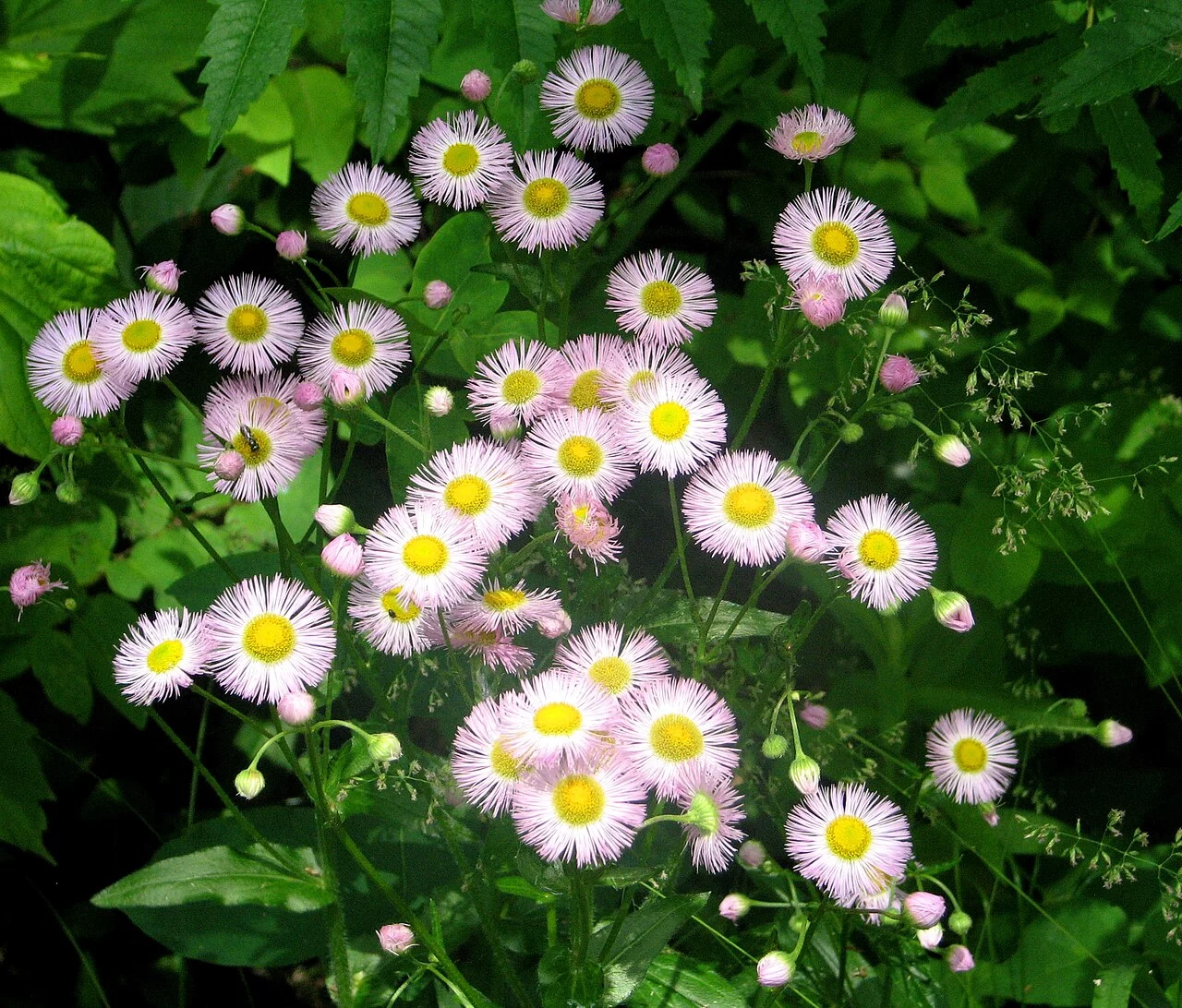
Image source:https://en.wikipedia.org/wiki/Main_Page
▍Morphological Features
- Height: Usually 30-90 cm tall.
- Stem: Erect, relatively stout, green, upper
part branched, whole plant covered with long stiff hairs and
short stiff hairs.
- Leaves: Simple, alternate; basal leaves in
rosettes, spatulate, ovate or ovate-lanceolate, 5-12 cm long,
2-4 cm wide, apex acute or obtuse, base cuneate-decurrent into
long winged petioles, base of petioles often purplish, both
surfaces covered with appressed stiff hairs, margin coarsely
toothed; cauline leaves semi-amplexicaul, gradually smaller.
- Flowers: Several capitula arranged in corymbose
or paniculate inflorescences; involucre hemispherical, bracts in
3 layers, lanceolate, pale green, margin translucent, midvein
brown, hairy abaxially; ray florets ligulate, ligules linear,
white slightly pinkish; tubular florets yellow.
- Fruit: Achenes flattened, oblong, with pappus,
small and light, suitable for wind dispersal.
- Root system: No obvious taproot, many branches,
fibrous roots well developed and widely spreading.
▍Cultivation Methods
| Parameter |
Specifications |
| Soil type |
Loose, fertile, well-drained sandy loam or humus soil, pH 6.0-7.5,
tolerant to poor soil. |
| Germination temperature |
15-25°C (optimal), suitable for sowing in spring or autumn,
germinating in about one week. |
| Planting density |
Row spacing 30-40 cm, plant spacing 20-30 cm. |
▍Pest Management
Diseases
- Powdery mildew: Spray with 50% Tricyclazole WP or 25%
Triadimefon WP at 1500x dilution
- Root rot: Crop rotation and drainage, avoid waterlogging, drench
with Carbendazim at early stage.
Pests
- Aphids: Spray with 10% Thiamethoxam SC or 25% Phosmet EC at
1000x dilution
- Noctuid larvae: Spray with 80% Dichlorvos EC at 1500x dilution.
▍Applications
Ecological role
As an alien invasive species, it often grows on
roadsides, wastelands and fields; can be used as a pioneer plant
to quickly cover the ground, but may inhibit the growth of
native plants.
Ornamental
Flowering from March to May, flower shape similar to
daisies, suitable for flower borders, wildflower combinations or
natural landscapes.
Medicinal use
Whole herb can be used as medicine, with functions
of clearing heat, detoxifying and stopping bleeding; modern
studies show certain antibacterial and anti-inflammatory
effects.
Filago lutescens

Image source:NA
▍Morphological Features
- Height: Usually 10-30 cm tall, 0.5-0.8 mm in
diameter.
- Stem: Culms tufted, erect or slightly inclined
at base, longitudinally striate, scabrous, usually with 3-7
nodes; nodes bearded with white hairs, rarely branched.
- Leaves: Simple, alternate; leaf sheaths shorter
or longer than internodes, membranous at margin, thinly ciliate
at throat or margin; ligule short, ciliate; leaf blades linear,
flat, 1.5-5 cm long, 1-4 mm wide, apex acuminate, slightly
scabrous and puberulent on both surfaces.
- Flowers: Raceme spike-like, solitary at apex,
1.5-3 cm long, slender, slightly curved, creamy yellow; sessile
spikelets less than 2 mm long, base hairs as long as or slightly
longer than spikelet; glumes fringed with cilia, second glume
with golden awn 10-15 mm long; stamen 1, anther about 1 mm long.
Flowering and fruiting period: May to September.
- Fruit: Caryopsis ovoid-oblong, small and light,
easy to shed and disperse.
- Root system: Slender and dense roots, basal
tillers usually clustered, fibrous roots well developed, adapted
to poor environments.
▍Cultivation Methods
| Parameter |
Specifications |
| Soil type |
Loose, well-drained sandy loam or rocky lean soil, pH 6.0-7.5,
tolerant to infertility, preferring semi-shade or scattered light,
avoiding waterlogging. |
| Germination temperature |
15-25°C (optimal), suitable for sowing in spring, germinating in
about 7-10 days. |
| Planting density |
Row spacing 20-30 cm, plant spacing 15-20 cm, about 150-200 plants
per square meter. |
▍Pest Management
Diseases
- Powdery mildew: Spray with 25% Triadimefon WP at 1500x dilution
at early stage
- Root rot: Improve drainage, drench with 50% Carbendazim WP at
500x dilution.
Pests
- Aphids: Spray with 10% Imidacloprid WP at 1500x dilution
- Underground pests: Mix soil with 50% Phoxim EC at 1000x dilution
before sowing.
▍Applications
Medicinal use
Whole herb used as medicine, with effects of
clearing heat and detoxifying, cooling blood to stop bleeding,
inducing diuresis and treating stranguria; used for cold and
fever, hepatitis, nephritis, urinary tract infection, etc.
Ecological use
Drought and poor soil tolerant, can be used as
pioneer plant for rocky desertification and slope greening,
stabilizing soil and preventing erosion.
Other uses
Can be used as raw material for herbal tea; dried
stems used as fuel; young plants used as fodder; also used as
matching material in floral art
Gnaphalium uliginosum
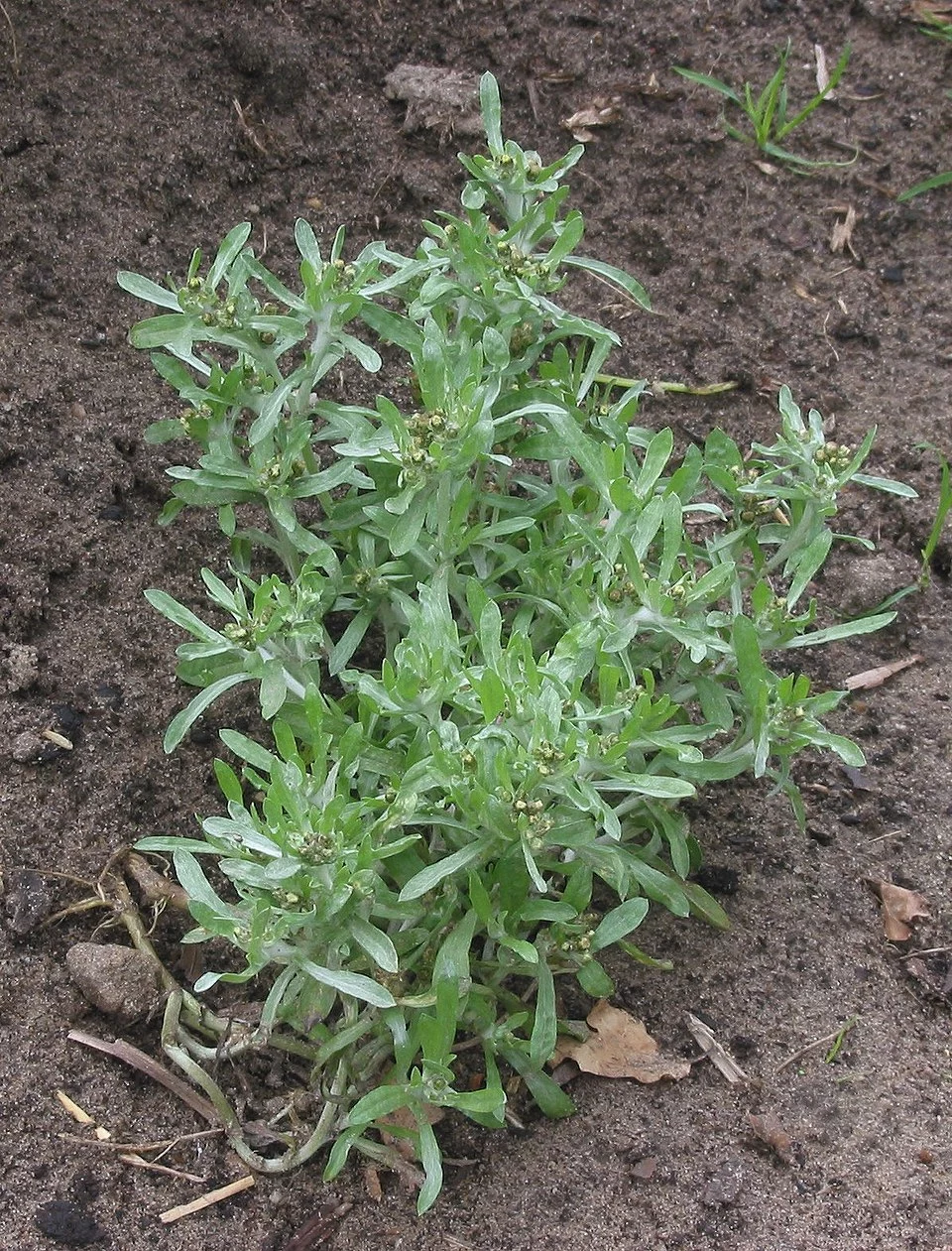
Image source:https://en.wikipedia.org/wiki/Main_Page
▍Morphological Features
- Height: Usually 10-20 cm tall, up to 40 cm,
- Stem: erect, slightly woody at base, tufted and
ascending branches; densely covered with white floccose
tomentum, internodes short (5-10 mm).
- Leaves: Simple, alternate; basal leaves
persistent at anthesis, in rosettes; median leaves oblong-linear
or linear-lanceolate, 2-4(-7) cm long, 2-4 mm wide, sessile,
white tomentose on both surfaces.
- Flowers: Capitula clustered at apex of
branches, involucres 3-seriate, membranous; florets tubular,
pale yellow; pappus white, scabrous, deciduous. Flowering
period: July-October.
- Fruit: Achenes fusiform, about 0.7 mm long,
papillose, easily dispersed by wind.
- Root system: Mainly fibrous roots, slender and
dense, shallowly rooted, adapted to wet habitats.
▍Cultivation Methods
| Parameter |
Specifications |
| Soil type |
Prefers moist, fertile, loose loam or sandy loam, pH 6.0-7.5,
moisture-tolerant but avoiding waterlogging; often grows in wet
grasslands, riverbanks and valleys. |
| Germination temperature |
Optimal 15-25°C, suitable for spring sowing, germinating in about
7-10 days. |
| Planting density |
Row spacing 20-25 cm, plant spacing 15-20 cm, about 200-250 plants
per square meter. |
▍Pest Management
Diseases
- Powdery mildew: Spray with 25% Triadimefon WP at 1500x dilution
- Leaf spot: Spray with 70% Thiophanate-Methyl WP at 800x dilution
- Root rot: Control water and drench with 50% Carbendazim WP at
500x dilution.
Pests
- Aphids: Spray with 10% Imidacloprid WP at 1500x dilution
- Leafminers: Spray with 1500x dilution of suitable insecticide
- Underground pests: Treat soil with 50% Phoxim EC at 1000x
dilution before sowing.
▍Applications
Medicinal use
Whole herb used as medicine, with effects of
relieving cough and resolving phlegm, clearing heat and
detoxifying, lowering blood pressure; used for cough, sore
throat, hypertension, etc.
Edible use
Tender stems and leaves can be blanched and used as
ingredients for Qingming cakes and green rice cakes.
Ecological use
Pioneer plant for wetland restoration and riverbank
slope protection, conserving soil and water and purifying water
quality.
Other uses
Can be used as natural dye; folk herbal tea for
clearing heat and promoting diuresis.
Helianthus anomalus
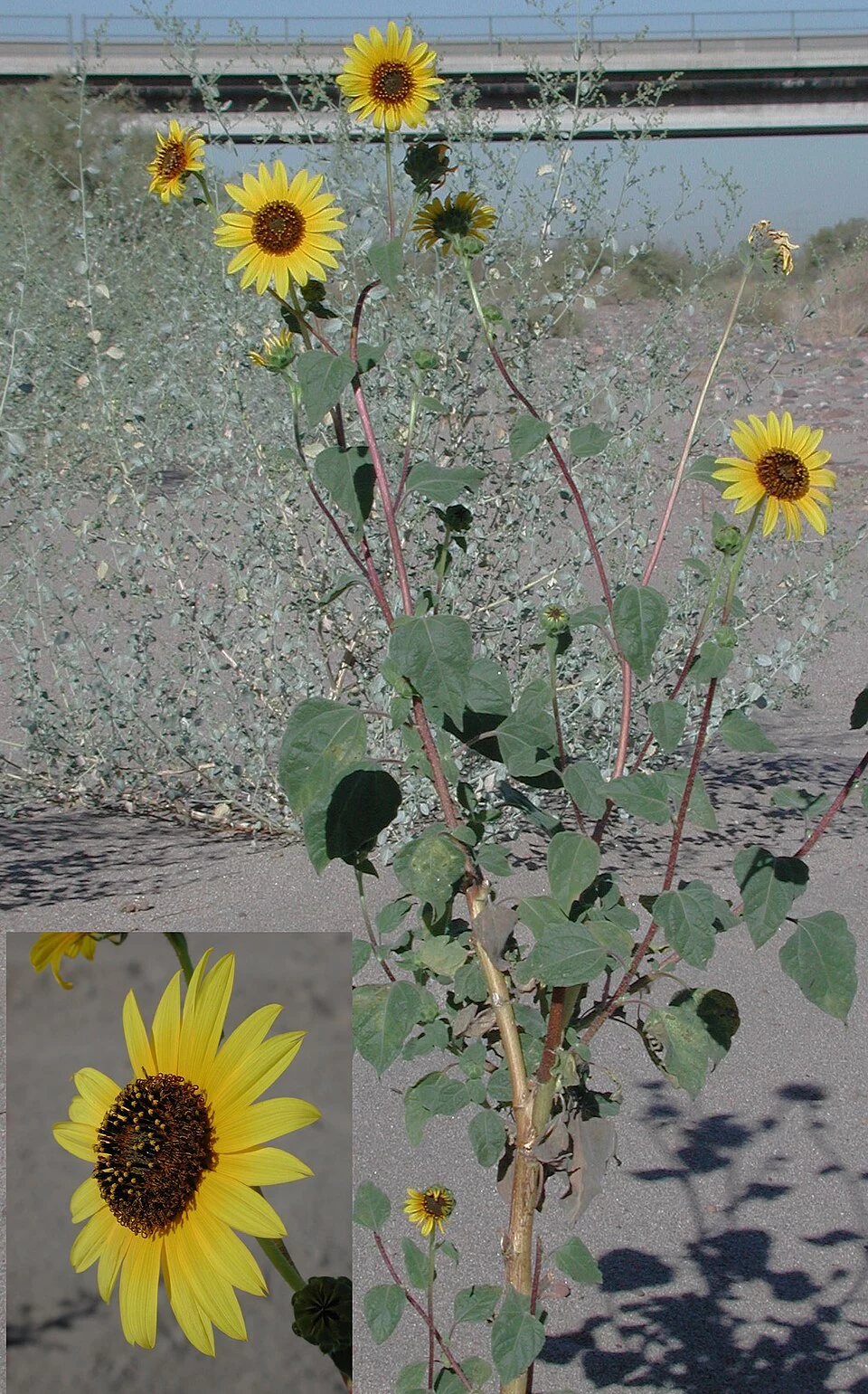
Image source:https://en.wikipedia.org/wiki/Main_Page
▍Morphological Features
- Height: Usually 1-3.5 meters tall; dwarf
ornamental varieties 30-150 cm, giant varieties can reach over 8
meters.
- Stem: Annual herb, stem erect and stout,
cylindrical with multiple angles, covered with white coarse
hairs, generally unbranched, occasionally branched at the upper
part; pith well-developed.
- Leaves: Simple, alternate, ovate-cordate or
ovate, 10-40 cm long, 5-40 cm wide, with three basal veins,
margin coarsely serrated, both surfaces covered with short rough
hairs; petiole 2-20 cm long.
- Flowers: Capitulum solitary at the apex of stem
or branch, 10-30 cm in diameter; involucral bracts
multi-layered, imbricate; ray florets neutral, golden yellow
(sterile); tubular florets bisexual, brown or purple (fertile).
Flowering period: July-September.
- Fruit: Achene (sunflower seed), obovate or
ovate-oblong, slightly compressed, 10-15 mm long; pericarp
woody, gray or black, with fine ribs and pubescent.
- Root system: Taproot well-developed,
penetrating 2-3 meters deep; lateral roots spreading
horizontally, drought and poor soil tolerant.
▍Cultivation Methods
| Parameter |
Specifications |
| Soil type |
Prefers deep, fertile, loose, well-drained loam, pH 6.0-8.0;
salt-tolerant, can grow normally with total salt content ≤0.4%;
avoids waterlogging. |
| Germination temperature |
Can germinate at 8-10°C, optimal 15-25°C, germinates in 5-7 days
after sowing. |
| Planting density |
Oil-type: row spacing 60-70 cm, plant spacing 30-40 cm, about
45,000-60,000 plants per hectare. Confectionery-type: row spacing
70-80 cm, plant spacing 40-50 cm, about 30,000-45,000 plants per
hectare. |
▍Pest Management
Diseases
- Sclerotinia rot: crop rotation + spray with 50% Procymidone WP
at 1000x dilution
- Rust: spray with 25% Triadimefon WP at 1500x dilution
- Brown spot: spray with 70% Thiophanate-Methyl WP at 800x
dilution.
Pests
- Aphids: spray with 10% Imidacloprid WP at 1500x dilution
- Sunflower moth: spray with Bt emulsion at 800x dilution
- Underground pests: treat soil with 50% Phoxim EC at 1000x
dilution before sowing.
▍Applications
Edible use
Sunflower seeds can be roasted or pressed for oil
(oil-type varieties contain about 50% oil), with high nutrition.
Medicinal use
Flower heads, stem pith, roots, etc. used as
medicine, with functions of clearing heat, relieving pain,
promoting diuresis.
Ornamental use
Dwarf varieties for potted plants and flower
borders; tall varieties for flower sea landscapes.
Industrial use
Sunflower seed meal used as feed; stems for
fiberboard and fuel; flowers for natural pigment extraction.
Ecological use
Excellent crop for saline-alkali soil improvement
and soil and water conservation; also an important nectar source
plant.
Lactuca serriola
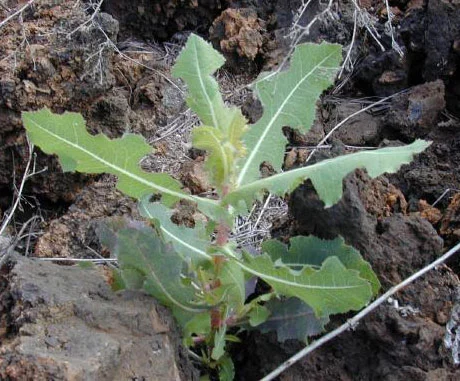
Image source:https://en.wikipedia.org/wiki/Main_Page
▍Morphological Features
- Height: usually 50-120 cm tall, some up to 150
cm.
- Stem: Erect, solitary, hollow, base often
purplish, with white stiff bristles, conically branched at upper
part; white latex exudes when broken.
- Leaves: Alternate; middle and lower leaves
oblanceolate or oblong-elliptic, 3-17 cm long,
runcinate-pinnatifid, base sagittate-clasping; margin entire or
finely serrate, midrib on abaxial surface with yellow bristles.
- Flowers: Capitula arranged in panicles;
involucre ovoid, about 5 layers; ligulate florets 15-25, yellow.
Flowering period: June-August.
- Fruit: Achenes oblanceolate, light brown, about
3.5 mm long, 6-8 fine ribs on each face, scabrous on upper part,
beak 3 mm long at apex.
- Root system: Taproot stout, vertically
straight, lateral roots fibrous, tolerant to poor soil.
▍Cultivation Methods
| Parameter |
Specifications |
| Soil type |
Prefers loose, fertile, well-drained loam, pH 5.5-7.0; tolerant to
poor soil, avoids waterlogging. |
| Germination temperature |
Suitable 15-20°C, germinates in 7-10 days after sowing, relatively
cold-resistant. |
| Planting density |
Row spacing 30-40 cm, plant spacing 20-30 cm, about 80,000-120,000
plants per hectare. |
▍Pest Management
Diseases
- Downy mildew: Spray with 75% Chlorothalonil WP at 800x dilution
- Powdery mildew: Spray with 25% Triadimefon WP at 1500x dilution
- Brown spot: Spray with 70% Thiophanate-Methyl WP at 800x
dilution.
Pests
- Aphids: Spray with 10% Imidacloprid WP at 1500x dilution
- Cabbage caterpillars: Spray with Bt emulsion at 800x dilution
- Underground pests: Treat soil with 50% Phoxim EC at 1000x
dilution before sowing.
▍Applications
Medicinal use
Whole herb used as medicine, with effects of
clearing heat and detoxifying, activating blood and removing
stasis.
Forage use
Tender stems and leaves used as green forage, crude
protein content about 14%-16%.
Ecological use
For saline-alkali soil improvement and soil and
water conservation; also used as ornamental plant in flower
borders.
Industrial use
Stems for fiber and fuel; latex contains
lactucarium, can be used as raw material for biological
pesticides.
Lactuca virosa
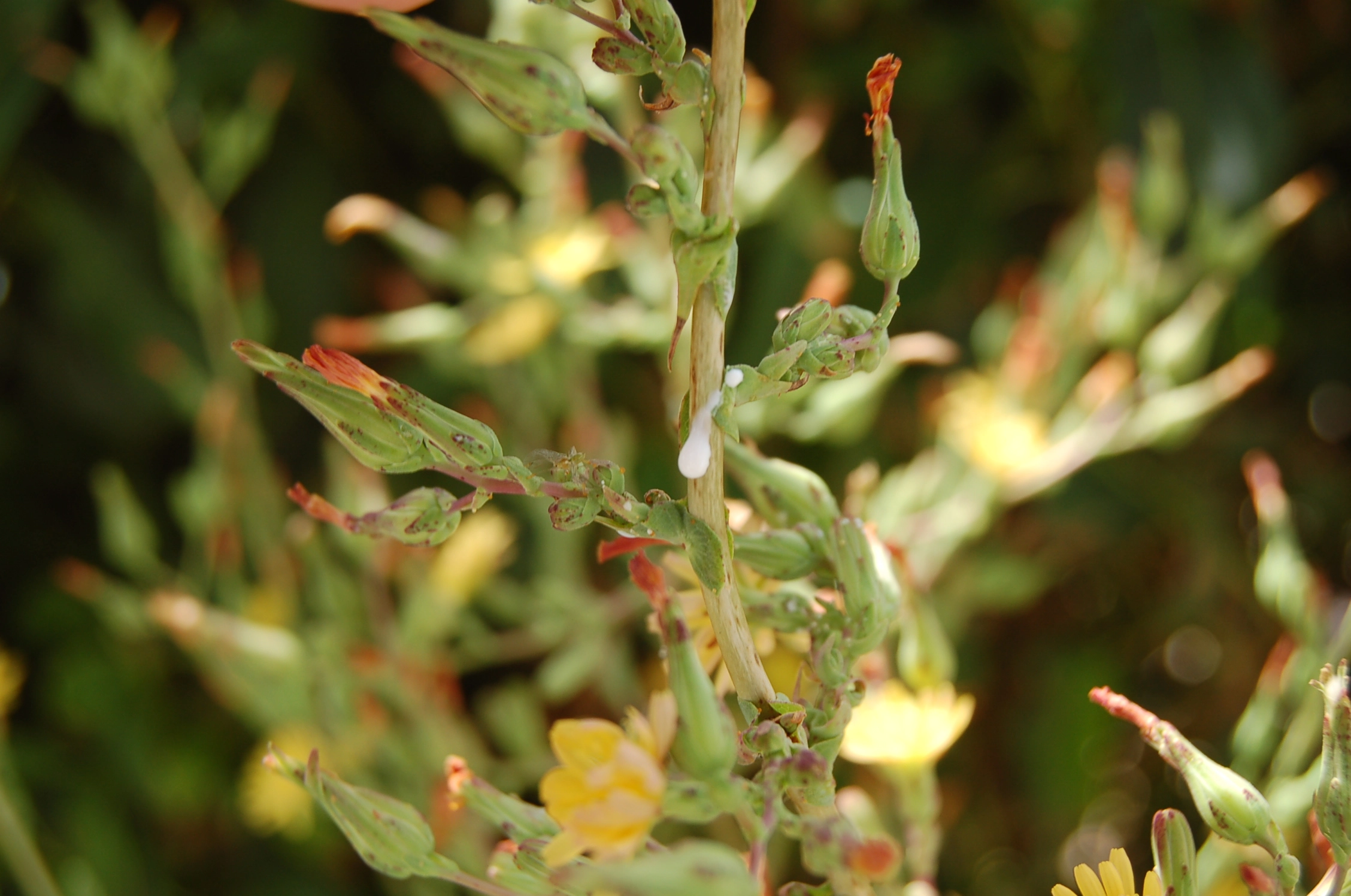
Image source:https://en.wikipedia.org/wiki/Main_Page
▍Morphological Features
- Height: usually 100-200 cm tall, some can reach
over 200 cm.
- Stem: Erect, solitary, hollow, purplish-red at
base, with white stiff bristles, conically branched at upper
part; white latex exudes when broken.
- Leaves: Alternate, petioles and leaves often
purple; middle and lower leaves oblanceolate or oblong-elliptic,
runcinate-pinnatifid, base sagittate-clasping, midrib on abaxial
surface with yellow bristles, margin entire or finely serrate.
- Flowers: Capitula arranged in panicles;
involucre ovoid, about 5 layers; ligulate florets 15-25, yellow.
Flowering period: July-September.
- Fruit: Achenes oblanceolate, purplish-black,
about 3.5 mm long, 6-8 fine ribs on each face, scabrous on upper
part, beak 3 mm long at apex.
- Root system: Taproot stout, vertically
straight, lateral roots fibrous, tolerant to poor soil.
▍Cultivation Methods
| Parameter |
Specifications |
| Soil type |
Prefers loose, fertile, well-drained loam, pH 5.5-7.0; tolerant to
poor soil, avoids waterlogging. |
| Germination temperature |
Suitable 15-20°C, minimum about 10°C, germinates in 7-10 days after
sowing, relatively cold-resistant. |
| Planting density |
Row spacing 30-40 cm, plant spacing 20-30 cm, about 80,000-120,000
plants per hectare. |
▍Pest Management
Diseases
- Downy mildew: Spray with 75% Chlorothalonil WP at 800x dilution
- Powdery mildew: Spray with 25% Triadimefon WP at 1500x dilution
- Brown spot: Spray with 70% Thiophanate-Methyl WP at 800x
dilution.
Pests
- Aphids: Spray with 10% Imidacloprid WP at 1500x dilution
- Cabbage caterpillars: Spray with Bt emulsion at 800x dilution
- Underground pests: Treat soil with 50% Phoxim EC at 1000x
dilution before sowing.
▍Applications
Medicinal use
Whole herb used as medicine, containing lactucerin,
with sedative, analgesic and hypnotic effects; traditionally
used for relieving cough and insomnia, dosage control required
to avoid poisoning.
Ecological use
Can be used for saline-alkali soil improvement and
soil and water conservation; also used as ornamental plant in
flower borders.
Industrial use
Stems for fiber and fuel; latex contains
lactucarium, can be used as raw material for biological
pesticides.
Matricaria chamomilla
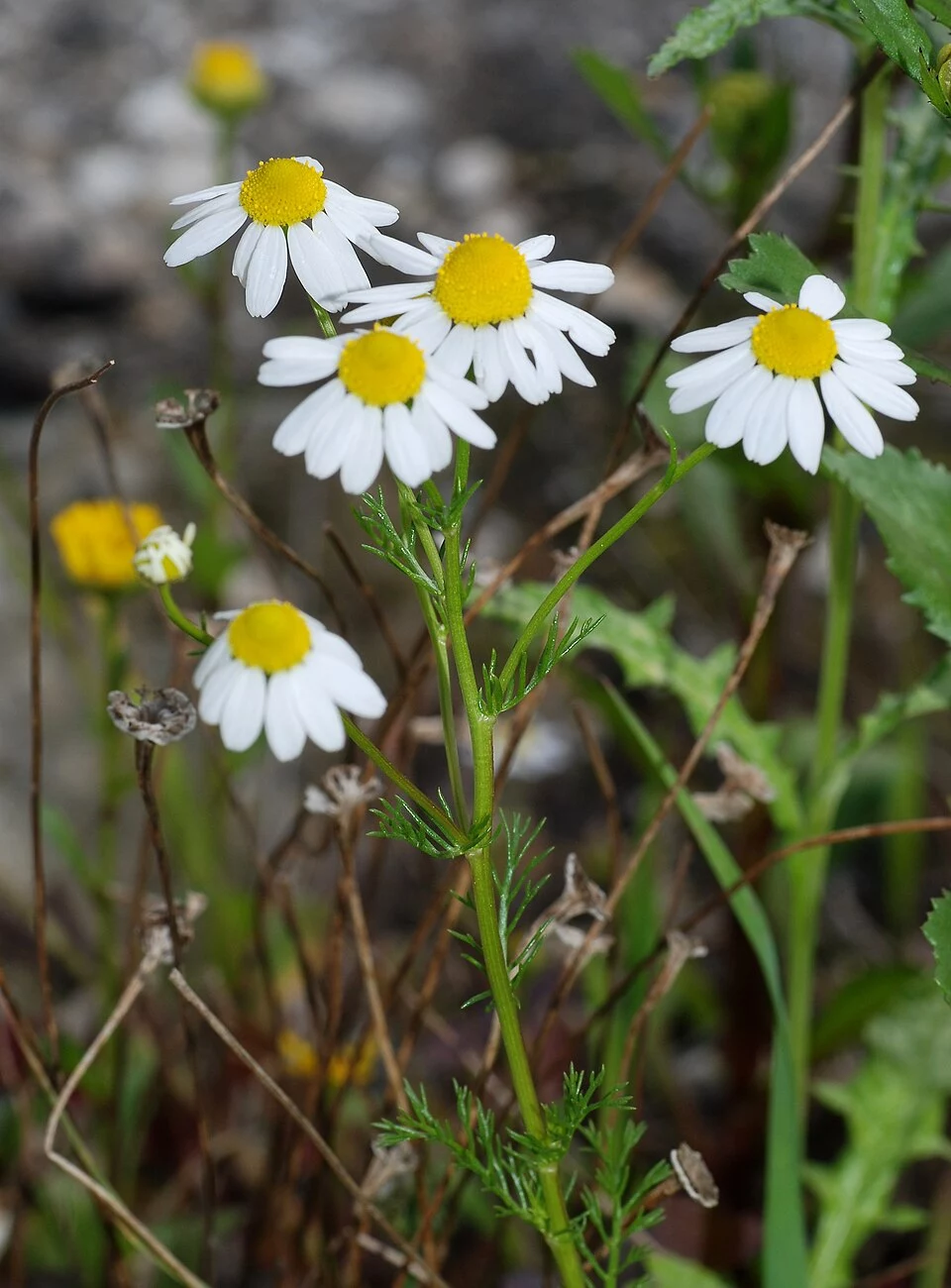
Image source:https://en.wikipedia.org/wiki/Main_Page
▍Morphological Features
- Height: Typically 30–60 cm tall
- Stem: Erect, glabrous, much branched at upper
part, green, with faint herbal scent.
- Leaves: Alternate, bipinnately divided,
sessile, base slightly enlarged, segments filiform; upper leaves
ovate or oblong-ovate.
- Flowers: Capitula arranged in corymbs, 1.2–2.5
cm in diameter; involucre hemispherical, 2-seriate, margin
membranous; ray florets white, female; tubular florets yellow,
bisexual, 4–5 lobed at apex. Flowering period: April–August.
- Fruit: Achenes oblong or obovate,
grayish-white, 1–1.5 mm long, 3–5-ribbed, without pappus.
Fruiting period: April–August.
- Root system: Fusiform roots, relatively shallow
distribution, good drought tolerance.
▍Cultivation Methods
| Parameter |
Specifications |
| Soil type |
Prefers loose, fertile, well-drained sandy loam, pH 5.6–7.5, neutral
soil best; avoids waterlogging. |
| Germination temperature |
Suitable 15–20°C, germinates in 7–14 days after sowing;
cold-resistant, tolerates light frost. |
| Planting density |
Row spacing 25–30 cm, plant spacing 20–25 cm, about 120,000–150,000
plants per hectare. |
▍Pest Management
Diseases
- Powdery mildew: Spray with 25% Triadimefon WP at 1500x dilution
- Gray mold: Spray with 50% Procymidone WP at 1000x dilution
- Leaf spot: Spray with 70% Thiophanate-Methyl WP at 800x
dilution.
Pests
- Aphids: Spray with 10% Imidacloprid WP at 1500x dilution
- Thrips: Spray with 20% Acetamiprid at 2000x dilution
- Leafminers: Spray with suitable insecticide at 1500x dilution.
▍Applications
Medicinal use
Whole herb and flowers used medicinally, containing
flavonoids and essential oils, with anti-inflammatory, sedative,
and gastrointestinal soothing effects; used for insomnia, skin
inflammation, indigestion.
Cosmetic use
Essential oil and hydrosol used in skin care
products for soothing sensitive skin, reducing redness and
dryness.
Tea use
Flowers can be brewed as tea for relaxing mood and
improving sleep.
Ornamental use
Delicate flower form, suitable for flower borders,
potted plants, and ground cover.
Omalotheca supina
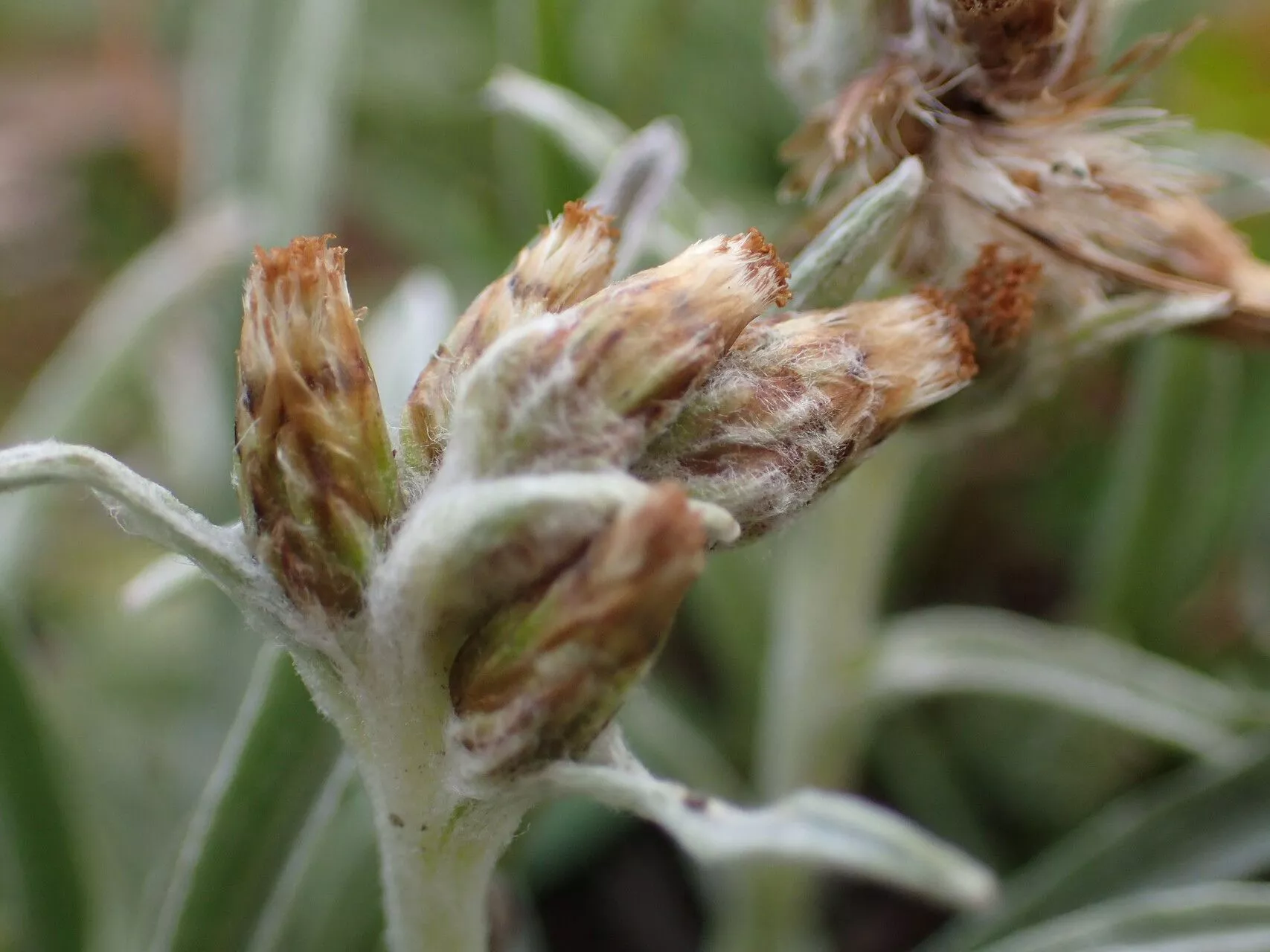
Image source:https://www.iplant.cn/
▍Morphological Features
- Height: Perennial herb, 2–10 cm tall, tufted at
base, dwarf plant type.
- Stem: Erect or slightly curved at upper part,
unbranched, 0.5–1 mm in diameter, densely grayish-white
tomentose, denser below capitula.
- Leaves: Basal leaves densely clustered; cauline
leaves sparse, linear-subulate or linear-lanceolate, 1–3 cm
long, 1–2.5 mm wide, sessile, entire, white tomentose on both
surfaces, 1-veined.
- Flowers: Capitula usually 1–7, subcapitate to
spiciform at stem apex; involucre campanulate, 5–6 mm long,
3–4-seriate, phyllaries light green to tan with dark brown
margins or tips; all florets tubular; pappus white, 3.5–4 mm
long, scabrous, deciduous. Flowering period: July–September.
- Fruit: Cypselae obovoid, 1.0–1.5 mm long,
strigose; fruiting period the same as flowering period.
- Root system: Slender prostrate cylindrical
rhizome with long fibrous roots, adapted to alpine habitats.
▍Cultivation Methods
| Parameter |
Specifications |
| Soil type |
Native to alpine meadows, granite outcrops and gravelly slopes;
prefers cool, moist, loose and well-drained soil, tolerates poor
soil, avoids waterlogging. |
| Germination temperature |
Wild-type favors 10–15°C; artificial sowing at 12–18°C, germinating
in 10–15 days. |
| Planting density |
Plant spacing 10–15 cm, row spacing 15–20 cm, 30–50 plants per
square meter. |
▍Pest Management
Diseases
- Powdery mildew: Spray with 25% Triadimefon WP at 1500x dilution
- Leaf spot: Spray with 70% Thiophanate-Methyl WP at 800x dilution
- Root rot: Improve drainage and drench with 50% Carbendazim WP at
800x dilution.
Pests
- Aphids: Spray with 10% Imidacloprid WP at 1500x dilution
- Thrips: Spray with 20% Acetamiprid at 2000x dilution
- Underground pests: Control with poison baits.
▍Applications
Medicinal use
Whole herb used in traditional medicine, containing
flavonoids and volatile oils, with effects of clearing heat,
promoting diuresis, relieving cough and asthma.
Ecological use
Alpine ecological restoration species for soil and
slope protection, and as a nectar source for alpine insects.
Ornamental use
Dwarf and compact plant, suitable for rock gardens,
alpine plant collections and potted plants.
Pilosella piloselloides
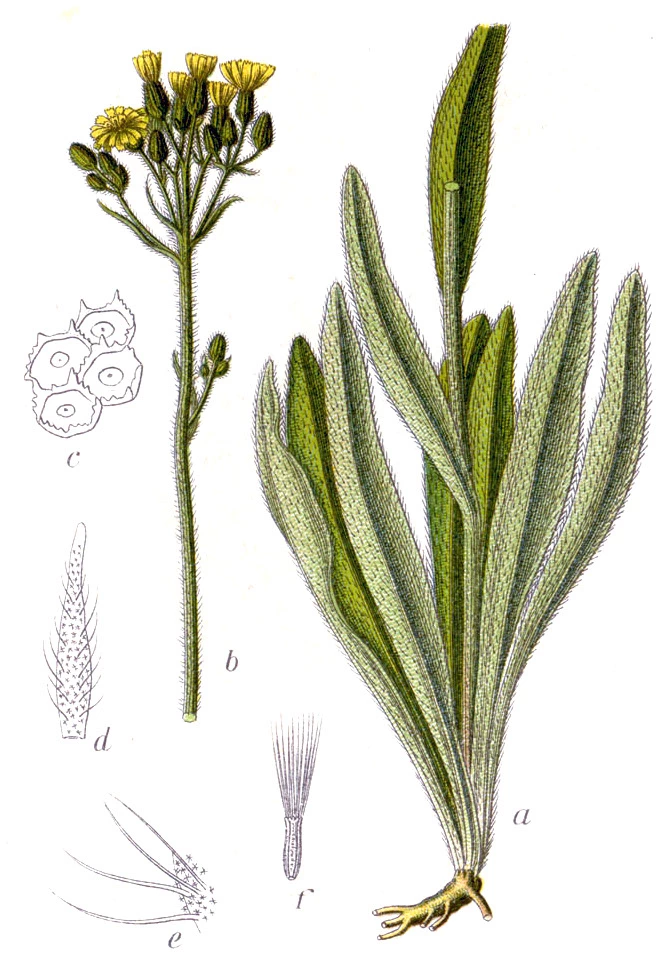
Image source:https://en.wikipedia.org/wiki/Main_Page
▍Morphological Features
- Height
- Stem: Erect, slender, 2–5 mm in diameter,
sparsely to densely hairy, often with a few small leaves,
unbranched or slightly branched near the top.
- Leaves: Basal leaves in a rosette, spatulate to
oblong-lanceolate, 5–20 cm long, 1–3 cm wide, entire or slightly
toothed, densely white-hairy on both surfaces; cauline leaves
smaller, alternate, lanceolate, sessile.
- Flowers: Capitula 5–30, arranged in a loose
corymb at the stem apex; involucre cylindrical to campanulate,
6–8 mm long, 2–3-seriate, phyllaries green to brownish, hairy;
all florets ligulate, bright yellow, 8–12 mm long; pappus white,
5–7 mm long, persistent. Flowering period: June–August.
- Fruit: Cypselae oblong, 2–3 mm long, brown,
slightly ribbed, with a white pappus for wind dispersal.
Fruiting period same as flowering period.
- Root system: Fibrous root system, shallow and
spreading, with short rhizomes, adapted to colonizing open,
disturbed sites .
▍Cultivation Methods
| Parameter |
Specifications |
| Soil type |
Native to meadows, grasslands, open woodlands and roadsides; prefers
well-drained, moderately fertile, neutral to slightly acidic soil,
tolerates poor, dry soil, avoids waterlogging. |
| Germination temperature |
Optimal 15–20°C, germination in 10–20 days under suitable moisture
and light. |
| Planting density |
Plant spacing 20–30 cm, row spacing 30–40 cm, 30–50 plants per
square meter to ensure air circulation. |
▍Pest Management
Diseases
- Powdery mildew: Spray with 25% Triadimefon WP at 1500x dilution
- Leaf spot: Spray with 70% Thiophanate-Methyl WP at 800x dilution
- Root rot: Improve drainage and drench with 50% Carbendazim WP at
800x dilution.
Pests
- Aphids: Spray with 10% Imidacloprid WP at 1500x dilution
- Leaf miners: Use yellow sticky traps and spray with 20% Spinosad
SC at 1500x dilution
- Caterpillars: Handpick or spray with 2.5% Lambda-Cyhalothrin EC
at 2000x dilution.
▍Applications
Medicinal use
Whole herb used in traditional medicine, containing
flavonoids and phenolics, with anti-inflammatory, diuretic and
wound-healing effects.
Ecological use
Forage for livestock, nectar source for pollinators;
can be invasive in some regions, requiring monitoring.
Ornamental use
Bright yellow flowers, suitable for wildflower
gardens, meadow plantings and naturalistic landscapes.
Rudbeckia hirta
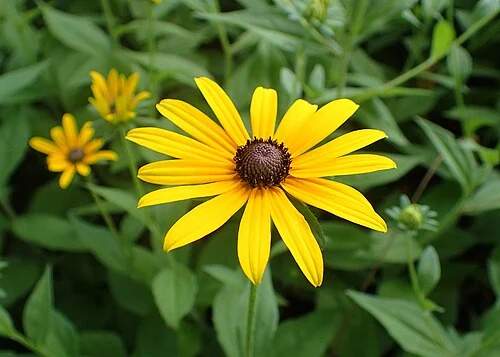
Image source:https://en.wikipedia.org/wiki/Main_Page
▍Morphological Features
- Height: Typically 30–100 cm tall,
- Stem: Erect, 3–6 mm in diameter, unbranched or
slightly branched at upper part, densely covered with coarse
bristles, firm and strong .
- Leaves: Alternate; basal and lower leaves
spatulate to oblong-ovate, 8–12 cm long, 2–4 cm wide, with
winged petioles, crenate-serrate, 3-veined; upper leaves
oblong-lanceolate, 3–5 cm long, 1–1.5 cm wide, sessile or
shortly petioled, crenate or entire, both surfaces densely
white-bristly .
- Flowers: Capitula solitary or few clustered at
stem apex, 5–7 cm in diameter, with long peduncles; involucre
bracts 2-seriate, outer oblong, 12–17 mm, inner
lanceolate-linear, all bristly; receptacle conical; ray florets
bright yellow, 10–14, 20–40 mm long, apex with 2–3 irregular
short teeth; disk florets dark brown to purple-black, conical;
flowering period June–October .
- Fruit: Achenes tetragonal, blackish-brown,
about 2 mm long, without pappus; fruiting period same as
flowering period .
- Root system: Strong taproot system with fibrous
roots, deep and spreading, adapted to dry and infertile
environments .
▍Cultivation Methods
| Parameter |
Specifications |
| Soil type |
Native to meadows, grasslands and roadsides in North America;
prefers well-drained, neutral to slightly acidic loam, tolerates
clay, sand, poor and dry soil, avoids waterlogging. |
| Germination temperature |
Optimal 15–20°C, germination in 10–15 days under sufficient light
and proper moisture. |
| Planting density |
Plant spacing 25–35 cm, row spacing 30–40 cm, 25–35 plants per
square meter to ensure air circulation and prevent diseases. |
▍Pest Management
Diseases
- Powdery mildew: Spray with 25% Triadimefon WP at 1500x dilution
- Leaf spot: Spray with 70% Thiophanate-Methyl WP at 800x dilution
- Root rot: Improve drainage and drench with 50% Carbendazim WP at
800x dilution.
Pests
- Aphids: Spray with 10% Imidacloprid WP at 1500x dilution
- Thrips: Spray with 20% Acetamiprid EC at 2000x dilution
- Caterpillars: Handpick or spray with 2.5% Lambda-Cyhalothrin EC
at 2000x dilution.
▍Applications
Ornamental use
Bright flowers with long flowering period, suitable
for flower borders, meadow landscapes, potted plants and cut
flowers, often used in festival decorations.
Ecological use
Important nectar source for bees and butterflies;
can be used for soil and water conservation and ecological
restoration on slopes; in some regions, it may be invasive and
requires monitoring.
Medicinal use
Whole herb has anti-inflammatory and diuretic
effects in traditional medicine, containing flavonoids and
phenols.
Saussurea bogedaensis

Image source:https://baike.baidu.com/
▍Morphological Features
- Height: Typically 30–60 cm tall
- Stem: Solitary, erect, unbranched, 1.5–3 cm in
diameter, covered with glandular hairs, robust .
- Leaves: Basal and lower stem leaves petiolate,
narrowly ovate/elliptic/obovate, 15–20 cm long, 3–5 cm wide,
glandular hairy, margin denticulate to serrulate, apex obtuse;
upper leaves sessile, ovate/elliptic, 5.5–12 cm long, 3.5–6.5 cm
wide, membranous, stellate surrounding synflorescence, pale
yellow .
- Flowers: Capitula 15–30, hemispheric
synflorescence 8–15 cm in diameter, sessile/shortly pedunculate;
involucre broadly campanulate, 1–2.5 cm in diameter, phyllaries
4–5-seriate, subulate, light brown with dark margin, densely
pubescent; florets purple, corolla 1.3–1.5 cm long; pappus dirty
white, persistent; flowering period July–August .
- Fruit: Cypselae oblong, brown, ribbed, with
dirty white pappus for wind dispersal; fruiting period
August–September .
- Root system: Stout unbranched caudex, densely
covered with fibrous remains of petioles; taproot system with
fibrous roots, adapted to rocky alpine soil .
▍Cultivation Methods
| Parameter |
Specifications |
| Soil type |
Native to high-altitude (3000–4000 m) rocky slopes, gravelly areas,
alpine meadows in Bogeda Mountain, Xinjiang; prefers well-drained,
gravel-rich, slightly acidic to neutral soil, tolerates poor, dry,
cold conditions, avoids waterlogging. |
| Germination temperature |
No precise data; refer to related Saussurea species: 15–20°C,
stratification may improve germination, germination in 20–30 days
under suitable conditions. |
| Planting density |
No precise data; refer to alpine herbs: plant spacing 20–30 cm, row
spacing 30–40 cm, 30–50 plants per square meter to reduce
competition. |
▍Pest Management
Diseases
- Powdery mildew: Spray 25% Triadimefon WP 1500x
- Leaf spot: Spray 70% Thiophanate-Methyl WP 800x
- Root rot: Improve drainage, drench with 50% Carbendazim WP 800x.
Pests
- Aphids: Spray 10% Imidacloprid WP 1500x
- Caterpillars: Handpick or spray 2.5% Lambda-Cyhalothrin EC 2000x
- Slugs: Use iron phosphate bait.
▍Applications
Medicinal use
Contains flavonoids, phenolics and terpenoids, with
anti-inflammatory, antioxidant effects; critically endangered,
protected by law, wild collection prohibited .
Ecological use
Alpine ecosystem stabilizer, prevents soil erosion
on rocky slopes; nectar source for alpine pollinators.
Conservation research
Important for studying alpine plant adaptation and
evolution; subject of ex-situ conservation and propagation
research .
Scalesia atractyloides
▍Morphological Features
- Height
- Stem: Woody, erect, 0.8–1.5 cm diameter,
unbranched/slightly branched, soft wood with large pith, bark
smooth light brown.
- Leaves: Alternate, narrow lanceolate, 5–10 cm
long, 0.5–1.2 cm wide, entire, glabrous, 3-veined,
short-petioled, adapted to arid conditions .
- Flowers: Capitula solitary/several at apex, 3–4
cm diameter; involucre bracts 3–4-seriate, lanceolate,
pubescent; ray florets yellow, disk florets yellowish; pappus
bristles persistent; flowering period June–August.
- Fruit: Achenes oblong, brown, ribbed, with
persistent pappus for wind dispersal; fruiting period
August–September.
- Root system: Well-developed taproot system with
fibrous roots, deep for water/nutrients in arid, rocky soil.
▍Cultivation Methods
| Parameter |
Specifications |
| Soil type |
Native to arid-zone rocky slopes, lava fields; prefers well-drained,
gravel-rich, neutral to slightly alkaline soil, tolerates poor, dry,
infertile conditions, avoids waterlogging . |
| Germination temperature |
No precise data; refer to Scalesia spp.: 18–22°C, light-dependent,
germination in 15–25 days; scarification may improve germination.
|
| Planting density |
No precise data; refer to Galápagos shrubs: plant spacing 30–40 cm,
row spacing 40–50 cm, 20–30 plants per square meter to reduce
competition. |
▍Pest Management
Diseases
- Powdery mildew: Spray 25% Triadimefon WP 1500x
- Leaf spot: Spray 70% Thiophanate-Methyl WP 800x
- Root rot: Improve drainage, drench 50% Carbendazim WP 800x.
Pests
- Aphids: Spray 10% Imidacloprid WP 1500x
- Scale insects: Neem oil spray or introduce parasitic wasps
- Caterpillars: Handpick or spray 2.5% Lambda-Cyhalothrin EC
2000x.
▍Applications
Conservation research
Iconic for adaptive radiation studies; subject of
ex-situ conservation, propagation, reintroduction to restore
wild populations .
Ecological use
Endemic keystone species for Santiago arid
ecosystems; stabilizes lava/rocky slopes; nectar source for
native pollinators .
Educational value
Symbol of Galápagos’ unique biodiversity; used in
environmental education about island endemism and conservation
threats.
Silphium perfoliatum
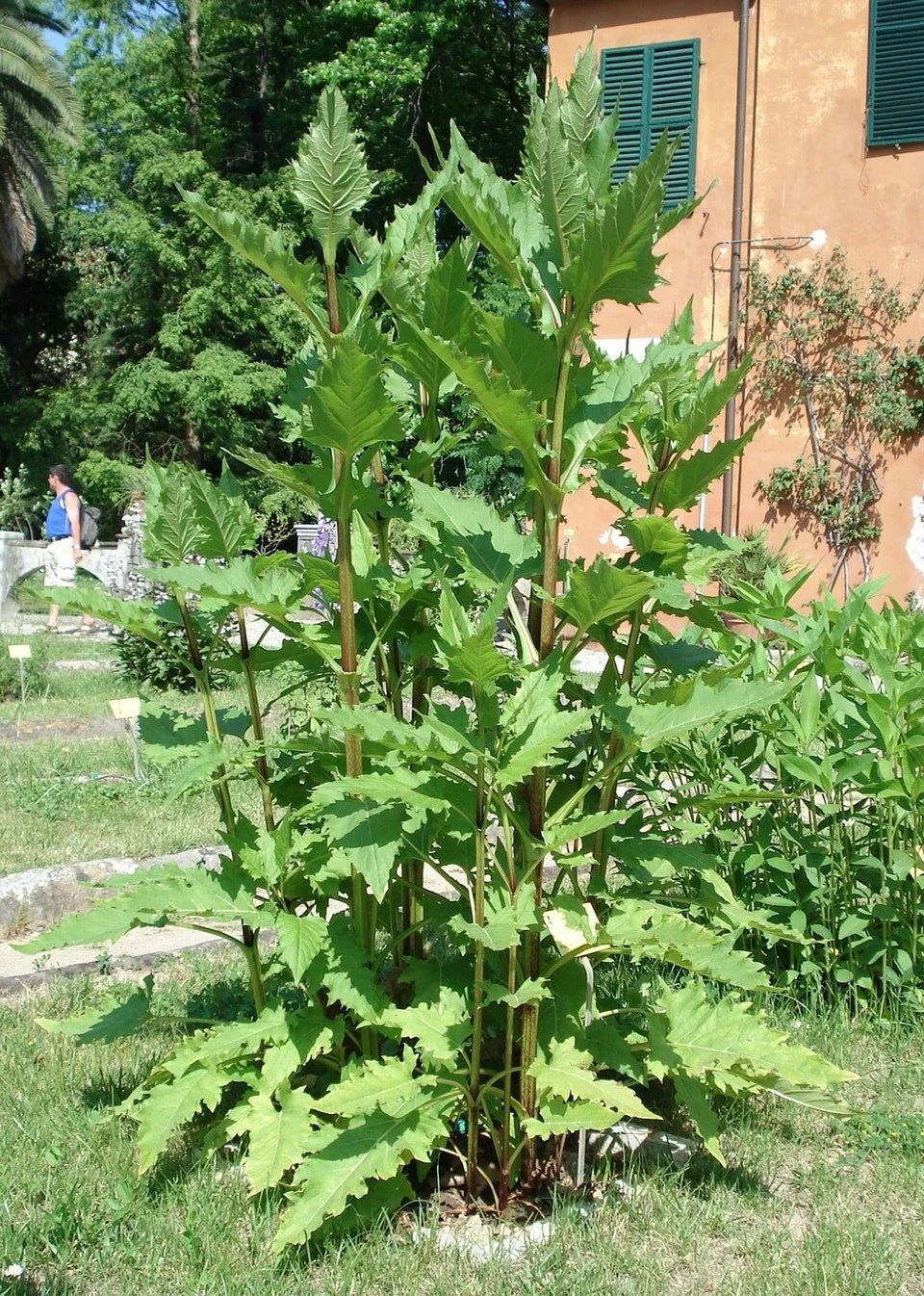
Image source:https://en.wikipedia.org/wiki/Main_Page
▍Morphological Features
- Height: 2–3 m tall, up to 3.5 m in favorable
conditions.
- Stem: Erect, quadrangular, upper-branched,
solid, succulent when young, 1.5–2.5 cm in diameter.
- Leaves: Opposite, perfoliate, ovate, 15–30 cm
long and 10–20 cm wide, base clasping stem to form a cup shape,
margin coarsely toothed.
- Flowers: Terminal corymbose capitula, 2–3 cm in
diameter; ray florets yellow, disk florets yellow; flowering
period June–September.
- Fruit: Achenes flat, winged, heart-shaped,
brown; fruiting period September–October.
- Root system: Fibrous roots with creeping
rhizomes, with a strong central taproot and extensive shallow
rhizomes.
▍Cultivation Methods
| Parameter |
Specifications |
| Soil type |
Prefers moist, fertile, well-drained loam, pH 6.0–7.5, avoids
waterlogging. |
| Germination temperature |
15–22°C, germinates in 10–15 days, 1–2 weeks stratification
recommended. |
| Planting density |
Seedling spacing 40 × 60 cm, 7500–10000 plants per hectare. |
▍Pest Management
Diseases
- Powdery mildew: Spray 25% Triadimefon WP 1500x
- Leaf spot: Spray 70% Thiophanate-Methyl WP 800x
- Root rot: Improve drainage and drench 50% Carbendazim WP 800x.
Pests
- Aphids: Spray 10% Imidacloprid WP 1500x
- Cutworms: Use Bt spray
- Leaf beetles: Spray 2.5% Lambda-Cyhalothrin EC 2000x.
▍Applications
Forage use
High yield and high protein, used as feed for
ruminants and monogastric animals.
Medicinal use
Contains caffeoylquinic acids with lipid-lowering
and hepatoprotective effects.
Ecological use
For wetland restoration, soil stabilization and
pollinator nectar source.
Ornamental use
Suitable for gardens, meadows and naturalistic
landscapes.
Silybum marianum
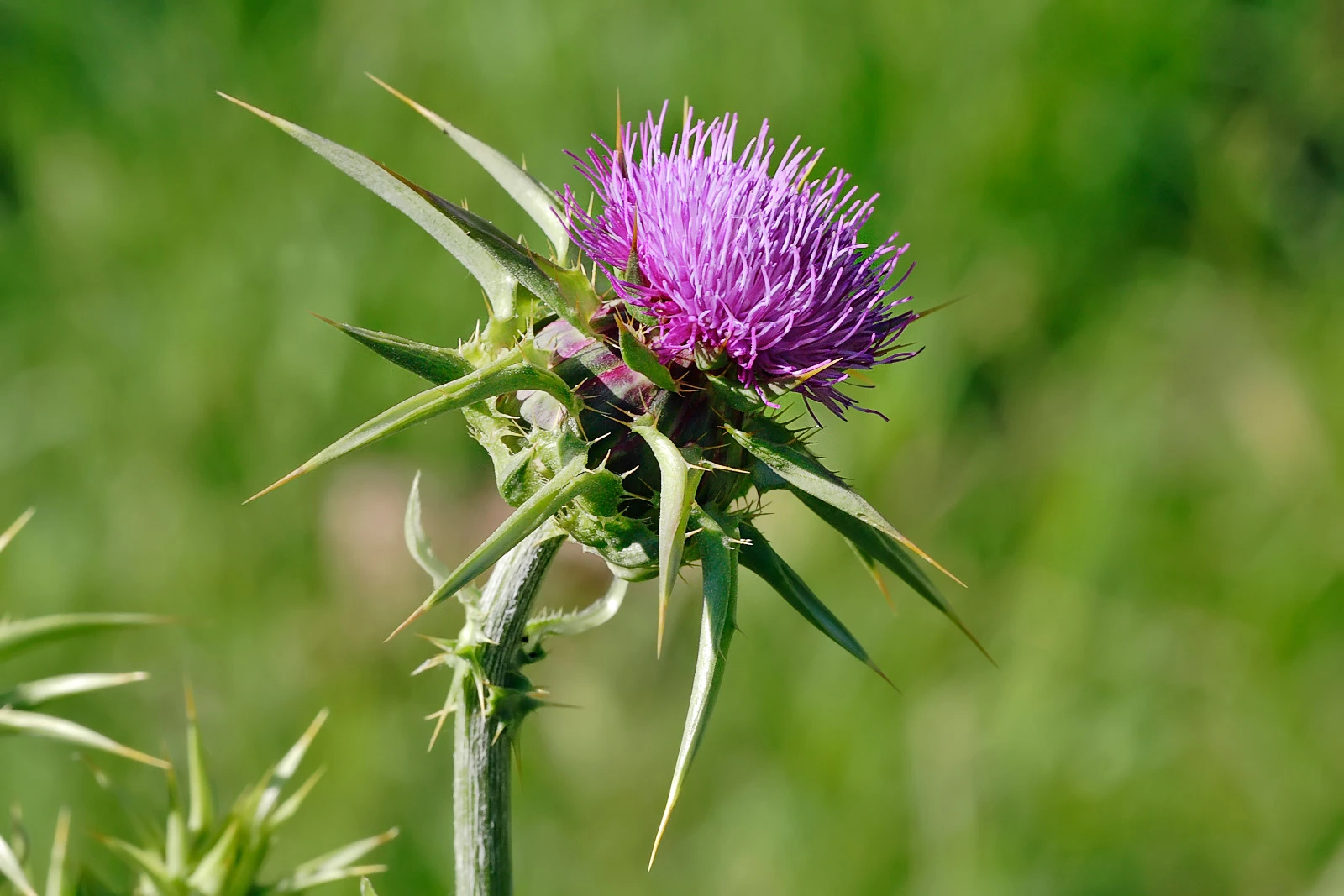
Image source:https://en.wikipedia.org/wiki/Main_Page
▍Morphological Features
- Height: Typically 1.0–2.0 m tall.
- Stem: Erect, branched, ribbed, with white
powdery coating and sparse arachnoid hairs.
- Leaves: Basal leaves rosulate, elliptic or
oblanceolate, pinnately lobed, with white markings and spiny
margins; upper leaves smaller, clasping, spiny.
- Flowers: Capitula terminal, 4–8 cm in diameter;
involucre globose, phyllaries leathery and spiny; florets
reddish-purple or white. Flowering period: June–July.
- Fruit: Achenes oblong-ovate, compressed,
blackish-brown, 7 mm long, with longitudinal stripes; pappus
white, deciduous. Fruiting period: July–August.
- Root system: Taproot robust, deep, with lateral
fibrous roots, adapted to drought and poor soil.
▍Cultivation Methods
| Parameter |
Specifications |
| Soil type |
Prefers loose, fertile, well-drained sandy loam or loam, pH 6.0–8.0,
drought-tolerant, avoids waterlogging. |
| Germination temperature |
Optimal 18–25°C, germinates in 7–10 days; cold-resistant, can be
sown in early spring. |
| Planting density |
Row spacing 45–60 cm, plant spacing 20–30 cm, 60,000–90,000 plants
per hectare. |
▍Pest Management
Diseases
- Root rot: Improve drainage and drench with 50% Carbendazim WP
800x
- Leaf spot: Spray 70% Thiophanate-Methyl WP 800x
- Sclerotinia: Rotate with non-Compositae crops.
Pests
- Aphids: Spray 10% Imidacloprid WP 1500x
- Cutworms: Use poison baits or Bt preparation
- Spider mites: Spray abamectin 1500x.
▍Applications
Medicinal use
Achenes rich in silymarin, used for liver
protection, anti-hepatotoxicity, treating liver injury and fatty
liver.
Ecological use
Drought-resistant, for slope stabilization, soil and
water conservation, and barren land greening.
Ornamental use
Unique spiny foliage and purple flowers, suitable
for rock gardens and wildflower landscapes.
Industrial use
Seeds can be used for oil extraction; silymarin is
widely used in pharmaceutical and health products.
Solidago azorica
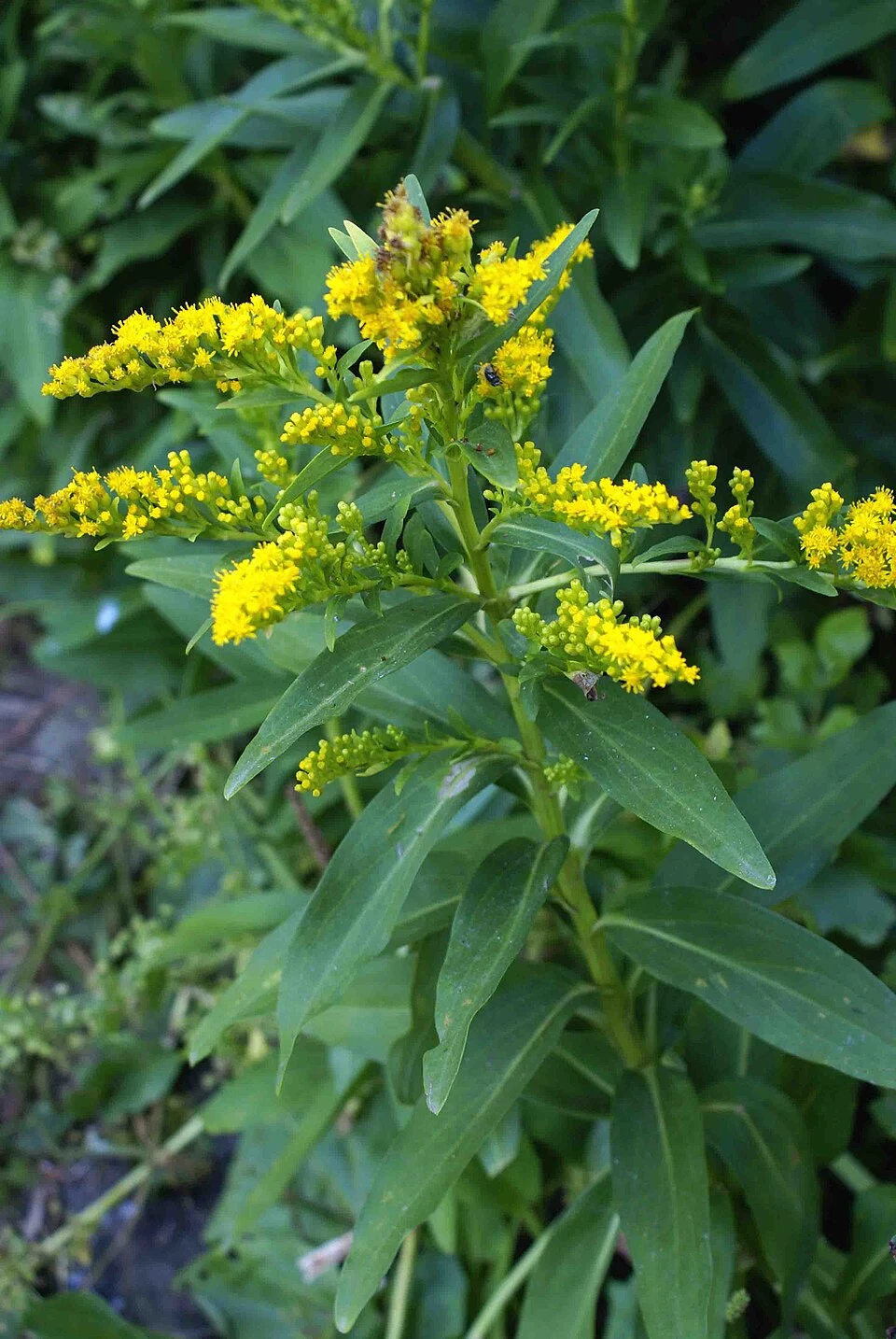
Image source:https://en.wikipedia.org/wiki/Main_Page
▍Morphological Features
- Height: Typically 50–100 cm tall.
- Stem: Erect, unbranched or sparsely branched at
upper part, glabrous or slightly pubescent, green to
reddish-green.
- Leaves: Alternate, lanceolate to oblanceolate,
margin serrulate, upper leaves sessile, lower leaves shortly
petiolate, glabrous on both surfaces.
- Flowers: Capitula small, golden-yellow,
arranged in dense racemose or paniculate inflorescences; ray
florets female, disk florets bisexual; flowering period
July–September.
- Fruit: Achenes cylindrical, small, with 8–12
longitudinal ribs, pappus white, bristly; fruiting period
August–October.
- Root system: Short rhizomes with fibrous root
system, clump-forming, adapted to coastal and mountainous soils.
▍Cultivation Methods
| Parameter |
Specifications |
| Soil type |
Prefers well-drained, sandy or gravelly loam, neutral to slightly
acidic, tolerant of poor and coastal soil, avoids waterlogging. |
| Germination temperature |
Optimal 18–22°C, germinates in 10–15 days under light conditions.
|
| Planting density |
Row spacing 30–40 cm, plant spacing 20–25 cm, 90,000–120,000 plants
per hectare. |
▍Pest Management
Diseases
- Powdery mildew: Spray 25% Triadimefon WP 1500x
- Leaf spot: Spray 70% Thiophanate-Methyl WP 800x
- Root rot: Improve drainage, drench 50% Carbendazim WP 800x.
Pests
- Aphids: Spray 10% Imidacloprid WP 1500x
- Thrips: Spray 20% Acetamiprid EC 2000x
- Spider mites: Spray abamectin 1500x.
▍Applications
Ornamental use
Bright yellow inflorescences, suitable for coastal
gardens, rock gardens, wildflower landscapes and cut flowers.
Ecological use
Azores endemic species, used for slope
stabilization, soil and water conservation, and native
pollinator nectar source.
Conservation value
Protect island endemic biodiversity, used for
ecological restoration and ex-situ conservation research.
Tagetes patula
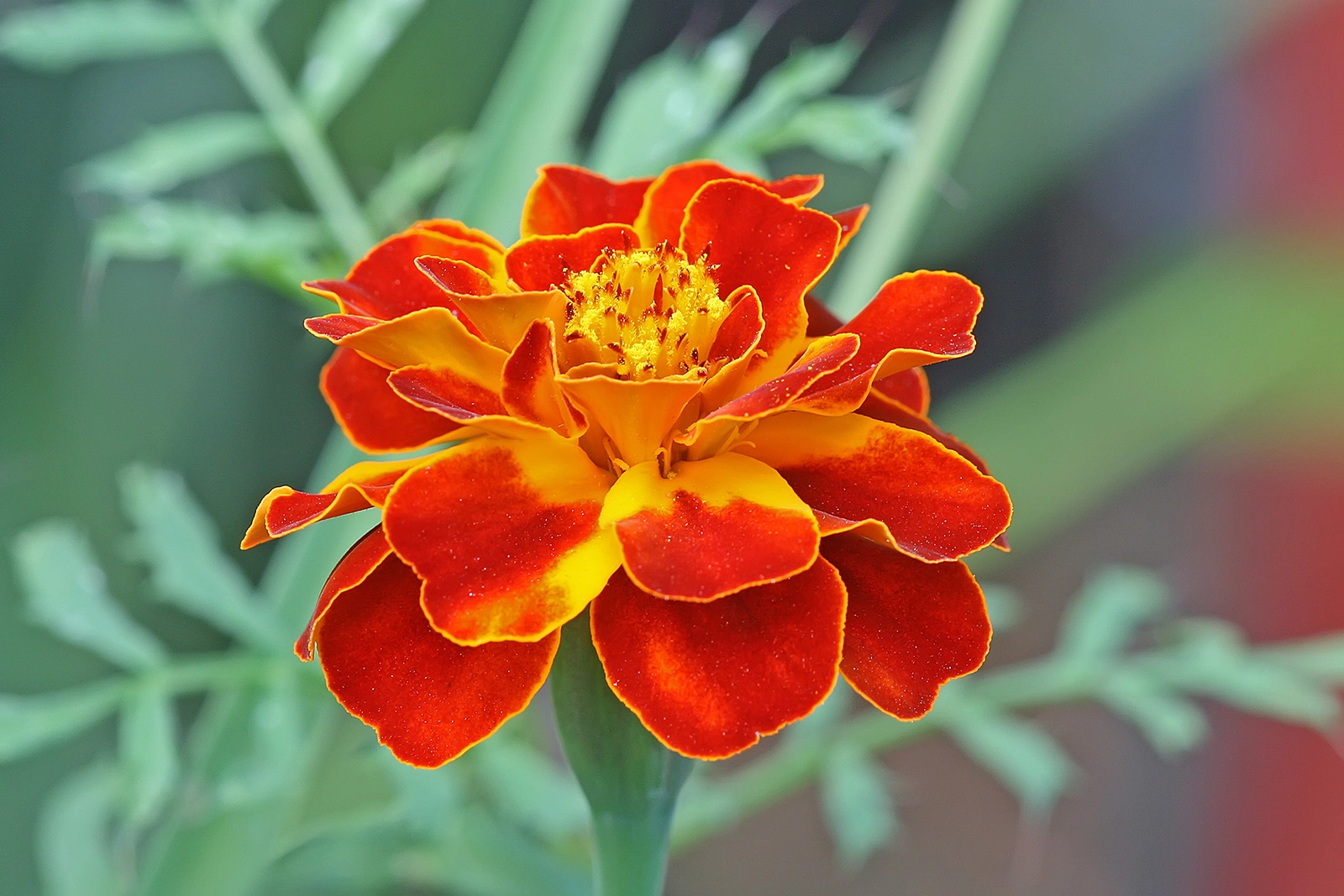
Image source:https://en.wikipedia.org/wiki/Main_Page
▍Morphological Features
- Height: Annual herb, 20–50 cm tall, up to 100
cm in favorable conditions.
- Stem: Erect, branched from base, branches
spreading, glabrous or slightly pubescent, often purplish.
- Leaves: Opposite, pinnately divided, 2–9 cm
long, 1.5–3 cm wide; lobes linear-lanceolate, margin serrate
with glandular dots at base, aromatic.
- Flowers: Capitula solitary, terminal, 3.5–4 cm
in diameter; ray florets golden-yellow or orange with red
blotches; disk florets yellow; flowering period June–October.
- Fruit: Achenes linear, 8–12 mm long, black,
pubescent; pappus scaly with 1–2 long awns; fruiting period
September–October.
- Root system: Taproot with fibrous lateral
roots, shallow, well-branched, adapted to well-drained soil.
▍Cultivation Methods
| Parameter |
Specifications |
| Soil type |
Prefers loose, fertile, well-drained sandy loam or loam, pH 6.0–7.0,
drought-tolerant, avoids waterlogging. |
| Germination temperature |
Optimal 18–25°C, germinates in 5–7 days; light promotes germination.
|
| Planting density |
Row spacing 30–40 cm, plant spacing 20–30 cm, 90,000–120,000 plants
per hectare. |
▍Pest Management
Diseases
- Root rot: Improve drainage, drench with 50% Carbendazim WP 800x
- Leaf spot: Spray 70% Thiophanate-Methyl WP 800x
- Powdery mildew: Spray 25% Triadimefon WP 1500x.
Pests
- Aphids: Spray 10% Imidacloprid WP 1500x
- Thrips: Spray 20% Acetamiprid EC 2000x
- Spider mites: Spray abamectin 1500x.
▍Applications
Ornamental use
Bright flowers, long bloom period; suitable for
flower beds, borders, pots, cut flowers, and landscape
decoration.
Medicinal use
Whole plant used for colds, coughs, dysentery,
toothache; external use for carbuncles and swelling.
Ecological use
Root secretions repel nematodes; used for companion
planting, soil improvement, and pollinator attraction.
Industrial use
Petals extract lutein for food coloring; essential
oil for cosmetics and fragrances.
Tanacetum coccineum
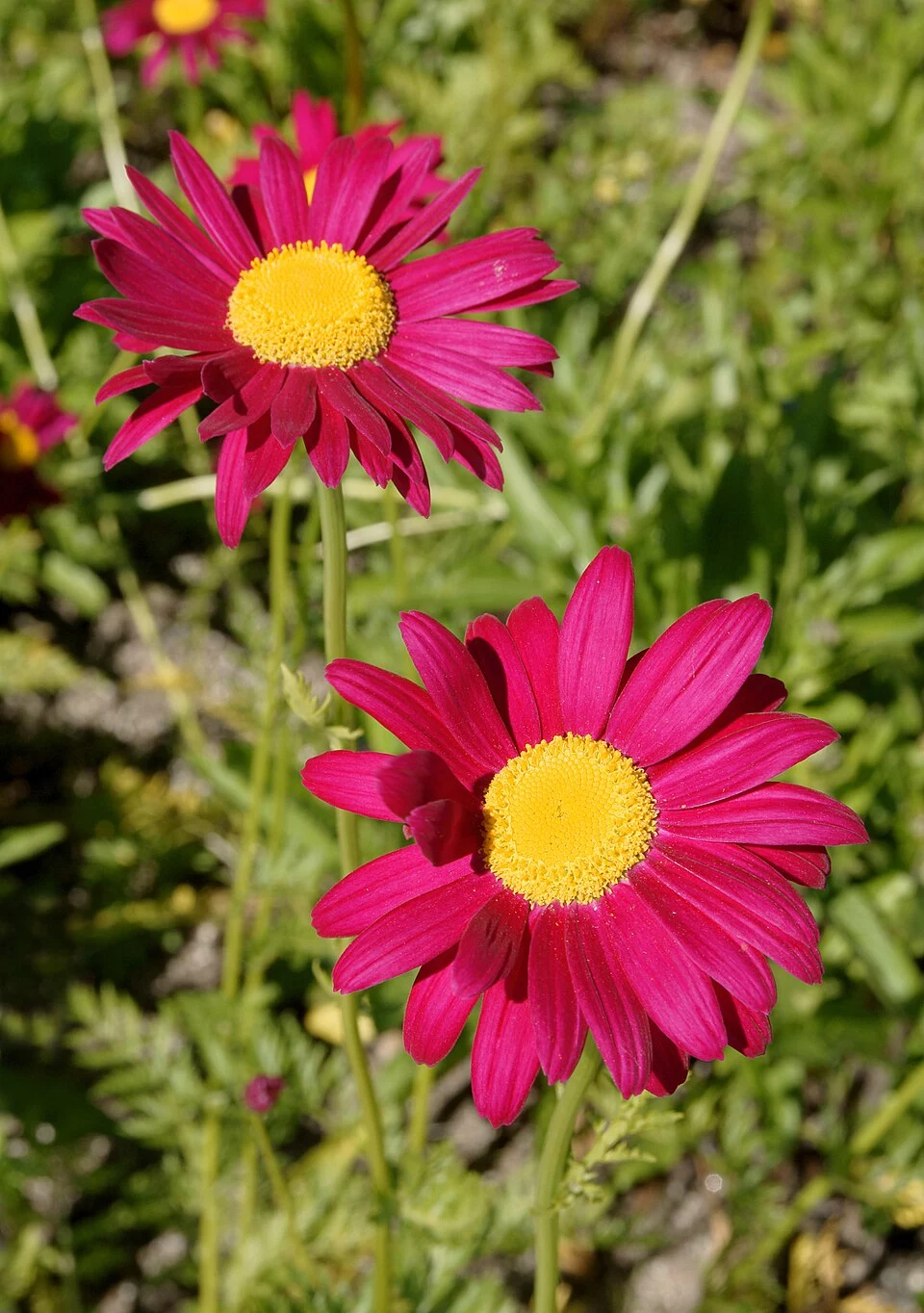
Image source:https://en.wikipedia.org/wiki/Main_Page
▍Morphological Features
- Height: Usually 25–50 cm tall .
- Stem: Erect, single or few clustered,
unbranched or sparsely branched, glabrous or slightly pubescent
.
- Leaves: Basal leaves ovate or oblong-elliptic,
4–8 cm long, 2.5–4 cm wide, bipinnately divided, petiole 2–10
cm; stem leaves smaller, sessile or subsessile; all leaves
sparsely hairy or glabrous .
- Flowers: Capitula solitary at stem apex, 1–1.5
cm in diameter; involucre cup-shaped; ray florets red, lamina
ca. 1.6 cm long, apex 2–3 dentate; disk florets yellow;
flowering period May–October .
- Fruit: Achenes ca. 2.5 mm long, with 5–8
elliptical longitudinal ribs; corona 0.1–0.2 mm, margin
shallowly lobed; fruiting period May–October .
- Root system: Short rhizome with fibrous lateral
roots, clump-forming, shallow and well-branched.
▍Cultivation Methods
| Parameter |
Specifications |
| Soil type |
Prefers loose, fertile, well-drained sandy loam or loam, pH 6.0–7.5,
drought-tolerant, avoids waterlogging. |
| Germination temperature |
Optimal 15–20°C, germinates in 7–10 days; light promotes
germination. |
| Planting density |
Row spacing 30–40 cm, plant spacing 20–25 cm, 90,000–120,000 plants
per hectare. |
▍Pest Management
Diseases
- Root rot: Improve drainage, drench with 50% Carbendazim WP 800x
- Leaf spot: Spray 70% Thiophanate-Methyl WP 800x
- Powdery mildew: Spray 25% Triadimefon WP 1500x.
Pests
- Aphids: Spray 10% Imidacloprid WP 1500x
- Leaf miners: Spray abamectin 1500x
- Nematodes: Use soil fumigants or resistant varieties.
▍Applications
Ornamental use
Bright red daisy-like flowers, suitable for flower
beds, borders, rock gardens, and cut flowers.
Medicinal use
Contains pyrethrins, used for natural insect
repellent and external antipruritic preparations.
Ecological use
Attracts pollinators; used for companion planting to
repel pests and improve soil health.
Industrial use
Flower heads extract pyrethrins for organic
pesticides, cosmetics, and household insecticides.
Tanacetum parthenium (feverfew)
.webp)
Image source:https://baike.baidu.com/
▍Morphological Features
- Height: Typically 30–60 cm tall.
- Stem: Erect, branched, green, glabrous or
slightly pubescent, aromatic.
- Leaves: Ovate, pinnately lobed, 3–15 cm long,
light green, pubescent, strongly aromatic.
- Flowers: Capitula 2–2.5 cm across, in loose
corymbs; ray florets white, disk florets yellow; flowering
July–August.
- Fruit: Achenes small, 1.5–2 mm, ribbed;
fruiting August–September.
- Root system: Fibrous root system, shallow,
clump-forming, well-branched.
▍Cultivation Methods
| Parameter |
Specifications |
| Soil type |
Prefers loose, fertile, well-drained sandy loam/loam, pH 6.0–7.5,
drought-tolerant, avoids waterlogging. |
| Germination temperature |
Optimal 15–20°C, germinates in 7–10 days; light promotes
germination. |
| Planting density |
Row spacing 30–40 cm, plant spacing 20–25 cm, 90,000–120,000
plants/ha. |
▍Pest Management
Diseases
- Root rot: Improve drainage, drench with 50% Carbendazim WP 800x
- Powdery mildew: Spray 25% Triadimefon WP 1500x
- Leaf spot: Spray 70% Thiophanate-Methyl WP 800x.
Pests
- Aphids: Spray 10% Imidacloprid WP 1500x
- Leaf miners: Spray abamectin 1500x
- Spider mites: Spray 1.8% abamectin EC 2000x.
▍Applications
Ornamental use
Daisy-like flowers, suitable for flower beds,
borders, rock gardens, containers.
Medicinal use
Contains parthenolide; used for migraine prevention,
fever, arthritis, menstrual pain.
Ecological use
Repels insects; companion planting to protect
vegetables; attracts pollinators.
Industrial use
Extracts for natural insecticides, herbal
supplements, and cosmetic ingredients.
Tanacetum vulgare (tansy)
.webp)
Image source:https://baike.baidu.com/
▍Morphological Features
- Height: Typically 50–150 cm tall.
- Stem: Erect, single or clustered, glabrous,
branched at upper part, base slightly woody .
- Leaves: Alternate, elliptic/ovate, up to 25 cm
long, bipinnately divided; lower leaves long-petioled, upper
sessile; green, sparsely hairy, aromatic when crushed.
- Flowers: Capitula small (0.5–1.3 cm), golden
yellow, dense corymbs; all tubular florets; flowering
July–September.
- Fruit: Achenes 1.2–2 mm long, ribbed; corona
0.1–0.4 mm, shallowly toothed; fruiting August–October.
- Root system: Shallow, fibrous, dense,
clump-forming, competitive in upper soil layer.
▍Cultivation Methods
| Parameter |
Specifications |
| Soil type |
Prefers well-drained loam/sandy loam, pH 6.0–8.0; drought-tolerant,
avoids waterlogging . |
| Germination temperature |
Optimal 18–22°C; germinates in 10–14 days; light promotes
germination. |
| Planting density |
Row spacing 40–50 cm, plant spacing 30–35 cm; 60,000–80,000
plants/ha. |
▍Pest Management
Diseases
- Root rot: Improve drainage, drench with 50% Carbendazim 800x
- Powdery mildew: Spray 25% Triadimefon 1500x
- Leaf spot: Spray 70% Thiophanate-Methyl 800x.
Pests
- Aphids: 10% Imidacloprid 1500x
- Leaf miners: Abamectin 1500x
- Spider mites: 1.8% Abamectin EC 2000x.
▍Applications
Ornamental
Bright yellow button flowers; beds, borders, rock
gardens, cut flowers.
Medicinal
Traditional use for fever, digestive issues,
menstrual relief; contains toxic alkaloids (use with caution).
Ecological
Repels insects; companion planting for vegetables;
attracts pollinators.
Industrial
Essential oil for natural insecticides, herbal
products, and fragrances.
Tragopogon pratensis
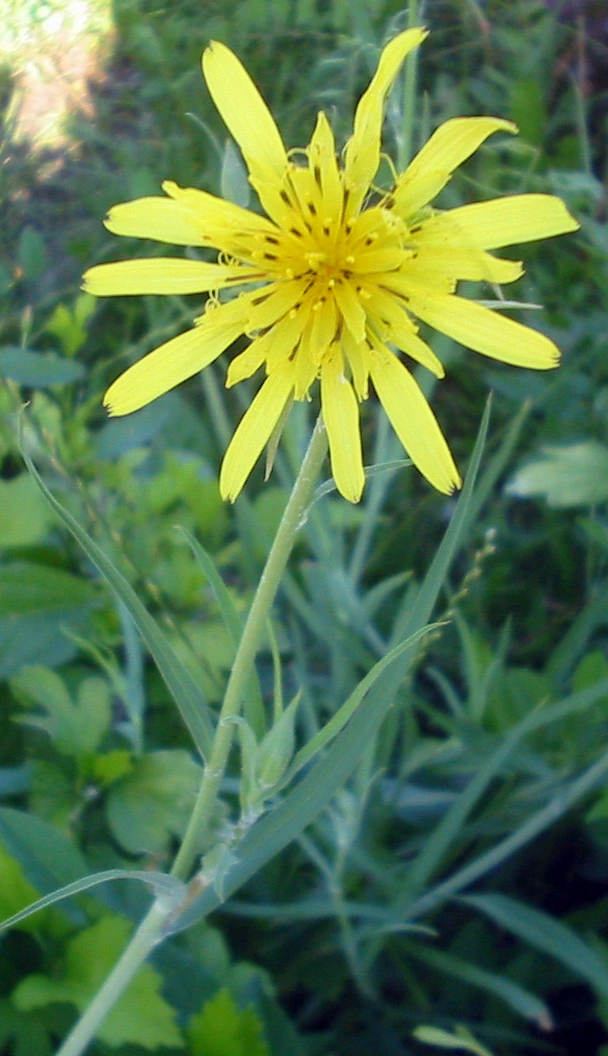
Image source:https://en.wikipedia.org/wiki/Main_Page
▍Morphological Features
- Height: 25–100 cm tall.
- Stem: Erect, unbranched or branched,
longitudinally grooved, glabrous, containing white latex.
- Leaves: Alternate, linear or linear-lanceolate;
lower leaves long, base enlarged and subamplexicaul, entire or
undulate; upper leaves gradually smaller.
- Flowers: Capitulum solitary at apex, involucre
cylindrical; ligulate florets yellow, turning bluish-purple when
dry, opening in the morning and closing at noon; flowering
period May–September.
- Fruit: Achenes grayish-black or grayish-brown,
ca. 1.1 cm long, with longitudinal ribs and tuberculate
projections, apex slender-beaked; pappus grayish-white; fruiting
period August–October.
- Root system: Fleshy taproot, cylindrical,
vertically descending, with few lateral roots.
▍Cultivation Methods
| Parameter |
Specifications |
| Soil type |
Prefers loose, fertile, well-drained sandy loam or loam, pH 6.0–7.5,
drought-tolerant, avoids waterlogging. |
| Germination temperature |
Optimal 20–25°C, germinates in 7–10 days; light promotes
germination. |
| Planting density |
Row spacing 40–50 cm, plant spacing 25–30 cm, 60,000–80,000 plants
per hectare. |
▍Pest Management
Diseases
- Root rot: Improve drainage and drench with 50% Carbendazim WP
800x
- Leaf spot: Spray 70% Thiophanate-Methyl WP 800x.
Pests
- Aphids: Spray 10% Imidacloprid WP 1500x
- Leaf miners: Spray abamectin 1500x
- White grubs: Apply phoxim granules.
▍Applications
Edible use
Fleshy roots suitable for roasting, stewing, frying
and soup; young leaves for salad or stir-fry.
Medicinal use
Traditionally used for jaundice, promoting
digestion, diuresis and strengthening bones.
Ornamental use
Unique flower shape, used in flower borders, rock
gardens, cut and dried flowers.
Ecological use
Nectar source for bees and butterflies; can be used
as ground cover.
Blumea balsamifera
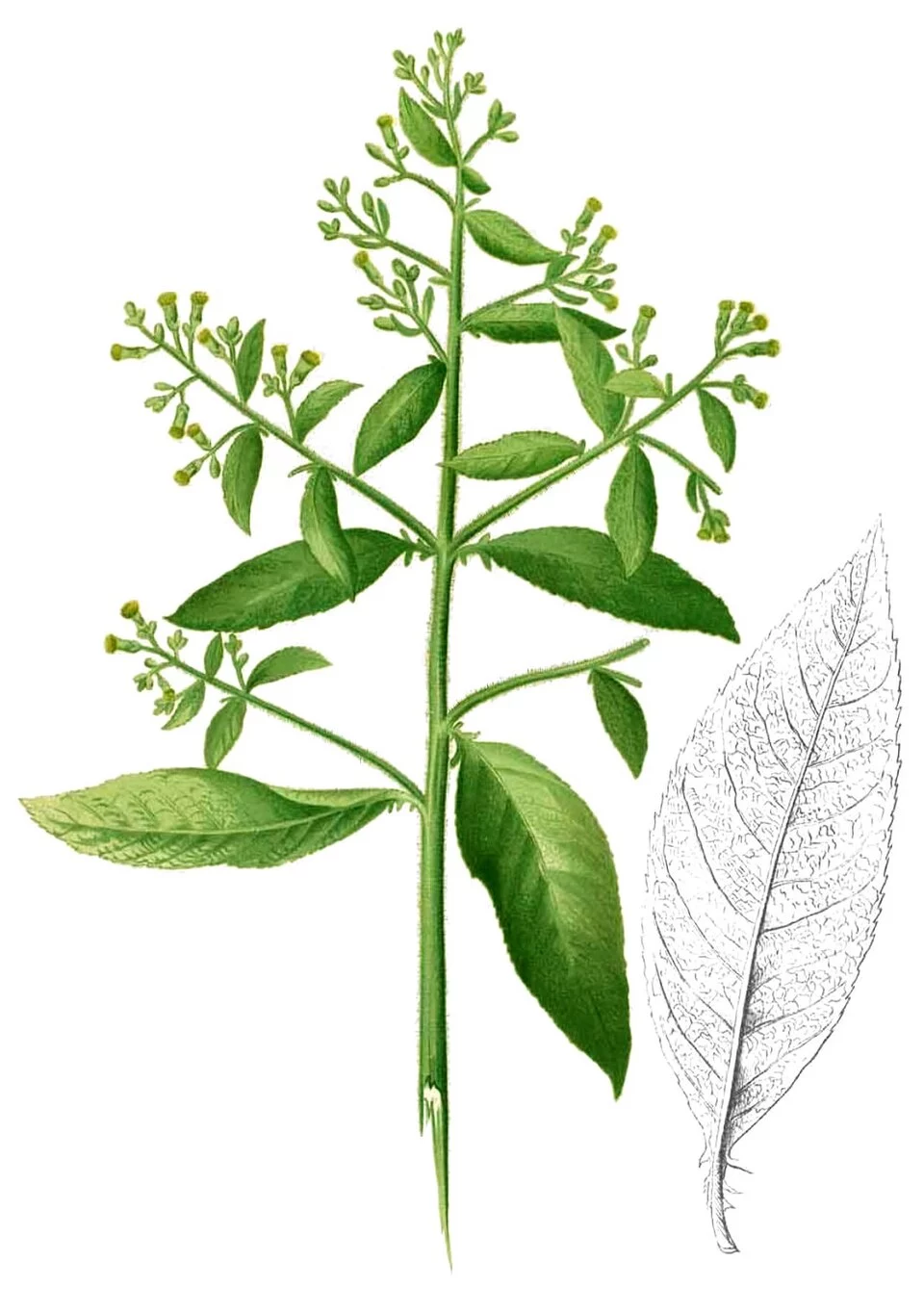
Image source:https://en.wikipedia.org/wiki/Main_Page
▍Morphological Features
- Height: Perennial herb or subshrub, 1–3 m tall.
- Stem: Erect, robust, base slightly woody;
gray-brown bark with longitudinal ribs; densely tawny pubescent;
internodes 2–6 cm.
- Leaves: Alternate; lower leaves broadly
elliptic or oblong-lanceolate, 22–25 cm long and 8–10 cm wide,
petiolate with 3–5 pairs of linear appendages; upper leaves
smaller, 7–12 cm long and 1.5–3.5 cm wide, sessile or
short-petiolate; upper surface pubescent, lower surface densely
silky-cottony; margin serrate; aromatic when crushed.
- Flowers: Capitula numerous in panicles;
involucre campanulate; florets yellow; female florets numerous,
slender-tubular; bisexual florets few, tubular; flowering period
March–May.
- Fruit: Achenes cylindrical, 5–10 ribbed,
densely pubescent; pappus reddish-brown, scabrous; fruiting
period September–October.
- Root system: Taproot system well-developed,
vertical, extending to about 1.5 m; lateral roots abundant.
▍Cultivation Methods
| Parameter |
Specifications |
| Soil type |
Prefers loose, well-drained, acidic soil with pH 5.5–6.5;
drought-tolerant, avoids waterlogging; adapts to sandy loam or loam.
|
| Germination temperature |
Optimal 20–25°C, germinates in 10–15 days; light promotes
germination. |
| Planting density |
Row spacing 50–60 cm, plant spacing 30–40 cm, about 40,000–55,000
plants per hectare. |
▍Pest Management
Diseases
- Root rot: Improve drainage and drench with 50% Carbendazim WP
800x
- Leaf spot: Spray 70% Thiophanate-Methyl WP 800x.
Pests
- Aphids: Spray 10% Imidacloprid WP 1500x
- Leaf miners: Spray abamectin 1500x
- Spider mites: Spray abamectin 2000x.
▍Applications
Medicinal use
Source of natural borneol; used for resuscitation,
heat-clearing and pain relief; treats cold, rheumatism, diarrhea
and abdominal pain.
Industrial use
Essential oil for cosmetics, fragrances and natural
insecticides.
Ecological use
Pioneer species for soil and water conservation;
aromatic and pest-repellent.
Ornamental use
Tropical garden greenery with fragrant foliage.
Blumea hookeri
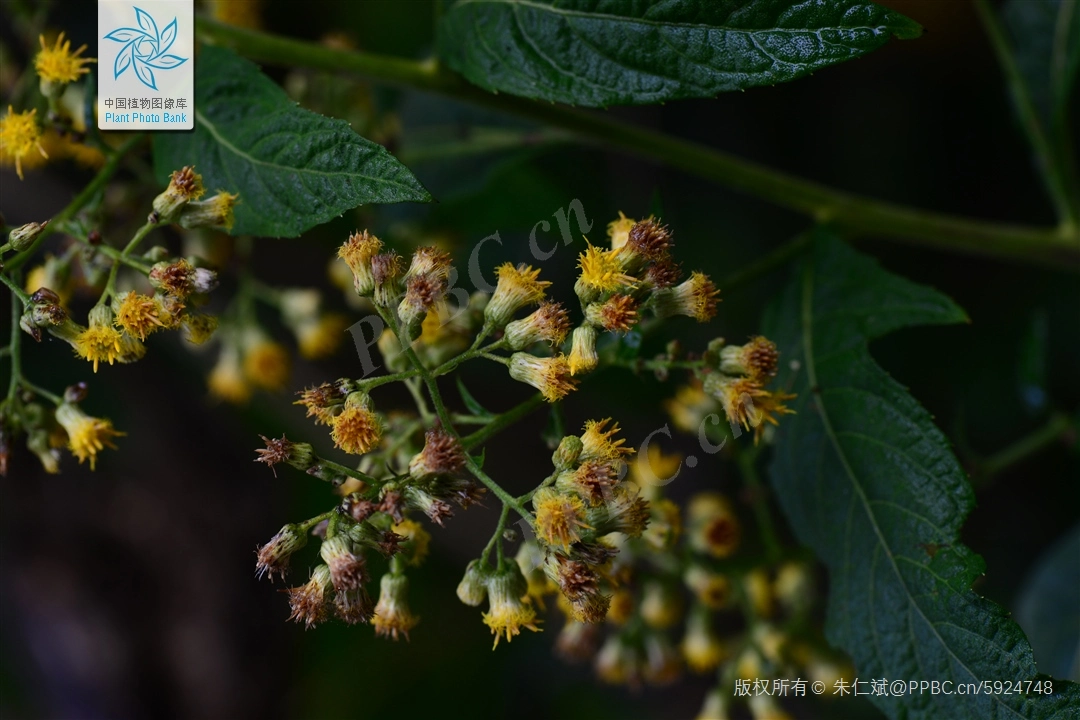
Image source:https://www.iplant.cn/
▍Morphological Features
- Height: 0.8–1.5 m tall.
- Stem: Erect, branched, base slightly woody,
pubescent, slender internodes.
- Leaves: Alternate, membranous; lower leaves
obovate or oblong-lanceolate; upper leaves smaller, subsessile;
nearly glabrous or sparsely pubescent on both surfaces, margin
dentate, apex acute.
- Flowers: Capitula arranged in panicles;
involucre campanulate; florets yellow; female florets numerous,
slender-tubular; bisexual florets tubular; flowering period
November–February.
- Fruit: Achenes cylindrical, ribbed, pubescent;
pappus white or reddish-brown, scabrous; fruiting period
March–May.
- Root system: Taproot system moderately
developed, with fibrous lateral roots, adapted to moist mountain
slopes.
▍Cultivation Methods
| Parameter |
Specifications |
| Soil type |
Prefers moist, well-drained loam or sandy loam, acidic to neutral
(pH 5.5–7.0), avoids waterlogging; native to wet mountain slopes at
about 2800 m altitude. |
| Germination temperature |
Optimal 18–22°C, germinates in 15–20 days, light-sensitive. |
| Planting density |
Row spacing 40–50 cm, plant spacing 25–30 cm, about 60,000–80,000
plants per hectare. |
▍Pest Management
Diseases
- Root rot: Improve drainage and drench with 50% Carbendazim WP
800x
- Leaf spot: Spray 70% Thiophanate-Methyl WP 800x.
Pests
- Aphids: Spray 10% Imidacloprid WP 1500x
- Leaf miners: Spray abamectin 1500x
- Spider mites: Spray abamectin 2000x.
▍Applications
Medicinal use
Traditional herb with anti-inflammatory, analgesic
and antipyretic effects, used for cold, rheumatism and abdominal
pain.
Ecological use
Pioneer species for soil and water conservation on
high-altitude moist slopes.
Industrial use
Source of volatile oils for natural fragrances and
insect repellents.
Ornamental use
Rare alpine garden greenery with aromatic foliage.
Blumea membranacea
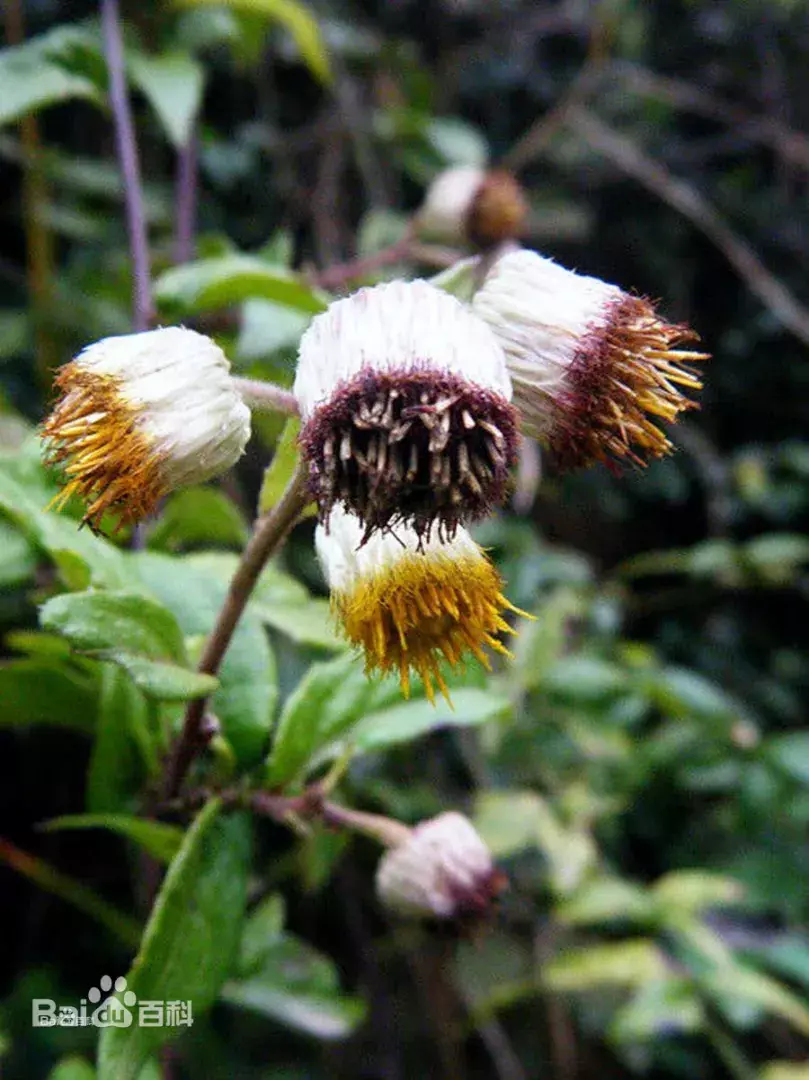
Image source:https://baike.baidu.com/
▍Morphological Features
- Height: Annual herb, 0.3–1 m tall.
- Stem: Erect, branched or rarely unbranched;
base 2–5 mm thick, with coarse ribs; lower part sparsely
glandular-pubescent, upper part and inflorescence axis densely
pubescent; internodes 3–5 cm.
- Leaves: Alternate; lower leaves
obovate/oblong-lanceolate, 9–15 cm (including petiole) × 4–5 cm,
lyrate/pinnatifid, apex acute, margin serrate, both surfaces
sparsely pubescent, petiole 3–4 cm; upper leaves smaller, 2–4 cm
× 1–2 cm, sessile or subsessile, undivided, margin irregularly
serrate.
- Flowers: Capitula 5–7 mm in diameter, 3–5
clustered or in narrow panicles; involucre cylindrical, 5 mm
long; florets yellow; female florets numerous, slender-tubular;
bisexual florets few, tubular; flowering period August–October.
- Fruit: Achenes cylindrical, ~0.7 mm long,
sparsely pubescent; pappus white; fruiting period
October–December.
- Root system: Taproot system shallowly
developed, fibrous lateral roots abundant; adapted to moist,
loose soil.
▍Cultivation Methods
| Parameter |
Specifications |
| Soil type |
Prefers loose, well-drained sandy loam/loam, pH 5.5–7.0;
drought-tolerant, avoids waterlogging; native to
tropical/subtropical moist slopes. |
| Germination temperature |
Optimal 20–25°C, germinates in 10–15 days; light promotes
germination. |
| Planting density |
Row spacing 40–50 cm, plant spacing 20–30 cm, ~65,000–85,000 plants
per hectare. |
▍Pest Management
Diseases
- Root rot: Improve drainage + drench with 50% Carbendazim WP 800×
- Leaf spot: Spray 70% Thiophanate-Methyl WP 800×.
Pests
- Aphids: Spray 10% Imidacloprid WP 1500×
- Leaf miners: Spray abamectin 1500×
- Spider mites: Spray abamectin 2000×.
▍Applications
Medicinal use
Traditional herb for anti-inflammatory, antipyretic,
analgesic; treats cold, rheumatism, abdominal pain; aromatic for
external use.
Ecological use
Pioneer herb for soil & water conservation in
tropical/subtropical slopes; weed-suppressive.
Industrial use
Source of volatile oils for natural fragrances,
insect repellents, and cosmetics.
Ornamental use
Compact herb for tropical garden borders and potted
greenery.
Blumea oblongifolia
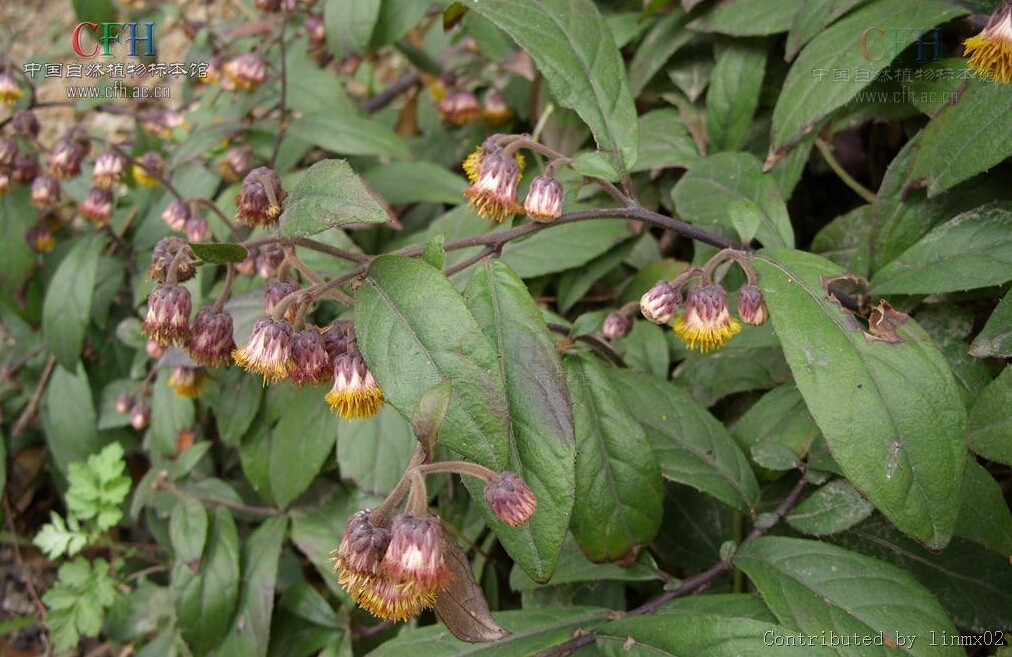
Image source:https://baike.baidu.com/
▍Morphological Features
- Height: 0.5–1.5 m tall.
- Stem: Erect, branched; lower part sparsely
hairy or glabrescent, upper part densely pubescent; internodes
slender.
- Leaves: Alternate; middle stem leaves
oblong/narrow elliptic-oblong, 9–14 cm × 2–4 cm, base cuneate,
margin revolute with double serrations, upper surface pubescent,
lower surface slightly pilose, sub?sessile; upper leaves
smaller, oblong?lanceolate, 4–5.5 cm, acute teeth, sessile.
- Flowers: Capitula 0.8–1.2 cm in diameter, in
terminal spreading panicles; peduncles up to 2 cm, densely
pilose; involucre globose?campanulate, ~1 cm long; florets
yellow; female numerous, slender?tubular; bisexual few, tubular;
flowering period September–November.
- Fruit: Achenes cylindrical, 1–1.1 mm long,
sparsely white hispid; pappus white; fruiting period
November–January.
- Root system: Taproot system with well?developed
fibrous lateral roots, adapted to moist, loose soils.
▍Cultivation Methods
| Parameter |
Specifications |
| Soil type |
Prefers well?drained loam/sandy loam, pH 5.5–7.0; tolerant to
moderate drought, avoids waterlogging; native to roadsides, fields,
grasslands, valleys. |
| Germination temperature |
Optimal 20–25°C, germinates in 12–18 days; light?sensitive. |
| Planting density |
Row spacing 40–50 cm, plant spacing 25–30 cm, ~60,000–75,000 plants
per hectare. |
▍Pest Management
Diseases
- Root rot: Improve drainage + drench with 50% Carbendazim WP 800×
- Leaf spot: Spray 70% Thiophanate?Methyl WP 800×.
Pests
- Aphids: Spray 10% Imidacloprid WP 1500×
- Leaf miners: Spray abamectin 1500×
- Spider mites: Spray abamectin 2000×.
▍Applications
Medicinal use
Traditional herb with anti?inflammatory,
antipyretic, analgesic effects; treats cold, rheumatism,
abdominal pain; contains alkaloids, phenols, flavonoids .
Ecological use
Pioneer herb for soil & water conservation in
subtropical slopes; weed?suppressive.
Industrial use
Source of volatile oils for natural fragrances and
insect repellents.
Ornamental use
Compact herb for subtropical garden borders and
potted greenery.
Blumea megacephala
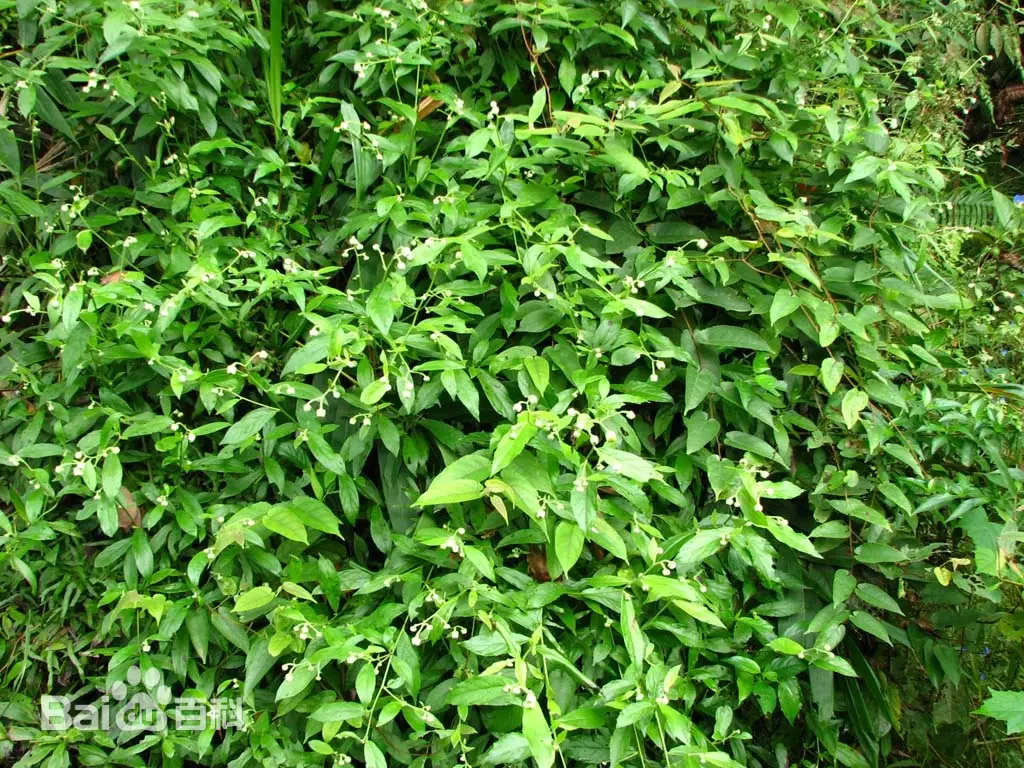
Image source:https://baike.baidu.com/
▍Morphological Features
- Height: Climbing herbaceous vine / subshrub,
1–3 m tall.
- Stem: Cylindrical, branched, with distinct
grooves; sparsely hairy or glabrescent; internodes 6–12 cm
(smaller branches: 2–4 cm); young branches densely pubescent.
- Leaves: Alternate; lower/middle leaves
ovate/oblong-elliptic, 7–10 cm × 2.5–4 cm, base rounded, margin
sparsely serrate/denticulate, upper surface sparsely hairy
(glabrescent), lower surface glabrous/sparsely hairy, petiole
2–6 mm; upper leaves smaller (2–5 cm × 1–1.5 cm),
short-petioled, finely serrate.
- Flowers: Capitula large, 1.5–2 cm diameter, 1–7
in racemes/corymbs, forming large panicles; peduncles 1–3 cm,
densely pilose; involucre hemispheric, 5–6 layers; florets
yellow; female numerous (slender-tubular), bisexual few
(tubular); flowering period August–December.
- Fruit: Achenes cylindrical/oblong, 1.2–1.4 mm,
10-ribbed, sparsely pubescent; pappus white, 4–6 mm; fruiting
period December–February.
- Root system: Taproot system with well-developed
fibrous lateral roots; adapted to moist, loose soils.
▍Cultivation Methods
| Parameter |
Specifications |
| Soil type |
Prefers well-drained loam/sandy loam, pH 5.5–7.0; drought-tolerant,
avoids waterlogging; native to tropical/subtropical slopes,
thickets, roadsides. |
| Germination temperature |
Optimal 20–28°C, germinates in 10–15 days; light promotes
germination. |
| Planting density |
Row spacing 50–60 cm, plant spacing 30–40 cm, ~40,000–55,000 plants
per hectare. |
▍Pest Management
Diseases
- Root rot: Improve drainage + drench with 50% Carbendazim WP 800×
- Leaf spot: Spray 70% Thiophanate-Methyl WP 800×.
Pests
- Aphids: Spray 10% Imidacloprid WP 1500×
- Leaf miners: Spray abamectin 1500×
- Spider mites: Spray abamectin 2000×.
▍Applications
Medicinal use
Traditional herb for dispelling wind, dampness,
activating blood, regulating menstruation; treats rheumatism,
traumatic swelling, postpartum hemorrhage, irregular
menstruation; external for boils.
Ecological use
Climbing pioneer for slope greening & soil
conservation in tropical/subtropical areas.
Industrial use
Contains flavonoids; potential source of volatile
oils for natural fragrances.
Ornamental use
Climbing foliage for tropical garden trellises and
vertical greening.
Schischkinia albispina
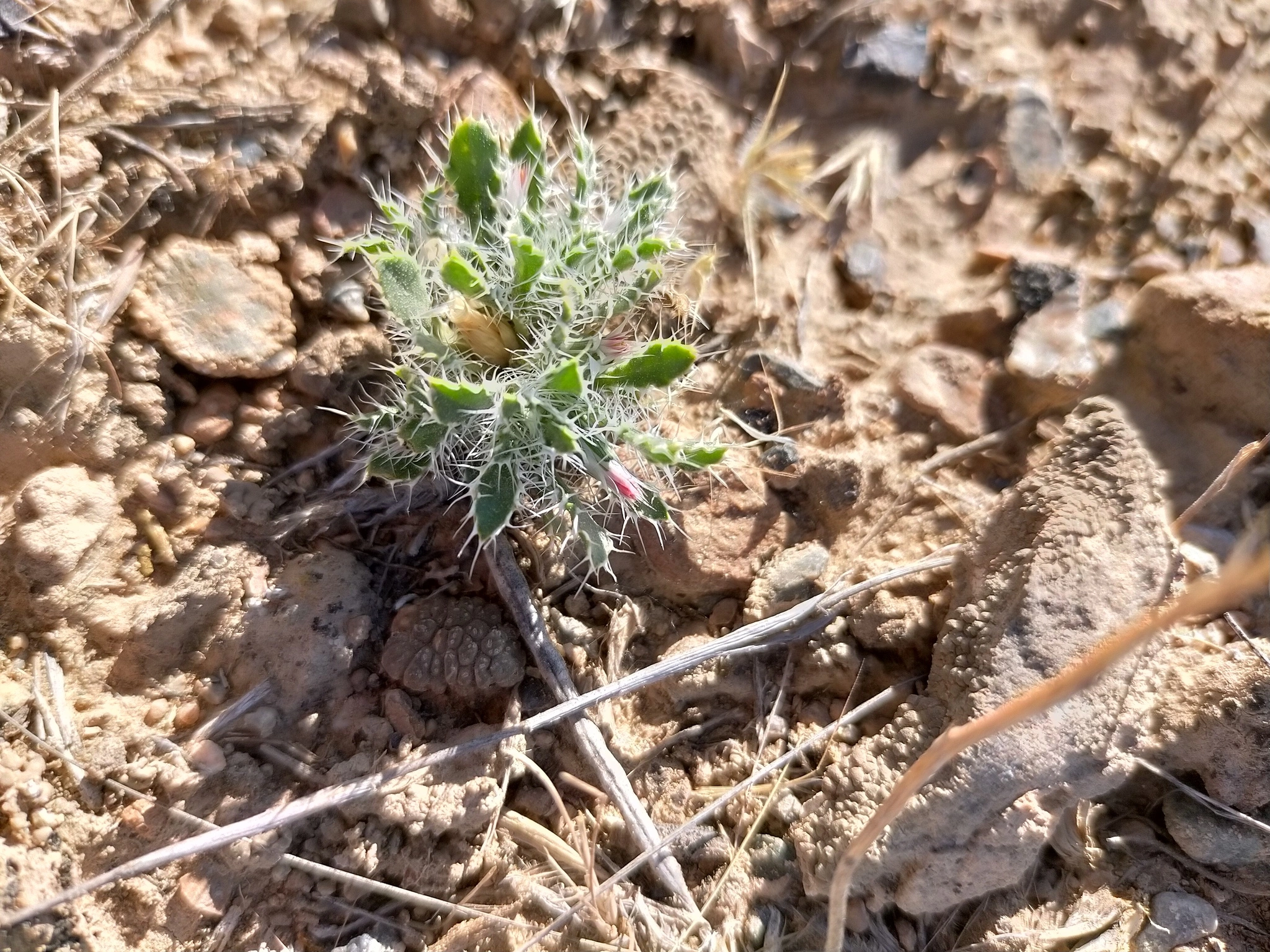
Image source:https://en.wikipedia.org/wiki/Main_Page
▍Morphological Features
- Height: 3–10 cm tall .
- Stem: Main stem very short, much branched from
base; stems white, covered with short scabrous hairs .
- Leaves: Alternate,
oblong/oblanceolate/spathulate, 2–5 cm × 0.2–0.3 cm; apex
obtuse, margin with rigid white spines (simple or 2–4 palmate);
base attenuate into short petiole; green, glabrous or sparsely
scabrous beneath .
- Flowers: Capitula solitary at branch ends,
enclosed by bracts; involucre ovoid-elliptic, 4–5 mm diam.;
florets yellow; marginal florets neuter, corolla 5–6 mm; central
disk florets bisexual, corolla 5.5 mm; flowering period
July–August.
- Fruit: Achenes oblong-ovoid, 4 mm × 2.5 mm,
glabrous, smooth, without ribs; apex with denticulate margin;
pappus white, 2-seriate, outer series 7 mm, inner 9 mm; fruiting
period August–September .
- Root system: Taproot system with shallow,
fibrous lateral roots, adapted to arid, sandy soils.
▍Cultivation Methods
| Parameter |
Specifications |
| Soil type |
Prefers well-drained sandy/loamy soil, pH 7.0–8.5; drought-tolerant,
avoids waterlogging; native to arid slopes, gravelly deserts,
saline-alkali lands (Xinjiang, Central Asia). |
| Germination temperature |
Optimal 15–25°C, germinates in 15–20 days; light promotes
germination. |
| Planting density |
Row spacing 20–30 cm, plant spacing 10–15 cm, ~150,000–200,000
plants per hectare (wild/conservation only). |
▍Pest Management
Diseases
- Root rot: Improve drainage + drench with 50% Carbendazim WP 800×
- Leaf spot: Spray 70% Thiophanate-Methyl WP 800×.
Pests
- Aphids: Spray 10% Imidacloprid WP 1500×
- Spider mites: Spray abamectin 2000×.
▍Applications
Ecological use
Pioneer species for desert/saline-alkali soil
restoration; sand fixation, slope stabilization in arid zones.
Medicinal use
Minor traditional use for anti-inflammatory,
analgesic; external for minor wounds (local folk use).
Ornamental use
Dwarf, spiny foliage for rock gardens, xeriscaping,
desert-themed landscaping.
Eschenbachia aegyptiaca
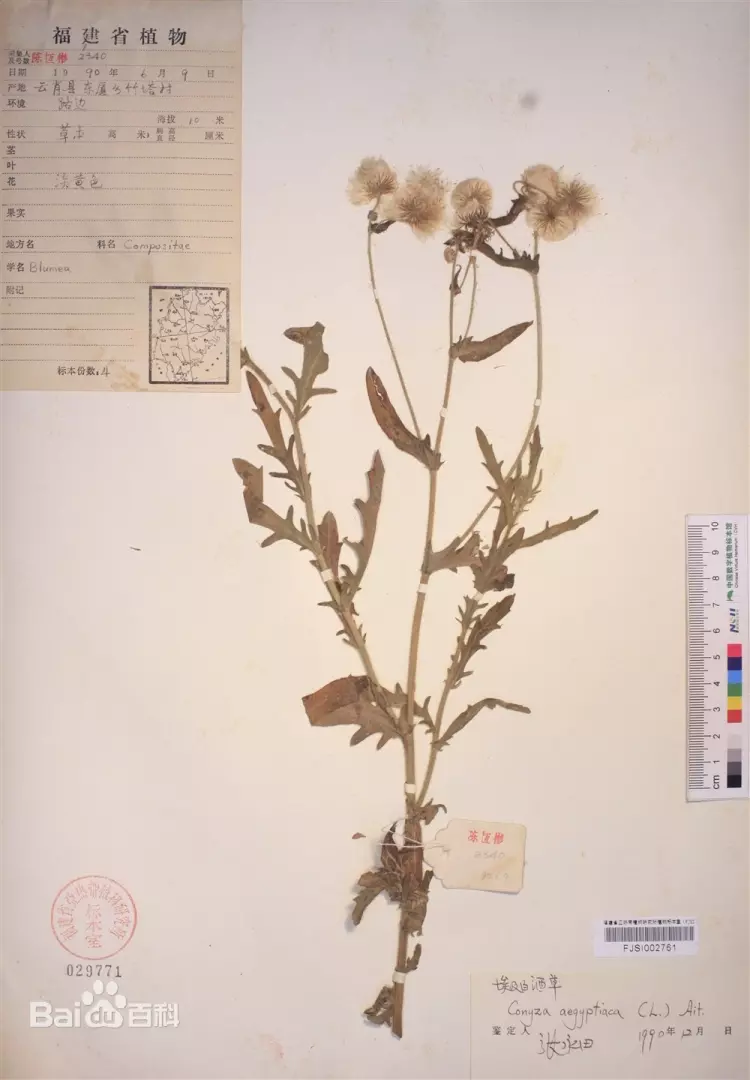
Image source:https://baike.baidu.com/
▍Morphological Features
- Height: 30–80 cm tall。
- Stem: Erect or ascending, branched from upper
part; cylindrical, densely covered with gray-white long hairs +
glandular hairs。
- Leaves: Alternate; lower/middle leaves
oblong-lanceolate, 4–10 cm × 1–2.5 cm, base attenuate and
semi-amplexicaul, margin pinnately lobed/serrate, both surfaces
with gray-white hairs + glandular hairs; upper leaves smaller,
linear-lanceolate。
- Flowers: Capitula 1.2–1.5 cm diameter, 2–6 in
corymbs; involucre hemispheric, 3–4 layers; florets yellow;
female numerous (filiform), bisexual few (tubular); flowering
period July–October。
- Fruit: Achenes oblong, 0.8–1 mm, compressed,
puberulent; pappus white, 3–4 mm; fruiting period
September–November 。
- Root system: Taproot system with fusiform main
root + numerous fibrous lateral roots。
▍Cultivation Methods
| Parameter |
Specifications |
| Soil type |
Prefers well-drained sandy loam/loam, pH 6.0–7.5; drought-tolerant,
avoids waterlogging; native to coastal wastelands, roadsides。 |
| Germination temperature |
Optimal 20–28°C, germinates in 7–12 days; light promotes germination
。 |
| Planting density |
Row spacing 30–40 cm, plant spacing 20–25 cm, ~80,000–110,000 plants
per hectare 。 |
▍Pest Management
Diseases
- Root rot: Improve drainage + drench with 50% Carbendazim WP 800×
- Leaf spot: Spray 70% Thiophanate-Methyl WP 800× 。
Pests
- Aphids: Spray 10% Imidacloprid WP 1500×
- Leaf miners: Spray abamectin 1500× 。
▍Applications
Medicinal use
Traditional herb for heat-clearing, detoxification,
anti-inflammatory, analgesic; treats cold, cough, sore throat,
enteritis; external for eczema, boils 。
Ecological use
Pioneer for coastal/wasteland greening & soil
stabilization; adapts to poor soils。
Ornamental use
Wildflower for natural gardens, roadside
landscaping; yellow flowers attract pollinators 。
Eschenbachia japonica
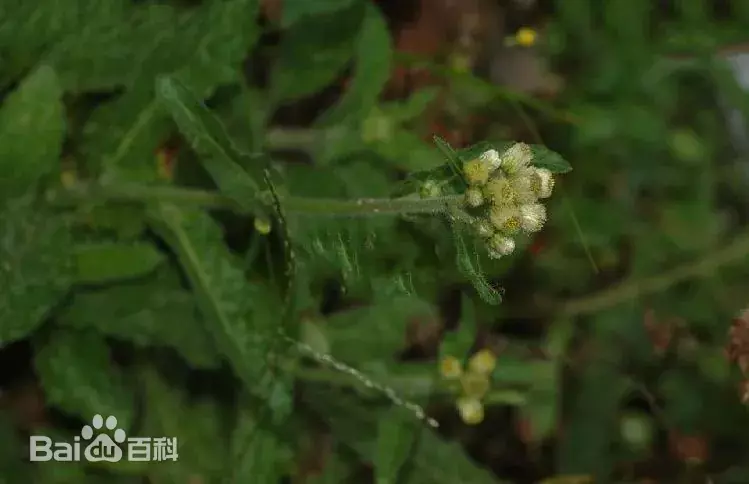
Image source:https://baike.baidu.com/
▍Morphological Features
- Height: Annual/biennial herb, 20–45 cm
(occasionally taller).
- Stem: Erect, slender, ribbed; branched from
base or upper part; densely white long hairs/scabrous hairs;
base 2–4 mm thick.
- Leaves: Alternate; basal rosette leaves
obovate/spathulate, 6–7 cm; lower leaves long-petiolate (3–13
cm), oblong/oblanceolate, margin crenate/serrate; middle leaves
3.5–5 cm × 0.5–1.5 cm, sessile, semi-amplexicaul, small sharp
teeth; upper leaves linear-lanceolate; all with white hairs.
- Flowers: Capitula ~1.1 cm diam., dense
globose/corymbose at apex; involucre hemispheric 0.8–1 cm, 3–4
layers; florets yellow; female numerous (filiform), bisexual
15–16 (tubular); flowering May–September.
- Fruit: Achenes oblong, 1–1.2 mm, yellow,
compressed, margin ribbed, puberulent; pappus dirty
white/reddish, 4.5 mm, scabrous; fruiting August–October.
- Root system: Taproot system with slender main
root + fibrous lateral roots.
▍Cultivation Methods
| Parameter |
Specifications |
| Soil type |
Prefers well-drained sandy loam/loam, pH 6.0–7.5; drought-tolerant,
avoids waterlogging; grows in wastelands, roadsides, hillsides. |
| Germination temperature |
Optimal 18–26°C, germinates in 7–14 days; light promotes
germination. |
| Planting density |
Row spacing 25–35 cm, plant spacing 15–20 cm, ~100,000–130,000
plants/ha. |
▍Pest Management
Diseases
- Root rot: Improve drainage + drench 50% Carbendazim WP 800×
- Leaf spot: Spray 70% Thiophanate-Methyl WP 800×.
Pests
- Aphids: Spray 10% Imidacloprid WP 1500×
- Leaf miners: Spray abamectin 1500×.
▍Applications
Medicinal use
Whole plant/root for heat-clearing, detox,
anti-inflammatory, analgesic, expectorant; treats cold, cough,
sore throat, enteritis, rheumatism; external for eczema, boils .
Ecological use
Pioneer for wasteland/roadside greening & soil
stabilization; adapts to poor soils.
Ornamental use
Wildflower for natural gardens, rockeries; yellow
capitula attract pollinators.
Eschenbachia stricta
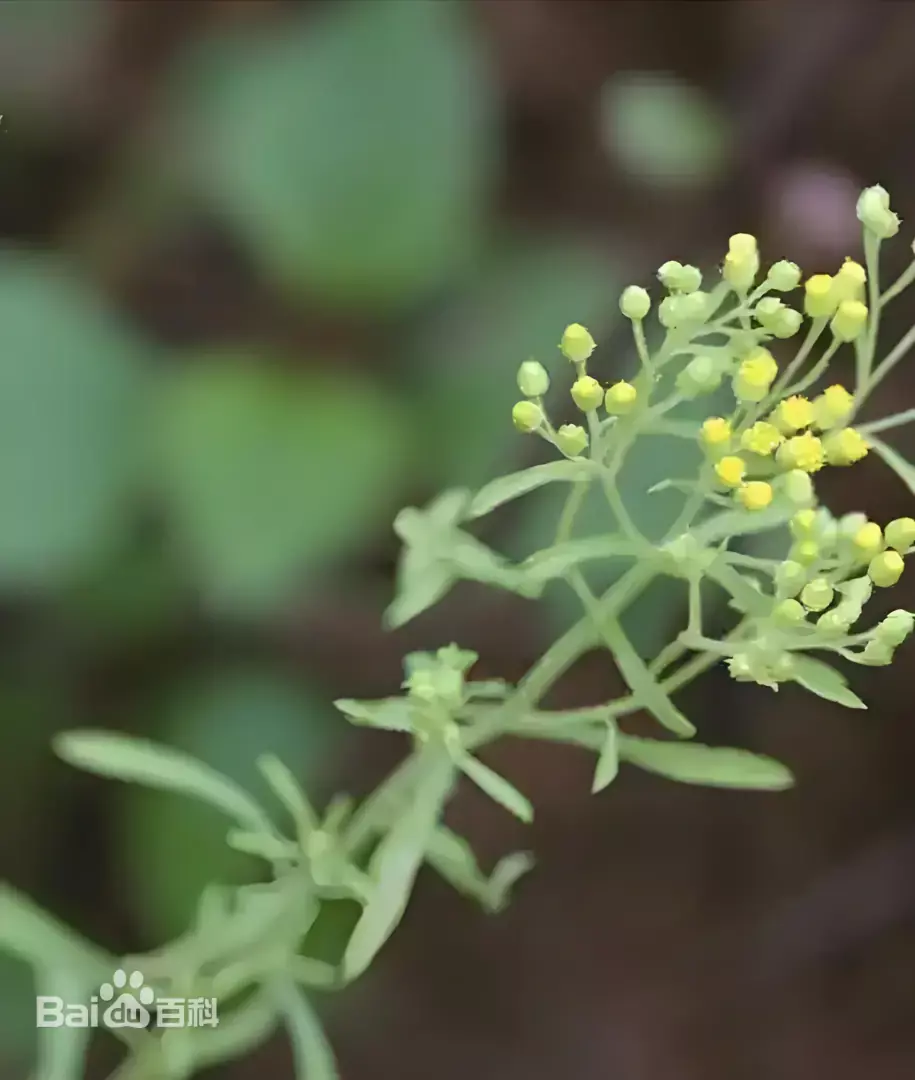
Image source:https://baike.baidu.com/
▍Morphological Features
- Height: 30–65 cm tall .
- Stem: Erect, base 3–5 mm thick, ribbed; much
branched (corymbose), slender and straight; densely gray-white
scabrous pubescence throughout .
- Leaves: Alternate, dense; lower/middle leaves
spathulate-obovate, 3–5.5 cm × 0.5–1.3 cm, base cuneate into
slender petiole, margin coarsely toothed/pinnately lobed, both
sides gray-white scabrous; upper/branch leaves
linear-lanceolate, 1.2–2 cm × 2–4 mm, sessile, entire, 1-veined;
axils often with 2–4 small leaf clusters .
- Flowers: Capitula very small, 2–3 mm diam.,
extremely numerous in dense compound corymbs; involucre
hemispheric (~3 mm), 3-layered; florets yellow; female filiform,
bisexual tubular; flowering/fruiting September–November.
- Fruit: Achenes oblong, ~0.6 mm, glandular;
pappus pale red, 2-layered (outer very short, inner
bristle-like).
- Root system: Taproot system; main root woody,
fusiform, often curved, with numerous fibrous lateral roots .
▍Cultivation Methods
| Parameter |
Specifications |
| Soil type |
Prefers well-drained sandy loam/loam, pH 6.0–7.5; drought-tolerant,
avoids waterlogging; grows in wastelands, roadsides, hillsides. |
| Germination temperature |
Optimal 20–28°C, germinates in 7–12 days; light promotes
germination. |
| Planting density |
Row spacing 25–35 cm, plant spacing 15–20 cm, ~100,000–130,000
plants/ha. |
▍Pest Management
Diseases
- Root rot: Improve drainage + drench 50% Carbendazim WP 800×
- Leaf spot: Spray 70% Thiophanate-Methyl WP 800×.
Pests
- Aphids: Spray 10% Imidacloprid WP 1500×
- Leaf miners: Spray abamectin 1500×.
▍Applications
Medicinal use
Whole plant/root for heat-clearing, detoxification,
anti-inflammatory, analgesic; treats cold, cough, sore throat,
enteritis; external for eczema, boils.
Ecological use
Pioneer for wasteland/roadside greening & soil
stabilization; adapts to poor soils.
Ornamental use
Wildflower for natural gardens, rockeries; small
yellow capitula attract pollinators.
Eschenbachia muliensis
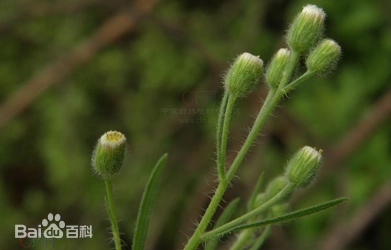
Image source:https://baike.baidu.com/
▍Morphological Features
- Height: Perennial herb, 5–13 cm tall.
- Stem: Single or 2–3 clustered; erect, slender,
unbranched; covered with gray-white short stiff hairs +
appressed pubescence .
- Leaves: Basal leaves form rosette,
spathulate/obovate, 2–5 cm × 0.3–0.5 cm, winged petiole, upper
margin sparsely serrated ; lower stem leaves
linear/linear?oblanceolate, 2–3.5 cm × 0.1–0.3 cm, sessile,
sparsely serrated ; upper leaves linear, small, entire; all with
scabrous hairs on margins .
- Flowers: Capitula 3–4 in terminal corymb
(rarely solitary); involucre campanulate; florets yellow; female
filiform, bisexual tubular; flowering June.
- Fruit: Achenes oblong, 1–1.2 mm, compressed,
margin ribbed, sparsely appressed hairy + glandular; pappus
dirty white, 1 layer, scabrous, 3–3.5 mm .
- Root system: Woody rhizome with ascending
branches; fibrous?rooted, neck with brown persistent leaf bases
.
▍Cultivation Methods
| Parameter |
Specifications |
| Soil type |
Native to Sichuan (Muli), 2200 m elevation; prefers well?drained
sandy loam/loam, neutral?slightly acidic; avoids waterlogging. |
| Germination temperature |
No published data; reference genus: 18–26°C, light?promoted, 7–14
days. |
| Planting density |
No published data; reference genus: row spacing 25–35 cm, plant
spacing 15–20 cm. |
▍Pest Management
Diseases
- Root rot: Improve drainage + drench with 50% Carbendazim WP 800×
- Leaf spot: Spray 70% Thiophanate-Methyl WP 800×.
Pests
- Aphids: Spray 10% Imidacloprid WP 1500×
- Leaf miners: Spray abamectin 1500×.
▍Applications
Medicinal use
Traditional folk use (local Sichuan); whole plant
for heat?clearing, anti?inflammatory, analgesic; external for
wounds/eczema.
Ecological use
Rare alpine herb, suitable for rock gardens, alpine
greening, soil stabilization in high?elevation areas.
Ornamental use
Compact rosette + small yellow capitula; used in
miniature gardens, alpine rockeries.
Eschenbachia leucantha
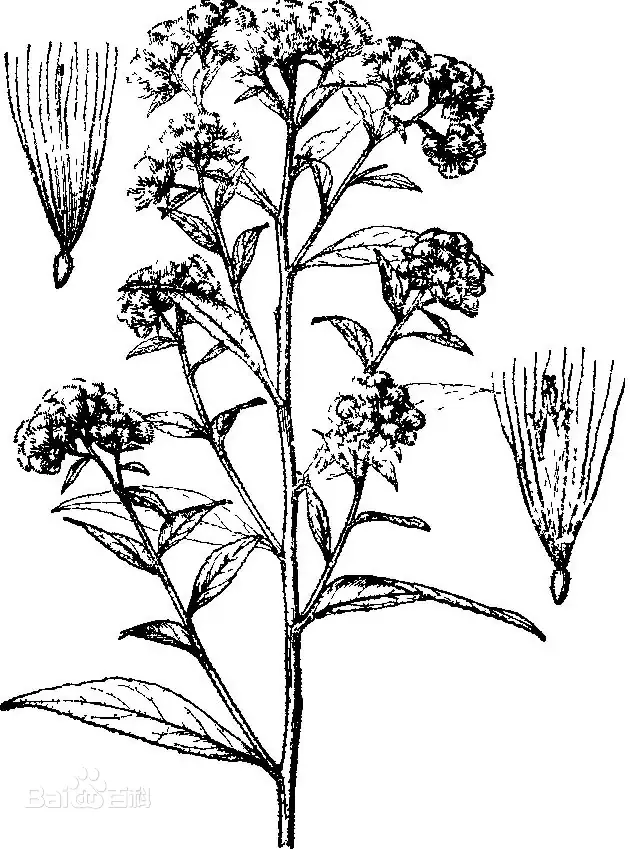
Image source:https://baike.baidu.com/
▍Morphological Features
- Height: 40–120 cm tall.
- Stem: Erect, green/purple; base 3–5 mm thick,
ribbed; densely dust?like glandular pubescent; branched (lower
spreading, upper forked).
- Leaves: Dense; lower leaves wither at
flowering; middle leaves elliptic?oblong/oblong?lanceolate, 7–14
cm × 2.5–3.5 cm, short?petiolate, margin sharp?tipped serrate,
both sides glandular pubescent; upper leaves smaller,
oblong?lanceolate, uppermost 3–5 cm, sub?sessile, entire/finely
toothed.
- Flowers: Capitula 7 mm diam., numerous in broad
paniculate clusters; peduncles 3–9 mm, densely glandular
pubescent; involucre campanulate; flowers white; female
filiform, bisexual tubular (6–9); flowering/fruiting
September–December.
- Fruit: Achenes oblong, ~0.6 mm, margin ribbed,
sparsely pubescent; pappus 1 layer, pale red, bristle?like, base
connate, deciduous.
- Root system: Taproot fusiform, woody, with
numerous fibrous lateral roots.
▍Cultivation Methods
| Parameter |
Specifications |
| Soil type |
Prefers well?drained loam/sandy loam, pH 6.0–7.5; drought?tolerant,
avoids waterlogging; grows in wastelands, roadsides, hillsides. |
| Germination temperature |
No published data; reference genus: 20–28°C, light?promoted, 7–12
days. |
| Planting density |
No published data; reference genus: row spacing 25–35 cm, plant
spacing 15–20 cm, ~100,000–130,000 plants/ha. |
▍Pest Management
Diseases
- Root rot: Improve drainage + drench with 50% Carbendazim WP 800×
- Leaf spot: Spray 70% Thiophanate-Methyl WP 800×.
Pests
- Aphids: Spray 10% Imidacloprid WP 1500×
- Leaf miners: Spray abamectin 1500×.
▍Applications
Medicinal use
Whole plant for heat?clearing, detoxification,
anti?inflammatory, analgesic; treats cold, cough, enteritis;
external for eczema, boils, wounds.
Ecological use
Pioneer for wasteland/roadside greening & soil
stabilization; adapts to poor soils.
Ornamental use
Wildflower for natural gardens, rockeries; white
capitula attract pollinators.
Leucomeris decora
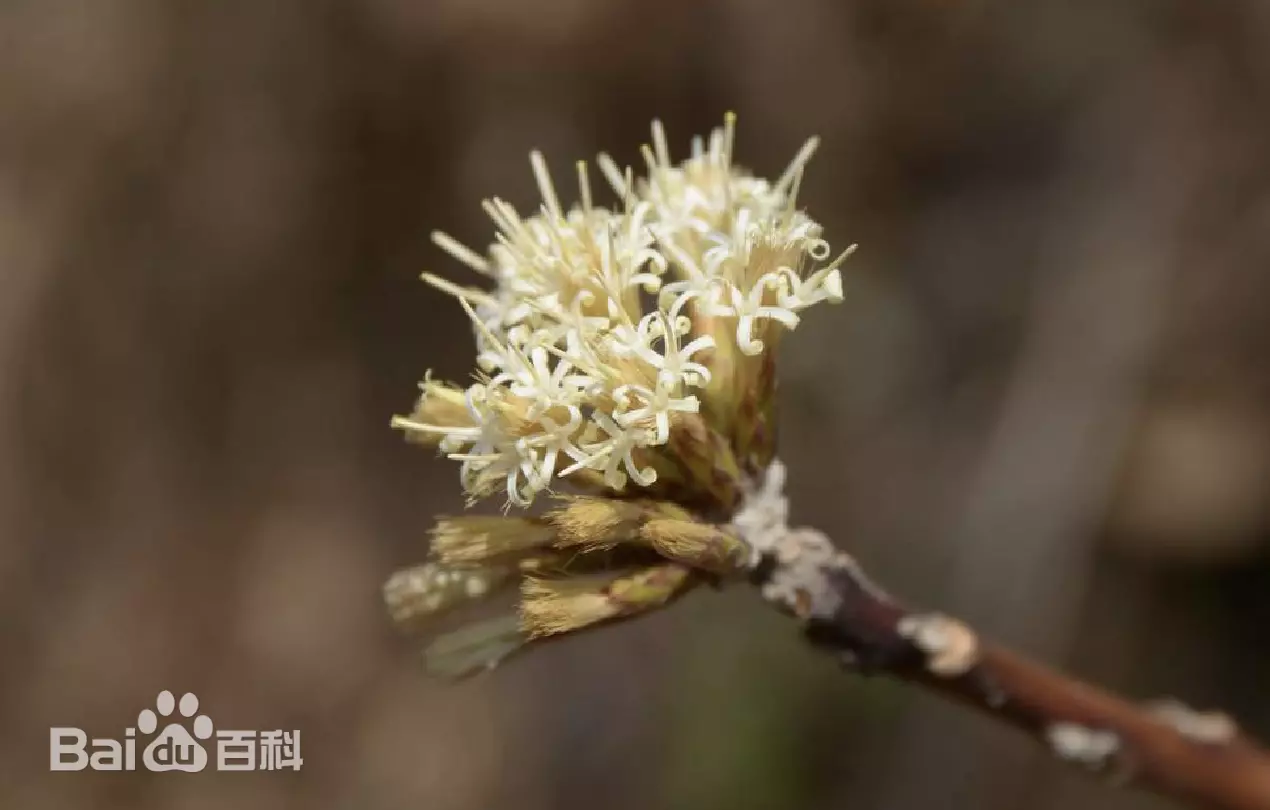
Image source:https://baike.baidu.com/
▍Morphological Features
- Height: Deciduous small tree, 2–5 m tall.
- Stem: Erect, with obvious longitudinal stripes;
young branches white, densely tomentose; base woody, robust.
- Leaves: Papery, elliptic/oblong?lanceolate,
8–18 cm × 3–6 cm; apex short?acuminate/obtuse, base broadly
cuneate; margin shallowly undulate, with sparse callose teeth;
upper surface glabrous, lower surface tomentose; petiole 1.5–4
cm, sparsely hairy.
- Flowers: Capitula ~1 cm diam., 8–12+ in
terminal compound capitula; involucre obconical, 4–5 mm;
phyllaries 6–7 layers; flowers white, bisexual, tubular, 5?deep
lobed, lobes curled; blooms March–April (before leaves).
- Fruit: Achenes cylindrical, ~1.2 cm, ribbed,
densely appressed sericeous; pappus pale red, unequal, 1.3–1.5
cm.
- Root system: Taproot system, woody taproot with
well?developed lateral roots; adapted to mountainous soil.
▍Cultivation Methods
| Parameter |
Specifications |
| Soil type |
Native to Yunnan (1100–1900 m), mountain forests; prefers
well?drained loam/sandy loam, slightly acidic?neutral (pH 5.5–7.0);
avoids waterlogging. |
| Germination temperature |
No published data; reference woody Compositae: 20–28°C,
light?promoted, 15–25 days. |
| Planting density |
No published data; reference small trees: spacing 3–4 m × 3–4 m,
~800–1100 plants/ha. |
▍Pest Management
Diseases
- Root rot: Improve drainage + drench with 50% Carbendazim WP 800×
- Leaf spot: Spray 70% Thiophanate-Methyl WP 800×.
Pests
- Aphids: Spray 10% Imidacloprid WP 1500×
- Scale insects: Spray 40% Omethoate EC 1000×.
▍Applications
Ornamental use
Rare woody Compositae ("chrysanthemum tree"); blooms
before leaves, white flowers + graceful form; used in gardens,
parks, scenic areas.
Ecological use
National Class II protected plant; important for
biodiversity conservation, plant systematics research; suitable
for mountain greening & soil stabilization.
Scientific value
Key for studying Compositae evolution & woody herb
transition; high research significance.
Stilpnolepis centiflora
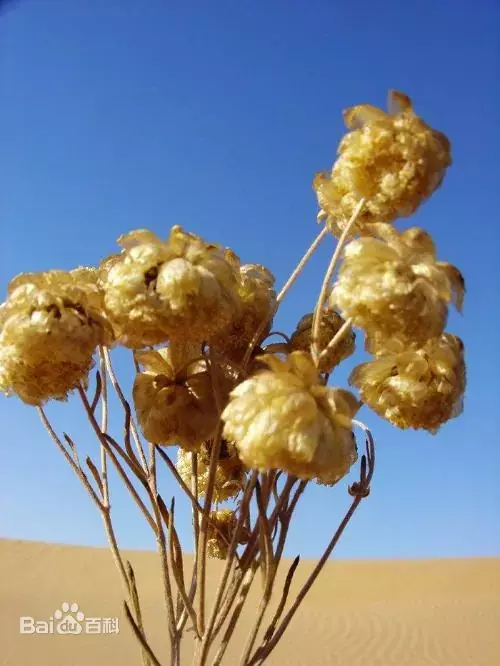
Image source:https://baike.baidu.com/
▍Morphological Features
- Height: About 40 cm tall.
- Stem: Erect, branched, with longitudinal
stripes; sericeous pubescent; base slightly woody.
- Leaves: Linear, sessile, 3.5–10 cm × 2.5–4 mm,
3?veined; both sides sparsely pubescent; apex acuminate; base
with 2–3 pairs of pinnate lobes (lobes linear, spreading).
- Flowers: Capitula hemispherical, nodding, 8–20
mm in diameter; arranged in loose corymbs; flowers yellow,
bisexual, numerous; blooming/fruiting September–October.
- Fruit: Achenes fusiform, 5–6 mm, indistinctly
ribbed, densely glandular; no pappus; small and light, adapted
for wind dispersal.
- Root system: Robust taproot system, fusiform
main root; well?adapted to desert sandy soils.
▍Cultivation Methods
| Parameter |
Specifications |
| Soil type |
Well?drained sandy soil / loamy sand, neutral to slightly alkaline;
drought?tolerant, avoids waterlogging. |
| Germination temperature |
Optimal 20–30°C (reference desert Asteraceae); light?promoted
germination, 7–15 days. |
| Planting density |
Row spacing 30–40 cm, plant spacing 20–25 cm; ~80,000–120,000
plants/ha (reference desert herbs). |
▍Pest Management
Diseases
- Root rot: Improve drainage + drench with 50% Carbendazim WP
800×.
Pests
- Aphids: Spray 10% Imidacloprid WP 1500×
- Spider mites: Spray abamectin EC 1500×.
▍Applications
Medical use
No established medical use; research focus on
ecological adaptation.
Essential oils
Limited data; potential for minor aromatic
compounds.
Ecological role
Desert pioneer species; critical for fixing mobile
sand dunes and restoring desert ecosystems.
Blainvillea acmella
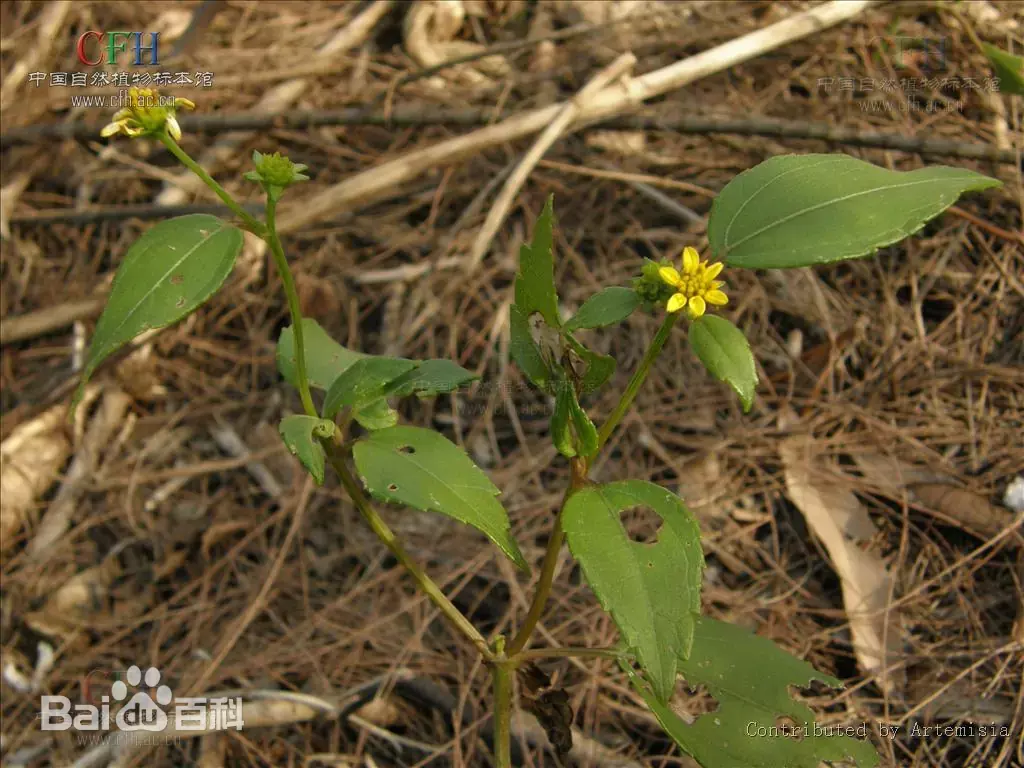
Image source:https://baike.baidu.com/
▍Morphological Features
- Height: 40–60 cm tall.
- Stem: Erect, much branched; lower branches
opposite, upper alternate; with fine grooves, sparsely spreading
pubescent; internodes 7–11 cm.
- Leaves: Lower leaves opposite, petioles up to 1
cm; blades ovate to ovate-lanceolate, 4–7 cm × 2–3 cm, apex
acuminate, base cuneate, margin sparsely serrate, both surfaces
scabrous-hispid. Upper leaves smaller, alternate, ovate or
ovate-oblong, 2–3 cm × 1.3–1.5 cm, base often rounded.
- Flowers: Capitula axillary or terminal, ~1 cm
in diameter; peduncles 1.5–4 cm, scabrous-hispid. Involucre
2-seriate; outer phyllaries herbaceous, green, ovate-oblong;
inner ovate-oblong to linear-oblong. Ray florets 1-seriate,
yellow or yellowish-white, ligule short, apex 2–4-toothed; disk
florets tubular, 5-lobed.
- Fruit: Achenes: female 3-angled, bisexual
flattened; dark brown when dry, densely pubescent; pappus of 2–5
unequal bristles.
- Root system: Taproot system with fibrous
lateral roots; shallow, adapted to well-drained soils.
▍Cultivation Methods
| Parameter |
Specifications |
| Soil type |
Prefers loose, fertile, well-drained sandy loam or loam; pH 6.0–7.5;
drought-tolerant, avoids waterlogging; grows in wastelands,
roadsides, open slopes. |
| Germination temperature |
Optimal 22–30°C; light-promoted germination; sowing depth 0.5–1 cm;
emergence in 7–10 days. |
| Planting density |
Row spacing 30–40 cm, plant spacing 20–25 cm; ~80,000–100,000
plants/ha. |
▍Pest Management
Diseases
- Root rot: Improve drainage + drench with 50% Carbendazim WP 800×
- Leaf spot: Spray 70% Thiophanate-Methyl WP 800×.
Pests
- Aphids: Spray 10% Imidacloprid WP 1500×
- Leaf miners: Spray abamectin 1500×.
▍Applications
Medicinal use
Whole plant used for anti-inflammatory, analgesic,
detoxicating; treats toothache, cold, cough, enteritis; external
for wounds, eczema, snakebites.
Ecological use
Pioneer species for wasteland greening, soil
stabilization; adapts to poor soils.
Ornamental use
Compact habit with yellow capitula; suitable for
herb gardens, rockeries, natural landscaping.
Zinnia elegans
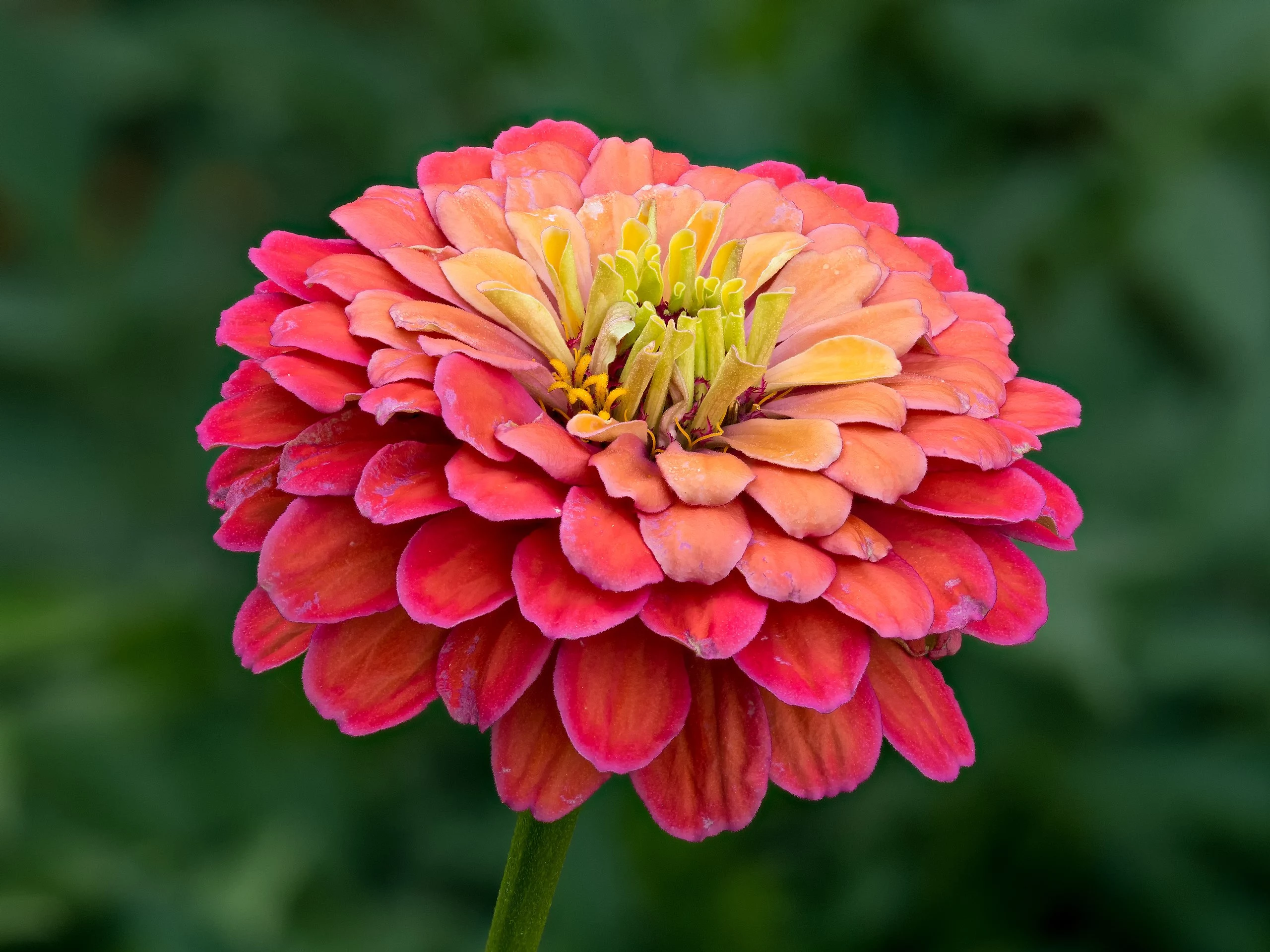
Image source:https://en.wikipedia.org/wiki/Main_Page
▍Morphological Features
- Height: Annual herb, 30–100 cm tall .
- Stem: Erect, stout; green with purplish-red
tinge; covered with coarse hairs or stiff bristles; base with
fine longitudinal ribs .
- Leaves: Opposite, broadly ovate to
oblong-elliptic, 5–10 cm × 2.5–5 cm, entire; base slightly
cordate and clasping stem; both surfaces rough, lower surface
densely short-hispid; 3 basal veins .
- Flowers: Capitula solitary at branch apices,
5–10 cm diameter; involucre broadly campanulate; ray florets
(female) deep red, rose, purple, or white, ligule obovate, apex
2–3-toothed or entire; disk florets (bisexual) yellow or orange,
tubular .
- Fruit: Achenes flattened; female achenes
obovate, 6–7 mm; bisexual achenes obovate-cuneate, 7–8 mm,
sparsely hairy; apex truncate or short-toothed.
- Root system: Taproot conical, tapering downward
with abundant fibrous lateral roots; moderately deep .
▍Cultivation Methods
| Parameter |
Specifications |
| Soil type |
Prefers fertile, loose, well-drained loam or sandy loam; pH 6.0–7.5;
drought-tolerant, avoids waterlogging; adapts to poor soils. |
| Germination temperature |
Optimal 20–28°C; light-promoted; sowing depth 0.5–1 cm; emergence in
5–7 days. |
| Planting density |
Row spacing 30–40 cm, plant spacing 20–25 cm; dwarf varieties: 15–20
cm spacing; ~80,000–100,000 plants/ha. |
▍Pest Management
Diseases
- Powdery mildew: Improve ventilation + spray 15% Triadimefon WP
1500×
- Root rot: Enhance drainage + drench 50% Carbendazim WP 800×
- Leaf spot: Spray 70% Thiophanate-Methyl WP 800×.
Pests
- Aphids: Spray 10% Imidacloprid WP 1500×
- Thrips/Leaf miners: Spray abamectin 1500×
- Cutworms: Soil treatment with chlorpyrifos granules.
▍Applications
Ornamental use
Excellent for flower beds, borders, rockeries, and
mass planting; tall varieties for cut flowers (long vase life);
dwarf types for pots and container gardens.
Medicinal use
Whole plant used in folk medicine for heat-clearing,
dampness-removing, detoxification; treats dysentery, urinary
infections, mastitis, and boils.
Ecological use
Strong resistance to hydrogen fluoride; suitable for
industrial area greening; moderate cadmium accumulation for soil
remediation.
Zinnia peruviana
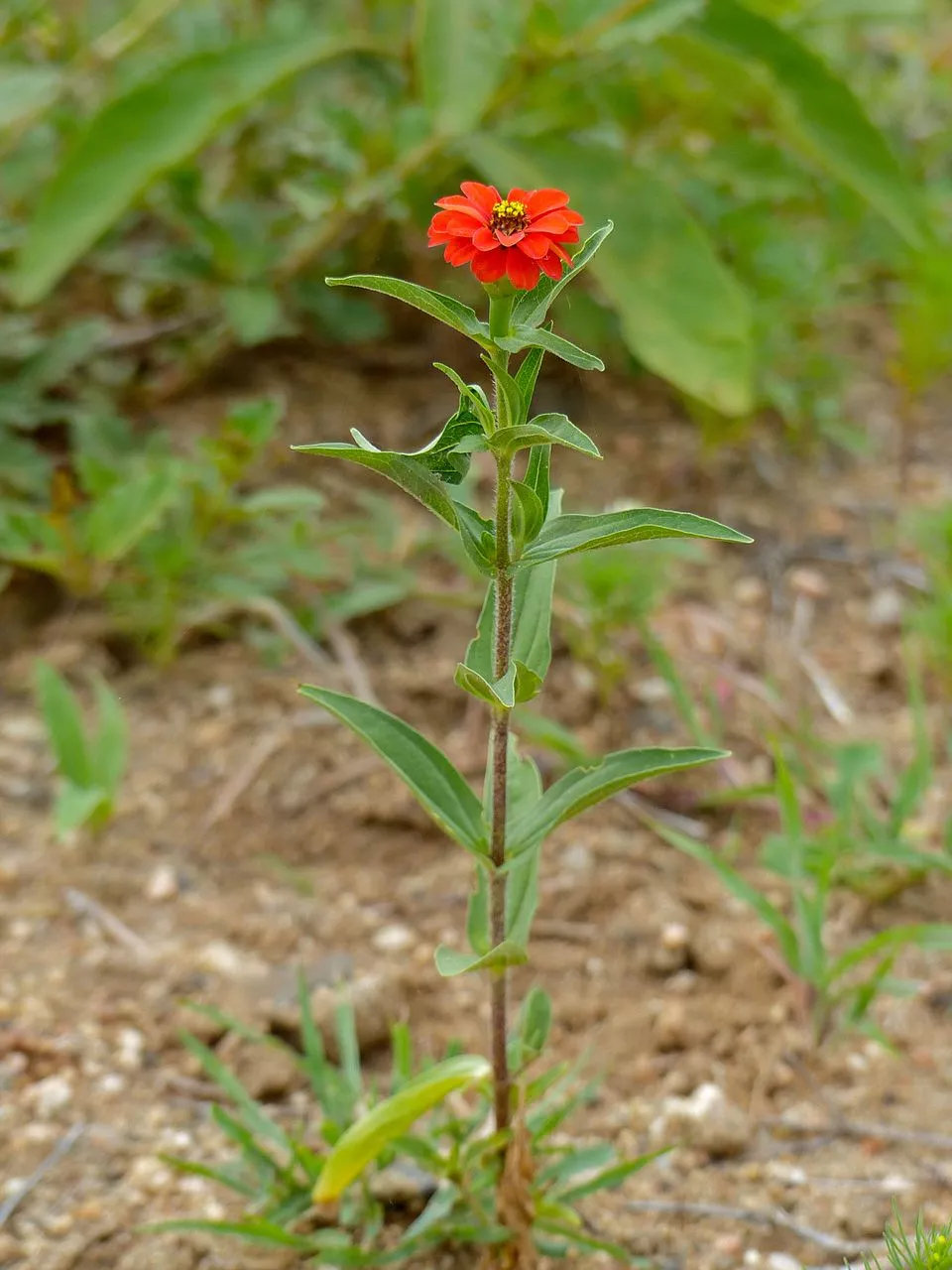
Image source:https://en.wikipedia.org/wiki/Main_Page
▍Morphological Features
- Height: 15–90 cm (commonly 30–50 cm) tall .
- Stem: Erect, dichotomously branched; green,
later yellowish or purplish; covered with coarse hairs or long
villi; base with fine longitudinal ribs .
- Leaves: Opposite, lanceolate to narrowly
ovate-lanceolate, 2.5–6 cm × 0.5–1.7 cm; base rounded,
semi-clasping; both surfaces scabrous-pubescent; 3 basal veins
prominent beneath .
- Flowers: Capitula in corymbose panicles,
2.5–3.8 cm diameter; peduncles inflated, hollow, 2–6 cm long .
Involucre campanulate; ray florets yellow, purplish-red or red,
ligule elliptic, entire or 2–3-toothed; disk florets
reddish-yellow, tubular, 5-lobed .
- Fruit: Achenes (cypselae): female achenes
narrowly cuneate, ~10 mm long, 3-angled, densely hairy; bisexual
achenes oblong-cuneate, 8.5–10 mm, strongly flattened, with 1–2
awns and ciliate margins .
- Root system: Taproot with fibrous lateral
roots; moderately shallow, adapted to well-drained soils.
▍Cultivation Methods
| Parameter |
Specifications |
| Soil type |
Prefers fertile, loose, well-drained loam or sandy loam; pH 6.0–7.5;
drought-tolerant, avoids waterlogging; naturalized on slopes,
grasslands, roadsides. |
| Germination temperature |
Optimal 20–28°C; light-promoted; sowing depth 0.5–1 cm; emergence in
5–7 days. |
| Planting density |
Row spacing 30–40 cm, plant spacing 20–25 cm; ~80,000–100,000
plants/ha. |
▍Pest Management
Diseases
- Powdery mildew: Improve ventilation + spray 15% Triadimefon WP
1500×
- Root rot: Enhance drainage + drench 50% Carbendazim WP 800×
- Leaf spot: Spray 70% Thiophanate-Methyl WP 800×.
Pests
- Aphids: Spray 10% Imidacloprid WP 1500×
- Thrips/Leaf miners: Spray abamectin 1500×
- Cutworms: Soil treatment with chlorpyrifos granules.
▍Applications
Ornamental use
Mass planting, flower beds, borders, rockeries;
compact habit with colorful blooms; suitable for naturalistic
landscaping.
Ecological use
Pioneer species for slope greening and soil
stabilization; adapts to poor, disturbed soils.
Medicinal use
Folk use for heat-clearing, detoxification,
anti-inflammatory; treats cold, cough, and minor skin ailments.
Zinnia haageana
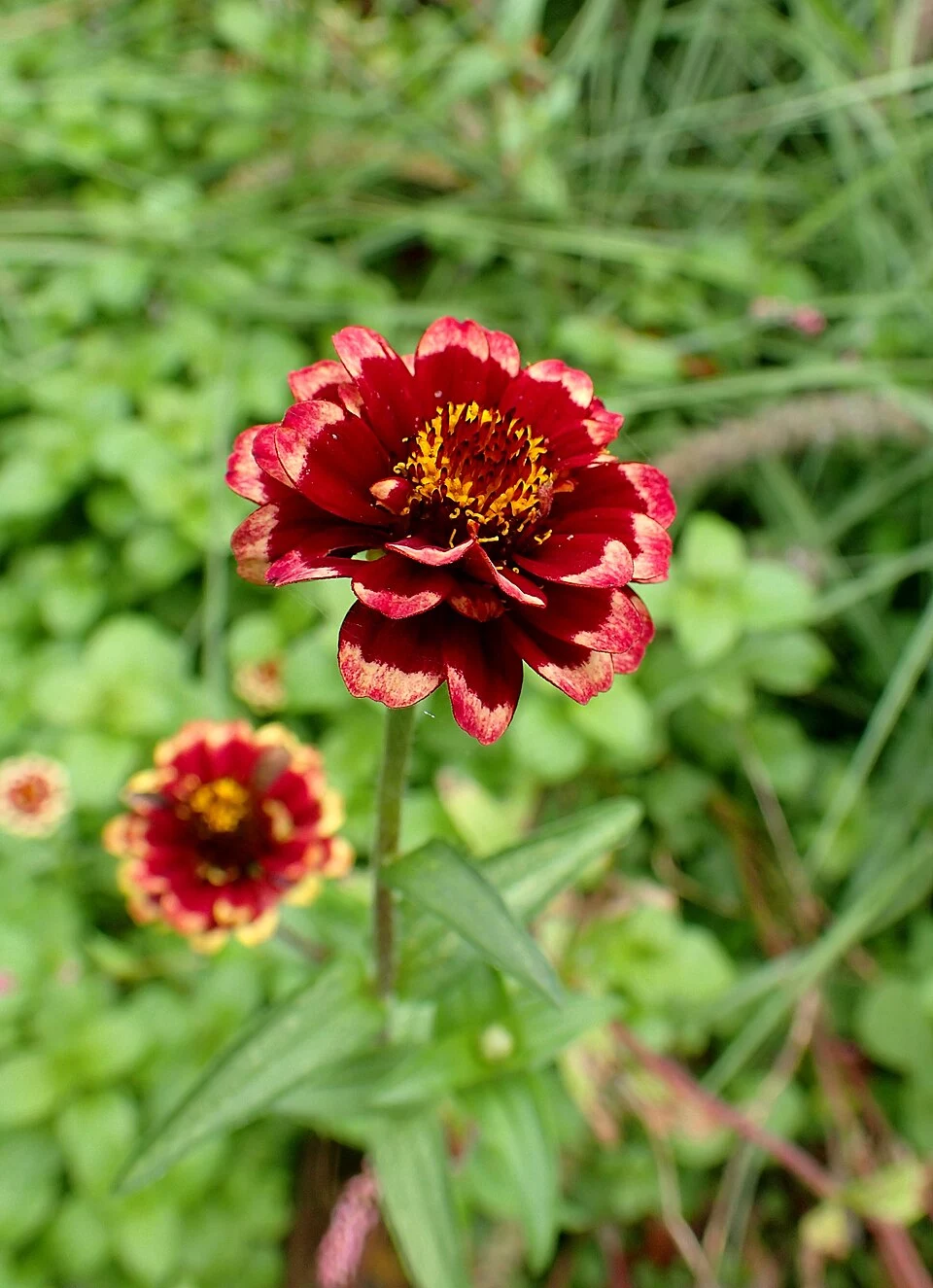
Image source:https://en.wikipedia.org/wiki/Main_Page
▍Morphological Features
- Height: Annual herb, 30–60 cm tall (compact
cultivars: 15–45 cm).
- Stem: Erect, branched; green to purplish;
covered with coarse strigose hairs; base slightly ribbed.
- Leaves: Opposite, lanceolate to narrowly
lanceolate, ~3.5 cm × 0.7 cm; sessile, base slightly
cordate-clasping; both surfaces scabrous-pubescent; 3 prominent
basal veins.
- Flowers: Capitula solitary at apex, 2–3 cm
diameter; peduncles densely hairy; involucre broadly
campanulate; ray florets orange-yellow, brown-red, or white;
disk florets orange; ligule oblong, hairy.
- Fruit: Achenes obovate, flattened, 2-angled,
~3.5 mm long; sparsely hairy; apex truncate.
- Root system: Taproot with fibrous lateral
roots; moderately shallow, adapted to well-drained soils.
▍Cultivation Methods
| Parameter |
Specifications |
| Soil type |
Prefers loose, fertile, well-drained loam/sandy loam; pH 5.5–8.5;
drought-tolerant, avoids waterlogging. |
| Germination temperature |
Optimal 20–28°C; light-promoted; sowing depth 0.5–1 cm; emergence in
5–7 days. |
| Planting density |
Row spacing 25–35 cm, plant spacing 15–20 cm; ~100,000–120,000
plants/ha; compact types: 10–15 cm spacing. |
▍Pest Management
Diseases
- Powdery mildew: Improve ventilation + spray 15% Triadimefon WP
1500×
- Root rot: Enhance drainage + drench 50% Carbendazim WP 800×
- Leaf spot: Spray 70% Thiophanate-Methyl WP 800×.
Pests
- Aphids: Spray 10% Imidacloprid WP 1500×
- Thrips/Leaf miners: Spray abamectin 1500×
- Cutworms: Soil treatment with chlorpyrifos granules.
▍Applications
Ornamental use
Compact habit for flower beds, borders, rockeries,
mass planting, containers, and pollinator gardens; long bloom
period (7–11 months).
Ecological use
Drought/heat-tolerant; suitable for slope greening,
roadside landscaping, and xeriscaping.
Medicinal use
Folk use for heat-clearing, detoxification; minor
anti-inflammatory applications.
Strobocalyx esculenta
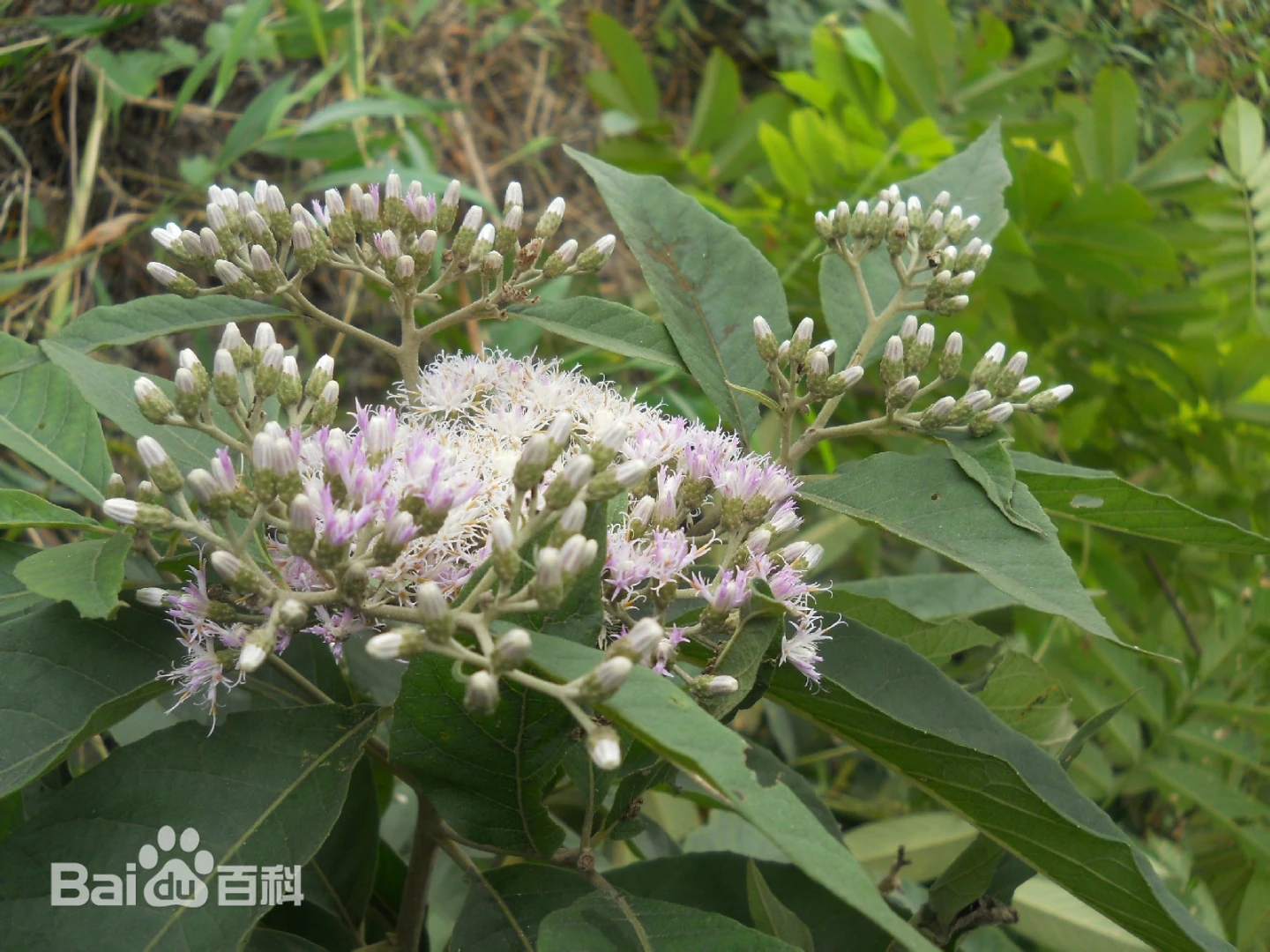
Image source:https://baike.baidu.com/
▍Morphological Features
- Height: 3–4 m tall .
- Stem: Erect, cylindrical, slightly ribbed;
green to grayish-brown; densely covered with gray or
brownish-gray tomentum; base with fine longitudinal stripes .
- Leaves: Alternate, hard papery,
oblong-lanceolate/lanceolate, 10–23 cm × 3–8 cm; apex acuminate,
base cuneate; margin entire or slightly undulate; both surfaces
scabrous with papillae, pubescent beneath; 9–13 pairs of lateral
veins; petiole 5–20 mm, densely tomentose .
- Flowers: Capitula numerous, 2–4 mm diameter,
5–6 florets each; arranged in dense broad panicles at branch
apices; peduncles 2–5 mm, densely tomentose; involucre obconic,
2–3 mm; florets pale reddish-purple, tubular, ~7 mm long .
- Fruit: Achenes subcylindrical, slightly
compressed, ~3 mm long, pale yellowish-brown, slightly ribbed,
sparsely pubescent; pappus 2-layered, white or pale brown.
- Root system: Taproot system with well-developed
lateral roots; deep, adapted to well-drained mountain soils.
▍Cultivation Methods
| Parameter |
Specifications |
| Soil type |
Prefers loose, fertile, well-drained loam/sandy loam; pH 5.5–7.5;
drought-tolerant; grows naturally on sunny slopes, grasslands,
thickets, forest edges at 1000–2700 m elevation. |
| Germination temperature |
Optimal 20–28°C; light-favored; sowing depth 0.5–1 cm; emergence in
7–10 days. |
| Planting density |
Row spacing 2–3 m, plant spacing 1.5–2 m; ~2000–3000 plants/ha (for
shrub cultivation). |
▍Pest Management
Diseases
- Leaf spot: Improve ventilation + spray 70% Thiophanate-Methyl WP
800×
- Root rot: Enhance drainage + drench 50% Carbendazim WP 800×.
Pests
- Aphids: Spray 10% Imidacloprid WP 1500×
- Leaf miners: Spray abamectin 1500×
- Scale insects: Spray 40% Omethoate EC 1000×.
▍Applications
Medicinal use
Roots/leaves used for heat-clearing, detoxification,
anti-inflammation, wound healing; treats appendicitis, boils,
burns, and skin ailments.
Ecological use
Pioneer species for slope greening, soil
stabilization, and afforestation in mountainous areas; adapts to
poor soils.
Ornamental use
Suitable for garden hedges, background planting, and
naturalistic landscaping; attractive panicles of small purple
flowers.
Strobocalyx sylvatica
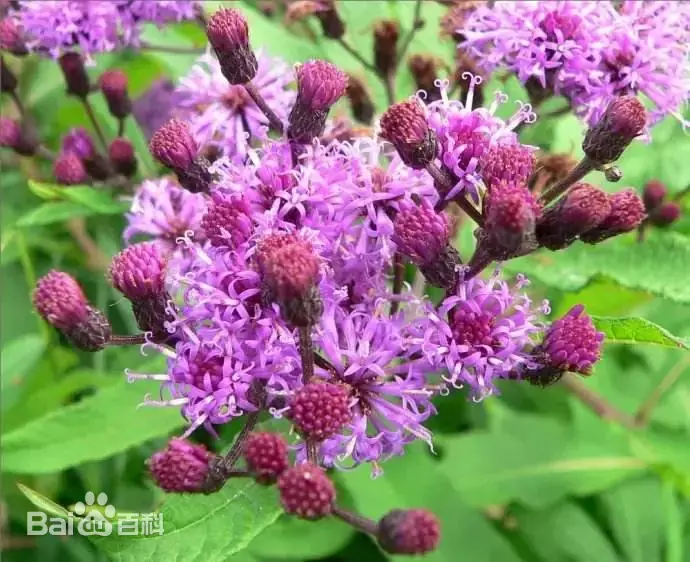
Image source:https://baike.baidu.com/
▍Morphological Features
- Height: 2–5 m tall.
- Stem: Cylindrical, climbing; with longitudinal
ribs; densely covered with reddish-brown pubescence; branchlets
slender, striated.
- Leaves: Opposite, papery, ovate to oblong, 6–13
cm × 2–5.5 cm; apex acute/acuminate, base oblique-rounded;
margin entire or slightly undulate-toothed; 7–8 pairs of lateral
veins; both surfaces with reddish-brown pubescence along veins,
glabrous elsewhere with sunken glands; petiole 5–10 mm, densely
pubescent.
- Flowers: Capitula numerous, 7–12 mm diameter,
arranged in broad panicles at apex; peduncles 5–15 mm; involucre
hemispheric, 3–5 mm, 4-layered bracts; florets tubular, pale
reddish-purple.
- Fruit: Achenes cylindrical, slightly
compressed, ~3 mm; ribbed, pubescent; pappus 2-layered,
white/brownish.
- Root system: Taproot with well-developed
lateral fibrous roots; moderately deep, adapted to climbing
support and well-drained soil.
▍Cultivation Methods
| Parameter |
Specifications |
| Soil type |
Prefers loose, fertile, well-drained loam/sandy loam; pH 5.5–7.5;
drought-tolerant; avoids waterlogging; naturally grows in forests,
thickets, and shaded slopes. |
| Germination temperature |
Optimal 20–28°C; light-favored; sowing depth 0.5–1 cm; emergence in
7–10 days. |
| Planting density |
Row spacing 1.5–2 m, plant spacing 1–1.5 m; ~3000–4000 plants/ha
(climbing shrub cultivation). |
▍Pest Management
Diseases
- Leaf spot: Improve ventilation + spray 70% Thiophanate-Methyl WP
800×
- Root rot: Enhance drainage + drench 50% Carbendazim WP 800×.
Pests
- Aphids: Spray 10% Imidacloprid WP 1500×
- Scale insects: Spray 40% Omethoate EC 1000×
- Leaf miners: Spray abamectin 1500×.
▍Applications
Ornamental use
Climbing habit for arbors, trellises, fences, and
vertical greening; attractive purple panicles.
Medicinal use
Roots/leaves used for heat-clearing, detoxification,
anti-inflammation; folk remedy for skin ailments and swelling.
Ecological use
Suitable for slope greening, soil stabilization, and
understory planting in forest restoration; adapts to shaded
conditions.
Strobocalyx bockiana
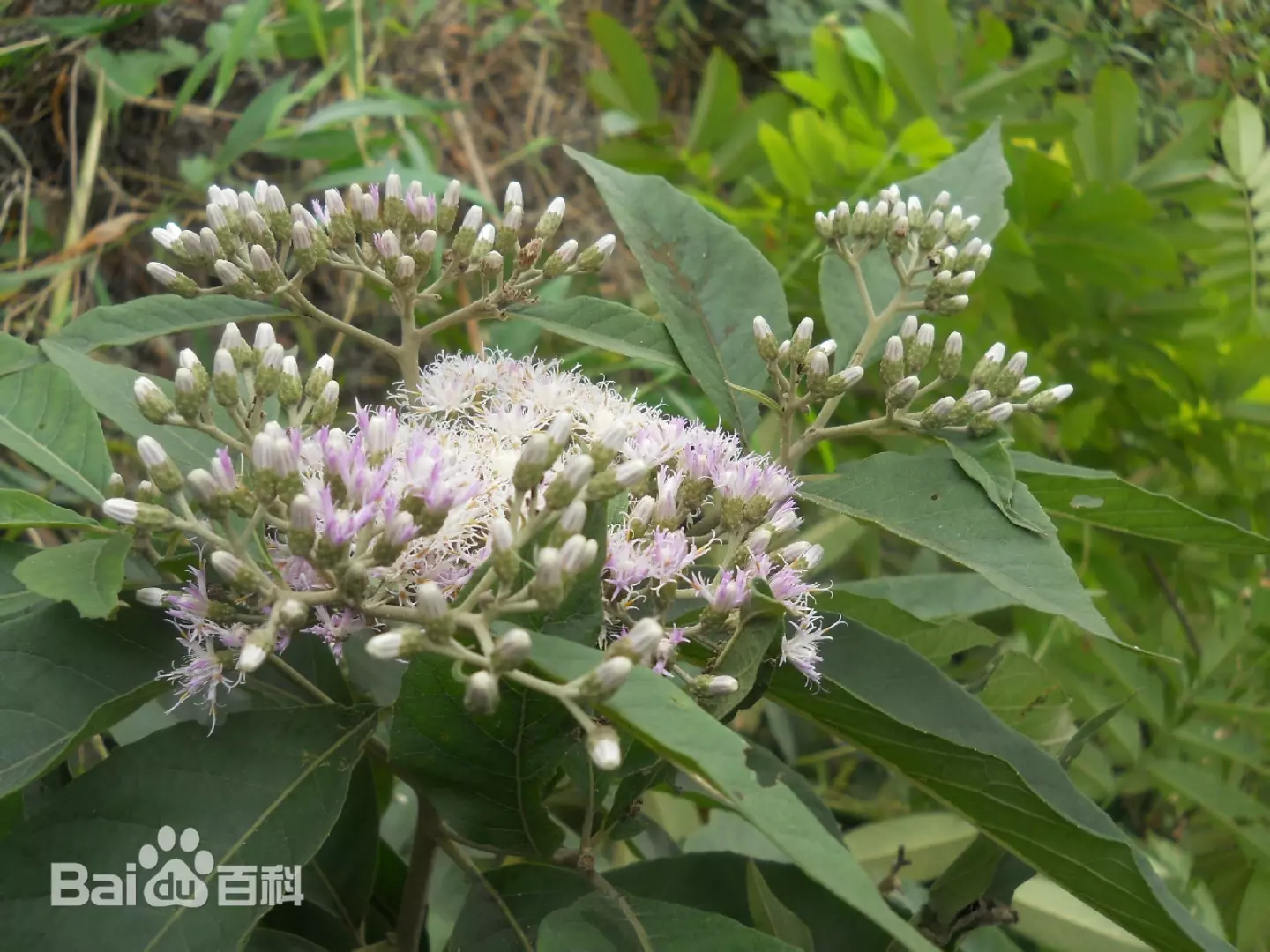
Image source:https://baike.baidu.com/
▍Morphological Features
- Height: Shrub or small tree, 3–6 m tall.
- Stem: Erect, cylindrical; densely covered with
gray or pale yellow tomentum; branchlets with fine longitudinal
ribs.
- Leaves: Alternate, membranous or thin papery,
oblong-lanceolate/elliptic, 12–22 cm × (8)–22 cm; apex
acuminate, base cuneate; margin undulate or subentire; 10–13
pairs lateral veins; upper surface papillate, lower surface gray
pubescent with silvery glands; petiole 1.2–2.5 cm, densely
tomentose.
- Flowers: Capitula 6–8 mm diameter, 8–12 florets
each; arranged in loose compound corymbs at branch apices/axils;
peduncles gray tomentose; involucre subglobose/hemispheric, 4–6
mm, 5-layered bracts; florets pale reddish-purple, tubular,
glandular.
- Fruit: Achenes subcylindrical, 3.5–4 mm, pale
yellowish-brown, 3-ribbed on ventral side, subglabrous,
glandular; pappus white, 2-layered (outer short, inner
scabrous).
- Root system: Taproot with well-developed
lateral roots; moderately deep, adapted to well-drained mountain
soils (consistent with genus).
▍Cultivation Methods
| Parameter |
Specifications |
| Soil type |
Prefers loose, fertile, well-drained loam/sandy loam; pH 5.5–7.5;
drought-tolerant; naturally grows in mountain forests, thickets,
slopes (consistent with genus). |
| Germination temperature |
Optimal 20–28°C; light-favored; sowing depth 0.5–1 cm; emergence in
7–10 days (consistent with genus). |
| Planting density |
Row spacing 2–3 m, plant spacing 1.5–2 m; ~2000–3000 plants/ha
(shrub/small tree cultivation, consistent with genus). |
▍Pest Management
Diseases
- Leaf spot: Improve ventilation + spray 70% Thiophanate-Methyl WP
800×
- Root rot: Enhance drainage + drench 50% Carbendazim WP 800×
(consistent with genus).
Pests
- Aphids: Spray 10% Imidacloprid WP 1500×
- Scale insects: Spray 40% Omethoate EC 1000×
- Leaf miners: Spray abamectin 1500× (consistent with genus).
▍Applications
Medicinal use
Roots/leaves used for heat-clearing, detoxification,
anti-inflammation; folk remedy for skin ailments, swelling, and
trauma (consistent with genus).
Ecological use
Pioneer species for mountain slope greening, soil
stabilization, and afforestation; adapts to poor mountain soils.
Ornamental use
Suitable for garden background planting, hedges, and
naturalistic landscaping; attractive reddish-purple corymbose
inflorescences.
Strobocalyx solanifolia
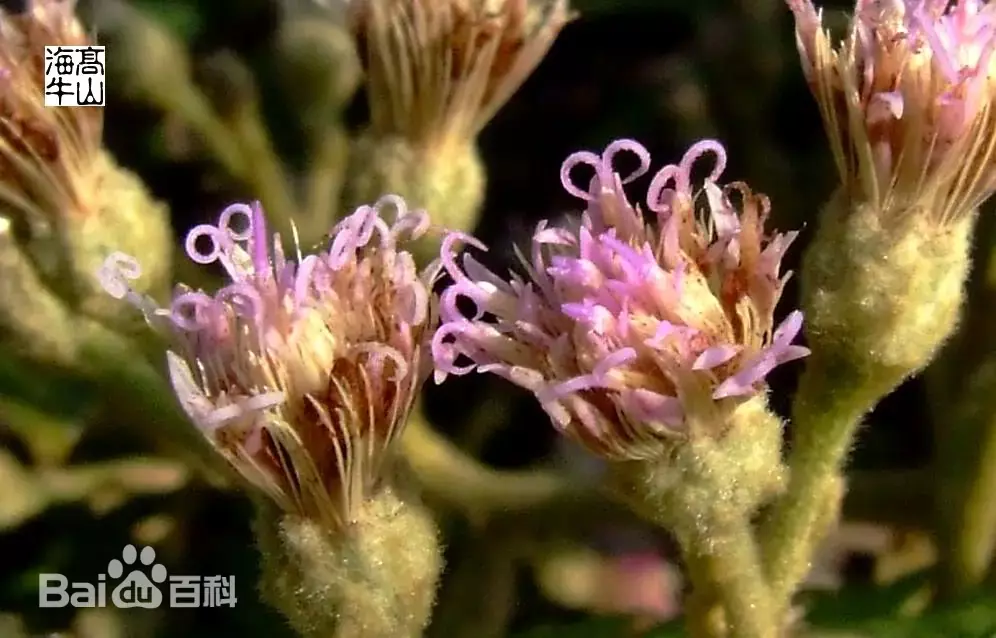
Image source:https://baike.baidu.com/
▍Morphological Features
- Height: 8–12 m tall.
- Stem: Cylindrical, branches spreading or
sometimes climbing; densely covered with yellowish-brown/light
yellow tomentum; branchlets stout, with fine longitudinal ribs.
- Leaves: Alternate, ovate/ovate-oblong, 6–16 cm
× 4–9 cm; apex obtuse/short-acuminate, base
rounded/subcordate/truncate, slightly oblique; margin entire,
undulate or sparsely obtuse-toothed; 7–9 pairs lateral veins;
upper surface rough with sparse appressed hairs and gland dots,
lower surface densely yellowish tomentose; petiole 1–2.5 cm,
stout and densely tomentose.
- Flowers: Capitula 5–6 mm diameter, arranged in
leafy compound corymbs at branch apices; peduncles densely
tomentose; involucre hemispheric, 4–5 mm, 4–5 layered bracts;
florets tubular, pink/pale purple, fragrant, with glandular
exterior.
- Fruit: Achenes cylindrical, ~2–3 mm, 4–5
ribbed, glabrous; pappus pale yellow, 2-layered (outer very
short, inner scabrous).
- Root system: Taproot with well-developed
lateral fibrous roots; moderately deep, adapted to well-drained
mountain/forest soils (consistent with genus).
▍Cultivation Methods
| Parameter |
Specifications |
| Soil type |
Prefers loose, fertile, well-drained loam/sandy loam; pH 5.5–7.5;
drought-tolerant; naturally grows in mountain forests, thickets,
slopes (consistent with genus). |
| Germination temperature |
Optimal 20–28°C; light-favored; sowing depth 0.5–1 cm; emergence in
7–10 days (consistent with genus). |
| Planting density |
Row spacing 2.5–3.5 m, plant spacing 2–2.5 m; ~1500–2500 plants/ha
(large shrub/small tree cultivation). |
▍Pest Management
Diseases
- Leaf spot: Improve ventilation + spray 70% Thiophanate-Methyl WP
800×
- Root rot: Enhance drainage + drench 50% Carbendazim WP 800×
(consistent with genus).
Pests
- Aphids: Spray 10% Imidacloprid WP 1500×
- Scale insects: Spray 40% Omethoate EC 1000×
- Leaf miners: Spray abamectin 1500× (consistent with genus).
▍Applications
Medicinal use
Roots/leaves used for heat-clearing, detoxification,
anti-inflammation; folk remedy for skin ailments, swelling, and
trauma (consistent with genus).
Ecological use
Pioneer species for mountain slope greening, soil
stabilization, and afforestation; adapts to poor mountain soils.
Ornamental use
Suitable for garden background planting, hedges, and
naturalistic landscaping; attractive fragrant pink/purple
corymbose inflorescences.
Strobocalyx chunii
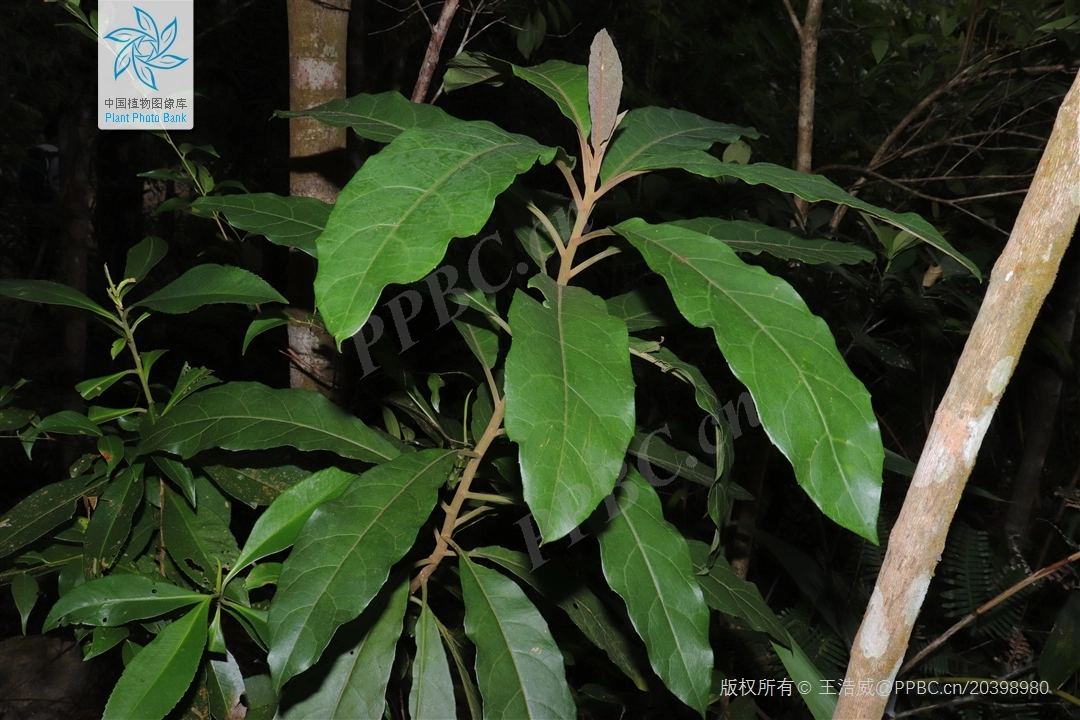
Image source:https://www.iplant.cn/
▍Morphological Features
- Height
- Stem: Cylindrical, climbing; branchlets with
indistinct ribs, densely covered with pale yellowish-brown
tomentum and glands .
- Leaves: Alternate, papery,
oblong/elliptic-oblong, 7–13 cm × 2.8–5.7 cm; apex short-acute,
base rounded/attenuate; margin entire or slightly undulate; 3–6
pairs lateral veins; both surfaces with sessile glands, veins
pubescent; petiole up to 2.5 cm, densely tomentose .
- Flowers: Capitula 3–5 mm diameter, 2–3 florets
each; arranged in broad panicles at stem/branch apices;
peduncles very short (<2 mm), tomentose; involucre cylindrical,
4–5 mm, 4–6 layered bracts; florets purplish-violet,
tubular, 5–6 mm long .
- Fruit: Achenes oblong, ~2.5 mm, glabrous,
glandular, indistinctly 5-ribbed; pappus white, 2-layered (outer
short, inner scabrous) .
- Root system: Taproot with well-developed
lateral roots; moderately deep, adapted to well-drained
forest/hedge soils (consistent with genus).
▍Cultivation Methods
| Parameter |
Specifications |
| Soil type |
Prefers loose, fertile, well-drained loam/sandy loam; pH 5.5–7.5;
drought-tolerant; naturally grows in mountain forests, thickets,
slopes (consistent with genus). |
| Germination temperature |
Optimal 20–28°C; light-favored; sowing depth 0.5–1 cm; emergence in
7–10 days (consistent with genus). |
| Planting density |
Row spacing 2–3 m, plant spacing 1.5–2 m; ~2000–3000 plants/ha
(climbing shrub cultivation). |
▍Pest Management
Diseases
- Leaf spot: Improve ventilation + spray 70% Thiophanate-Methyl WP
800×
- Root rot: Enhance drainage + drench 50% Carbendazim WP 800×
(consistent with genus).
Pests
- Aphids: Spray 10% Imidacloprid WP 1500×
- Scale insects: Spray 40% Omethoate EC 1000×
- Leaf miners: Spray abamectin 1500× (consistent with genus).
▍Applications
Medicinal use
Roots/leaves used for heat-clearing, detoxification,
anti-inflammation; folk remedy for skin ailments, swelling, and
trauma; contains bioactive sesquiterpene lactones.
Ecological use
Climbing shrub for vertical greening, slope
stabilization, and forest understory restoration; adapts to poor
mountain soils.
Ornamental use
Suitable for arbors, trellises, and naturalistic
landscaping; attractive purplish-violet panicles.
Crupina vulgaris
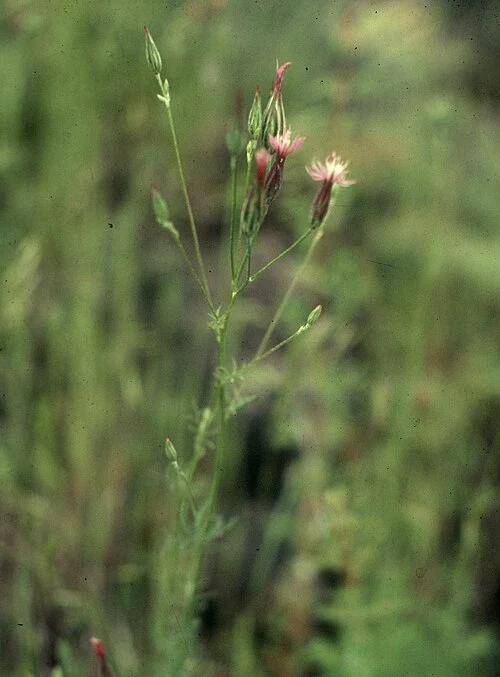
Image source:https://en.wikipedia.org/wiki/Main_Page
▍Morphological Features
- Height: Typically 20-80 cm tall,about 40 cm
- Stem: Single, erect, ridged; branched near apex
(5–15 branches); covered with short stiff hairs/spines; white
powdery coating, sparse arachnoid hairs.
- Leaves: Alternate; basal rosette leaves
oval/lanceolate, toothed/lobed; stem leaves deeply pinnate-lobed
(finely dissected), rough with stiff hairs/spines; lower larger,
upper smaller; up to 15 cm long.
- Flowers: Capitula vase-shaped, 1–2 cm long;
pink/purple/lavender; 1–5 per branch apex; surrounded by stiff
bracts; blooms May–moisture depletion.
- Fruit: Achenes cylindrical/tapered, 3–6 mm
long; black-silvery/beige, hairy; apex with stiff barbed pappus
(4–8 mm).
- Root system: Fibrous root system; shallow,
dense, adapted to disturbed soils.
▍Cultivation Methods
| Parameter |
Specifications |
| Soil type |
Adaptable to wide range; prefers well-drained loam/sandy loam;
tolerates poor/alkaline soils; natural in rangeland, roadsides,
waste areas. |
| Germination temperature |
Optimal 10–25°C; winter annual; germinates autumn, overwinters as
rosette. |
| Planting density |
Not cultivated commercially; invasive; natural density 100–300
plants/m2 in dense stands. |
▍Pest Management
Diseases
- Rare
- leaf spot in humid conditions: improve ventilation
- root rot in wet soil: enhance drainage.
Pests
- Aphids, leaf miners: spray imidacloprid/abamectin
- control priority: herbicides (2,4-D, dicamba, picloram)
pre-flowering
- mowing/grazing ineffective (stimulates branching/seeding).
▍Applications
Ecological
Invasive noxious weed; disrupts grasslands/pastures;
no positive cultivation use; focus on eradication/control.
Other
No medicinal/ornamental/agricultural use; listed as
federal noxious weed in US.
Smallanthus sonchifolius
Image source:https://en.wikipedia.org/wiki/Main_Page
▍Morphological Features
- Height: 1.5–3 m tall .
- Stem: Erect, cylindrical, hollow; base
purplish-red, young branches green; densely pubescent; branching
strong .
- Leaves: Opposite; lower leaves broadly
ovate/hastate, 25–30 cm × 15–20 cm, rough, wrinkled; upper
leaves ovate-lanceolate; petiole 7–12 cm; both surfaces hairy .
- Flowers: Capitula terminal clusters;
yellow/orange; 5 involucral bracts; ray florets (female) yellow,
12–16 mm; disc florets (male) tubular; blooms Sep–Nov .
- Fruit: Achenes, ellipsoid, 2–4 mm, dark brown;
most ecotypes sterile, rarely viable .
- Root system: Fibrous roots in 5–30 cm topsoil;
enlarged spindle-shaped storage roots (edible); pinkish
irregular tubercles for propagation .
▍Cultivation Methods
| Parameter |
Specifications |
| Soil type |
Prefers loose, fertile, well-drained sandy loam; pH 5.5–7.0; avoids
waterlogging; suitable for 1000–2300 m elevation. |
| Germination temperature |
Tuber sprouting optimal 15–25°C; seed germination (rare) 20–28°C.
|
| Planting density |
Row spacing 100 cm, plant spacing 80–100 cm; ~10,000–12,500
plants/ha. |
▍Pest Management
Diseases
- Root rot: Improve drainage + drench 50% carbendazim 800×
- Leaf spot: 70% thiophanate-methyl 800×.
Pests
- Aphids, leaf miners: 10% imidacloprid 1500×
- Root-knot nematodes: Soil solarization + nematicides.
▍Applications
Edible
Storage roots eaten raw/cooked; crisp, sweet, high
in fructooligosaccharides; low sugar, high fiber.
Medicinal
Regulates blood sugar/lipids; aids digestion; leaves
used for tea with antioxidant effects.
Economic
Fresh market, processing (juice, syrup, powder);
low-input, high-value cash crop.
Ecological
Adaptable to mountain slopes; used for soil
conservation and intercropping.
Cyathocline purpurea
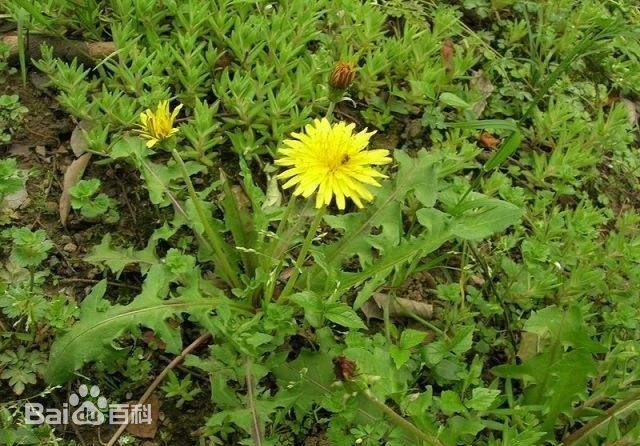
Image source:https://baike.baidu.com/
▍Morphological Features
- Height: Typically 10-15 cm ,up to 15 cm tall.
- Stem: Erect, branched at base; reddish?purple
or tinged red; covered with viscid long pubescence; grooved.
- Leaves: Sessile, base auriculate?clasping;
middle leaves 2.5–12 cm long, ovate/obovate, bipinnately
divided; upper/lower leaves smaller; abaxially pubescent along
rachis/veins, adaxially nearly glabrous.
- Flowers: Capitula hemispherical, ~2 mm diam.;
involucral bracts 2?seriate, purple?tipped; female florets
numerous, linear, reddish?purple; central florets bisexual;
peduncles with white viscid hairs.
- Fruit: Achenes oblong, smooth; pappus absent.
- Root system: Fibrous, shallow; adapted to
moist/wet habitats; no enlarged storage roots.
▍Cultivation Methods
| Parameter |
Specifications |
| Soil type |
Prefers moist, fertile loam/clay loam; tolerates wet soils; common
in grasslands, roadsides, rice fields, stream banks; pH neutral to
slightly acidic. |
| Germination temperature |
Optimal 18–28°C; germinates in warm wet seasons; annual, completes
life cycle quickly. |
| Planting density |
Wild only; no commercial cultivation; natural density 50–200
plants/m2 in moist habitats. |
▍Pest Management
Diseases
- Root rot in waterlogged soil: improve drainage
- leaf spot in high humidity: thin plants for ventilation.
Pests
- Aphids, leaf miners: spray with neem oil or imidacloprid
- few major pests in wild populations.
▍Applications
Medicinal
Whole plant aromatic; used in folk medicine for
anti?inflammatory, hemostatic, diuretic, insecticidal effects;
contains essential oils (cyathoclol, thymyl esters) .
Ecological
Pioneer in wet/disturbed areas; stabilizes moist
soils; indicator of high soil moisture.
Agricultural
Occurs as weed in rice fields; no cultivation use;
controlled via drainage/weeding.
Eurybia sibirica
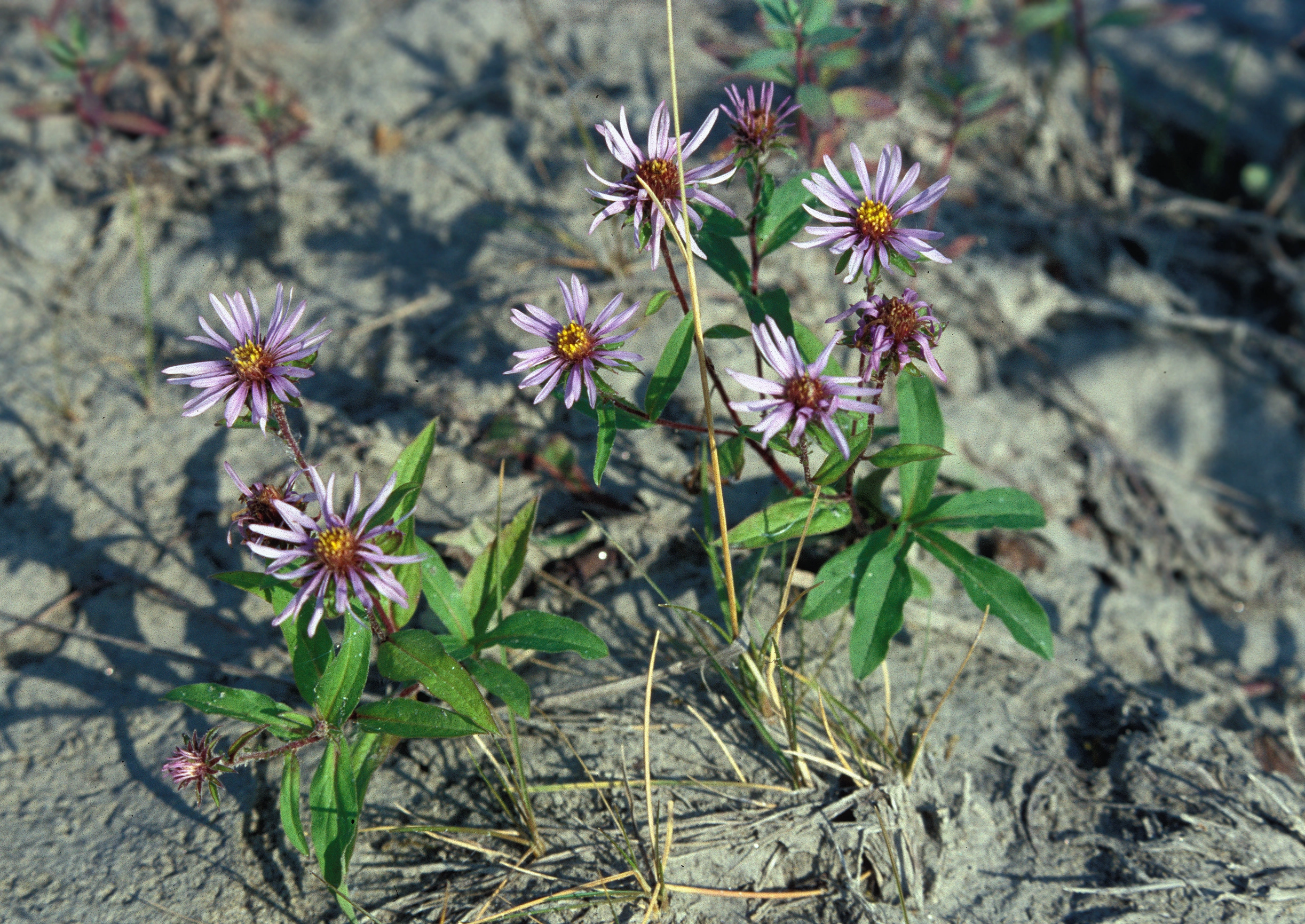
Image source:https://en.wikipedia.org/wiki/Main_Page
▍Morphological Features
- Height: Typically 7–35 cm tall.
- Stem: Decumbent?ascending from curved base;
slender, clumped; densely pubescent; unbranched or upper
branched; densely leafy.
- Leaves: Basal leaves small, scale?like; lower
leaves oblong?spatulate, with broad winged petiole, withering at
anthesis; middle leaves oblong?lanceolate, 5–8 cm × 1–1.7 cm,
base subcordate/rounded, semi?amplexicaul, apex acute, serrate;
upper leaves linear?oblong; thin papery, adaxially glabrescent,
abaxially sparsely pubescent (denser on veins).
- Flowers: Capitula 2–3.5 cm diam., solitary or
2–5 in dense corymbs; peduncles 2–7 mm; involucre hemispheric,
10–13 mm diam.; bracts 3?seriate, purple?tipped, pubescent; ray
florets purple; disc florets tubular; blooms July–September.
- Fruit: Achenes obovate?oblong, 2.5–3 mm,
purplish?brown, puberulent; pappus dirty white/reddish, 6 mm
long .
- Root system: Rhizomatous, prostrate rhizomes;
fibrous lateral roots; clump?forming; shallow to medium depth.
▍Cultivation Methods
| Parameter |
Specifications |
| Soil type |
Prefers well?drained loam/sandy loam, neutral to slightly alkaline;
tolerates cold, dry, and rocky soils; common in tundra, meadows,
rocky slopes, forest edges. |
| Germination temperature |
Seed germination optimal 15–22°C; cold stratification (2–4°C for 4–6
weeks) improves rate; rhizome sprouting 10–18°C. |
| Planting density |
Ornamental: 20–30 cm spacing; wild/naturalized: 5–10 plants/m2;
rhizome division for propagation. |
▍Pest Management
Diseases
- Root rot (waterlogging): improve drainage
- powdery mildew: thin for ventilation, spray sulfur fungicides .
Pests
- Aphids, leaf miners: neem oil or imidacloprid
- slug/snail damage in moist areas: bait or handpick.
▍Applications
Ornamental
Cold?hardy perennial; purple autumn flowers; used in
rock gardens, borders, alpine plantings; long cut?flower vase
life .
Ecological
Pioneer in cold/tundra regions; stabilizes slopes;
supports pollinators (bees, butterflies); wildlife forage.
Medicinal
Folk use for respiratory ailments;
antimicrobial/anti?inflammatory properties; roots used in
traditional Siberian medicine.
Conservation
Native to Arctic/Siberian regions; indicator of cold
grassland ecosystems.
Allardia tridactylites
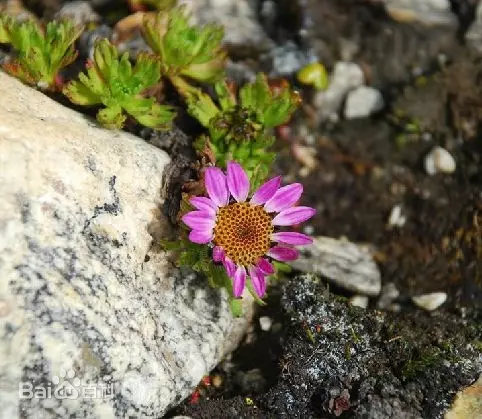
Image source:https://baike.baidu.com/
▍Morphological Features
- Height: Typically 2-6 cm tall.
- Stem: Numerous stems, forming dense basal
rosettes; slender, unbranched or sparsely branched; glabrous.
- Leaves: Spatulate, 1–1.5 cm long; 3(5)-lobed
(deep/shallow), base cuneate; lobes oblong, entire or
2–3-toothed; glabrous, with gland dots; in dense rosettes.
- Flowers: Capitula solitary at stem apex,
2.5–3.5 cm diam.; involucre hemispheric, 1.5–2 cm diam.,
glabrous; bracts 3–4-seriate, dark brown scarious margins; ray
florets pink/purple-red, neutral; disc florets yellow, bisexual,
glandular; blooms in alpine summer.
- Fruit: Achenes ~2.5 mm, slightly curved,
5-ribbed, glabrous, yellow-glandular; pappus brownish; ray
achenes often sterile, pappus absent/reduced.
- Root system: Fibrous, shallow; rhizomatous
(short, creeping); adapted to rocky/alpine soils; anchoring in
crevices.
▍Cultivation Methods
| Parameter |
Specifications |
| Soil type |
Prefers well-drained sandy loam/rocky soil, neutral to slightly
alkaline; tolerates cold, arid, high-altitude (4820–6000 m); grows
in rock crevices, glacier margins, stony slopes. |
| Germination temperature |
Optimal 10–18°C; requires cold stratification (0–4°C for 6–8 weeks);
slow germination in alpine conditions. |
| Planting density |
Wild only; no commercial cultivation; natural density 10–30
plants/m2 in suitable habitats. |
▍Pest Management
Diseases
- Root rot in poorly drained soil: improve drainage
- powdery mildew in humid alpine: thin for air flow.
Pests
- Aphids, alpine weevils: neem oil or pyrethrins
- few major pests in harsh high-altitude environments.
▍Applications
Medicinal
Traditional use in Himalayan/Ladakh regions;
essential oil with antibacterial, anti-inflammatory, cytotoxic
properties; used for respiratory and digestive ailments.
Ecological
Pioneer in high-altitude rocky areas; stabilizes
fragile alpine soils; supports pollinators in extreme cold;
indicator of glacial/rocky ecosystems.
Ornamental
Rare alpine rock garden plant; compact size,
colorful flowers; suitable for cold-climate rockeries.
Allardia huegelii
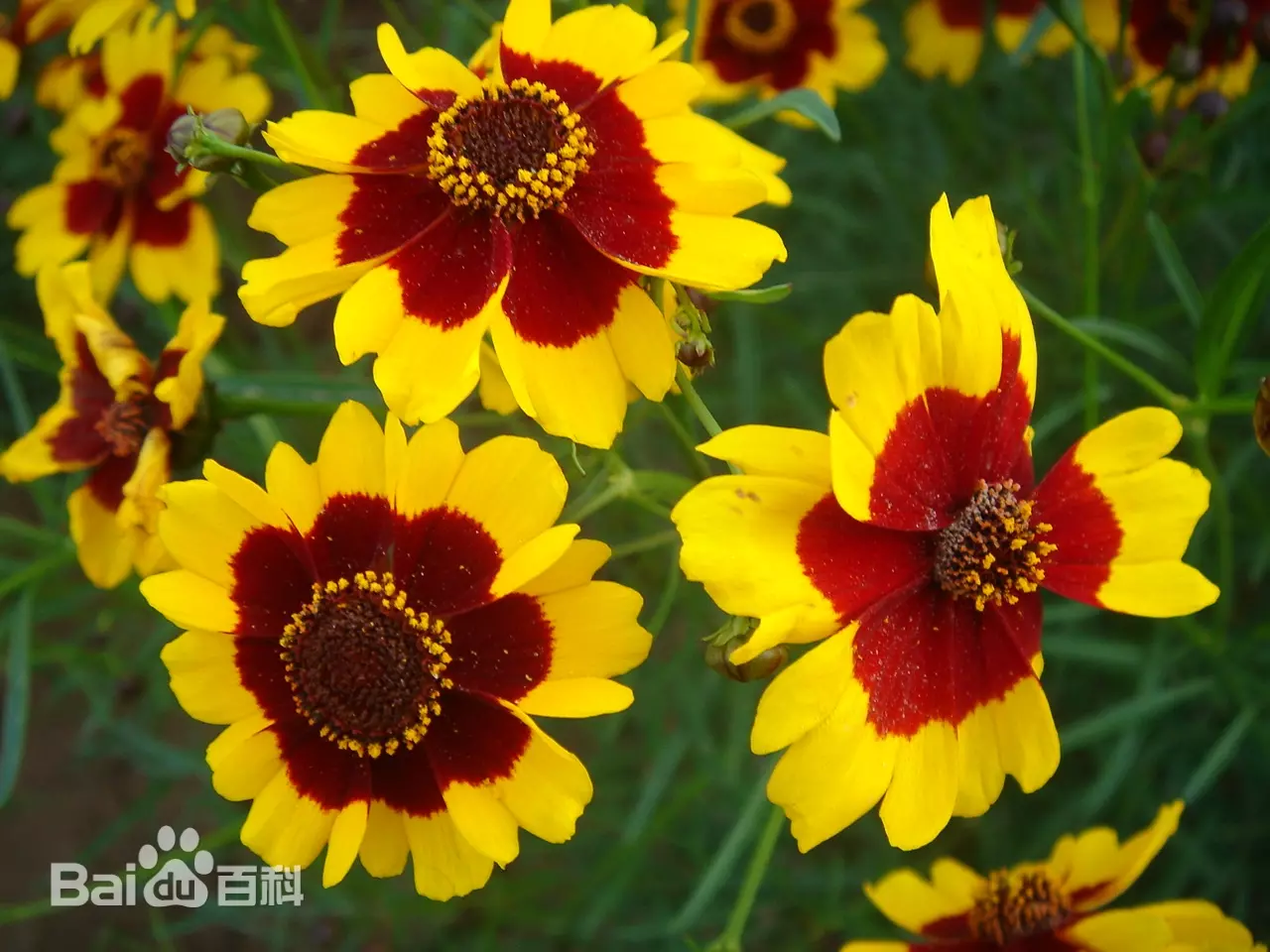
Image source:https://baike.baidu.com/
▍Morphological Features
- Height: Typically 10-15 cm tall.
- Stem: Numerous, short, clustered; densely
covered with gray-white cottony hairs; unbranched; forms tight
basal rosettes .
- Leaves: Oblong-cuneate, 8–12 mm × 3–5 mm;
3-deeply lobed at apex; lobes oblong, entire or 2-lobed; both
surfaces densely gray-white tomentose; in dense rosettes .
- Flowers: Capitula solitary at stem apex, ~2 cm
diam.; sessile or short-pedunculate; involucre hemispheric, ~1.5
cm diam.; bracts 3-seriate, oblong-lanceolate, black scarious
fringed margins, cottony-backed; ray florets neutral, pink, ~7
mm long; disc florets bisexual, yellow, 3.5 mm long; blooms in
alpine summer .
- Fruit: Achenes ~1.5 mm, glandular; pappus many,
~3 mm, pale yellow, greenish at apex; ray achenes sterile,
pappus absent/reduced .
- Root system: Rhizomatous; creeping, woody,
branched rhizomes; fibrous adventitious roots; shallow,
anchoring in rock crevices .
▍Cultivation Methods
| Parameter |
Specifications |
| Soil type |
Prefers well-drained rocky/sandy loam, neutral to alkaline; adapted
to 5800 m high altitude; grows in rock crevices,山口平台石下; intolerant
of waterlogging. |
| Germination temperature |
No commercial data; alpine-adapted; likely 8–16°C; requires long
cold stratification (0–4°C for 8–10 weeks). |
| Planting density |
Not cultivated commercially; wild density 15–30 plants/m2 in
suitable habitats. |
▍Pest Management
Diseases
- Root rot in wet conditions: ensure sharp drainage
- powdery mildew in humid alpine: improve air circulation.
Pests
- Few major pests in extreme high-altitude
- occasional aphids: neem oil
- minimal herbivory.
▍Applications
Medicinal
Traditional Himalayan/Tibetan use; aromatic oils
with antimicrobial/anti-inflammatory properties; used for
respiratory and digestive issues.
Ecological
Pioneer species in high-altitude rocky zones;
stabilizes fragile alpine soils; supports pollinators in extreme
cold; indicator of glacial/rocky ecosystems.
Ornamental
Rare alpine rock garden subject; tiny size, pink
flowers; suitable for cold-climate alpine collections.
Allardia stoliczkae
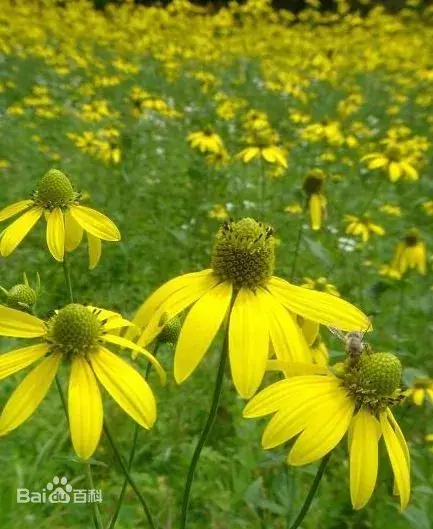
Image source:https://baike.baidu.com/
▍Morphological Features
- Height: About 15 cm tall.
- Stem: Erect, slender, glabrous (hairless); with
creeping, rooting rhizomes; unbranched or sparsely branched.
- Leaves: 1–2 pinnatisect (fully divided),
glabrous; segments linear/oblong; arranged along stem, not in
dense rosettes.
- Flowers: Capitula solitary, pedunculate
(long-stalked); involucre hemispheric, glabrous, with black
scarious margins; ray florets pink, ~1.8 cm long; disc florets
yellow, bisexual; blooms in alpine summer.
- Fruit: Achenes ~2–3 mm, slightly curved,
5-ribbed; upper half sparsely pubescent or glabrous, glandular;
pappus pale yellow, ~4–6 mm; ray achenes sterile, pappus
absent/reduced.
- Root system: Creeping rhizomatous (rooting at
nodes); fibrous adventitious roots; shallow, anchoring in
gravel/rocky soils.
▍Cultivation Methods
| Parameter |
Specifications |
| Soil type |
Prefers well-drained gravelly/sandy loam, neutral to alkaline;
adapted to 3200–5400 m high altitude; grows in rocky slopes, gravel
beds, near glaciers; intolerant of waterlogging. |
| Germination temperature |
No commercial data; alpine-adapted; likely 8–16°C; requires cold
stratification (0–4°C for 6–8 weeks). |
| Planting density |
Not cultivated commercially; wild density 10–25 plants/m2 in
suitable habitats. |
▍Pest Management
Diseases
- Root rot in wet conditions: ensure sharp drainage
- powdery mildew in humid alpine: improve air circulation.
Pests
- Few major pests in extreme high-altitude
- occasional aphids: neem oil
- minimal herbivory.
▍Applications
Medicinal
Traditional Himalayan/Tibetan use; aerial parts used
for anti-inflammatory, analgesic, and respiratory ailments;
essential oil with antimicrobial activity.
Ecological
Pioneer species in high-altitude rocky/gravel zones;
stabilizes fragile alpine soils; supports pollinators in cold
environments; indicator of glacial/rocky ecosystems.
Ornamental
Rare alpine rock garden plant; delicate foliage,
pink flowers; suitable for cold-climate alpine collections.
Allardia vestita
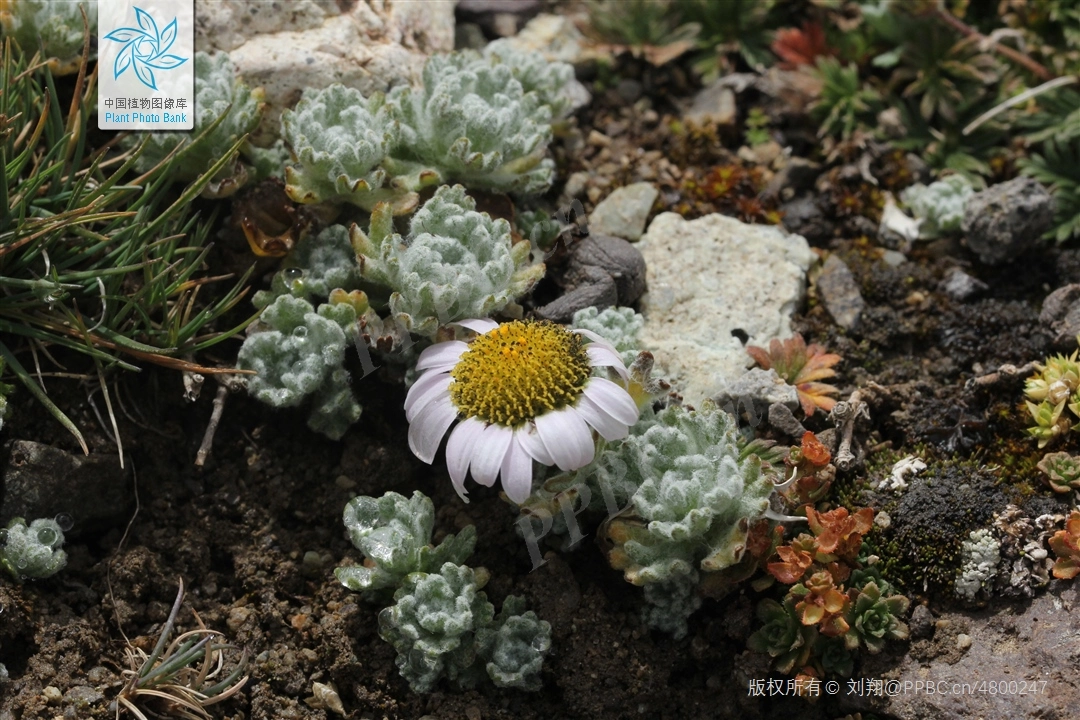
Image source:https://www.iplant.cn/
▍Morphological Features
- Height: Usually 4–6 cm tall;
- Stem: Numerous, short, erect; densely cottony;
forms tight basal rosettes; unbranched.
- Leaves: Cuneate, 10–15 mm × 4–5 mm; apex 3–5
shallowly lobed (lobes 1–2.5 mm, rounded); both surfaces densely
pale yellow/gray-white tomentose; in dense rosettes.
- Flowers: Capitula solitary at stem apex, ~2 cm
diam.; short-pedunculate; involucre hemispheric, ~1.5 cm diam.;
bracts 4–5-seriate, ovate-oblong, 4–6 mm, with broad dark brown
lacerate scarious margins, cottony-backed; ray florets neutral,
pink, ~11 mm long; disc florets bisexual, yellow; blooms
August–September.
- Fruit: Achenes ~2 mm, glandular; pappus pale
yellow, ~3–4 mm; ray achenes sterile, pappus absent/reduced.
- Root system: Creeping, woody, branching
rhizomes (rooting at nodes); fibrous adventitious roots;
shallow, anchoring in rock/gravel.
▍Cultivation Methods
| Parameter |
Specifications |
| Soil type |
Prefers well-drained rocky/sandy/gravelly loam, neutral to alkaline;
adapted to 4500–5500 m high altitude; grows in alpine rock crevices,
gravel slopes; intolerant of waterlogging. |
| Germination temperature |
No commercial data; alpine-adapted; likely 8–16°C; requires cold
stratification (0–4°C for 8–10 weeks). |
| Planting density |
Not cultivated commercially; wild density 15–30 plants/m2 in
suitable habitats. |
▍Pest Management
Diseases
- Root rot in wet conditions: ensure sharp drainage
- powdery mildew in humid alpine: improve air circulation.
Pests
- Few major pests in extreme high-altitude
- occasional aphids: neem oil
- minimal herbivory.
▍Applications
Medicinal
Traditional Himalayan/Tibetan use; aromatic aerial
parts for anti-inflammatory, analgesic, and respiratory
ailments; essential oil with antimicrobial activity.
Ecological
Pioneer species in high-altitude rocky/gravel zones;
stabilizes fragile alpine soils; supports pollinators in cold
environments; indicator of glacial/rocky ecosystems.
Ornamental
Rare alpine rock garden subject; tiny size, pink
flowers; suitable for cold-climate alpine collections.
Allardia lasiocarpa
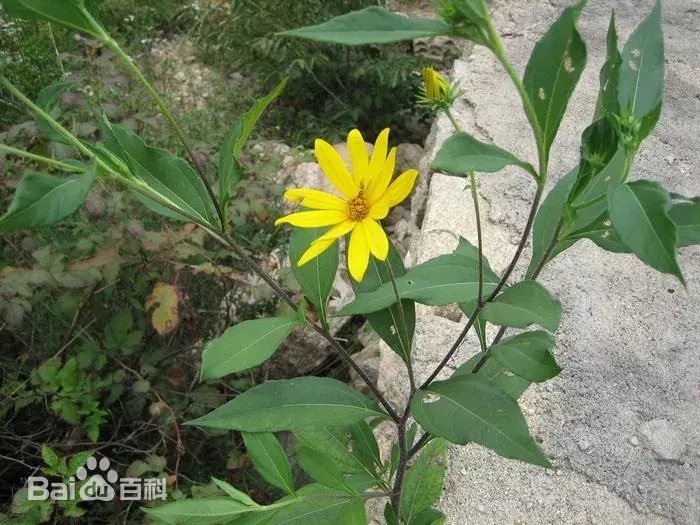
Image source:https://baike.baidu.com/
▍Morphological Features
- Height: 10–15 cm tall (stem length) .
- Stem: Prostrate at base, upper part ascending;
much branched; sparsely cottony-haired .
- Leaves: Spathulate (匙形), 1.5–2 cm × 6–7 mm;
apex 5–7 deeply/ shallowly lobed (lobes linear-oblong, obtuse);
both surfaces sparsely cottony .
- Flowers: Capitula solitary at stem apex, up to
3 cm diam., sessile (无梗); involucre 3–4-seriate,
triangular-lanceolate to oblong, 6–7 mm, with purple-brown
scarious margins, sparsely cottony abaxially; ray florets
neutral, deep pink, 15 mm total (ligule 13 mm); disc florets
bisexual, yellow; blooms July .
- Fruit: Achenes cylindrical, compressed, ~2.5
mm, 6-ribbed; densely white long-pubescent + yellow glandular;
pappus pale yellowish-brown, membranous, flat, longer than
corolla; ray achenes sterile, pappus absent .
- Root system: Creeping rhizomatous (underground,
rooting at nodes); fibrous adventitious roots; shallow,
anchoring in gravel/rocky soils.
▍Cultivation Methods
| Parameter |
Specifications |
| Soil type |
Prefers well-drained stony/gravelly loam, neutral to alkaline;
adapted to 4700–5200 m high altitude; grows in riverside stony
meadows & scree slopes; intolerant of waterlogging. |
| Germination temperature |
No commercial data; alpine-adapted; likely 8–16°C; requires cold
stratification (0–4°C for 8–10 weeks). |
| Planting density |
Not cultivated commercially; wild density 10–20 plants/m2 in
suitable habitats. |
▍Pest Management
Diseases
- Root rot in wet conditions: ensure sharp drainage
- powdery mildew in humid alpine: improve air circulation.
Pests
- Few major pests in extreme high-altitude
- occasional aphids: neem oil
- minimal herbivory.
▍Applications
Medicinal
Traditional Tibetan/Himalayan use; aerial parts for
anti-inflammatory, analgesic, and respiratory support; essential
oil with antimicrobial activity.
Ecological
Pioneer species in high-altitude stony/riverside
zones; stabilizes fragile alpine soils; supports pollinators in
cold environments; indicator of glacial/rocky river ecosystems.
Ornamental
Rare alpine rock garden plant; deep pink flowers,
low-growing habit; suitable for cold-climate alpine collections.
Leucanthemum vulgare
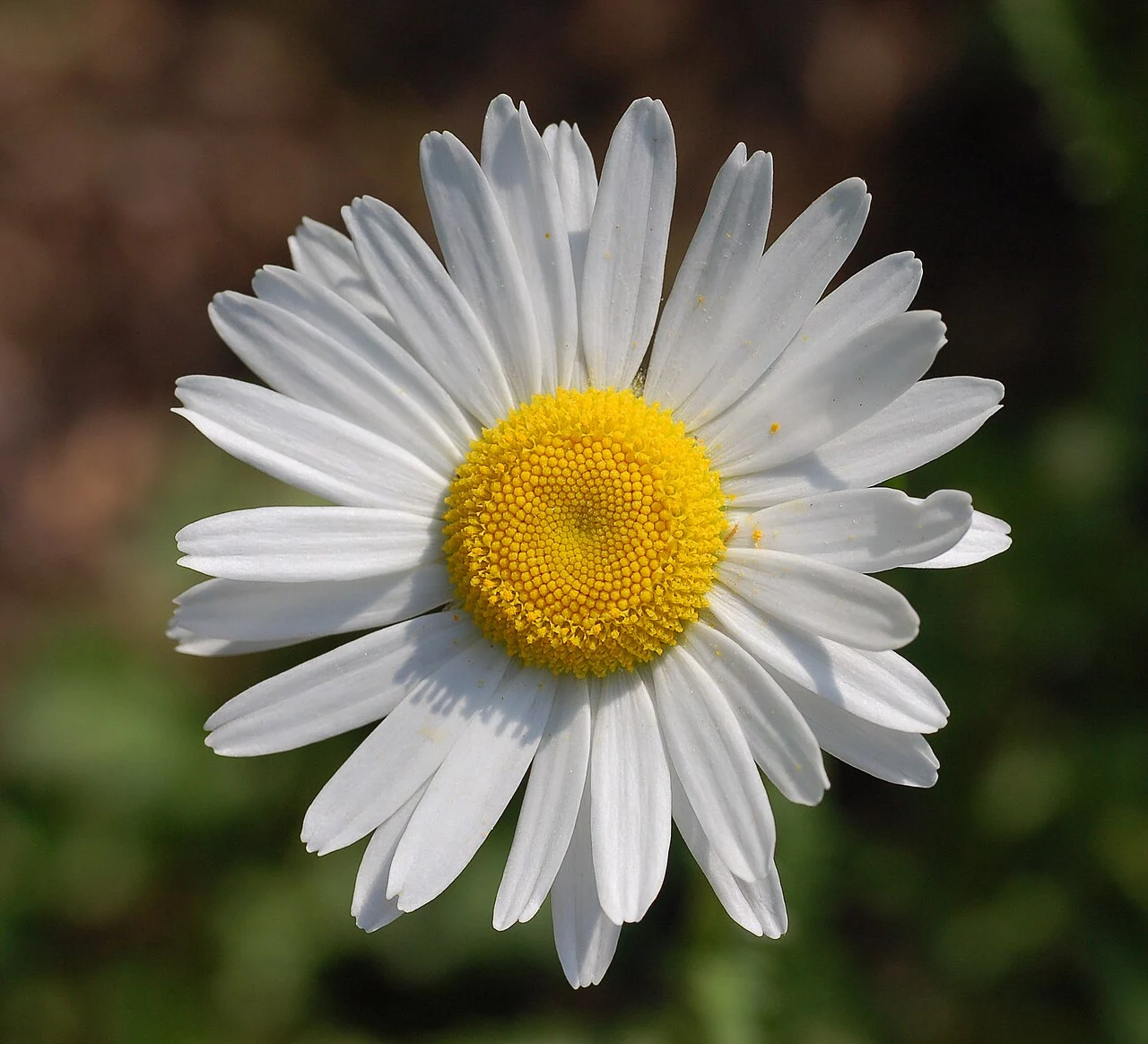
Image source:https://en.wikipedia.org/wiki/Main_Page
▍Morphological Features
- Height: 30–90 cm tall.
- Stem: Erect, solitary or few; glabrous or
sparsely hairy; unbranched or branched in upper half; green to
reddish-brown.
- Leaves: Basal leaves spoon-shaped/obovate, 5–10
cm long, long-petioled, coarsely toothed/lobed; stem leaves
alternate, sessile upward, lanceolate, smaller, sharply
serrated; dark green, smooth or sparsely hairy.
- Flowers: Capitula solitary at stem apex, 3–5 cm
diam. ; involucre hemispheric, bracts multi-seriate, green with
scarious margins; ray florets white, 13–30+, 1–2 cm long; disc
florets yellow, bisexual; blooms June–August.
- Fruit: Achenes cylindrical, ~2–3 mm, smooth,
without pappus; ray achenes often sterile .
- Root system: Short rhizomatous + fibrous root
system; creeping rhizomes form clumps; shallow, spreading .
▍Cultivation Methods
| Parameter |
Specifications |
| Soil type |
Tolerates sandy/loamy/clay soils; prefers moist but well-drained,
neutral to alkaline pH; full sun to light shade; avoids
waterlogging. |
| Germination temperature |
15–20°C; seeds need light for germination; cold stratification
(0–4°C, 2–4 weeks) improves rate . |
| Planting density |
Garden use 20–30 cm apart; meadow/groundcover 10–15 plants/m2 . |
▍Pest Management
Diseases
- Powdery mildew (humid): improve air circulation
- leaf spot: avoid overhead watering
- root rot: ensure drainage .
Pests
- Aphids, leaf miners: insecticidal soap/neem oil
- slugs/snails: bait/barriers .
▍Applications
Ornamental
Popular garden/meadow/rock garden plant; cut flower;
mass planting for white blooms.
Ecological
Pollinator support (bees/butterflies); meadow
restoration; naturalized in roadsides/grasslands.
Edible
Young leaves raw in salads, cooked as greens; mild
flavor.
Medicinal
Traditional use for anti-inflammatory,
antispasmodic, wound care; aerial parts used in infusions.
Leucanthemum maximum
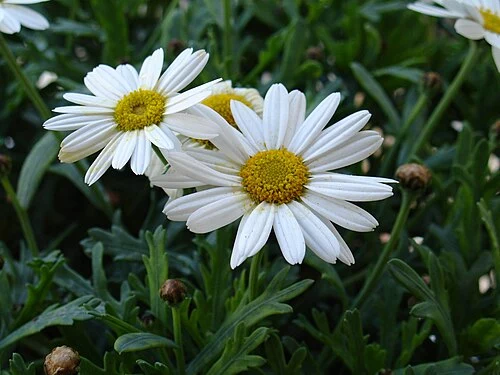
Image source:https://en.wikipedia.org/wiki/Main_Page
▍Morphological Features
- Height: 30–110 cm (commonly 60–90 cm) .
- Stem: Erect, solitary or few-branched; glabrous
(smooth); green to dark green; unbranched or sparsely branched
in upper part .
- Leaves: Basal leaves long-spathulate/obovate,
up to 30 cm, long-petioled, coarsely serrated; stem leaves
alternate, sessile, lanceolate to linear, smaller upward; dark
green, smooth .
- Flowers: Capitula solitary at apex, 5–10 cm
diam.; involucre bracts multi-seriate, green with brownish
scarious margins; ray florets white, numerous, 2–3 cm long; disc
florets bright yellow, bisexual; blooms June–August .
- Fruit: Achenes cylindrical, ~2–3 mm, smooth,
without pappus; ray achenes often sterile .
- Root system: Short rhizomatous + fibrous root
system; creeping rhizomes form dense clumps; shallow, spreading.
▍Cultivation Methods
| Parameter |
Specifications |
| Soil type |
Tolerates sandy/loamy/clay soils; prefers moist but well-drained,
neutral to alkaline pH; full sun; avoids waterlogging . |
| Germination temperature |
15–20°C; seeds need light; cold stratification (0–4°C, 2–4 weeks)
improves germination . |
| Planting density |
Garden/flower border 30–40 cm apart; mass planting 8–12 plants/m2.
|
▍Pest Management
Diseases
- Powdery mildew (humid): improve air circulation
- leaf spot: avoid overhead watering
- root rot: ensure drainage .
Pests
- Aphids, leaf miners: insecticidal soap/neem oil
- slugs/snails: bait/copper barriers .
▍Applications
Ornamental
Popular garden/flower border/rock garden plant;
excellent cut flower; mass planting for white summer blooms.
Ecological
Pollinator magnet (bees/butterflies); meadow
restoration; naturalized in grasslands/roadsides.
Medicinal
Traditional use for anti-inflammatory,
antispasmodic, and wound care; aerial parts used in infusions .
Cynara scolymus
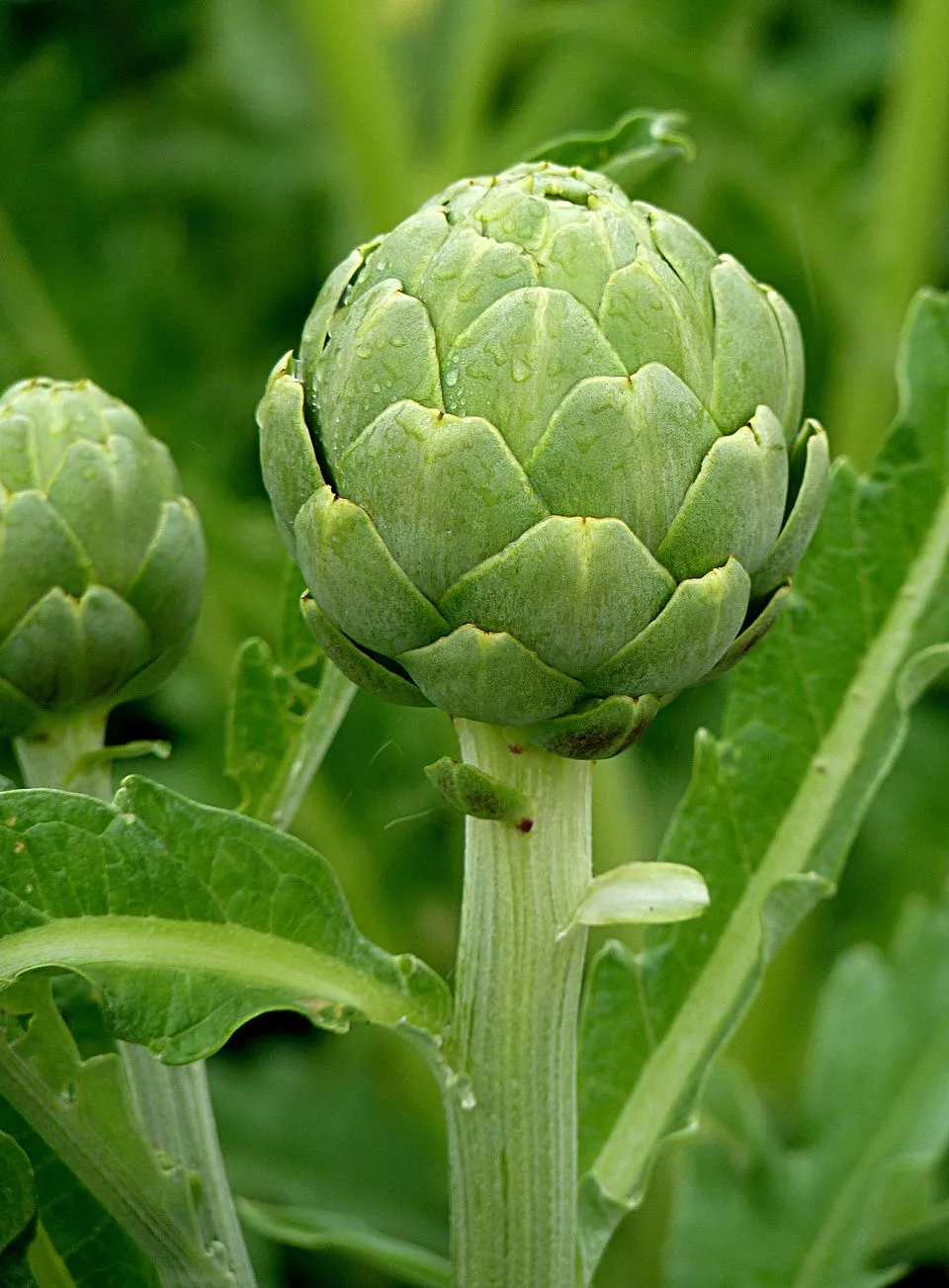
Image source:https://en.wikipedia.org/wiki/Main_Page
▍Morphological Features
- Height: 1.2–2 m (commonly 1.5–2 m) .
- Stem: Erect, stout, ribbed, upper branched;
sparsely to densely arachnoid-hairy; green to silvery-green .
- Leaves: Basal leaves large, rosette-forming,
oblong/ broadly lanceolate, up to 1 m long × 50 cm wide,
bipinnately divided; long-petioled; upper leaves smaller,
sessile; upper surface green, glabrous; lower surface
gray-white, densely to sparsely tomentose .
- Flowers: Large capitula at branch apices, 8–15
cm diam.; involucre bracts multiseriate, leathery, glabrous;
florets purple-red, tubular; blooms July.
- Fruit: Achenes oblong, 4-angled, apex truncate;
pappus white, feathery, ~3.6 cm, united at base, deciduous.
- Root system: Taprooted + fibrous lateral roots;
deep, robust, well-developed.
▍Cultivation Methods
| Parameter |
Specifications |
| Soil type |
Prefers deep, fertile, well-drained loam/sandy loam; neutral to
alkaline pH; tolerates clay if drained; avoids waterlogging. |
| Germination temperature |
18–22°C (optimum ~20°C); seeds may benefit from light; cold
stratification not required. |
| Planting density |
Field: 80–100 cm between rows, 60–80 cm between plants; garden: 1 m
apart. |
▍Pest Management
Diseases
- Root rot (overwatering): improve drainage
- powdery mildew: air circulation
- leaf spot: avoid wet foliage.
Pests
- Aphids, thrips: insecticidal soap/neem
- slugs/snails: bait/barriers
- caterpillars: manual removal or Bt.
▍Applications
Edible
Edible immature flower buds (bracts + receptacle);
cooked/steamed/fried; "vegetable king" in Europe.
Medicinal
Rich in cynarin, flavonoids; used for liver
protection, cholesterol lowering, digestion, antioxidant.
Ornamental
Architectural foliage + purple flowers; used in
borders, cottage gardens, large landscapes.
Industrial
Byproducts used for extracts, teas, dietary
supplements.
Cynara cardunculus
Image source:https://en.wikipedia.org/wiki/Main_Page
▍Morphological Features
- Height: 0.9–2.5 m (commonly 1.5–2 m).
- Stem: Erect, stout, ribbed, upper branched;
gray-white, densely arachnoid-tomentose; silvery-green to
gray-green.
- Leaves: Basal rosette large, oblong/ broadly
lanceolate, up to 1 m long × 50 cm wide, bipinnately divided;
long-petioled; upper leaves smaller, sessile; upper surface
gray-green, sparsely hairy; lower surface white-gray, densely
tomentose; lobes tipped with yellow spines (15–35 mm).
- Flowers: Large globose capitula at branch
apices, 8–12 cm diam.; involucre bracts leathery, spiny; florets
purple-red, tubular; blooms July.
- Fruit: Achenes oblong, 6–8 mm, 4-angled; pappus
white, feathery, ~4 cm, united at base, deciduous.
- Root system: Thick fleshy taproot + fibrous
lateral roots; deep, robust, well-developed .
▍Cultivation Methods
| Parameter |
Specifications |
| Soil type |
Prefers deep, fertile, well-drained loam/sandy loam/chalk; neutral
to alkaline pH; full sun; avoids waterlogging. |
| Germination temperature |
18–22°C (optimum ~20°C); light beneficial; no cold stratification
needed. |
| Planting density |
Field: 100–120 cm between rows, 90–120 cm between plants; garden:
90–120 cm apart. |
▍Pest Management
Diseases
- Root rot: improve drainage
- powdery mildew: air circulation
- leaf spot: avoid wet foliage.
Pests
- Aphids, thrips: insecticidal soap/neem
- slugs/snails: bait/barriers
- caterpillars: manual removal or Bt.
▍Applications
Edible
Young petioles & inner leaves
(blanched/boiled/steamed); used in salads, soups, stews; similar
to artichoke .
Medicinal
Rich in cynarin, flavonoids; liver protection,
cholesterol lowering, digestive aid, antioxidant.
Ornamental
Architectural silvery foliage + purple flowers;
borders, cottage gardens, large landscapes.
Industrial
Biomass for biofuel; byproducts for extracts, teas,
supplements .
Xanthium strumarium
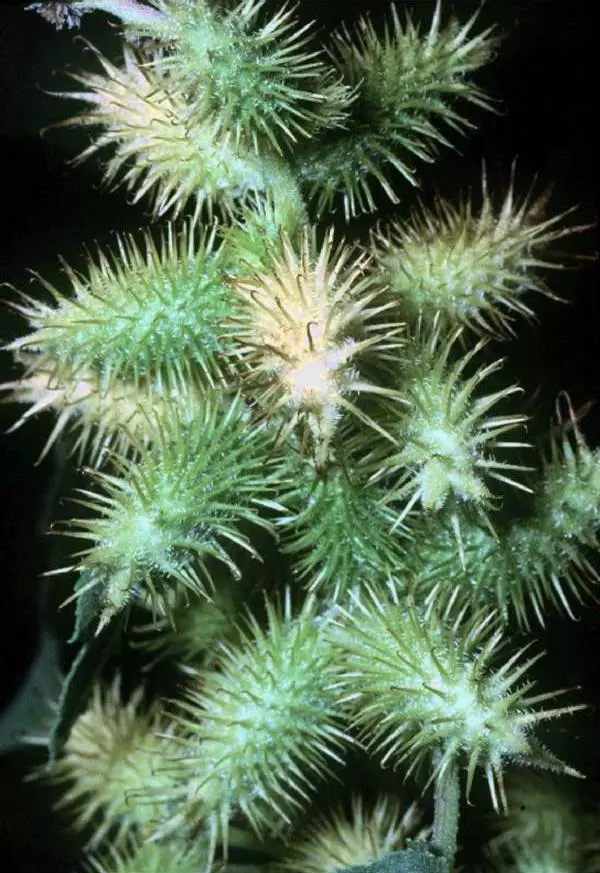
Image source:https://en.wikipedia.org/wiki/Main_Page
▍Morphological Features
- Height: 20–120 cm (commonly 30–80 cm) .
- Stem: Erect, stout, lower cylindrical (4–10 mm
diam.), upper grooved; sparsely branched; covered with
gray-white strigose hairs.
- Leaves: Alternate, triangular-ovate/cordate,
4–9 cm long × 5–10 cm wide; irregular coarse teeth or 3–5
obscure lobes; base subcordate/truncate; 3 basal veins; upper
surface green, lower pale; petiole 3–11 cm.
- Flowers: Monoecious; male capitula spherical
(4–6 mm diam.) at upper stem, yellow-green, corolla campanulate;
female capitula ellipsoid at lower stem, involucre fused into a
spiny bur; blooms July–August .
- Fruit: Bur (mature involucre) ovoid/ellipsoid,
hard, green/yellowish, covered with hooked spines, apex with 2
straight/curved beaks; 2 achenes inside, obovoid; fruit period
September–October.
- Root system: Taproot fusiform (spindle-shaped),
branched or unbranched; shallow to medium depth .
▍Cultivation Methods
| Parameter |
Specifications |
| Soil type |
Adaptable; prefers loose, fertile, well-drained sandy loam;
tolerates poor, dry soils; avoids waterlogging. |
| Germination temperature |
15–25°C (optimum ~20°C); seeds have dormancy; may need
scarification. |
| Planting density |
Wild/volunteer; cultivated: 30–40 cm between rows, 20–30 cm between
plants. |
▍Pest Management
Diseases
- Root rot (overwatering): improve drainage
- leaf spot: avoid wet foliage
- powdery mildew: enhance air circulation.
Pests
- Aphids, thrips: insecticidal soap/neem
- caterpillars: manual removal/Bt
- flea beetles: row covers.
▍Applications
Medicinal
Whole plant/fruits (cang'erzi) used in TCM; dispel
wind, dampness, relieve nasal congestion, treat rheumatism;
toxic, use under professional guidance.
Industrial
Seeds yield oil for paints, inks, soaps; bur used
for natural crafts.
Ecological
Pioneer species for soil stabilization; wildlife
food (birds eat seeds); but invasive in croplands.
Other
Natural insecticide; bur used for seed dispersal
research.
Xanthium spinosum
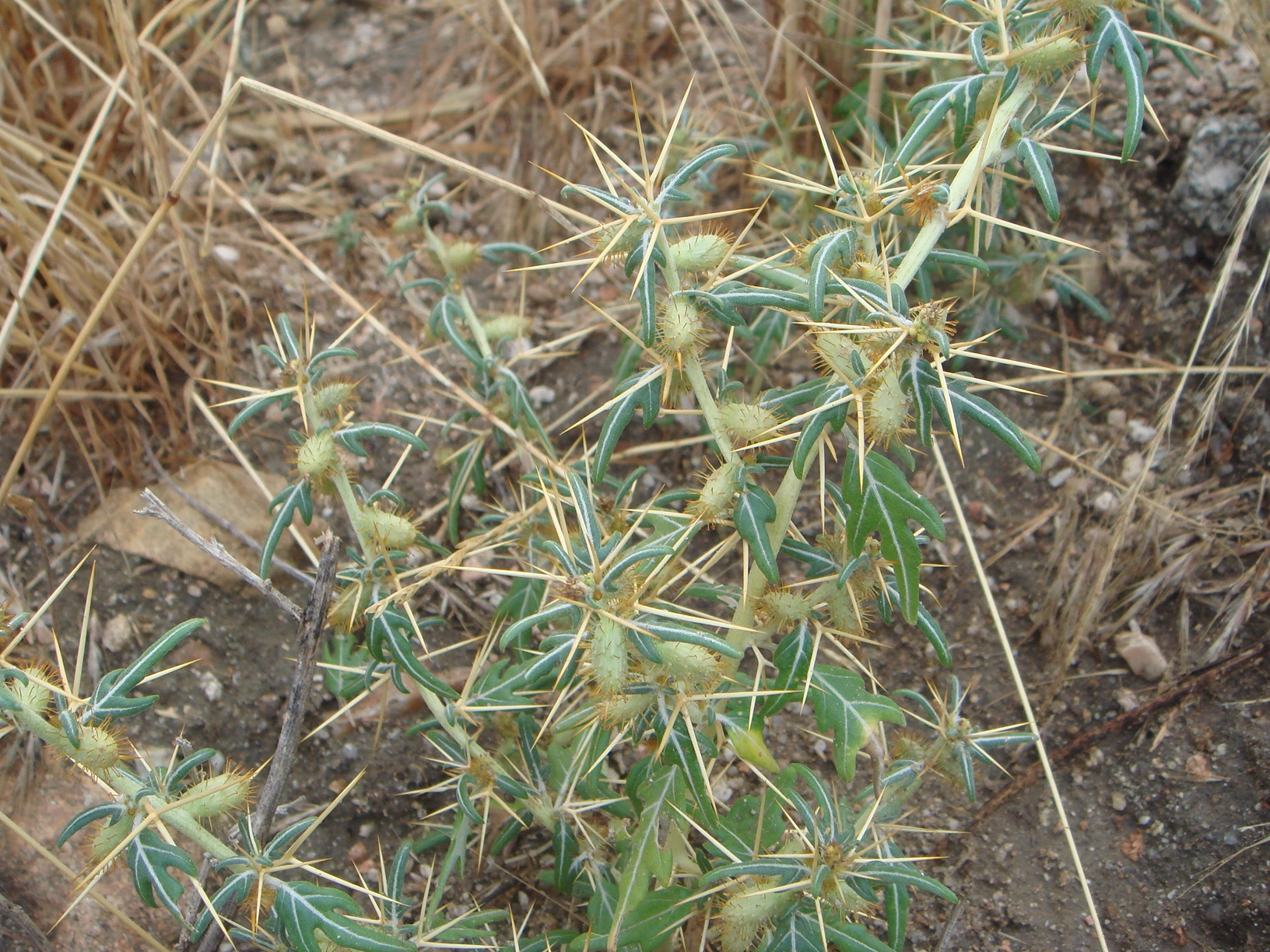
Image source:https://en.wikipedia.org/wiki/Main_Page
▍Morphological Features
- Height: 30–120 cm (commonly 30–100 cm).
- Stem: Erect, cylindrical, ribbed; upper
branched densely; nodes with yellow 3-pronged spines (1–3 cm);
covered with short strigose hairs.
- Leaves: Alternate, narrow
ovate-lanceolate/broad lanceolate, 3–8 cm × 0.6–3 cm; 3–6
shallow lobes or entire, middle lobe longest; base cuneate;
upper surface green-glossy, lower gray-white densely hairy;
petiole 5–15 mm, slender.
- Flowers: Monoecious; male capitula spherical,
terminal; female capitula ovoid, axillary; involucre spiny;
blooms July–October .
- Fruit: Bur (mature involucre)
obovoid-ellipsoid, 7–13 mm; yellow-brown, with fine hooked
spines, apex with 2 slender beaks; 2 achenes inside; fruit
period September–October .
- Root system: Taproot fusiform, well-branched;
shallow to medium depth .
▍Cultivation Methods
| Parameter |
Specifications |
| Soil type |
Adaptable; prefers loose, well-drained sandy loam/loam; tolerates
poor, dry soils; avoids waterlogging . |
| Germination temperature |
15–25°C (optimum ~20°C); seeds have dormancy; may need
scarification. |
| Planting density |
Wild/invasive; cultivated control: 30–40 cm row spacing, 20–30 cm
plant spacing (for eradication trials). |
▍Pest Management
Diseases
- Root rot: improve drainage
- leaf spot: avoid wet foliage
- powdery mildew: enhance air circulation.
Pests
- Aphids, thrips: insecticidal soap/neem
- flea beetles: row covers
- caterpillars: manual removal/Bt.
- Invasive control: Mechanical tillage/hand-pulling (before
seeding)
- herbicides (glyphosate)
- crop rotation
- prevent seed spread via animals/equipment.
▍Applications
Medicinal
Traditional use for fever, rheumatism, nasal issues;
highly toxic (cynarin-like toxins), strictly for professional
use only.
Industrial
Leaves yield yellow dye; seeds contain oil for
industrial uses (non-edible).
Ecological
Invasive weed; competes with crops (wheat, soybean,
vegetables); toxic to livestock; listed as harmful invasive
species.
Other
Used in botanical research on seed dispersal and
invasive ecology.